What Makes Denver Hotel Wastewater a Different Sizing Problem
At Denver's 5,280 ft (1,610 m) elevation, standard oxygen-transfer efficiency in a fine-bubble aerator drops roughly 20% compared to sea level, which means any aeration design copied from a coastal manufacturer's data sheet will under-deliver oxygen in Denver and risk winter ammonia excursions under Colorado Regulation 22. Add to that a winter operating regime where mixed-liquor temperature sits at 8-12°C for weeks, slowing nitrification kinetics, plus hotel-specific kitchen flows that carry fats, oils, and grease (FOG) and starch at concentrations a domestic-only design never sees, and you have a project that cannot be specified from a generic MBR brochure. As Imemflo's hotel applications note, the characteristics of hotel wastewater "can vary based on factors such as the size of the hotel, the amenities it offers, and local practices" (source: imemflo.com, hotel MBR page, accessed 2025), and Colorado practice — full-service kitchens, on-site laundry, winter pool backwash cycles — pushes the load profile toward the high end of that variability envelope.
The regulatory driver is the Colorado Discharge Permit System (CDPS) general permit for domestic wastewater, administered by the Water Quality Control Division (WQCD), which points new sub-0.5 MGD discharges toward an MBR or equivalent when the receiving water or reuse target demands low TSS, low BOD, and the nitrate-nitrogen limits in Regulation 22 (per Colorado Water Quality Control Commission, Regulation 22 site-specific standards, 2025-09 update). Two engineering consequences follow: design for peak-hourly flow, not just average daily flow, because the morning checkout surge concentrated into two hours can hit 2.5-3.0x the daily average; and reserve nitrification volume even where ammonia limits are not formally triggered, because cold mixed-liquor suspended solids (MLSS) below 10°C will not nitrify reliably at sea-level kinetics.
Step 1: Build the Design Flow and Loading Budget
The defensible starting point is 50 GPD (190 L) per overnight guest for domestic flow, the same per-population assumption Pure Aqua uses to size their 6,250-75,000 GPD containerized MBR line (source: Pure Aqua, Packaged MBR Systems data sheet, MBR-6.25K through MBR-75.0K models). To that baseline add a kitchen allowance of 5-8 GPD per seat for full-service hotels, 8-15 GPD per room for on-site laundry, and 3-5% intermittent peak allowance for pool backwash and spa discharges.
Worked example for a 200-key full-service Denver property: 200 × 50 = 10,000 GPD domestic; on-site laundry at roughly 15 GPD/key ≈ 3,000 GPD; full-service kitchen (assume 200 seats) at 8 GPD/seat ≈ 1,600 GPD; miscellaneous and staff ≈ 1,400 GPD, giving about 16,000 GPD average daily flow. Apply a peak factor of 2.5-3.0x to land on a 40,000-48,000 GPD design flow, which lands inside Pure Aqua's MBR-50.0K-4 class (50,000 GPD, four 40 ft containers, 1,000 membrane elements) per the same data sheet. For a 300-key resort at the upper end, expect 25,000-30,000 GPD average and a 65,000-80,000 GPD peak — that is two parallel MBR-50.0K-4 skids or a single MBR-75.0K-6, again per the same published model table.
| Property Profile | Keys | Avg Daily Flow (GPD) | Peak Design Flow (GPD) | Pure Aqua MBR Class |
|---|---|---|---|---|
| Boutique, limited kitchen | 100 | 7,000-9,000 | 18,000-25,000 | MBR-12.5K-1 to MBR-25.0K-2 |
| Full-service, on-site laundry (worked example) | 200 | 16,000 | 40,000-48,000 | MBR-50.0K-4 |
| Resort, spa, pool, multiple F&B outlets | 300 | 25,000-30,000 | 65,000-80,000 | MBR-75.0K-6 or 2 × MBR-50.0K-4 |
Cap the design with a per-capita BOD5 loading target of 0.04-0.06 kg BOD/person/day (domestic baseline) plus a 30-50% lift for kitchen and laundry contributions, so the aeration tank can be sized independently of flow against a realistic food-to-mass ratio (F:M) of 0.05-0.15 kg BOD/kg MLSS-day at the design MLSS of 8,000-12,000 mg/L.
Step 2: Pre-Treatment Train Before the Membrane Tank
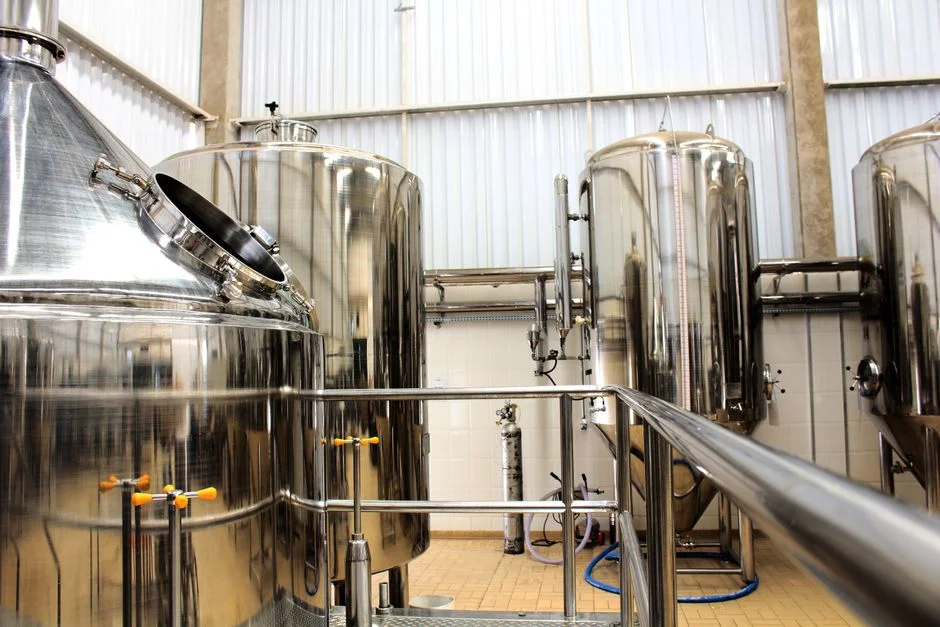
A submerged PVDF membrane will not tolerate what a conventional secondary clarifier would have ignored. Specify a rotary mechanical bar screen with 2-3 mm clear opening ahead of the bioreactor to remove rags, hair, lint, and plastics — this is the single most common membrane-fouling root cause in hotel MBR retrofits, because laundry lint binds with biological polymers and forms a felt that a backwash cycle cannot remove. Downstream of screening, route the kitchen stream through a DAF system for FOG removal sized to drop influent oil and grease below 50 mg/L; FOG films on PVDF surfaces are not easily backwashed off and will accelerate trans-membrane pressure rise across the cassette.
Equalization is the third mandatory element: a flow equalization tank sized to at least 8 hours of average daily flow (so roughly 5,300 gallons for the 16,000 GPD worked example) so the MBR sees a steady organic load rather than the morning-checkout surge Imemflo flags when it notes that hotel wastewater "can vary based on factors such as the size of the hotel, the amenities it offers, and local practices" (source: imemflo.com, hotel MBR page). What you do not install is a buried primary clarifier: the MBR already replaces the secondary clarifier, so only a small grit chamber and the equalization tank precede the bioreactor.
Step 3: Choose Membrane Type — Hollow Fiber vs Flat Sheet
Two submerged membrane formats dominate the Denver hotel market. Pure Aqua packages Toray flat-sheet elements — PVDF membrane on a PET non-woven supporting panel, 0.1 µm pore class, 1.4 m² effective area per element, panel dimensions 515 × 1,608 × 13.5 mm, model TSP-50150 (source: Pure Aqua MBR data sheet). Imemflo ships both formats and references a hollow-fiber MBR installation at a 200-bed five-star hotel rated at 250 m³/d (≈ 66,000 GPD), the only published hotel reference of that scale in the scraped sources (source: imemflo.com, hotel MBR page, accessed 2025).
| Decision Axis | Flat Sheet (Toray TSP-50150 class) | Hollow Fiber (Imemflo HF MBR class) |
|---|---|---|
| Packing density (m²/m³ tank) | Moderate; planar cassettes on 13.5 mm spacing | High; bundles pack 2-3x more area per tank volume |
| Tolerance to hair, lint, and grit | High; flat surface sheds solids back into the mixed liquor | Lower; hair wraps fibers and requires reliable pre-screening |
| Backwash regime | Relaxation + air-scour; typically 10-20x lower specific energy than external cross-flow hollow-fiber designs | Periodic backwash with permeate or chemical CIP every 1-3 months |
| Single-element replacement | Swap one panel without draining the cassette | Replace a bundle; requires dewatering the module |
| Hotel use case fit | Retrofit, laundry-heavy flows, non-specialist operations | New-build, large footprint, reliable pre-treatment — e.g. the Imemflo 250 m³/d 200-bed reference |
The selection rule: specify flat-sheet for older hotel retrofits where the influent carries laundry lint and hair, and where the engineering team is not staffed with membrane specialists — one panel can be pulled and replaced without dewatering the cassette, and a PVDF flat-sheet MBR membrane module in the DF series is the standard build. Specify hollow-fiber for new-build, large-footprint properties that need maximum membrane area in minimum volume, with reliable upstream screening and a willing service partner; the Imemflo 250 m³/d 200-bed installation is the proof point. Either way, the host system is a packaged integrated MBR wastewater treatment system with the membrane cassette, blowers, permeate pumps, and PLC on a single skid or container set.
Step 4: Aeration, Mixing, and the Denver Altitude Correction
The sea-level aeration design will under-perform in Denver. Standard oxygen-transfer efficiency (SOTE) for a typical coarse-bubble diffuser drops by approximately 20% at 5,280 ft because of lower air density and partial-pressure derating, so blower nameplate and diffuser count must be increased roughly 25% to deliver the same field oxygen flux — call it a 1.25x derating factor on every aeration calculation you copy from a manufacturer data sheet. Mount coarse-bubble diffusers directly under the membrane cassette so the rising air column does double duty as membrane scouring and oxygen supply, the same arrangement Pure Aqua shows in its submerged flat-sheet schematic where "air injected from a manifold at the bottom of the membrane assembly help[s] keep the membrane surfaces clean as well as supply oxygen" (source: Pure Aqua MBR data sheet).
Plan a winter operating mode that holds MLSS at 10,000-12,000 mg/L and extends hydraulic retention time (HRT) in the bioreactor to keep nitrification alive when mixed-liquor temperature sits at 8-12°C for weeks at a time, because nitrifier growth rate halves roughly every 7-10°C. Specify blowers with VFD control, not across-the-line starters, so the 25% altitude derating does not force year-round full-speed operation; VFDs protect diffuser membrane life, cut OPEX at part-load, and let you match dissolved-oxygen setpoints to the actual loading curve. For projects in the 100-300 key range where the design flow is below 50,000 GPD, two positive-displacement blowers at 60/40 duty split give the redundancy that CDPS permit reviewers look for.
Step 5: Effluent Polishing, Disinfection, and Reuse Targeting
A properly operated MBR already produces an effluent envelope of BOD5 ≤ 5 mg/L and TSS near zero — Pure Aqua states the system delivers "high BOD5 removal (about 98%) and virtually complete TSS removal" (source: Pure Aqua MBR data sheet), and Imemflo's working envelope is "90-95% harmful substances" removal, which is the realistic field claim (source: imemflo.com, hotel MBR page). That envelope comfortably meets non-potable reuse targets of <10 mg/L BOD and <10 NTU that the WQCD recognizes under its graywater and reclaimed water guidance, but it is not reuse-grade water by itself.
For irrigation or toilet-flush reuse, follow the MBR with a polishing step: a low-dose UV sterilizer for reuse polishing is preferred where CDPS reuse rules require no chemical residual, and UV at 30-40 mJ/cm² dose is sufficient to bring the MBR permeate's already-low fecal coliform count to non-detect. For cooling-tower makeup, send the MBR permeate through an industrial water softener system before the tower to keep cycle-of-concentration within the Langelier Saturation Index window (roughly -0.5 to +0.5) and avoid calcium-scale fouling. Where a chlorine residual is acceptable — outdoor irrigation only, never indoor toilet flush — a chlorine dioxide generator sized to 0.5-1.0 mg/L residual provides a broader-spectrum residual than sodium hypochlorite at the same dose.
Step 6: CAPEX, OPEX, and Procurement Checklist for Colorado
For a 2026 Denver hotel project in the 25,000-50,000 GPD range, packaged MBR CAPEX runs roughly $0.18-0.35 per GPD of design capacity, which translates to about $9,000-17,000 in installed cost per key at 200 keys — call it an order-of-magnitude budget envelope, not a firm quote, because site-specific civil work, the 25% altitude derating on the aeration train, and CDPS permitting fees drive most of the spread. OPEX lands in the $0.25-0.55 per m³ treated band, dominated by blower energy (weighted upward for the 5,280 ft derating), membrane replacement amortized over 7-10 years, and sludge hauling at roughly 2-4% of total OPEX.
| Cost Element | Order-of-Magnitude 2026 Range (Denver hotel, 25,000-50,000 GPD) |
|---|---|
| Packaged MBR skid CAPEX | $0.18-0.35 per GPD → $9,000-17,000 per key at 200 keys |
| OPEX (energy, membranes, hauling, chemicals) | $0.25-0.55 per m³ treated |
| Membrane replacement reserve | Amortized over 7-10 years; budget $0.03-0.06 per m³ |
| CDPS permit & engineering | 3-8% of CAPEX for sub-0.5 MGD general permit pathway |
The procurement checklist for a Colorado project: factory witness test before shipment, NSF-61 certification of wetted parts, UL/CE listing on the control panel, PLC with remote monitoring and a cellular or Ethernet gateway, an O&M manual specific to the skid, membrane warranty of typically 5 years pro-rata from the membrane OEM, and a 24-month consumables stock list (sodium hypochlorite or ClO₂ precursor, CIP chemicals, spare diffusers, one spare membrane element). Schedule a WQCD pre-application meeting before procurement; the CDPS general permit pathway is materially faster than an individual permit for any packaged MBR below 0.5 MGD. For broader cost-modeling context, the same packaged-MBR cost framing appears in our 2026 engineering specs and cost models for IC wastewater plants and in the parallel Pennsylvania municipal sewage treatment 2026 upgrade guide; for a Middle East counterpoint where altitude is not a constraint, see our packaged MBR STP selection for hotels in Dubai and the adjacent packaged MBR STP sizing for Abu Dhabi hotels. For international context, our hotel and resort wastewater treatment in India 2026 guide covers a different climate envelope, and the MBR market outlook to 2030 frames where vendor pricing is heading.
Frequently Asked Questions
How many GPD does a 200-key Denver hotel actually need from a packaged MBR?
Yes, a 200-key full-service Denver hotel with on-site laundry and a full kitchen averages about 16,000 GPD and peaks at 40,000-48,000 GPD after a 2.5-3.0x peaking factor. That lands in Pure Aqua's MBR-50.0K-4 class (50,000 GPD, four 40 ft containers, 1,000 membrane elements) per their published data sheet.
Does Denver's 5,280 ft altitude change the aeration design on a packaged MBR?
Yes. Standard oxygen-transfer efficiency drops about 20% at 5,280 ft, so blower nameplate and diffuser count must increase roughly 25% to deliver the same field oxygen flux — plan for a 1.25x altitude derating factor on any sea-level aeration calculation. VFD-controlled blowers protect diffuser life and let you match dissolved oxygen to the actual loading.
What effluent quality can a hotel expect from a packaged MBR, and is it reuse-grade?
A packaged MBR delivers about 98% BOD5 removal and near-zero TSS per the Pure Aqua data sheet, giving BOD5 ≤ 5 mg/L and TSS near zero; Imemflo's working claim is 90-95% contaminant removal, which is the realistic field envelope. For non-potable reuse (irrigation, toilet flush, cooling-tower makeup) under Colorado WQCD rules, follow the MBR with a UV sterilizer and, for cooling tower, a softener.
How often do the membranes need replacement in a hotel MBR?
Membrane elements in a well-operated hotel MBR last 7-10 years, with pro-rata warranty typically 5 years from the membrane OEM. Budget the replacement at $0.03-0.06 per m³ treated amortized over that interval, and stock at least one spare element at startup so a single fouled panel does not take the cassette offline.