IC Wastewater Treatment Plant: 2026 Engineering Specs, Cost Models & Zero-Fouling Reactor Design
IC wastewater treatment plants leverage Internal Circulation (IC) reactors to achieve 92-97% COD removal for high-organic-load effluents like semiconductor fab wastewater. These anaerobic systems use a two-stage vertical design with internal circulation (up to 20 m/h) to accelerate microbial degradation, reducing OPEX by 30-50% compared to conventional UASB reactors. For a 150 m³/h system, CAPEX ranges from $2.5M to $15M (2026 benchmarks), with effluent COD consistently below 250 mg/L before aerobic polishing—meeting EPA 40 CFR Part 469 limits for fluoride (≤15 mg/L) and TMAH (≤1 mg/L).Why Semiconductor Fabs Are Switching to IC Wastewater Treatment Plants
Semiconductor fabs face annual fines averaging $200,000 for non-compliance with COD, TMAH, and fluoride discharge limits, per a 2024 case study from a leading wastewater treatment provider. These regulatory penalties stem from the complex and high-strength wastewater streams generated during wafer fabrication, which often contain high concentrations of chemical oxygen demand (COD), tetramethylammonium hydroxide (TMAH), and fluoride. Beyond fines, existing membrane bioreactor (MBR) systems in integrated circuit wastewater treatment plants frequently experience a 30% flux decline within six months due to severe fluoride scaling and photoresist buildup, leading to annual membrane replacement costs exceeding $200,000 (Top 1 data). This rapid deterioration of membrane performance directly impacts operational stability, increases maintenance budgets, and contributes to unplanned downtime. Fab managers are increasingly frustrated by the cycle of permit violations, rising operational expenditures, and the constant battle against membrane fouling. Traditional anaerobic systems, such as Upflow Anaerobic Sludge Blanket (UASB) reactors, often struggle with the high organic loads and specific inhibitory compounds found in semiconductor wastewater, requiring longer hydraulic retention times and larger footprints. Internal Circulation (IC) reactors, however, offer a robust solution. They eliminate the primary causes of regulatory fines and reduce operational expenditures (OPEX) by 30-50% compared to conventional UASB reactors, primarily through efficient biogas recovery. A 2024 case study demonstrated that IC systems could offset up to 15% of their total energy demand through biogas utilization, providing a significant economic and environmental advantage. By addressing these critical pain points, IC wastewater treatment plants offer a pathway to consistent compliance, reduced operational overhead, and enhanced process reliability.How IC Reactors Work: Hydraulics, Microbial Kinetics & Zero-Fouling Design
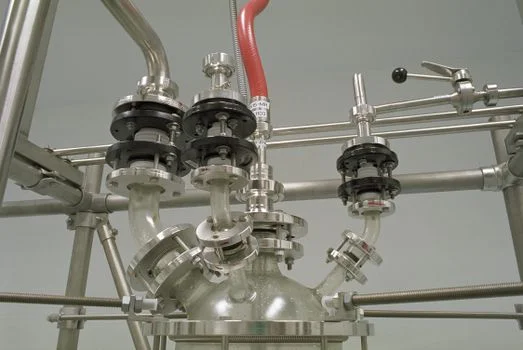
IC Reactor Design Parameters for Semiconductor Wastewater
| Parameter | Typical Range for Semiconductor Effluent | Notes |
|---|---|---|
| Upflow Velocity | 10-20 m/h | Driven by internal circulation, ensuring high mass transfer. |
| Hydraulic Retention Time (HRT) | 4-8 hours | For influent COD ~5,000 mg/L; significantly shorter than UASB. |
| Sludge Bed Height | 1.5-2.5 m | Maintains high biomass concentration for efficient degradation. |
| Granular Sludge Diameter | 0.5-2 mm | Ensures excellent settleability and biomass retention (>90%). |
| COD Removal Efficiency (Anaerobic) | 92-97% | High efficiency for high-organic-load industrial effluents. |
| Biogas Yield | 0.35-0.45 m³/kg COD removed | Significant energy recovery potential. |
| Methane Content in Biogas | 60-70% | High-quality biogas for energy offset. |
IC vs. MBR vs. Chemical Precipitation: Head-to-Head Comparison for Semiconductor Wastewater
Comparing Internal Circulation (IC) reactors, Membrane Bioreactors (MBR), and chemical precipitation reveals distinct trade-offs in performance, cost, and compliance for semiconductor wastewater treatment. Each technology offers specific advantages and disadvantages depending on the effluent characteristics, regulatory requirements, and available footprint. For Chemical Oxygen Demand (COD) removal, IC reactors achieve high efficiencies of 92-97% for concentrated organic loads. MBR systems typically offer similar or slightly higher removal rates, around 95%, due to their superior solids separation. Chemical precipitation, being primarily a physical-chemical process, provides 70-80% COD reduction, often requiring further biological treatment. Tetramethylammonium hydroxide (TMAH) removal varies significantly: IC reactors achieve approximately 90% removal anaerobically, with an additional 95% reduction during subsequent aerobic polishing, leading to very low effluent concentrations. MBR systems excel at TMAH removal, often achieving 99.9% reduction. Chemical precipitation, however, is less effective, providing only 60-70% TMAH removal. Fluoride removal is critical for semiconductor wastewater. IC reactors require robust pre-treatment to reduce fluoride to below 5 mg/L before the anaerobic stage. MBR systems, while not directly removing fluoride, typically integrate pre-treatment for metals and fluoride, or utilize specialized membranes that are less susceptible to scaling. Chemical precipitation is highly effective for fluoride, achieving about 90% reduction. In terms of capital expenditure (CAPEX), IC wastewater treatment plants typically range from $2.5M-$15M for industrial scale. MBR systems for semiconductor wastewater are generally more expensive, with CAPEX ranging from $5M-$50M, largely due to membrane costs and advanced controls. Chemical precipitation plants are often the lowest in initial investment, at $1M-$5M. Operational expenditure (OPEX) also shows significant differences: IC systems are cost-effective at $0.36-$0.85/m³, partly due to biogas energy offset. MBR systems have higher OPEX, ranging from $0.80-$2.50/m³, primarily due to energy consumption for aeration and membrane maintenance. Chemical precipitation OPEX is between $0.50-$1.20/m³, driven by chemical consumption and sludge disposal costs. Footprint is another key factor; IC reactors offer the smallest footprint due to their high volumetric loading rates. MBR systems are also compact, about 60% smaller than conventional activated sludge, while chemical precipitation plants often require the largest footprint due to extensive tankage and sludge handling facilities. For detailed information on MBR systems for semiconductor wastewater, HydropureWater offers advanced solutions. Compliance with stringent regulatory limits (e.g., EPA 40 CFR Part 469, Taiwan EPA) is achievable with IC systems when integrated with appropriate pre- and post-treatment. MBR systems consistently meet all discharge limits due to their high-quality effluent. Chemical precipitation, while effective for certain pollutants like fluoride, may require extensive post-treatment for complete TMAH and COD compliance. Use-case matching is clear: IC is ideal for high-organic-load effluents, MBR is preferred for space-constrained sites requiring extremely high effluent quality, and chemical precipitation is best suited for low-COD effluents or as a targeted pre-treatment step.Head-to-Head Comparison: IC vs. MBR vs. Chemical Precipitation
| Feature | IC Reactors | MBR Systems | Chemical Precipitation |
|---|---|---|---|
| COD Removal Efficiency | 92-97% | ~95% | 70-80% |
| TMAH Removal | 90% (anaerobic) + 95% (aerobic) | 99.9% | 60-70% |
| Fluoride Removal | Requires pre-treatment to <5 mg/L | Requires pre-treatment (or specialized membranes) | ~90% reduction |
| Typical CAPEX (Industrial Scale) | $2.5M-$15M | $5M-$50M | $1M-$5M |
| Typical OPEX (per m³) | $0.36-$0.85 | $0.80-$2.50 | $0.50-$1.20 |
| Footprint | Smallest (high volumetric loading) | Compact (60% smaller than conventional) | Largest (due to sludge handling) |
| Regulatory Compliance | Meets EPA/Taiwan EPA with pre/post-treatment | Consistently meets all stringent limits | May require extensive post-treatment for TMAH/COD |
| Best Use Case | High-organic-load effluents, energy recovery | Space-constrained sites, highest effluent quality | Targeted pollutant removal (e.g., metals, fluoride), low COD |
Case Study: IC Reactor Cuts COD from 5,000 mg/L to 250 mg/L in a 150 m³/h Semiconductor Fab
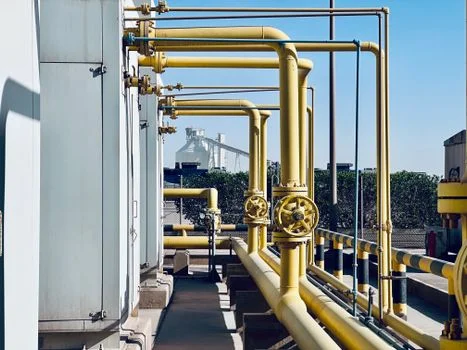
Cost-Benefit Analysis: IC Wastewater Treatment Plant ROI Framework
Calculating the Return on Investment (ROI) for an IC wastewater treatment plant involves a detailed assessment of capital expenditures, operational costs, and tangible and intangible benefits. A comprehensive ROI framework helps procurement teams and engineers justify the investment to stakeholders. The capital expenditure (CAPEX) for an IC system can be broken down into several key components. The IC reactor itself, including internal components and structural elements, typically ranges from $1.5M-$10M depending on capacity. Pre-treatment systems, crucial for semiconductor wastewater (e.g., fluoride precipitation, equalization), add $500K-$2M. Post-treatment units, such as aerobic polishing or advanced oxidation, range from $500K-$3M. Finally, civil works, including foundations, tankage, and utility connections, can account for $1M-$5M. Operational expenditure (OPEX) is a critical factor in long-term cost-effectiveness. Energy consumption, primarily for pumps and auxiliary equipment, generally falls between $0.10-$0.20/m³. Chemical costs, mainly for pre-treatment (e.g., pH adjustment, fluoride precipitation) and nutrient supplementation, average $0.05-$0.15/m³. Labor for monitoring and maintenance typically costs $0.05-$0.10/m³, and routine maintenance (parts, repairs) adds $0.10-$0.20/m³. Key ROI drivers for IC wastewater treatment plants include significant annual savings. Biogas recovery can offset 15% or more of the plant's energy consumption, translating into substantial utility cost reductions. Fine avoidance is a major financial benefit, with semiconductor fabs potentially saving $200,000 per year by achieving consistent regulatory compliance. Compared to MBR systems, IC pre-treatment can save $200,000 per year in membrane replacement costs by reducing the organic load and fouling potential on downstream polishing steps. Intangible benefits, while harder to quantify, are equally important: improved regulatory compliance mitigates legal risks, reduced unplanned downtime enhances productivity, and strong environmental performance provides significant advantages for ESG reporting and corporate reputation. A simplified ROI formula for an IC wastewater treatment plant can be expressed as: ROI (years) = Total CAPEX / (Annual Savings - Annual OPEX)IC Wastewater Treatment Plant ROI Framework (Illustrative for 150 m³/h System)
| Category | Cost/Benefit Description | Estimated Range (USD) | Notes |
|---|---|---|---|
| CAPEX Breakdown | |||
| IC Reactor | Core anaerobic reactor unit | $1.5M - $10M | Varies by capacity and materials |
| Pre-treatment System | Fluoride precipitation, equalization | $500K - $2M | Essential for semiconductor wastewater |
| Post-treatment System | Aerobic polishing, disinfection | $500K - $3M | For final effluent quality (e.g., TMAH, residual COD) |
| Biogas Recovery & Utilities | Gas holder, generator, piping, controls | $500K - $2M | For energy offset |
| Civil Works & Installation | Foundations, buildings, piping, electrical | $1M - $5M | Site-specific costs |
| Total Estimated CAPEX | $4M - $22M | Overall investment range | |
| OPEX Breakdown (per m³) | |||
| Energy Consumption | Pumps, blowers, instrumentation | $0.10 - $0.20 | Reduced by biogas recovery |
| Chemicals | Fluoride coagulants, pH adjusters, nutrients | $0.05 - $0.15 | For pre-treatment and process stability |
| Labor | Operations, monitoring, routine checks | $0.05 - $0.10 | Automation reduces labor needs |
| Maintenance | Parts, repairs, scheduled servicing | $0.10 - $0.20 | Long-term component durability |
| Total Estimated OPEX | $0.30 - $0.65 | Excludes biogas offset | |
| Annual Savings & Benefits | |||
| Fine Avoidance | Elimination of regulatory penalties | $100K - $500K | Based on historical violations |
| Energy Offset (Biogas) | Value of recovered energy | $50K - $200K | 15%+ energy demand reduction |
| Membrane Replacement Savings | Reduced costs vs. MBR (if applicable) | $100K - $300K | For hybrid systems or comparison |
| Reduced Downtime Costs | Improved reliability, fewer interruptions | $50K - $250K | Avoided production losses |
| Intangible Benefits | Compliance, ESG, brand reputation | High | Long-term strategic value |
Frequently Asked Questions
What is the typical lifespan of an IC reactor?
An IC reactor's structural components, primarily reinforced concrete or steel, typically have a lifespan exceeding 20-30 years with proper maintenance. Internal components like distribution systems and sludge collection systems may require replacement or refurbishment every 10-15 years, depending on material and operational conditions (HydropureWater data, 2025).How does IC technology handle varying influent loads?
IC reactors are highly robust against varying influent loads, thanks to their high biomass concentration and internal circulation. The granular sludge maintains a stable microbial community, allowing the system to buffer fluctuations in COD concentration and flow rate within typical operating ranges without significant loss of efficiency.What are the primary maintenance requirements for an IC plant?
Primary maintenance involves routine monitoring of pH, temperature, VFA levels, and biogas production. Granular sludge quality checks, occasional sludge withdrawal, and cleaning of internal distribution systems are also required. Automated chemical dosing for pre-treatment (e.g., fluoride) reduces manual intervention. See also: automated chemical dosing for fluoride precipitation.Can IC systems be integrated with existing treatment infrastructure?
Yes, IC systems are often integrated as a pre-treatment step for high-strength industrial effluents, feeding into existing aerobic polishing units or MBR systems. This modularity allows facilities to upgrade their treatment capacity and efficiency without entirely rebuilding their infrastructure, optimizing both CAPEX and OPEX. See also: semiconductor wastewater treatment: zero-liquid discharge (ZLD) integration for IC plants.What specific pre-treatment is essential for semiconductor wastewater in an IC system?
For semiconductor wastewater, essential pre-treatment includes pH adjustment and targeted fluoride precipitation (typically with CaCl₂ and NaOH) to reduce fluoride levels to below 5 mg/L. Equalization tanks are also crucial to buffer flow and load fluctuations, ensuring stable conditions for the anaerobic reactor.Related Equipment
- MBR systems for semiconductor wastewater — view specifications, capacity range, and technical data
- automated chemical dosing for fluoride precipitation — view specifications, capacity range, and technical data
- post-treatment disinfection for IC effluent — view specifications, capacity range, and technical data
Need a customized solution? Request a free quote with your specific flow rate and pollutant parameters.