What an Effluent Treatment Plant in Mumbai Must Actually Do
An effluent treatment plant in Mumbai is an engineered chain — equalisation, primary clarification, biological treatment (activated sludge, SBR or MBR) and tertiary polishing (DAF, UF, RO) — sized to bring trade effluent inside the parameter envelope the Maharashtra Pollution Control Board enforces under the Consent to Operate. A correctly specified MBR-based ETP produces an effluent filtered to under 1 μm, occupies roughly 60% less plot area than a conventional activated-sludge plant, and scales from 10 to 2,000 m³/day, which is why it has become the 2026 default for space-constrained Mumbai industrial estates.
The parameters that govern discharge into MPCB-consented receiving bodies, CETPs, or reuse streams are listed in the table below. These are the numbers a vendor must design against, not the headline flow rate alone.
| Parameter | Typical MPCB consent limit (inland surface discharge) | Why it matters in design |
|---|---|---|
| pH | 6.5 – 8.5 | Defines neutralisation stage sizing and chemical dose |
| Suspended Solids (TSS) | ≤ 100 mg/L (often ≤ 30 mg/L for CETP inlet) | Drives primary clarifier and MBR membrane selection |
| BOD (3-day, 27 °C) | ≤ 100 mg/L (≤ 30 mg/L for reuse) | Sets biological reactor volume and aeration demand |
| COD | ≤ 250 mg/L | Confirms biological efficiency and need for tertiary polishing |
| Oil & Grease (FOG) | ≤ 10 mg/L | Forces DAF or skimmer in pre-treatment |
| Ammoniacal Nitrogen (NH3-N) | ≤ 50 mg/L | Drives nitrification/denitrification sizing in biological stage |
| Residual Chlorine | ≤ 1.0 mg/L | Sets dechlorination or UV substitution in disinfection |
Where municipal water stress or consent conditions push the plant toward zero liquid discharge, the train extends beyond the above envelope into RO concentrate handling, mechanical vapour recompression (MVR) or brine evaporation, with capital and energy intensity rising sharply. Research on direct nanofiltration (Schrader, University of Twente, 2024) confirms that tight NF/RO membranes can polish secondary effluent to standards compatible with agricultural or indirect potable reuse — a useful tertiary option when the buyer is sizing for reuse rather than disposal.
Mumbai's Industrial Effluent Profile and Why It Matters for ETP Design
Every Mumbai ETP is sized against a specific influent envelope, and the dominant industrial profiles cluster into recognisable bands that drive technology choice. Pharmaceutical plants in MIDC Andheri and Turbhe generate high COD (often 2,000–8,000 mg/L) with variable pH and solvent traces. Textile and dye houses in Bhiwandi and Tarapur produce strong colour, high TDS, and a low BOD/COD ratio that signals refractory organics. Paint and ink units bring heavy metals and free oil; distilleries in the cane-processing belt deliver very high COD in the 15,000 mg/L range with deep colour; edible-oil refineries stream high FOG and BOD; and petrochemical refineries add phenols, refractory organics and free oil.
The chemistry of the stream — not the factory name — dictates the process train. A high-COD pharmaceutical wastewater typically needs Fenton oxidation upstream of a UASB + Anoxic/Oxic biological stage (a configuration documented in the chemical-park case studies, S4). A textile stream usually needs coagulation, colour removal and a DAF polish before biological treatment. A distillery or chemical plant that arrives at an ETP supplier with a "standard" biological-only quotation is a red flag — the chemistry will not match the hardware.
The first deliverable a credible Mumbai ETP supplier should produce is a treatability study or jar-test report referencing the actual influent data, not a generic proposal. Treatability work is what defines dose rates, residence time, and sludge yield before any reactor is poured. For plants with available land in the Tarapur or Mahape belts, constructed-wetland polishing (Lei, Wageningen University & Research, 2024) is worth evaluating as a low-O&M polishing step for trace organics.
Process Trains Used in Mumbai ETPs: Matching Influent to Technology
A Mumbai ETP proposal is only as strong as the match between the influent envelope and the unit operations in the train. The decision matrix below summarises the standard unit operations and their typical duty ranges so you can read vendor offers critically.
| Stage | Unit operation | Typical duty / design range | Best-fit applications in Mumbai |
|---|---|---|---|
| Pre-treatment | Rotary mechanical bar screen | Continuous headworks, 2–25 mm aperture | All plants; protects downstream MBR and pumps |
| Equalisation | Buffer tank + aeration | 6–12 hr hydraulic retention | Pharma, batch dye houses with variable flows |
| Primary | Lamella clarifier / high-efficiency sedimentation tank | 20–40 m/h surface loading, 30% lower coagulant dose vs conventional settling | TSS drop before biological stage; reduces reactor load |
| Biological | Activated Sludge / SBR / MBR | MBR effluent < 1 μm; 10–2,000 m³/day packaged capacities; 60% smaller footprint than CAS | Space-constrained Mumbai plots; tight BOD/NH3-N limits |
| Tertiary — FOG / TSS | Dissolved Air Flotation (DAF) | 4–300 m³/h; 13 standard models | Textile, food, dairy, refinery FOG polish |
| Tertiary — reuse / ZLD | UF → RO → evaporation | RO recovery 65–75% (single pass), 85–90% (two-pass) | Boiler-feed reuse, pharma, ZLD-mandated units |
| Disinfection | Chlorine dioxide or UV | UV dose ≥ 40 mJ/cm²; ClO₂ residual 0.2–0.5 mg/L | Final barrier before reuse or discharge |
| Sludge | Plate and frame filter press | 1–500 m² filtration area, hydraulic or PLC | Cake dryness 22–35% DS for MPCB-authorised TSDF disposal |
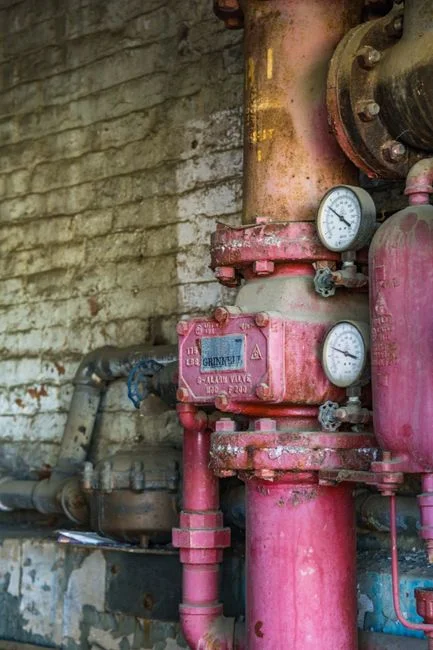
For the headworks, a continuous-duty rotary mechanical bar screen sized to site flow removes rags and grit that would otherwise blind pumps and membranes. The high-efficiency lamella-style sedimentation tank handles the primary TSS drop at a third lower coagulant consumption than conventional settling. The biological stage is where most Mumbai land-area is won or lost: an MBR membrane bioreactor for industrial ETPs delivers sub-1 μm effluent with a reactor footprint roughly 60% smaller than conventional activated sludge, packaged from 10 to 2,000 m³/day. Where the influent is variable and the load is light, submerged MBR flat-sheet membrane modules running at 32–135 m³/day per cassette with 0.1 μm pores consume an order of magnitude less energy than cross-flow designs. DAF pre-treatment for textile, dye and food effluent strips residual FOG and floatable solids after biological polishing. Disinfection closes the train — UV is preferred where chlorinated residuals would breach the MPCB consent. Finally, a sludge dewatering filter press handles the biosolids stream so the ETP scope does not end at clear water but at a cake dry enough for off-site disposal.
Capacity, Footprint and Civil Logic for a Mumbai ETP
Footprint is the single biggest reason Mumbai ETP buyers lean toward packaged MBR over conventional layouts. A 500 m³/day MBR plant typically needs around 250 m² of civil footprint including the membrane cassette bay and chemical skid area; the same duty as a conventional activated-sludge plant runs closer to 620 m² because of the larger aeration basin and secondary clarifier. For hospitality, campus and very small industrial loads where above-grade space is unavailable, a buried integrated STP with A/O contact oxidation at 1–80 m³/h lets you place the entire plant under a parking or landscaped area.
Plot integration matters as much as the technology choice. Chemical dosing skids should sit adjacent to the equalisation tank to minimise line runs, with the automatic dosing skid wired into a single control panel. The sludge press should be in a separate bay with truck access and a leachate drain, because Mumbai monsoon humidity raises the moisture content of dewatered cake if it is held in the open. RO and UF skids belong in a covered enclosure with ventilation, since high ambient humidity shortens membrane life and drives cleaning frequency up. If the plot is too small for a full biological + RO train, evaporation or MVR closes the loop — but at significant OPEX, so it is a constraint to plan around, not a default.
Sizing, CAPEX Intuition and What Drives Cost in 2026
Order-of-magnitude CAPEX bands for 2026 Mumbai industrial ETPs, drawn from recent project pricing, place small packaged STPs of 50 m³/day or less in the low-lakh-INR per m³/day range; mid-size MBR-based ETPs at 100–500 m³/day in the higher-lakh to low-crore per m³/day range; and large 1,000+ m³/day CETP-scale plants firmly in project-priced territory (HydropureWater field data, 2026). Two vendors quoting identical flow can still differ 30–50% because most of the spend sits in three line items: the biological reactor volume (which drives civil cost), the membrane area and replacement schedule for UF/RO/MBR (which drives consumable cost), and the sludge dewatering capacity (which drives downstream disposal cost).
OPEX is dominated by aeration energy in the aerobic BOD-removal stage, coagulant and polymer dose in primary and tertiary stages, anti-scalant and cleaning chemicals for the RO/UF, and the cost of disposing dewatered sludge to an MPCB-authorised TSDF. The 2026 trend in Mumbai is OPEX compression: tighter consent renewals and rising municipal water tariffs are forcing operators to recover energy from blowers, adopt lamella clarifiers that cut coagulant consumption by up to 30%, and tune MBR aeration cycles to match the diurnal load. Where reuse is on the table, RO recovery rates of 65–75% on a single pass and 85–90% on a two-pass train materially shift the cost-per-kilolitre of reused water — another number to pin during vendor evaluation.
Vetting a Mumbai ETP Supplier: 5-Step Procurement Checklist
- Demand a treatability study referencing your actual influent. A credible supplier runs a jar test and BOD/COD series on your wastewater before sizing any reactor. Generic proposals without a study should be rejected at the RFQ stage.
- Verify MPCB consent experience in Maharashtra. Ask for at least one operating reference inside the state with discharge test results you can audit. A vendor with no Maharashtra install base is a risk on consent paperwork.
- Lock the scope boundaries in writing. Confirm whether inlet works, biological stage, tertiary polishing, sludge dewatering, RO/ZLD, stack monitoring, and AMC/O&M are included or quoted as extras. The biggest 2026 RFQ disputes trace back to a missing line item.
- Pin performance guarantees numerically. Effluent parameter numbers, RO/UF recovery rates, expected membrane life, and penalty/remedy clauses for non-compliance must be in the contract — not in the sales pitch.
- Plan O&M and spares supply. Confirm the supplier's membrane, valve and chemical supply chain. A benchmark for what "covered" should look like is a stocked RO/UF membrane and filter element catalogue and a parts, valves and media inventory that supports 48-hour dispatch inside Maharashtra.
For buyers also evaluating STPs in other states, the Hotel Resort Wastewater Treatment in India 2026: Sizing, Technology & Compliance Guide covers the hospitality load profile, the Package Wastewater Treatment Plant in Bihar India: Costs, Suppliers & Compliance 2026 lays out a procurement approach for smaller northern plots, and the Rural Sewage Treatment in India: 2026 Engineering Guide to Decentralized STPs is the right reference for decentralised, low-O&M deployments.
Frequently Asked Questions
What is the typical MPCB discharge limit for BOD and COD in Mumbai?
For inland surface discharge under standard MPCB Consent to Operate conditions, the typical limits are BOD ≤ 100 mg/L and COD ≤ 250 mg/L, with TSS ≤ 100 mg/L (per MPCB consent schedule, 2025-08). Where the treated effluent is sent to a CETP, inlet norms are typically tighter at BOD ≤ 30 mg/L and TSS ≤ 30 mg/L.
What does MBR effluent quality look like for a Mumbai factory?
A correctly operated MBR delivers effluent with TSS typically below 1 mg/L (driven by the 0.1 μm flat-sheet membrane) and turbidity under 1 NTU, comfortably meeting MPCB reuse thresholds. BOD and COD removal of 95–99% is achievable, with NH3-N below 5 mg/L when the biological stage is sized for nitrification.
How much does an ETP cost in Mumbai in 2026?
For 2026 Mumbai industrial installations, small packaged STPs (≤ 50 m³/day) typically run from a few lakh INR per m³/day; mid-size MBR-based ETPs (100–500 m³/day) fall in the higher lakh to low crore per m³/day range; and large 1,000+ m³/day plants are bespoke (HydropureWater field data, 2026). The biological reactor volume and membrane area are the two largest cost drivers.
What is a CETP and when does it apply to a Mumbai factory?
A Common Effluent Treatment Plant (CETP) is a shared treatment facility, typically operated by an industrial association, that takes pre-treated effluent from member factories and polishes it to MPCB discharge norms. Mumbai factories in clustered MIDC areas — Bhiwandi, Tarapur, Taloja — are often mandated to send effluent to the local CETP, which sets the inlet envelope their own pre-treatment must meet.
Is ZLD mandatory for new Mumbai ETPs?
ZLD is not universal across Maharashtra, but MPCB has been tightening consent renewals in water-stressed industrial belts and increasingly specifies zero liquid discharge for new and expanding units in the MIDC clusters around Mumbai. Where ZLD applies, the train extends to RO concentrate evaporation or MVR, with materially higher CAPEX and OPEX.