What Is a Packaged MBR STP and Why Birmingham Hotels Use One
A packaged MBR sewage treatment plant is a factory-built, skid- or container-mounted unit that combines anoxic and aerobic activated sludge with submerged ultrafiltration membranes (typically 0.1 μm PVDF), eliminating the secondary clarifier and delivering reuse-grade effluent in roughly 60% less footprint than a conventional activated-sludge plant. For Birmingham city-centre and Solihull sites — where plantroom space is scarce, planning constraints are tight, and the site often sits within a conservation area — that footprint saving is the decisive engineering argument.
Hotel wastewater is a strong fit for MBR: MBR technology removes 90–95% of harmful substances from hotel wastewater and produces effluent suitable for non-potable reuse (Imemflo, hotel-sector data). The same source documents a 200-bed, 5-star luxury hotel reference plant running 250 m³/d on Imemflo hollow-fibre MBR since startup, with treated water meeting the wastewater reuse standard. Birmingham's 100–400 bed mid-market and luxury stock has a similar flow profile — variable, surfactant-rich, with significant F&B and laundry loading — and benefits from the same technology.
Packaged MBR units are delivered fully buried, semi-buried, or above-ground in a 20–40 ft ISO container, pre-wired and pre-plumbed, with only the inlet, outlet and power connection required on site. Containerisation matters for Birmingham: many hotel plots are constrained, listed, or adjacent to the city's Victorian sewer network, and minimal on-site civil work keeps both the build programme and the Section 106 planning risk down. A pre-engineered packaged MBR wastewater treatment system is the default choice for any 100–400 bed Birmingham hotel that needs reuse-grade effluent without building a below-ground concrete works.
UK Regulatory Framework: Consent, Building Regs and BS EN 12255
Any packaged MBR specified for a Birmingham hotel must satisfy four overlapping UK rule sets: the Environmental Permitting regime, the Water Industry Act 1991, Building Regulations Part H, and BS EN 12255. Getting these aligned at the spec stage is what separates a deliverable project from a consent deadlock.
- Environment Agency consent. A discharge to surface water or ground requires an environmental permit under the Environmental Permitting (England and Wales) Regulations 2016. For sanitary effluent under 5 m³/day to ground, a small sewage discharge exemption can apply, but anything larger — and any discharge to a surface watercourse — needs a full permit application. The MBR's 0.1 μm membrane barrier helps meet the permit's bacterial quality targets without tertiary sand filters.
- Section 107 sewer connection. Where a public sewer is available — almost always the case in Birmingham, served by Severn Trent — a Section 107 (Water Industry Act 1991) connection agreement is the alternative route. Severn Trent sets the trade-effluent quality limits (BOD, COD, TSS, ammoniacal nitrogen) that the MBR must hit, and the discharge must not exceed the consent volume.
- Building Regulations Part H. Approved Document H (Drainage and waste disposal) — and specifically Part H6 — governs installation of any packaged treatment plant, including siting, ventilation, access, and proximity to habitable buildings. Specifiers should confirm the unit's terminal vent, sampling chamber and access shaft details at design stage.
- BS EN 12255 design standard. BS EN 12255 is the European standard for wastewater treatment plant design (parts 1–16). For MBR, the relevant parts are BS EN 12255-3 (preliminary treatment) and BS EN 12255-15 (membrane filtration). Reputable packaged MBRs are designed to these standards as default.
| Regulation / Standard | Applies to | What it sets |
|---|---|---|
| Environmental Permitting Regulations 2016 | Discharge to surface water or ground | Permit quality limits, flow limits, monitoring |
| Water Industry Act 1991, Section 107 | Discharge to public sewer | Severn Trent trade-effluent consent |
| Building Regs Part H / Approved Doc H (H6) | Installation of treatment plant | Siting, access, ventilation |
| BS EN 12255-3 | Preliminary treatment | Screening, grit removal |
| BS EN 12255-15 | Membrane filtration | Membrane module design, CIP |
Sizing a Packaged MBR for a Birmingham Hotel: The Maths
The standard UK hotel-sizing benchmark is 0.20–0.25 m³ per occupied bedroom per day, drawn from the CIBSE Design Guide G public-health engineering chapter and widely cited in UK M&E briefs. To that, add food-and-beverage load (0.05–0.10 m³ per restaurant cover per day) and, if laundry is processed on-site, roughly 0.05 m³ per occupied room — many Birmingham hotels split laundry into a separate greywater stream, which simplifies the MBR's organics loading.
Design the inlet at 350–500 mg/L BOD and 700–900 mg/L COD — typical UK hotel mixed-sewage strength. Apply a 1.2–1.4 peaking factor for weekend occupancy, conferences and event surges; packaged MBRs absorb these well because the membrane flux is decoupled from the mixed-liquor suspended solids concentration, unlike a conventional clarifier.
| Hotel size (beds) | Avg. flow (m³/d) | Peak flow (×1.3) | BOD load (kg/d) | Recommended packaged MBR size |
|---|---|---|---|---|
| 100 (mid-scale, light F&B) | ~25 | ~32 | ~10 | 25–30 m³/d unit |
| 200 (full-service, restaurant, gym) | ~60 | ~78 | ~24 | 60–80 m³/d unit |
| 400 (luxury, spa, conference) | ~250 | ~325 | ~100 | 250 m³/d unit, parallel train option |
For the 200-bed case, the 250 m³/d Imemflo reference plant (HF MBR, treating to reuse standard) is directly comparable and confirms the size band. Birmingham specifiers should always run the calc both ways — by per-bedroom flow and by BOD load — and size to the larger of the two. Membrane modules are the long-lead, high-CAPEX item, so over-sizing the bioreactor tank by 10–15% is cheaper than retrofitting a second membrane cassette later. A flat-sheet PVDF membrane module in a DF-series cassette is the most common format for this flow range.
Hollow-Fibre vs Flat-Sheet MBR Membranes: Which Suits a Hotel?
For Birmingham hotel duty, the membrane-format decision matters more than the bioreactor tank geometry, because the influent contains hair, laundry lint and food particulates that challenge hollow-fibre (HF) modules disproportionately. The two formats behave very differently on this duty.
| Parameter | Hollow-fibre (HF) | Flat-sheet (FS) |
|---|---|---|
| Packing density | High (m²/m³) — smaller tank | Lower — larger cassette |
| CAPEX | Lower per m² of membrane | Higher, but cheaper maintenance |
| Fouling tolerance to hair/lint | Lower — fibres bundle and break | Higher — flat plates do not bundle |
| CIP interval (typical) | 2–3 months | ~6 months (S&L TITAN MBR field data) |
| Cassette replacement | Module-level, more involved | Individual plates, field-replaceable |
| Energy (submerged) | 0.3–0.6 kWh/m³ | 0.3–0.6 kWh/m³ (scour air integrated) |
| Suppliers | Suez, Dow/DuPont, Mitsubishi (HF) | Toray (FS), S&L flat-plate |
HF is the cheaper CAPEX option and has a strong installed base in hotels (Imemflo lists Suez, Dow, DuPont and Mitsubishi as HF suppliers for its hotel reference plant). FS costs more upfront but the ~6-month CIP interval versus 2–3 months for HF cuts chemical OPEX and operator time roughly in half — material on a small hotel engineering team. For a Birmingham hotel with on-site laundry, F&B outlets and high-occupancy weekend peaks, FS is the lower-risk format. Either way, specify 0.1 μm PVDF for >99.9% pathogen log reduction, relevant for any guest-facing reuse application. A flat-sheet PVDF membrane module in the DF series is a representative FS option for the 60–250 m³/d range.
Pretreatment, Reuse and Effluent Polishing for Birmingham Hotel Sites
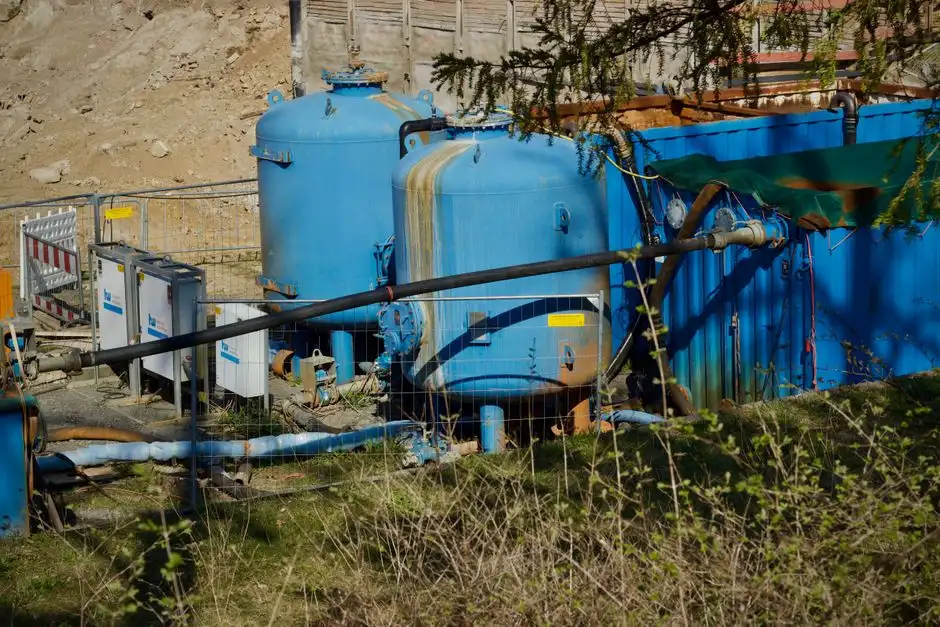
A packaged MBR is only as reliable as the headworks and polish steps around it. Birmingham hotel wastewater carries hair, food waste, lint and cooking fat — miss any of these in pretreatment and the membrane pays the price.
- Headworks. Specify 3 mm fine screening as the minimum (the S&L TITAN MBR ships with a 3 mm automatic fine screen as standard). For sites with food waste disposers, a 3 mm rotary fine screen upstream of the MBR is the right duty.
- Grease management. A grease interceptor upstream of the MBR is non-negotiable for any hotel kitchen. FOG loads will foul the membrane and increase CIP frequency well beyond the 6-month baseline.
- Effluent reuse. MBR permeate is suitable for toilet flushing, landscape irrigation, and — with a UV disinfection polish step or chlorine dioxide — cooling-tower make-up. UV at 40 mJ/cm² is the standard polish and is the lowest-energy route for a 60–250 m³/d hotel stream.
- Sludge handling. Packaged MBRs produce concentrated waste-activated sludge at typically 1–2% DS. A small sludge dewatering filter press dewatersto >18% DS cake, cutting off-site disposal mass by roughly 10× and the number of tanker visits per year.
CAPEX, OPEX and ROI: What a Birmingham Hotel MBR Actually Costs
Budget numbers for a UK hotel-scale packaged MBR in 2026 (equipment-only, ex-installation, ex-civils):
| Hotel size (beds) | MBR size | Indicative CAPEX (GBP) | OPEX (per m³ treated) | Indicative payback (vs mains) |
|---|---|---|---|---|
| 100 | 25 m³/d | £35,000–£60,000 | £0.04–£0.08 | 6–8 years |
| 200 | 60 m³/d | £80,000–£140,000 | £0.04–£0.08 | 5–7 years |
| 400 | 250 m³/d | £250,000–£400,000 | £0.04–£0.08 | 4–6 years |
OPEX is dominated by membrane aeration energy (0.3–0.6 kWh/m³ at UK 2026 industrial tariffs of roughly £0.25/kWh) and chemical CIP every 6 months for FS or 2–3 months for HF. Reuse for toilet flushing and irrigation can offset 30–50% of mains water demand — payback typically 5–8 years for a 200-bed Birmingham hotel, faster where Severn Trent trade-effluent charges are high. For a like-for-like like-for-like MBR vs MBBR vs SBR for sewage comparison, MBR wins on effluent quality and reuse potential; MBBR and SBR win on lower CAPEX if reuse isn't required. If reuse isn't a project driver and a mains sewer is available, a WSZ underground integrated sewage treatment unit is the cheaper CAPEX route, but it does not produce reuse-grade effluent.
Procurement Checklist: 7 Questions to Ask Any Packaged MBR Supplier
Run this list on every supplier call. Any "we'll come back to you" on more than two of these is a red flag.
- Is the unit designed and built to BS EN 12255-3 and 12255-15, and is it pre-wired and pre-plumbed in your factory (not assembled on site)?
- What membrane format and material do you supply (HF vs FS, PVDF, 0.1 μm), and what is the guaranteed membrane life in years?
- What is the documented CIP interval for hotel duty, and what is the annual chemical consumption in litres and GBP?
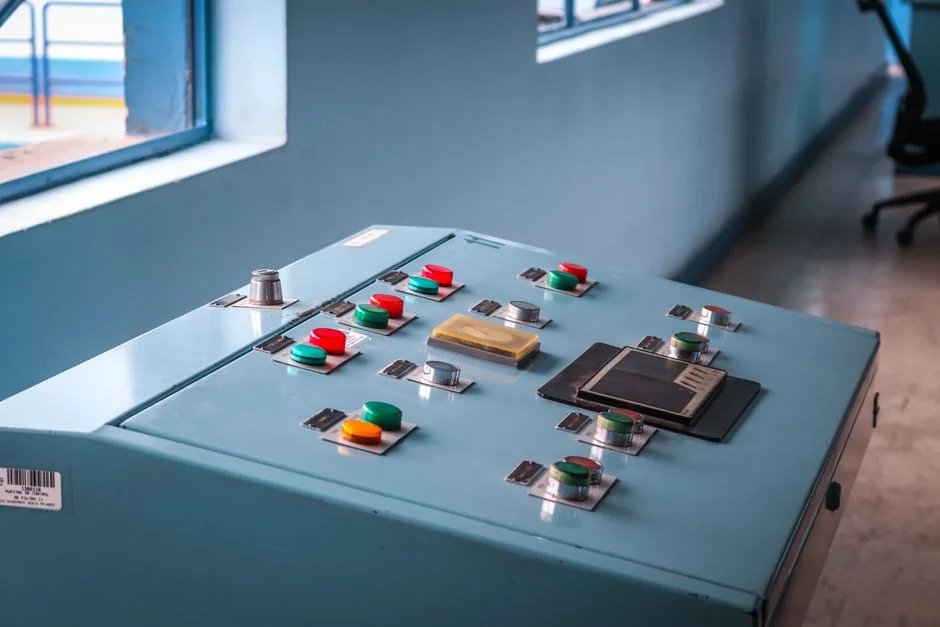
- Does the PLC offer remote monitoring as standard, and what telemetry (4G, Modbus, BACnet) is included for off-site service?
- What is the guaranteed effluent quality against BS EN 12255-15 — typically BOD <10 mg/L, TSS <5 mg/L, NH₃ <5 mg/L — and is it written into the warranty?
- Can the unit be containerised in a standard 20-ft or 40-ft ISO footprint for delivery to a constrained Birmingham site, and what is the lifted weight?
- What does spares logistics look like (membrane modules, blowers, diffusers), and what is your guaranteed UK service response time in hours?
A compliant packaged MBR wastewater treatment system with a credible UK service footprint is the first filter; consumables such as replacement RO/UF membrane elements should be on a defined lead-time, not a best-effort basis. Specifiers working on adjacent regional projects can also review parallel guidance on packaged MBR STP for hotels in Dubai and packaged MBR STP for hotels in Abu Dhabi for duty and climate comparisons, and the hotel resort wastewater treatment in India guide for a tropical-flow reference.
Frequently Asked Questions
How do I size a packaged MBR for a Birmingham hotel?
Size at 0.20–0.25 m³ per occupied bedroom per day (CIBSE Guide G), add 0.05–0.10 m³ per restaurant cover and 0.05 m³ per room if laundry is on-site, then apply a 1.2–1.4 peaking factor. A 200-bed full-service hotel lands at roughly 60 m³/d average and 78 m³/d peak.
Do I need an Environment Agency consent for a packaged MBR in Birmingham?
Yes if you discharge to surface water or ground — apply under the Environmental Permitting Regulations 2016. Sanitary discharges under 5 m³/day to ground can use a small sewage discharge exemption. If a public sewer is available, a Section 107 agreement with Severn Trent is the alternative.
What effluent quality can a packaged MBR realistically guarantee?
A BS EN 12255-15 compliant packaged MBR with 0.1 μm PVDF membranes typically guarantees BOD <10 mg/L, TSS <5 mg/L and NH₃ <5 mg/L, with >99.9% pathogen log reduction. The Imemflo hotel reference plant confirms treated water meets the wastewater reuse standard in continuous service.
What does a packaged MBR cost for a 200-bed Birmingham hotel?
Budget £80,000–£140,000 equipment-only CAPEX for a 60 m³/d unit in 2026, with OPEX of £0.04–£0.08 per m³ treated. Reuse for toilet flushing and irrigation can offset 30–50% of mains water demand, giving a typical payback of 5–7 years.