Why Santiago's water politics now define every fab and data-hall permit
Chile has been under a national mega-drought declaration since 2010, and the Maipo/Mapocho basin supplying metropolitan Santiago is the most stressed in the country (2024-09, restofworld.org). Sixteen of Chile's 22 approved data centers sit inside that metropolitan ring, and the Boric administration announced 28 additional projects in 2024, all of which now face a citizen-activist base that files SEIA observations as a first-line tactic. In early 2024, Santiago's environmental tribunal partially revoked a hyperscale data-center permit over water stress, forcing the operator to redesign a project valued at roughly $200M (2024-09, restofworld.org; bw-water.com, 2025). That ruling is now the political reference point every 2026 specification has to price in. The Google Quilicura data center was authorized for 50 L/s (over 1 BL/yr) from underground wells, and its second site for 228 L/s (over 7 BL/yr) — both approved via DIA rather than a full EIA, both now politically radioactive (2024-09, restofworld.org). A 1 MW water-cooled data hall draws approximately 25 ML/yr, so a 100 MW campus sits in the same water-demand bracket as a mid-sized Chilean city. SEIA evaluations currently run at a 94% approval rate, but the Huechuraba and Quilicura cases show that post-approval litigation is now the real bottleneck. Any new project extracting above ~50 L/s is effectively EIA territory, even when the legal pathway on paper is still a DIA. Engineering teams in 2026 are therefore designing for a regulator that reads permit volumes as political exposure, not just hydrology.
The Chilean rulebook: D.S. 90, D.S. 609, NCh 1333 and SEIA explained
D.S. 90/2000 of the Ministerio del Medio Ambiente is the national industrial effluent standard that any fab or data-hall drain must meet at the discharge point. It sets pH 6.0–8.5, ceilings on suspended solids, oils and greases, and metal-by-metal limits for Al, As, Cd, Cu, Cr, Hg, Ni, Pb and Zn that bind every fab acid, CMP and rinse stream. D.S. 609/1998 governs sewer discharges to sanitary utilities such as Aguas Andinas — the practical route for any data hall that prefers to send cooling-tower blowdown to a municipal treatment plant rather than the Maipo river. NCh 1333 sets receiving-water quality, which constrains the cumulative load any tributary can absorb and effectively caps how many fabs a given watershed can host. The SEIA pathway is binary: an EIA (full Environmental Impact Study) is mandatory for projects above defined extraction or capacity thresholds, while a DIA (Declaration of Environmental Impact) covers smaller projects with self-assessed impact. Above approximately 50 L/s of fresh extraction, projects are routinely pushed into EIA review because the volume triggers political exposure even where a DIA is technically defensible. The Superintendencia del Medio Ambiente (SMA) is the enforcement body, with sanction powers that include temporary closure, fines and reputational damage that reaches shareholders. The 2014 National Adaptation Plan and Chile's Agenda 2030 commitments to SDG 6 sit underneath all of this as the policy backdrop the regulator is operating within (2020-12, isahp.y2020.044). For a 2026 spec, that means the legal floor is D.S. 90 at the discharge point, the ceiling is the cumulative load NCh 1333 allows in the receiving water, and the project-approval ceiling is effectively set by SEIA and SMA practice rather than the statute alone.
Mapping fab and data-hall streams to Chilean discharge limits
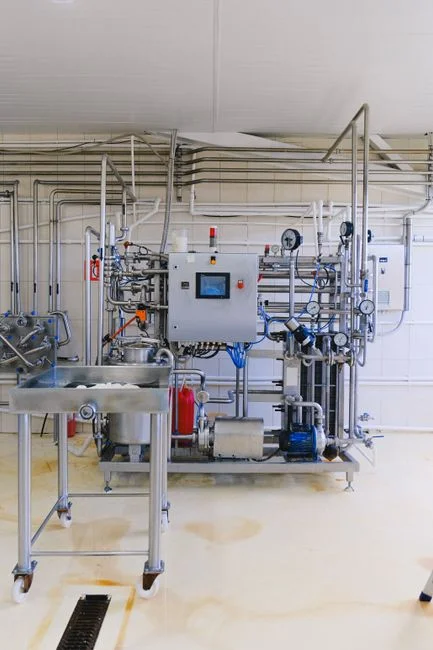
Segregation is not optional in a Chilean fab. HF, HCl and H2SO4 etch streams, NH3-bearing rinses, CMP slurry waste, RCA cleaning acid waste, photoresist solvent waste, and PFAS-bearing specialty rinses must be kept on physically separate drain lines; mixing them produces reactions, fugitive gas and a final effluent that cannot meet D.S. 90 ceilings for any of the regulated metals or for fluoride (2026, ide-tech.com). CMP alone accounts for 30–40% of total fab wastewater volume, carrying Cu, Ni, tungsten, colloidal silica and abrasive slurry that pushes D.S. 90 metal ceilings directly. HF etch waste routinely runs above receiving-water fluoride limits, and the baseline treatment is calcium precipitation followed by lamella clarification. Ammonia and total nitrogen require biological polishing — nitrification/denitrification — before any discharge; this is the most common compliance failure on fab sites because designers underestimate the NH3 load from RCA and CVD tool rinses. PFAS is now in scope: the U.S. EPA's CERCLA designation treats PFAS as a hazardous substance, and Chilean operators are under informal pressure to align with that direction in 2026 even where local MCLs have not yet been published (bw-water.com, 2025; ide-tech.com, 2026). Data-hall cooling-tower blowdown, humidification drain and once-through cooling water have very different profiles — they hit D.S. 90 on pH, temperature, suspended solids and trace metals from corrosion inhibitors, but they do not carry HF, CMP solids or PFAS. A defensible P&ID maps every segregated line to its target parameter before the drain geometry is fixed.
| Stream | Key D.S. 90 / D.S. 609 parameters | Baseline treatment | Reuse potential |
|---|---|---|---|
| HF / HCl / H2SO4 etch | Fluoride, pH 6.0–8.5, TSS | Ca precipitation, lamella clarifier | Industrial service / scrubber water |
| CMP slurry | Cu, Ni, W, TSS, colloidal silica | Metals precipitation (NaOH/Na2S) + clarification + UF | RO feed after UF polish |
| NH3 / RCA acid rinses | Total N, pH, COD | MBR or SBR nitrification/denitrification | Cooling-tower make-up |
| Photoresist / solvent | COD, TOC, sulfide | AOP (UV/H2O2) + biological | RO concentrate management |
| PFAS-bearing rinses | PFAS, TOC | High-rejection RO + GAC / IX | UPW return loop only |
| Cooling-tower blowdown (data hall) | TDS, conductivity, biocides, temperature | Side-stream filtration + RO | Cooling-tower make-up (closed loop) |
Designing the 2026 treatment train: from segregated drains to 85–90% reuse
The treatment train that is defensible to the SMA in 2026 starts with segregated collection: HF, alkaline, CMP, NH3 and PFAS lines are kept on independent pipework with sample ports at every junction, because once they are mixed the resulting effluent cannot legally meet D.S. 90 (2026, ide-tech.com). Step two is primary treatment — pH neutralization, calcium precipitation for fluoride, metals precipitation with NaOH or Na2S, and lamella clarification for TSS. Sludge yield from this stage typically runs 3–6 kg DS per m³ treated and is sent to a plate-and-frame filter press for volume reduction. Step three is biological treatment: an MBR membrane bioreactor running nitrification/denitrification, which polishes NH3 and COD down to the levels D.S. 90 expects and offers roughly 60% smaller footprint than conventional activated sludge — a real advantage on a constrained Santiago site. Step four is the reuse loop: a multi-media filter to drop SDI below 3, followed by an industrial RO system at 70–95% recovery, then EDI and UV polishing to return treated water to the UPW header. Step five is brine handling: thermal or brine-concentrator polishing for projects where ZLD is the political requirement, with the concentrate sent to secured sludge handling. Step six is PFAS polishing via high-rejection RO plus activated carbon or ion exchange, driven by EPA CERCLA alignment (bw-water.com, 2025; ide-tech.com, 2026). The realistic 2026 recovery target for a fab is 85–90% — IDE's reference plants run in that band — with the remaining 10–15% as brine and filter cake. A pure data hall without fab chemistry can skip steps one and six, and concentrate on cooling-tower blowdown polishing plus closed-loop cooling make-up, which is why a hyperscaler-only site has a fundamentally simpler train than a fab.
Choosing the right equipment: UF, RO, MBR, DAF and filter press for Santiago projects
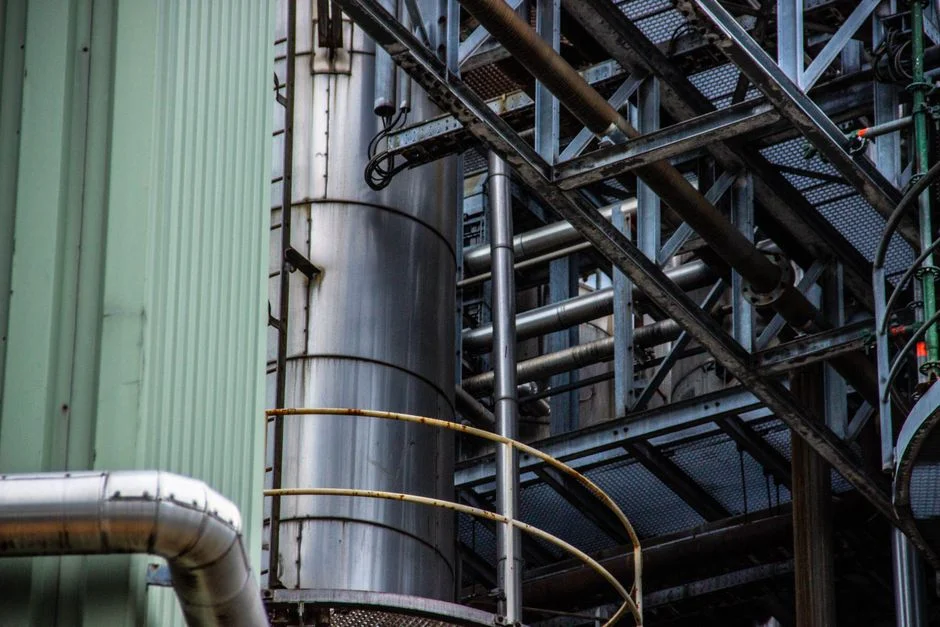
Procurement in 2026 has to convert the process flow into a bill of materials that ships inside a 6–9 month window. Pre-RO, a multi-media filter sized for 100–500 m³/h is the workhorse for bringing SDI below 3, with parallel vessels for redundancy during CIP cycles. The RO skid itself is an industrial RO system at 70–95% recovery, PLC-controlled, with integrated CIP and antiscalant dosing; for a 100 m³/h fab drain this typically means two parallel skids rather than one oversized unit, because Santiago's seismic and power-availability profile makes redundancy a permit expectation, not a luxury. Ammonia polishing uses an MBR membrane bioreactor in the 10–2,000 m³/day packaged range, delivering <1 μm effluent at roughly 60% of the footprint of an equivalent CAS basin. A hollow-fiber UF skid at 0.03–0.1 μm PVDF with automatic backwash and air scour handles both the CMP-solids barrier upstream of RO and the final polish on the reuse loop. Chemical dosing is delivered through a PLC-controlled chemical dosing package covering coagulant, flocculant, pH adjustment and antiscalant — mandatory for fluoride precipitation and for keeping the RO recovery rate at 90%+ without fouling. Sludge handling is a plate-and-frame filter press in the 1–500 m² range to drop sludge volume before offsite disposal, with cake wash and automatic cloth shake as the default options for fab chemistries. Disinfection on the reuse loop is a UV disinfection unit sized for the peak reuse flow — no DBPs, no taste change, no chlorine demand on the UPW header. Sizing logic for Santiago fabs typically lands at 100–500 m³/h on the RO train, 50–200 m³/day on the MBR, and 5–20 m³/h on the UF polish; data-hall-only sites sit at the lower end of each band.
| Unit | Typical size (Santiago project) | Key spec | Function in the train |
|---|---|---|---|
| Multi-media filter | 100–500 m³/h | SDI < 3 outlet | Pre-RO solids reduction |
| MBR | 10–2,000 m³/day | <1 μm effluent, 60% smaller than CAS | NH3 and COD polishing |
| UF (hollow-fiber PVDF) | 5–20 m³/h | 0.03–0.1 μm, auto backwash | CMP barrier + reuse-loop polish |
| RO (industrial) | 100–500 m³/h | 70–95% recovery, PLC + CIP | Bulk ion removal, reuse feed |
| Chemical dosing | Skid-mounted | PLC-controlled, multi-stream | Coagulant, flocculant, pH, antiscalant |
| Plate-and-frame filter press | 1–500 m² | Auto cloth shake, cake wash | Sludge volume reduction |
| UV sterilizer | Sized to peak reuse | No DBP formation | Reuse-loop disinfection |
2026 procurement checklist: what to put in the technical specification
The technical specification that survives SMA review in 2026 has to make several non-negotiable items explicit. Mandate segregated drain design with sample ports at every junction for HF, CMP, NH3, RCA and PFAS lines, and require that mixing of incompatible streams is prevented by physical separation rather than procedural control. Require 80–90% overall recovery, verified by on-line recovery metering and a documented water balance, not by calculated estimates. Require D.S. 90 and D.S. 609 compliance to be demonstrated at the discharge point, not at the treatment outlet, because Aguas Andinas and the SMA both read the regulation that way. Require a closed-loop UPW return line to the fab UPW header with continuous conductivity, TOC and silica monitoring, with an automatic divert-to-drain on any out-of-spec event. Require a PFAS management plan aligned to EPA CERCLA reporting thresholds and the direction Chilean enforcement is taking in 2026 (bw-water.com, 2025). Require a brine and sludge disposal plan — filter press cake characterization, hauling contract, secured disposal site — to be in place before commissioning, not after. Require a 12-month O&M proposal that includes remote monitoring and a defined response time, in line with the resilience logic the Chilean sanitary sector already uses for telecontrolled infrastructure investment (2020-12, isahp.y2020.044). Finally, require seismic-rated skids and dual power feeds for the RO and MBR, because Santiago's grid and seismic profile make single-point utility failure a real scenario.
Frequently Asked Questions
Does a Santiago fab or data hall need an EIA or a DIA under SEIA in 2026?
Projects extracting above ~50 L/s are routinely pushed into full EIA review because of political exposure after the 2024 Quilicura/Huechuraba rulings; smaller projects can still use a DIA, but the 94% approval rate on DIAs is no longer a reliable protection against post-approval litigation (2024-09, restofworld.org).
Which D.S. 90 parameters matter most for a segregated fab drain?
pH 6.0–8.5, suspended solids, fluoride from HF etch, metals (Cu, Ni, W, Pb) from CMP, total nitrogen from NH3/RCA rinses, and — increasingly — PFAS, where Chilean operators are aligning to EPA CERCLA reporting expectations in 2026 (ide-tech.com, 2026; bw-water.com, 2025).
What overall water recovery is realistic for a 2026 Santiago fab?
85–90% overall recovery is the realistic target for a high-recovery RO plus UF polish train with segregated drains, with the remaining 10–15% as brine and filter cake; ZLD is technically feasible but only justified where the political cost of any discharge is unacceptable (2026, ide-tech.com).
Can a hyperscale data hall skip the fab-specific treatment steps?
Yes — a data-hall-only site without HF, CMP, NH3 or PFAS chemistry can drop the segregated drain system and PFAS polishing, and concentrate on cooling-tower blowdown polishing plus closed-loop make-up, which is why hyperscaler-only projects have a fundamentally simpler treatment train than a fab (2024-09, restofworld.org).