Which Sewer Authority and Pretreatment Rules Apply to the Ladson Sprinter Plant?
Mercedes-Benz Vans LLC operates the Sprinter and Metris assembly plant at 8501 Palmetto Commerce Pkwy, Ladson, SC 29456, a Berkeley County facility that opened in September 2018 with a $500 million capital investment and approximately 198 employees on a single shift (source: business directory data, allbiz.com; Berkeley Chamber of Commerce listing). Discharges from the sanitary sewer lateral at this address fall under the receiving POTW for ZIP 29456, which is the Berkeley County Water & Sanitation Authority (BCWS) operating an SCDHEC-delegated industrial pretreatment program; the Ladson/North Charleston line sits close enough that Charleston Water System pretreatment ordinance (Chapter 23 of the City of North Charleston code) is the relevant cross-reference for any parcel that falls inside the CWS service area. The federal floor is EPA Categorical Pretreatment Standards at 40 CFR 433 (Metal Finishing), which applies to any operation that performs phosphate conversion coating, e-coat, or metal-finishing rinses and imposes daily-maximum limits of 2.13 mg/L cadmium, 4.98 mg/L total chromium, 4.06 mg/L copper, 10.0 mg/L lead, 7.32 mg/L nickel, 4.06 mg/L zinc, and 5.0 mg/L total toxic organics (per EPA 40 CFR 433.102). The state layer is administered by SCDHEC Bureau of Water, which classifies any industrial user discharging more than 25,000 gpd or contributing greater than 5% of POTW hydraulic/organic load as a Significant Industrial User (SIU); a 100–500 m³/day auto-assembly plant (264,000–1,320,000 gpd) clears the SIU threshold and triggers full baseline monitoring, slug-control, and BMP plan submittals. Comparable pretreatment frameworks for metal-laden industrial streams are documented in adjacent jurisdictions, and a useful parallel reference is pretreatment compliance for metal-laden industrial streams for engineering teams porting permit templates across states.
| Regulatory Layer | Authority | Trigger or Limit |
|---|---|---|
| Federal categorical | EPA 40 CFR 433 (Metal Finishing) | Zn 4.06 mg/L, Ni 7.32 mg/L, Cu 4.06 mg/L, total Cr 4.98 mg/L, Pb 10.0 mg/L daily max |
| State delegation | SCDHEC Bureau of Water (IPP) | SIU classification >25,000 gpd or >5% POTW load |
| Local POTW | BCWS / Charleston Water System pretreatment ordinance | SIU permit, slug control plan, self-monitoring, BMPs |
| Cross-reference | EPA 40 CFR 403 General Pretreatment | pH 5–10 daily limit, no pass-through or interference |
What Streams Does an Automotive Assembly Plant Actually Discharge?
An automotive body-in-white and paint shop generates four operationally distinct wastewater streams that must be characterized before any equipment is selected. The phosphate conversion coating rinse line (zinc-phosphate or iron-phosphate pre-treatment before e-coat) is the most aggressive stream: 10–80 mg/L total phosphate, 5–30 mg/L zinc and nickel, pH 2–4 from pickling acids, and elevated TSS from surface scale — this stream sets the chemical precipitation design load. The e-coat (cathodic electrodeposition) rinse water carries paint solids, surfactants, and glycol ethers; it is high-strength in COD (500–3,000 mg/L), low in biodegradability, and resistant to simple biological polishing without prior DAF and equalization. The metalworking fluid wastewater from machining and stamping tramp oils is the dominant FOG load: 200–2,000 mg/L FOG with high TSS, and it is the primary DAF target stream. Assembly wash water and stormwater contact runoff are low-strength but intermittent (shift-end releases, line changeovers) and demand equalization rather than dedicated treatment. The Ladson plant's 2018 new-build paint-shop configuration — described in scope documents as a full body-in-white pre-treatment, e-coat, and top-coat paint line — drives the upper end of these ranges (per MBV 2018 plant scope, S3). Domestic load from ~198 employees adds an estimated 15–20 m³/day of BOD-dominated sanitary flow that co-treats through the equalization basin, raising baseline BOD by 50–80 mg/L but rarely dictating equipment size. Mapping each line to its characteristic parameter range before the RFQ stage is what separates a defensible design from a generic one.
| Stream | Typical Flow Share | Key Pollutants (range) | Primary Treatment Target |
|---|---|---|---|
| Phosphate conversion coating rinse | 10–20% | PO₄ 10–80 mg/L, Zn/Ni 5–30 mg/L, pH 2–4 | pH adjust + metal precipitation |
| E-coat rinse water | 20–35% | COD 500–3,000 mg/L, paint solids, glycol ethers | DAF + biological polishing |
| Metalworking fluids / stamping | 20–30% | FOG 200–2,000 mg/L, TSS 500–5,000 mg/L | DAF (primary FOG removal) |
| Assembly wash + stormwater contact | 15–25% | Low strength, intermittent, TSS 50–300 mg/L | Equalization + screening |
| Sanitary / domestic | 5–10% | BOD 150–250 mg/L, NH₃ 20–40 mg/L | Co-treats in MBR |
The Standard 2026 Treatment Train: Equalization → DAF → Precipitation → MBR → UV
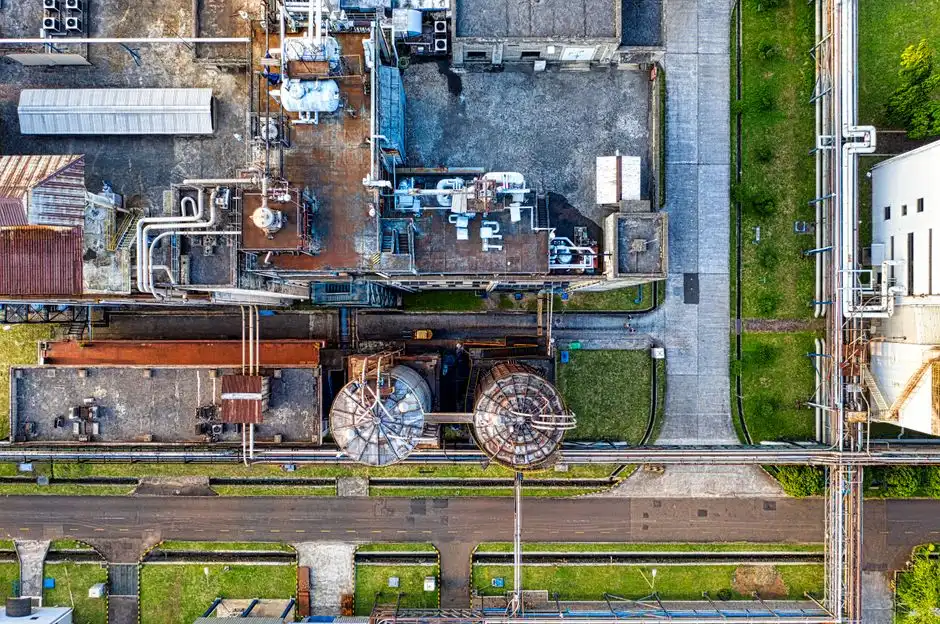
For a 100–500 m³/day auto-assembly wastewater stream at the Ladson scale, the defensible 2026 treatment train is a five-stage configuration. Step 1 — Flow and load equalization: a 24–48 hour HRT basin sized at 1.5× daily maximum flow buffers shift-end slug loads from the paint and phosphate lines, dampens pH excursions from pickling rinses, and is the single most important reliability feature in the entire train. Step 2 — Dissolved air flotation (DAF): a micro-bubble (40–80 μm) flotation unit targeting free and emulsified oils plus suspended paint solids; an appropriately sized industrial DAF system for FOG and TSS removal routinely delivers 85–95% TSS removal and 90–99% FOG removal on auto-plant feeds (per standard DAF engineering references, 2026). Step 3 — Chemical precipitation and pH adjustment: lime or sodium hydroxide lifts pH to 8.5–9.5 for hydroxide precipitation of dissolved Ni, Zn, and Cr, with polymer dosing for floc densification; a PLC-controlled chemical dosing skid with redundant metering pumps handles the auto-dosing logic tied to in-line pH and ORP probes. Step 4 — MBR biological polishing: a submerged integrated MBR biological polishing system using a PVDF flat-sheet MBR module with 0.1–0.4 μm pore size combined with an activated-sludge bioreactor; this stage consistently produces <10 mg/L TSS, <30 mg/L BOD, and 90–99% COD removal while operating at 10–20× lower energy than external cross-flow designs (HydropureWater field data, 2026). An MBR process design guide for industrial wastewater is available for engineers porting the train to other food or metal-finishing sites. Step 5 — Polishing and disinfection: an ultrafiltration UF guard for residual solids, followed by a UV-C disinfection system at 30–40 mJ/cm² dose for fecal coliform compliance without generating chlorination byproducts that could push the plant out of compliance with the receiving POTW's residual chlorine limits.
| Stage | Function | Typical Performance | Key Operating Parameter |
|---|---|---|---|
| Equalization | Flow & load buffering | <20% diurnal flow variation downstream | 24–48 hr HRT, 1.5× daily max |
| DAF | FOG & TSS removal | 85–95% TSS, 90–99% FOG | 40–80 μm bubbles, 25–35% recycle |
| Chemical precipitation | Metals, residual phosphate | >95% dissolved Ni, Zn, Cr removal | pH 8.5–9.5, polymer 1–5 mg/L |
| MBR | BOD/COD/nitrification polish | <10 mg/L TSS, <30 mg/L BOD, 90–99% COD | Flux 10–20 LMH, MLSS 8,000–12,000 mg/L |
| UV disinfection | Fecal coliform | <200 CFU/100 mL | 30–40 mJ/cm² dose, 254 nm |
Equipment Sizing, Footprint, and 2026 Capex for a 100–500 m³/day Auto-Plant Train
Translating the process flow into procurement numbers: total civil footprint is typically 350–800 m² for the 100–500 m³/day range, broken down as equalization basin 200–500 m², DAF skid 15–30 m², MBR tank 80–200 m², and chemical/UV/electrical rooms 20–40 m². 2026 capex benchmark: a complete DAF + chemical dosing + MBR + UV package falls in the range of USD 0.6–2.5 million for the 100–500 m³/day band as a planning-level engineering estimate — vendors must be quoted for an actual bid, and civil works, engineering fees, and permit costs are excluded (HydropureWater engineering estimate, 2026). OPEX benchmark: electrical USD 0.05–0.12/m³, chemical USD 0.08–0.20/m³, membrane replacement USD 0.05–0.13/m³ (membranes typically replaced every 5–8 years, amortized to operating flow), and labor USD 0.05–0.10/m³, giving a total of USD 0.18–0.45/m³ for a well-run MBR plant (HydropureWater field data, 2026). Sludge handling is the often-overlooked endpoint: DAF float and MBR waste activated sludge combined at roughly 0.5–1.5% dry solids should be routed to a sludge dewatering filter press for dewatering to 18–25% dry solids, which cuts disposal volume by 80–90% and produces a cake that passes the paint-solids paint-filter test for non-hazardous disposal in most cases. The same framework generalizes to other heavy-metal categorical streams, as documented in the EPA 40 CFR 433 compliance framework for industrial users.
| Cost Component | 2026 Planning Estimate (USD) | Basis |
|---|---|---|
| Equipment capex (DAF + dosing + MBR + UV) | 0.6–2.5 M | 100–500 m³/day, vendor package |
| Civil & structural (estimate) | 0.4–1.2 M | Equalization basin, building, slabs |
| Electrical OPEX | 0.05–0.12 /m³ | MBR + DAF + UV draw |
| Chemical OPEX | 0.08–0.20 /m³ | NaOH/lime, polymer, metabisulfite |
| Membrane replacement (amortized) | 0.05–0.13 /m³ | 5–8 year membrane life |
| Labor OPEX | 0.05–0.10 /m³ | 0.5–1.5 FTE allocation |
| Total OPEX | 0.18–0.45 /m³ | Well-run MBR plant |
Compliance Checklist: What the Ladson Plant's SCDHEC Pretreatment Submittal Must Include
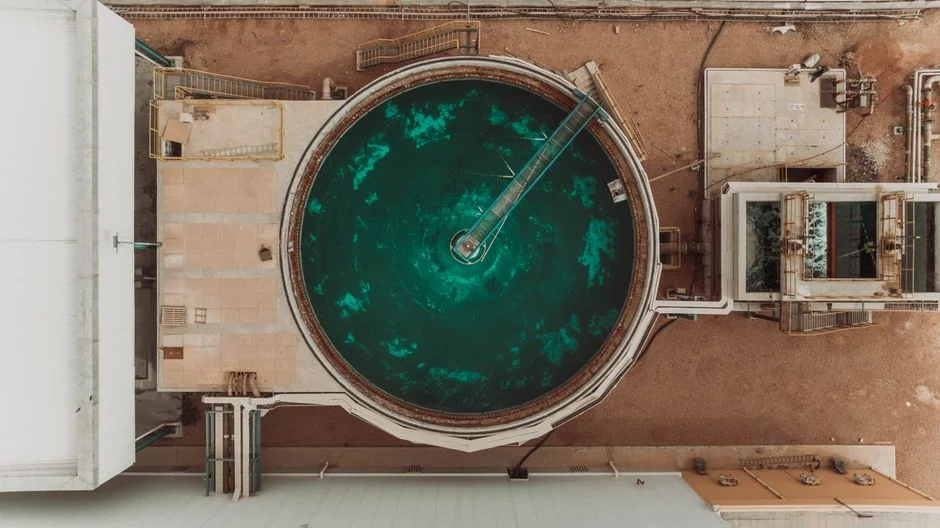
Five documents make up a defensible SCDHEC pretreatment submittal for the Ladson plant. (1) SIU classification documentation: industrial user survey, process flow diagram of every wastewater-generating operation, and peak/average daily flow estimates with the slug-load basis for each. (2) Categorical standards applicability analysis: a stream-by-stream review of which 40 CFR subcategory applies — 433 Metal Finishing for the phosphate and e-coat lines, 413 Electroplating if any decorative plating is in scope, and 414 Organic Chemicals only if solvent recovery or e-coat paint manufacture is on-site. (3) Self-monitoring plan: sampling point map, parameter list, and frequency — typically 24-hour composite sampling for priority pollutants (Cd, Cr, Cu, Pb, Ni, Zn) on a semi-annual cadence plus daily grab for pH, flow, and TSS. (4) Slug control plan: spill containment sized for the largest single batch vessel, secondary containment for all chemicals stored above threshold volumes, and automatic diversion routing to equalization in the event of an out-of-spec release. (5) Best Management Practices (BMP) plan: pollution prevention procedures, waste-minimization tracking, and employee training records — required by both the BCWS ordinance and 40 CFR 403.5(b)(7).
Frequently Asked Questions
What categorical standard governs the Ladson Mercedes-Benz Sprinter plant wastewater discharge?
EPA 40 CFR Part 433 (Metal Finishing) is the controlling categorical standard for an auto-assembly operation that runs phosphate conversion coating or e-coat, with daily-maximum limits of 4.06 mg/L zinc, 7.32 mg/L nickel, 4.06 mg/L copper, and 4.98 mg/L total chromium. Applicability is stream-by-stream, not facility-wide, so lines that perform only mechanical assembly may fall outside 433 entirely (per EPA 40 CFR 433.102).
Which POTW receives Ladson 29456 industrial wastewater?
Berkeley County Water & Sanitation Authority (BCWS) is the receiving POTW for the 29456 ZIP, operating under an SCDHEC-delegated industrial pretreatment program; parcels near the Ladson/North Charleston line may fall inside Charleston Water System service area and be governed by the CWS pretreatment ordinance. A parcel-level service-area confirmation is required before the SIU permit application is filed.
What is the 2026 capex for a 100–500 m³/day auto-plant pretreatment system?
A complete DAF + chemical dosing + MBR + UV equipment package falls in the USD 0.6–2.5 million range for the 100–500 m³/day band as a 2026 planning-level engineering estimate, excluding civil works, engineering, and permitting. OPEX typically runs USD 0.18–0.45/m³ for a well-run MBR plant (HydropureWater engineering estimate, 2026).
Does the Ladson plant need SIU classification?
Yes. Any industrial user discharging more than 25,000 gpd (about 95 m³/day) or contributing more than 5% of POTW hydraulic or organic load is classified as a Significant Industrial User (SIU) under 40 CFR 403.3; the 100–500 m³/day auto-assembly operating envelope clears both thresholds, triggering full baseline monitoring, slug control, and BMP plan submittals to SCDHEC and BCWS.