
Pulaski Pretreatment Regulatory Framework: Direct vs. Indirect Discharge
Mining and metals facilities near Pulaski, Virginia that route wastewater to a Publicly Owned Treatment Works (POTW) operate under two stacked regulatory layers: federal categorical pretreatment standards and local Sewer Use Ordinance (SUO) limits, and the more stringent of the two drives every design decision. EPA's 40 CFR Part 437 (Metal Mining and Processing Point Source Category) sets technology-based effluent limits for direct NPDES dischargers; when a mine sends wastewater to a POTW instead, those same numerical limits become Categorical Pretreatment Standards administered under 40 CFR 403 (per EPA pretreatment program guidance).
The applicable subpart depends on ore type: 40 CFR Part 437 Subpart C covers metal mining, while Subpart B governs coal mining, and the parameter lists and numerical ceilings differ between the two. Local limits then layer on top. The Pulaski County Public Service Authority (PSA) and Town of Pulaski Sewer Use Ordinance impose site-specific ceilings — typically 1.0 mg/L Cu, 0.5 mg/L Pb, 2.0 mg/L Zn, 0.1 mg/L Cd, 5.0 mg/L Fe, 1.0 mg/L Mn, pH 6-10, TSS 300 mg/L, and FOG 100 mg/L (verify current ordinance before final design). Because the EPA categorical standard and the local SUO are applied as a daily maximum / monthly average, the design target is whichever value is lower for each parameter.
The permit pathway for an indirect discharger is well-defined: submit a Baseline Monitoring Report (BMR) characterizing all regulated parameters, obtain an Industrial User Permit from the POTW, install any required side-stream monitoring, and file quarterly self-monitoring reports. Annual POTW inspections are standard. A helpful parallel reference is the Maybee mining pretreatment compliance guide, which walks through the same BMR → permit → reporting sequence for a different Mid-Atlantic jurisdiction.
Five-Step Pretreatment Compliance Workflow for Mining Facilities
A repeatable five-step workflow prevents the most common failure mode in mining pretreatment: designing a treatment train against assumed wastewater characteristics, then discovering during commissioning that the actual stream exceeds design basis. The steps below should be run sequentially, with each step's output locking in the design basis for the next.
- Wastewater characterization. Pull 24-hour composite samples across at least three operating conditions (normal production, storm event, post-blasting). Test for pH (expect 3-4 per the SAVMIN® pilot profile), TSS (500-5,000 mg/L), and dissolved metals (Fe, Mn, Al, Zn, Cu, Pb in the 10-500 mg/L range per S4 mining wastewater profile), plus total sulfate, fluoride, and oil/grease for SUO compliance.
- Limit determination. Build a three-column limit matrix: 40 CFR 437 Subpart C daily maximum / monthly average, Pulaski PSA SUO limit, and any site-specific limit negotiated in the Industrial User Permit. The most stringent value for each parameter becomes the design target.
- Treatment train selection. Match unit operations to the contaminant profile: chemical precipitation (pH adjustment) for metals, dissolved air flotation (DAF) or lamella clarifier for solids separation, multimedia filtration or ceramic UF for polishing, and filter press for sludge dewatering. The decision logic is laid out in the next section.
- Equipment sizing and redundancy. Design for peak flow (mine dewatering events can spike 2-3× average daily flow) with 20% hydraulic reserve. Specify duplicate chemical dosing trains so a single pump failure cannot trigger a pH excursion and a SUO violation.
- Monitoring and reporting protocol. Install continuous pH and flow logging at the discharge sampling point, automatic composite samplers, and schedule quarterly 40 CFR 437 parameter scans plus an annual priority pollutant scan per 40 CFR 403 Appendix E.
| Step | Key Output | Common Failure Mode |
|---|---|---|
| Characterization | Validated influent profile (pH, TSS, metals) | Sampling only during normal flow; missing storm/dewatering spikes |
| Limit determination | Design basis parameter table | Applying 40 CFR 437 direct-discharge limits instead of local SUO |
| Train selection | PFD with redundancy | Single-stage pH adjustment for amphoteric metals (Zn, Al) |
| Sizing | P&IDs with 20% reserve | No peak-flow allowance; no standby dosing train |
| Monitoring | SCADA tags, sampling SOP, reporting calendar | Manual pH logging; missed quarterly scan deadlines |
Treatment Technology Comparison: Matching Unit Operations to Mining Wastewater
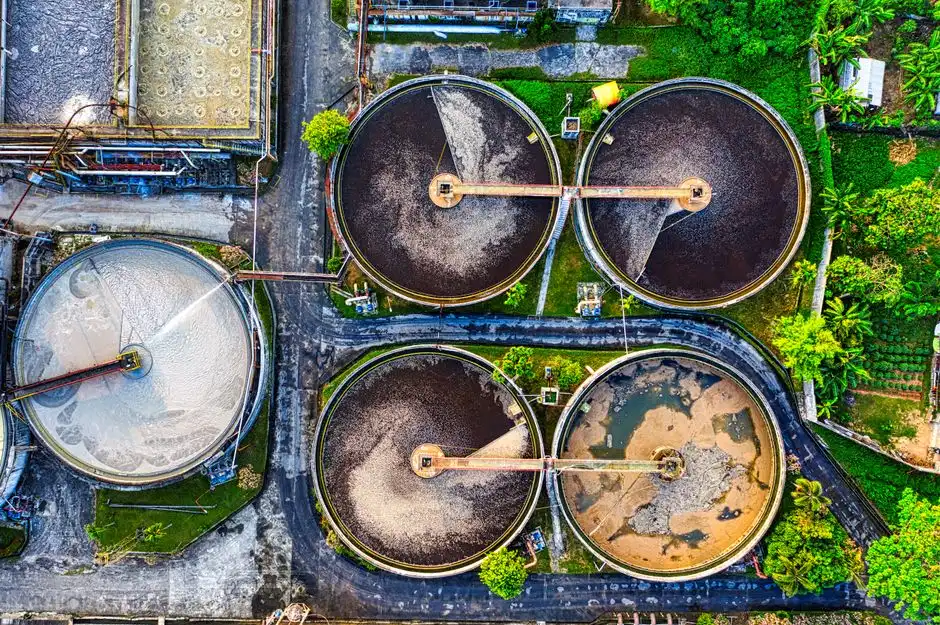
Selecting the right unit operations for Pulaski-area mining wastewater starts with recognizing that metal-bearing streams typically require a pH adjustment step before any solid-liquid separation will work. The technologies below are listed in the order they typically appear in a treatment train, and the comparison table that follows lets you size each one against your design flow.
Chemical precipitation with lime or caustic raises influent pH from 3-4 to above 10, precipitating dissolved metals as hydroxides and co-precipitating gypsum. Typical lime dose is 200-500 mg/L for moderate-strength mining streams. Dosing must be on automatic pH-feedback control, because a 0.5-unit pH excursion below the target will re-dissolve amphoteric metals such as Zn and Al. See PLC-controlled lime/caustic dosing skids for typical hardware configurations.
For solids separation, DAF excels at the low-density, slow-settling metal hydroxide flocs that conventional gravity clarifiers miss; micro-bubble systems achieve 92-97% TSS removal and handle FOG that often co-occurs in mine process water. Lamella clarifiers run at 20-40 m/h surface loading (roughly 30% less coagulant than DAF) and tolerate higher influent TSS up to 3,000 mg/L, making them a better fit for high-solids streams. A side-by-side DAF vs lamella clarifier comparison for mining walks through selection criteria in more detail.
Ceramic silicon carbide (SiC) ultrafiltration has emerged as a high-performance polishing step for streams that need to reach sub-mg/L total metals. The 0.03 μm pore size delivers >99.9% particulate metal rejection, and SiC membranes tolerate the acidic, high-TDS conditions that destroy polymeric UF in a matter of months. Modular ceramic SiC UF systems (2,000-40,000 L/h) are now standard on lithium, gold, and base-metal operations worldwide (LiqTech commercial data).
| Technology | Function | Operating Range | Typical Removal / Output | Footprint Note |
|---|---|---|---|---|
| Lime/caustic precipitation | Raise pH; precipitate metals | pH 3-4 → >10; 200-500 mg/L lime dose | >95% dissolved metals as hydroxide sludge | Reactor + flash mix; 5-15 min HRT |
| DAF | Float low-density flocs + FOG | 4-300 m³/h; micro-bubble 30-50 μm | 92-97% TSS; <10 mg/L effluent TSS typical | Compact rectangular basin |
| Lamella clarifier | Settle high-TSS streams | 20-40 m/h surface loading; up to 3,000 mg/L influent TSS | 85-95% TSS; 30% lower coagulant vs. DAF | Smallest footprint per m³/h |
| Ceramic SiC UF | Polish to sub-mg/L metals | 0.03 μm pore; 2,000-40,000 L/h modules | >99.9% particulate metals; 2-3× flux of polymeric | Modular skids; CIP every 4-8 weeks |
| Filter press | Dewater hydroxide sludge | 1-500 m²; 6-15 bar | 25-35% cake solids; 80-90% volume reduction | Batch; PLC cycle 2-4 hr |
Typical Pretreatment Train Configurations for Pulaski-Area Mining Operations
Three configuration tiers cover the bulk of mining pretreatment designs in the New River Valley region. Tier selection is driven by flow volume and the stringency of the metal limits you have to meet, not by plant size alone. The capital and operating cost ranges below are vendor-agnostic and drawn from 2025-2026 installed-price data for U.S. mining pretreatment projects.
Tier 1 — Basic (<50 m³/d, moderate SUO compliance). Equalization basin, lime dosing to pH 9.5-10, lamella clarifier, filter press, and pH trim before discharge. CapEx typically $350-500k, with OPEX dominated by lime consumption and sludge hauling. Suits quarries, dimension-stone operations, and aggregate wash plants that do not produce process-water laden with dissolved copper or zinc.
Tier 2 — Standard (50-200 m³/d, stringent metals). Adds two-stage precipitation — pH 7.5 for Fe and Al, then pH 10.5 for Zn, Cu, and Pb — followed by DAF (better low-density floc capture) and a multimedia filter before the filter press. CapEx $750k-1.2M. This is the most common configuration for base-metal and iron-ore processing plants discharging to the Pulaski PSA sewer system.
Tier 3 — Advanced (>200 m³/d or near-detection-limit metals). Tier 2 plus ceramic UF polishing and optional RO for sulfate/TDS control. CapEx $1.5-2.5M. UF guarantees <0.1 mg/L total metals and enables water reuse, which typically offsets $0.50-1.50/m³ in freshwater purchase cost. Deployed where SUO local limits are near detection or where the operator wants zero-discharge capability for reuse on the mine site.
| Tier | Flow Range | Treatment Train | CapEx (USD) | Best-Fit Application |
|---|---|---|---|---|
| 1 — Basic | <50 m³/d | EQ → lime (pH 9.5-10) → lamella → filter press → pH trim | $350-500k | Quarries, aggregate wash, non-metallic mineral |
| 2 — Standard | 50-200 m³/d | EQ → 2-stage ppt (pH 7.5 + 10.5) → DAF → multimedia → filter press | $750k-1.2M | Base-metal, iron-ore processing to POTW |
| 3 — Advanced | >200 m³/d or reuse | Tier 2 + ceramic UF → optional RO → filter press | $1.5-2.5M | Stringent limits, water reuse, zero-discharge |
Capital and Operating Cost Framework for Equipment Selection
Order-of-magnitude cost data lets you build a defensible capital and operating budget before vendor selection. The ranges below reflect 2025-2026 U.S. mining pretreatment market pricing for skidded, PLC-controlled equipment delivered and installed; site-specific factors (rock excavation, long chemical runs, off-site sludge disposal distance) can shift the numbers ±20%.
Major cost drivers: lime consumption dominates OPEX for Tier 1 and 2, membrane replacement drives Tier 3 OPEX, and sludge haul is the single largest variable cost across all three tiers. Total pretreatment cost typically runs $1.50-4.00/m³ treated, with water-reuse credits (where Tier 3 UF is installed) offsetting $0.50-1.50/m³ in avoided freshwater purchase. The table below summarizes the line items engineers most often need for a Class 5 estimate.
| Equipment / Line Item | CapEx (Installed) | OPEX Driver | OPEX Range |
|---|---|---|---|
| Chemical dosing skid (dual-train, PLC) | $45-85k | Lime at 300 mg/L | $0.08-0.15/m³ |
| DAF system, 50 m³/h | $180-280k | Power, polymer, compressed air | $0.03-0.05/m³ |
| Lamella clarifier, 50 m³/h | $120-180k | Coagulant (30% less than DAF) | $0.02-0.04/m³ |
| Ceramic UF system, 50 m³/h | $350-500k | Membrane replacement 7-10 yr; CIP chemicals | $0.10-0.15/m³ |
| Filter press, 50 m² | $80-150k | Cake solids 25-35%; disposal $50-120/ton | Volume-driven |
| Total pretreatment (all-in) | — | Combined | $1.50-4.00/m³ |
Frequently Asked Questions
What are the specific pretreatment limits for the Pulaski County PSA sewer system?
Current local limits typically include 1.0 mg/L Cu, 0.5 mg/L Pb, 2.0 mg/L Zn, 0.1 mg/L Cd, 5.0 mg/L Fe, 1.0 mg/L Mn, pH 6-10, TSS 300 mg/L, and FOG 100 mg/L. These apply alongside 40 CFR Part 437 Subpart C categorical standards for metal mining, and the more stringent value for each parameter governs. Always verify the current ordinance before final design, as POTW SUOs are revised on a 3-5 year cycle.
Can I use a single-stage pH adjustment for all heavy metals?
No. A single pH setpoint will leave amphoteric metals (Zn, Al, Cr) partially soluble, and a downstream pH dip can re-dissolve them and trigger a SUO violation. Two-stage precipitation — pH 7.5-8 for Fe and Al, then pH 10-10.5 for Zn, Cu, and Pb — is standard practice for base-metal and iron-bearing mining streams.
Is DAF or a lamella clarifier better for metal hydroxide flocs?
DAF is the better choice for low-density, slow-settling flocs and for streams with co-occurring FOG; micro-bubble systems achieve 92-97% TSS removal. Lamella clarifiers handle higher influent TSS (up to 3,000 mg/L) with 30% less coagulant and a smaller footprint. The two are not mutually exclusive — Tier 2 trains often use lamella for primary clarification and DAF as a polish step. A side-by-side comparison for mining applications is available, and a pilot test on your actual wastewater is still the most reliable selection method.
Do I need ceramic UF if my POTW limits are 1 mg/L Cu and 0.5 mg/L Pb?
Probably not. A well-operated two-stage precipitation train with DAF and multimedia filtration can reliably meet 1 mg/L Cu and 0.5 mg/L Pb on most mining streams. Ceramic UF becomes necessary when total metals must drop below 0.1 mg/L, when discharge enters a reuse loop, or when TDS/sulfate control is required and RO is being added.
How do I handle seasonal flow variation from mine dewatering?
Size the equalization basin for 2-3× the average daily flow, and specify modular unit operations (multiple DAF cells, redundant dosing pumps) that can be brought online incrementally. Continuous pH and flow monitoring with auto-dialer alarms on pH excursion is also standard, since a dewatering surge is the most common cause of unannounced SUO violations.
Related Equipment
- DAF systems (4-300 m³/h) — specifications, capacity range, and technical data
- lamella clarifiers (20-40 m/h loading) — specifications, capacity range, and technical data
- filter presses (1-500 m² filtration area) — specifications, capacity range, and technical data