Why Primary Clarifier Choice Matters for Reserve Chemical Plants in 2026
Reserve, Louisiana sits between New Orleans and Baton Rouge on the Mississippi River petrochemical corridor, where organic chemicals, plastics, synthetic fibers, and specialty-chemical operators discharge under LPDES permits enforced by the Louisiana Department of Environmental Quality. For these plants, EPA 40 CFR Part 414 — the Organic Chemicals, Plastics, and Synthetic Fibers (OCPSF) effluent guidelines — sets categorical pretreatment standards for BOD, TSS, COD, and priority pollutants, and the primary clarifier is the unit operation that determines whether the rest of the train can meet those limits. A mis-selected primary step cascades into biological-stage upsets, carbon-bed breakthrough, NPDES excursions, and consent-order risk; it is the cheapest equipment decision to get right and the most expensive to retrofit. For most chemicals-industry wastewater streams in Reserve, Louisiana, choose a Dissolved Air Flotation (DAF) unit as the primary clarifier when oils, greases, and low-density suspended solids dominate; DAF systems use 30–50 micron microbubbles and typically require chemical coagulation/flocculation for optimal TSS and FOG removal. Choose a lamella clarifier instead when flow is high (20–40 m/h surface loading) and solids are dense and settleable. The remainder of this article walks through stream characteristics, mechanism, a parameter table, and a flow-keyed decision framework to make that call defensible.
What Makes Chemicals Wastewater Different from Other Industrial Streams
Chemicals-plant wastewater is a variable blend of reactor wash water, condenser bleed, batch cleanouts, and stormwater contact runoff. Three parameters distinguish it from refinery or food-processing effluent: pH variability, mixed solids density, and elevated temperature. pH routinely swings from 1 to 13 across acid and caustic cleanout campaigns; without in-line equalization or pH conditioning, floc formation collapses and both DAF and lamella lose removal efficiency. Suspended solids are typically a mixture of dense catalyst fines (Ti, Pd, Ni, Ziegler-type residues), light polymer fluff, and organic floc with densities ranging roughly 1.0–2.5 g/cm³ — meaning a single settling unit will either pass the light fraction or underperform on the heavy fraction. Reactor-jacket discharge can push feed temperature to 40–60 °C, which reduces dissolved-air solubility (lowering microbubble yield in DAF) and raises kinematic viscosity (slowing lamella settling); either effect must be designed around. Finally, emulsified and free oils, monomers, vinyl acetate residues, plasticizers, and solvent sheens create a buoyant FOG layer that gravity-only lamella cannot capture — a core reason DAF is the default for this industry. For a deeper look at how a related chemicals-sector stream — paint and coating — is handled, see the paint and coating wastewater COD removal guide.
How DAF and Lamella Clarifiers Work Side by Side
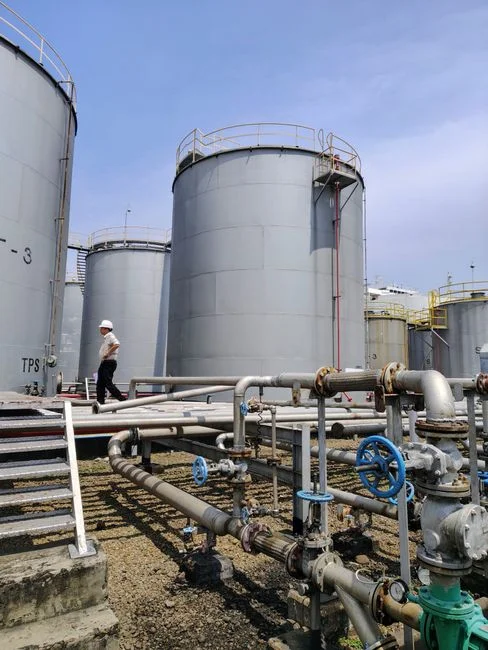
Selecting the right technology requires understanding how these two distinct mechanisms handle the complex solids profiles mentioned above. DAF relies on a physical phase change: saturated water is held at 60–80 psi in a pressure vessel, then released through needle valves or nozzles at near-atmospheric pressure, generating 30–50 micron microbubbles that nucleate on flocculated particles and lift them to the surface. A paddle skimmer scrapes the float layer into a sludge hopper; heavier particles that do not attach settle to the bottom collection zone and are augered out — this dual-action is what makes DAF a strong fit for the mixed-density solids common in chemical plants (per clearwaterind/ SigmaDAF, 2026). The compact skid and modular two-skid arrangement means the unit also has a small footprint relative to its flow rating, with single-skid coverage up to 66 GPM and modular expansion above that threshold. The HydropureWater DAF system covers 4–300 m³/h across 13 standard models and follows the same microbubble-flotation principle. Lamella clarifiers take a different approach: a pack of inclined plates set at 55–60° multiplies the effective settling area inside a fraction of the footprint of a conventional clarifier, with hydraulic surface loading rates of 20–40 m/h (HydropureWater lamella product catalog). Sludge slides down the plate faces into a thickening hopper, and a flocculation zone upstream compacts settleable solids before they enter the plate pack. The trade-off is that lamella is fundamentally gravity-driven — it captures what sinks, not what floats — so its performance drops sharply once FOG, solvents, or low-density polymer particles enter the feed. A direct head-to-head of the same family of equipment for another industrial sector is available in the DAF vs lamella clarifier comparison for mining wastewater.
DAF vs Lamella Clarifier: Parameter Comparison for Chemicals Duty
The table below consolidates the parameters a Reserve process engineer most often pulls for a basis-of-design memo. Numbers are drawn from clearwaterind/SigmaDAF (2026) for DAF and the HydropureWater lamella product catalog for sedimentation; cost is framed as a flow-keyed CAPEX band rather than a fabricated dollar figure, because verified 2026 U.S. equipment prices were not available in the research.
| Parameter | DAF (Dissolved Air Flotation) | Lamella Clarifier (Inclined Plate) |
|---|---|---|
| Hydraulic loading | Up to ~25 m/h hydraulic surface; sized by retention time | 20–40 m/h surface loading rate (HydropureWater catalog) |
| Footprint per m³/h | ~0.05–0.10 m² per m³/h; compact skid above ground | ~0.10–0.20 m² per m³/h; depends on plate area |
| Separation mechanism | 30–50 µm microbubbles attach to floc; float + settle dual action (clearwaterind, 2026) | Gravity settling on 55–60° inclined plates; sludge recirculation |
| FOG removal efficiency | 60–90% with coagulant; capable of >95% on free oils | <30% on emulsified FOG; gravity-only, no float capture |
| TSS removal efficiency | 50–90% on light/organic TSS up to ~2,000 mg/L | 70–95% on dense settleable solids, lower on light floc |
| Chemical demand | Coagulant + flocculant typically required; DAF FPBC variant reduces this | Up to 30% lower coagulant use than conventional clarifiers (HydropureWater) |
| Startup time | ~30–60 min; saturation and bubble nucleation must stabilize | ~15–30 min; plate pack fills and flow equilibrates |
| Sensitivity to pH / temperature | High — pH <5 or >9 destabilizes floc; hot feed reduces bubble yield | Moderate — viscosity rise at >50 °C slows settling; pH matters only for floc step |
| Typical CAPEX band (flow-keyed, 2026) | Low for ≤66 GPM single skid; mid for 100–500 GPM modular; high for >500 GPM | Low for retrofit plate packs; mid for 150–400 m³/h steel tank; high for >500 m³/h |
| Notable hybrid | DAF FPBC embeds lamella packs inside the DAF vessel (clearwaterind, 2026) | Conventional plate pack only |
The DAF FPBC variant embeds lamella packs inside the DAF vessel, a hybrid case for chemicals streams that contain both FOG and settleable inorganics — it delivers float capture plus reduced flow velocity, per the SigmaDAF model line (2026).
Decision Framework: When to Pick DAF, Lamella, or Both
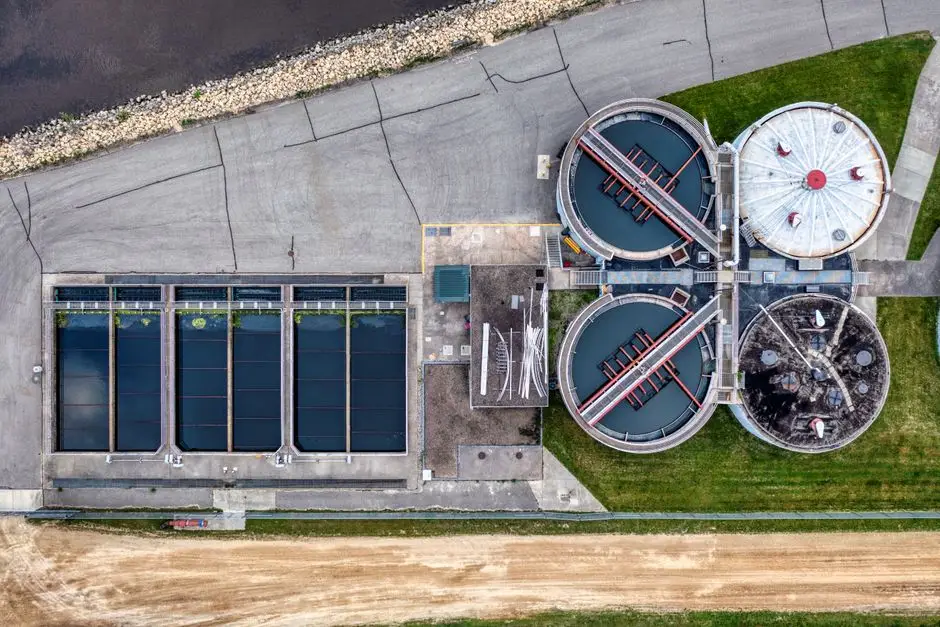
Following a structured decision process based on influent characteristics simplifies the procurement choice. Pick DAF when influent FOG exceeds ~50 mg/L, free oils or solvents are present, TSS is below 2,000 mg/L and mostly light or organic, or the plant footprint is constrained and a tall, small-diameter tank with large free surface is preferable. Pick lamella when flow is high (above 150 m³/h), FOG is minimal, solids are predominantly dense and inorganic (catalyst fines, salt precipitates, sand/grit), and the operator wants to reduce coagulant consumption by up to 30% (HydropureWater catalog). For streams that contain both buoyant FOG and dense inorganics — the most common chemicals-plant case — a DAF → lamella sequence is the defensible answer: DAF strips floatables and light TSS, lamella polishes settleables, then the train hands clean water to the biological or carbon stage. For smaller chemical-blending or pilot lines under 66 GPM, the COMPACT DAF single-skid design is the right scale point; for high-flow main header treatment, the FPHF DAF model combines cross-flow and countercurrent flow patterns to handle large flows with low-to-large solids loads (per SigmaDAF, 2026). Pair whichever primary you select with an automatic chemical dosing skid sized to the coagulant and flocculant demand — most chemicals streams cannot run a primary clarifier at nameplate without it.
Compliance, Footprint, and 2026 Cost Considerations for Reserve
OCPSF subcategories set both daily-maximum and monthly-average limits for BOD, TSS, COD, and toxics, making the primary clarifier critical for preventing permit excursions. LDEQ's antidegradation review applies to any new or expanded discharge to the Mississippi River, and a tight primary step with documented TSS and FOG removal simplifies the permit narrative. On the equipment side, the HydropureWater DAF system covers 4–300 m³/h across 13 standard models, while a SigmaDAF/clearwaterind COMPACT DAF handles ≤66 GPM on a single skid (per clearwaterind, 2026) — these give the procurement engineer two bracketed scale points for a basis-of-design write-up. CAPEX and OPEX are best framed as flow-keyed ranges, because 2026 U.S. equipment pricing for chemicals service was not in the verified research. The trade-off pattern to remember: lamella saves on chemical OPEX, while DAF saves on downstream sludge handling cost for FOG-rich streams — and the resulting float sludge is often dewatered effectively with a plate-and-frame filter press downstream. For a parallel evaluation in another corridor, see the DAF or clarifier for petroleum wastewater in Phoenix factory guide.
Frequently Asked Questions
What is the main difference between DAF and a clarifier for chemicals wastewater?
A DAF unit removes suspended solids and FOG by attaching 30–50 µm microbubbles to chemically flocculated particles and floating them to the surface, where a skimmer removes the layer. A lamella clarifier removes settleable solids by gravity on inclined plates at 55–60° with surface loading of 20–40 m/h, with no float-removal mechanism. DAF is the right choice when FOG, oils, or light organic solids dominate; lamella is the right choice when solids are dense and settleable.
When is a lamella clarifier better than DAF for a chemical plant?
Lamella wins when influent flow is high (above ~150 m³/h), FOG is minimal, solids are predominantly dense and inorganic (catalyst fines, salt precipitates), and the operator wants to reduce coagulant consumption by up to 30% (HydropureWater catalog). It is also a strong fit where the stream has already been equalized and contains little to no free oil or solvent sheen.