Why Spring City Mining and Metals Plants Are Revisiting the DAF vs Clarifier Choice in 2026
40 CFR Part 437 (the EPA's Metal Mining Point Source Category) sets monthly average and daily maximum effluent limits for TSS, settleable solids, pH, and total recoverable metals (As, Cd, Cu, Pb, Hg, Ni, Zn), and state pretreatment coordinators in the Spring City region have tightened enforcement against small-to-mid mining and metals operations in the last 12 months. A plant that picks the wrong primary clarifier in 2026 risks Notice of Violation letters, Consent Order penalties, and consent decree fines that can run into six figures for a single exceedance. The financial exposure is real, but the technical driver behind most of the failed inspections is simpler: the operator specified equipment designed to settle particles when the stream actually contains particles that float.
Spring City-area plants typically run 10-200 m³/h of combined process water, washdown, and tailings decants, which is the flow band where both DAF and lamella clarifiers are credible options. Footprint is usually the binding constraint: a 50 m³/h DAF unit such as the DAF-050 (8.4 m × 3.6 m × 2.7 m, ~5,500 kg dry weight) consumes roughly 30 m² of floor area, while an equivalent conventional clarifier running at 2 m/h surface loading needs closer to 600 m². That order-of-magnitude difference forces the equipment decision before any chemistry discussion. DAF micro-bubble flotation relies on buoyancy rather than weight, which is exactly the mechanism needed for the low-density, oil-coated, and colloidal flocs that dominate metals finishing and flotation tailings streams. A plant engineer reading the local enforcement notices and the ore feed trend at the same time usually lands on the same conclusion: a 2026 specification has to be grounded in 40 CFR Part 437, not in a generic DAF brochure. For the broader regulatory picture, see this 40 CFR Part 437 pretreatment compliance guide for mining plants.
How a DAF System Works for Mining and Metals Wastewater
A dissolved air flotation system runs in five repeatable stages that are well-documented in mining and metals DAF reference designs: coagulant and flocculant dosing into a flash mix, flocculation in a slow-mix chamber, pressurized air-saturated recycle (whitewater) injection, micro-bubble contact and float formation, and scraped removal of the float layer. The pressurization step is the heart of the process: clarified effluent is pumped to 5-7 bar and saturated with air in a packed saturator, then released through proprietary air-release nozzles that generate 10-50 µm bubbles. Those bubbles attach to the flocs and lift them to the surface in roughly 3-5 minutes of hydraulic residence time.
Manufacturer data for high-efficiency mining DAF units reports total suspended solids reduced by up to 97% and COD removal of 60-80% on well-coagulated feed (wastewatermachinery.com mining DAF spec). The high-efficiency design criteria that drive that performance are: saturation pressure at or above 5 bar, VFD control on the recycle pump, SS316 wetted parts, and a PLC with effluent TSS monitoring for closed-loop chemical trim (per the same spec). Real-world proof that DAF can run lean on chemicals comes from the Utah State University Logan WWTP study, where Andrew Elder's optimization work on a full-scale DAF harvesting algae from lagoon effluent reached an optimum dose of 30 mg/L aluminum sulfate, with no measurable benefit from biologically produced extracellular polymers (USU, 2011). For plants evaluating a primary clarifier in this flow band, the practical takeaway is that a correctly sized DAF system is the only equipment option that combines high TSS removal with a footprint a small plant can actually install.
How Clarifiers (Conventional and Lamella) Treat Mining Water
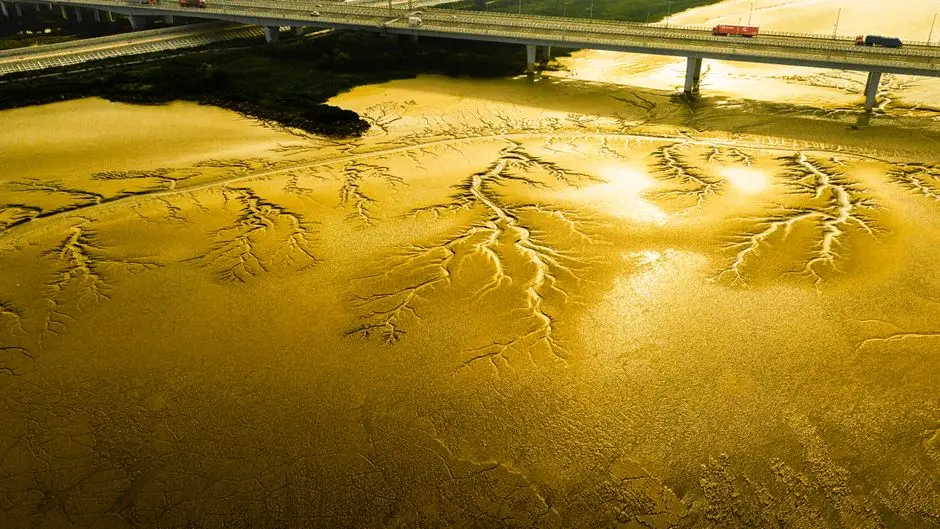
A conventional gravity clarifier is a low-velocity, large-footprint settling tank that relies on particle weight to drive separation. Surface loading rates for a conventional clarifier typically fall in the 1-3 m/h range, hydraulic residence time runs 2-4 hours, and the tank footprint for 50 m³/h is roughly 300-500 m² excluding sludge storage. That footprint is the first reason conventional clarifiers have largely fallen out of new mining/metals specifications: most Spring City plants do not have that much real estate, and a retrofit almost never pencils out. Conventional units still make sense at legacy sites with available land, low ore-grade variability, and dense, settleable grit streams.
A lamella clarifier (also called an inclined-plate or high-rate clarifier) replaces the deep settling zone with a stack of inclined plates at 55-60°, which dramatically shortens the effective settling path. Surface loading increases to 20-40 m/h and footprint drops by an order of magnitude versus a conventional unit. The HydropureWater high-efficiency lamella clarifier cuts coagulant consumption by up to 30% compared with conventional designs, which is a meaningful OPEX line for a 24/7 plant. Clarifiers in general excel on dense, settleable solids and produce a heavier, lower-volume underflow than DAF, which simplifies downstream dewatering. They struggle on light, colloidal, or oil-coated particles, which is exactly the particle population that DAF is built to capture. For operations that already have a settling pond or thickener train, the integrated JY-series design consolidates coagulation, flocculation, and lamella settling into a single packaged unit, useful where a plant wants to retire an old clarifier without expanding the building footprint.
Side-by-Side Comparison: DAF vs Conventional Clarifier vs Lamella Clarifier
The table below is the artifact most procurement reviewers will want to screenshot. Numbers reflect manufacturer data (wastewatermachinery.com mining DAF spec; HydropureWater JY-series lamella spec) and standard US municipal/industrial wastewater design references, and are sized to a representative 50 m³/h stream. The 'best fit' column is the engineer's recommendation, not marketing copy.
| Parameter | DAF | Conventional Clarifier | Lamella Clarifier (JY series) |
|---|---|---|---|
| Flow range (m³/h) | 3-300 | 50-5,000+ | 5-500 |
| Surface loading rate (m/h) | 5-25 (effective overflow) | 1-3 | 20-40 |
| Typical HRT | 15-30 min | 2-4 h | 20-45 min |
| Footprint for 50 m³/h | ~30 m² (DAF-050: 8.4 m × 3.6 m) | ~300-500 m² | ~15-25 m² |
| TSS removal | Up to 97% | 50-70% | 70-90% |
| COD removal | 60-80% | 20-40% | 40-60% |
| Oil / FOG removal | 80-95% | 10-30% | 20-40% |
| Sludge consistency | 2-4% dry solids (float) | 3-6% dry solids (underflow) | 3-6% dry solids (underflow) |
| Chemical demand (baseline) | Alum 30 mg/L + polymer 1-3 mg/L (USU, 2011) | Polymer 2-5 mg/L | ~30% less polymer than conventional |
| Capex band (50 m³/h, 2026 USD) | $$ | $$$ (civil work dominates) | $$ |
| OPEX drivers | Recycle pump kWh, polymer, sludge haul | Polymer, sludge haul, large tank maintenance | Polymer (lower), sludge haul, tank maintenance |
| Best fit | Fine, low-density, oily, or flotation tailings in tight footprints | Legacy site with abundant land and dense grit | High flow, mostly settleable solids, modest footprint |
The row that drives most 2026 mining specification decisions is footprint versus TSS removal. A 50 m³/h DAF system delivers 90-97% TSS removal in roughly 30 m², while a lamella clarifier gets to 70-90% in 15-25 m². Neither a conventional clarifier nor a lamella alone is a credible answer for a stream with more than 20-30% light or oil-coated particles, which is why hybrid trains are increasingly common in mining pretreatment.
Meeting 40 CFR Part 437 Pretreatment Limits in 2026
40 CFR Part 437 divides the metal mining category into subcategories (e.g., active ore mining, abandoned mine drainage, mineral processing) and assigns each one a numerical effluent limit guideline. The limits a 2026 spec has to hit include TSS, settleable solids, pH (typically 6.0-9.0), and individual total recoverable metals for As, Cd, Cu, Pb, Hg, Ni, and Zn. DAF as a single primary stage will routinely meet the TSS benchmark and reduce metals in the particulate-bound fraction, but it is not a metal-removal process: pH adjustment (typically to 8.5-9.5 for hydroxide precipitation) and a coagulant such as ferric chloride or alum are still required to drop dissolved metals to the sub-1 mg/L range that most state pretreatment coordinators enforce.
The typical 2026 train for a Spring City plant discharging to a POTW or to surface water is: equalization (for ore-feed variability) → coagulation/flocculation (rapid then slow mix, 10-20 min total) → DAF (primary TSS and oil removal) → pH adjustment / metals precipitation → lamella clarifier or sand filter (polishing to monthly average limits). An automatic polymer and coagulant dosing skid with flow-paced injection is now standard practice: it locks the chemical dose to incoming load, prevents overdose spikes that foul the DAF, and creates the audit trail a state inspector will ask for. The full numerical limit table and discharge monitoring report (DMR) checklist lives in the 40 CFR Part 437 pretreatment compliance guide for mining plants.
Decision Framework: Which Should Your Spring City Plant Specify in 2026?
The right primary clarifier in 2026 is determined by three numbers the plant already has on hand: peak flow, particle density distribution, and the tightest monthly average limit on the discharge permit. Use the following rules to convert those numbers into a spec.
If peak flow is under 50 m³/h, solids are fine, oily, or flotation-derived, and the building footprint is constrained, specify a DAF system as the primary clarifier. The DAF-020 through DAF-100 models cover this range natively, and a single DAF unit will meet Part 437 TSS limits on a well-coagulated feed.
If peak flow exceeds 100 m³/h and the TSS is dominated by settleable minerals, start with a HydropureWater high-efficiency lamella clarifier and reserve DAF as a polishing stage only if the effluent TSS is still off-spec. Lamella wins on flow density and OPEX at this scale; DAF as a polisher handles the residual fines without redesigning the headworks.
If the discharge permit has tight metals limits (total metals below 1 mg/L, TSS below 30 mg/L monthly average) or if the receiving POTW has a 40 CFR Part 437 categorical standard above the local limit, the safe 2026 answer is a DAF + lamella polishing train with an automatic chemical dosing skid. The DAF does the heavy lifting on TSS and oil; the lamella polishes and stabilizes the effluent; the dosing skid locks the chemistry across ore-feed swings.
If land is abundant, flow is variable, and ore grade is steady, a conventional clarifier with sludge recirculation may still be the lowest-capex option, but few Spring City sites fit that profile in 2026. A similar site-by-site logic is laid out for a Nebraska operation in this Wahoo mining DAF vs lamella clarifier buyer's guide.
Operating Cost and Lifecycle Considerations
Capex is roughly half the 10-year cost picture, and OPEX is usually the line that flips a procurement decision. For a DAF system, the recurring cost stack is dominated by the saturated-recycle pump (sized to 5-7 bar and typically 15-30% of throughput), polymer and coagulant consumption, and float-sludge hauling. The Logan WWTP data point of 30 mg/L alum as the optimum chemical dose is a useful baseline for a Spring City plant with similar feed solids; many mining streams will land closer to 50-100 mg/L alum once they account for fines and oil. Plan on 1-3 mg/L of anionic polymer as a secondary dose to build the floc the saturator can lift.
For a lamella clarifier, the recycle pump disappears, polymer dose is roughly 30% lower than a conventional clarifier at the same settling flux, and the larger tank surfaces need periodic washdown and inspection. The trade-off is that lamella sludge is heavier and drier than DAF float (3-6% dry solids versus 2-4%), so the downstream plate-and-frame filter press is sized for higher cake solids and shorter cycle times. Whichever 2026 selection a plant makes, pairing the primary clarifier with an automatic polymer and coagulant dosing skid is the single highest-ROI upgrade: it stabilizes effluent TSS, prevents polymer overdose, and creates the operational record a 2026 state inspector will want to see. For operations weighing pretreatment on the West Coast, the Chehalis mining pretreatment limits guide walks through a similar train under a different state NPDES framework.
Frequently Asked Questions
Can a DAF system meet 40 CFR Part 437 on its own?
No. A correctly sized DAF will routinely meet the Part 437 TSS limit and remove 60-80% of the particulate-bound metals, but it does not precipitate dissolved metals. The plant still needs pH adjustment (typically to 8.5-9.5) and a coagulant such as ferric chloride or alum to drop total recoverable metals below 1 mg/L.
How much floor space does a 50 m³/h DAF unit need?
The DAF-050 from the standard high-efficiency mining line is 8.4 m × 3.6 m × 2.7 m and weighs 5,500 kg empty, so plan on roughly 30 m² of floor area plus 1.0 m of clearance on the service and sludge side. That is about 1/10th of a conventional clarifier handling the same flow.
Is a lamella clarifier cheaper to run than a DAF?
Lamella OPEX is typically 20-40% lower because there is no saturated-recycle pump and polymer dose is reduced by up to 30% per the JY-series spec. The DAF earns that back on tighter TSS and oil removal, so the OPEX comparison only matters once the discharge limits are already being met by both options.
Can DAF handle oily tailings water?
Yes, and that is one of the strongest reasons to choose DAF for mining and metals streams. Micro-bubble flotation removes 80-95% of free and emulsified oil and FOG, which a lamella or conventional clarifier largely passes through. Oily feed that would cripple a clarifier is routine duty for a DAF.
Do I need a permit to install a DAF in Spring City?
Yes. Any new primary wastewater treatment unit at a mining or metals facility discharging to a POTW or to surface water triggers a pretreatment coordination review under 40 CFR Part 437 and the local POTW's sewer use ordinance, plus possible NPDES modifications. Start the permit conversation with the state pretreatment coordinator at least 90 days before the planned install, and use the 40 CFR Part 437 pretreatment compliance guide for mining plants as the working document.