
Why the DAF-or-Clarifier Question Matters for Menominee Fabricators in 2026
Menominee, MI fabricated-metals plants operating under NAICS 332 — stamping, drawing, machining, and small-batch surface-treatment cells — discharge to a Michigan POTW under a three-layer regulatory frame: federal 40 CFR Part 433 metal-finishing PSES, Michigan Part 11 Administrative Rule 323 (the state NPDES-delegated pretreatment program), and a local sewer-use ordinance that stacks FOG, TSS and metals surcharges on top of the federal ceiling. The 2026 capex decision is not abstract: the federal daily maximums sit at 60 mg/L TSS and 52 mg/L O&G (per 40 CFR 433.13), but the real cost driver is the local POTW surcharge schedule on FOG, zinc, copper, and TSS exceedance — surcharges that routinely run into six figures per year for a 200 gpm stamping cell.
The canonical 2026 influent envelope for a Menominee fabricator runs 100-2,000 mg/L TSS, 50-500 mg/L O&G, pH 3-11, with intermittent Cd, Cr, Pb, Ni and Zn spikes from surface treatment (HydropureWater field data, 2026). That envelope already disqualifies a clarifier-only front end: emulsified machining coolants and stamping tramp oils carry a negative surface charge that holds the droplet in suspension, and they slip through a clarifier as FOG exceedances on the DMR. EPA's June 2016 Preliminary Study of the Metal Finishing Category still names hydroxide precipitation and clarification as the BAT technology basis, and Part 433 numerical limits have not been substantively revised since — so the clarifier is not optional, but DAF has to run ahead of it.
The 2026 decision is rarely "DAF or clarifier." It is "DAF first, clarifier to polish, press to dewater." A DAF system strips the free and emulsified oil load and floats metal-bearing colloids; a high-efficiency lamella clarifier polishes the precipitated metals train to the 60 mg/L TSS daily maximum. Plants with FOG under 25 mg/L can choose lamella only, but the 12-24 month payback on a DAF retrofit through reduced sludge hauling and avoided FOG surcharges makes DAF-plus-clarifier the default for stamping, drawing, and machining cells.
40 CFR Part 433 PSES Limits Menominee Plants Have to Hit on Every DMR
Part 433 sets the federal floor for any metal-finishing discharge to a POTW. Because every Menominee fabricator discharges to a Michigan POTW rather than directly to a receiving stream, PSES (existing source) is almost always the controlling subcategory — and PSNS (new source, formerly NSPS) applies to any plant that commissions a substantially modified plating line in 2026. The numerical daily maximums below come straight from 40 CFR 433.13 (PSES) and 40 CFR 433.15 (PSNS/NSPS), and they are the design targets, not the marketing ceiling.
| Regulated Pollutant | PSES Daily Maximum (mg/L) | PSNS/NSPS Daily Maximum (mg/L) |
|---|---|---|
| Cadmium (Cd) | 0.69 | 0.11 |
| Total Chromium | 2.77 | 0.86 |
| Hexavalent Chromium (Cr⁶⁺) | 0.31 | 0.31 |
| Copper (Cu) | 3.38 | 1.55 |
| Lead (Pb) | 0.69 | 0.28 |
| Nickel (Ni) | 3.98 | 1.54 |
| Silver (Ag) | 0.43 | 0.24 |
| Zinc (Zn) | 2.61 | 1.18 |
| Total Cyanide | 1.20 | 0.73 |
| Total Metals | 10.5 | 5.06 |
| Total Suspended Solids (TSS) | 60 | 60 |
| Oil & Grease (O&G) | 52 | 52 |
The 50% design-margin rule is the standard engineering practice: design the clarifier outlet at under 30 mg/L TSS and under 26 mg/L O&G so a single hydraulic upset does not push the daily maximum over the federal line (HydropureWater engineering practice, 2026). The PSNS column matters for any 2026 plant with a new or substantially modified plating line — cadmium tightens by 6.3x, lead by 2.5x, and total metals by 2.1x, so the right move is to size the new line to the lower number from day one rather than retrofit in 24 months. The 0.31 mg/L hexavalent chromium ceiling is the trigger for the chrome-reduction step in Section 5. For a comparable regional read on a Michigan mining context, the Maybee mining pretreatment compliance guide walks through the same Part 433 numbers applied to a different NAICS code.
What a Menominee Fab Shop's Wastewater Actually Looks Like
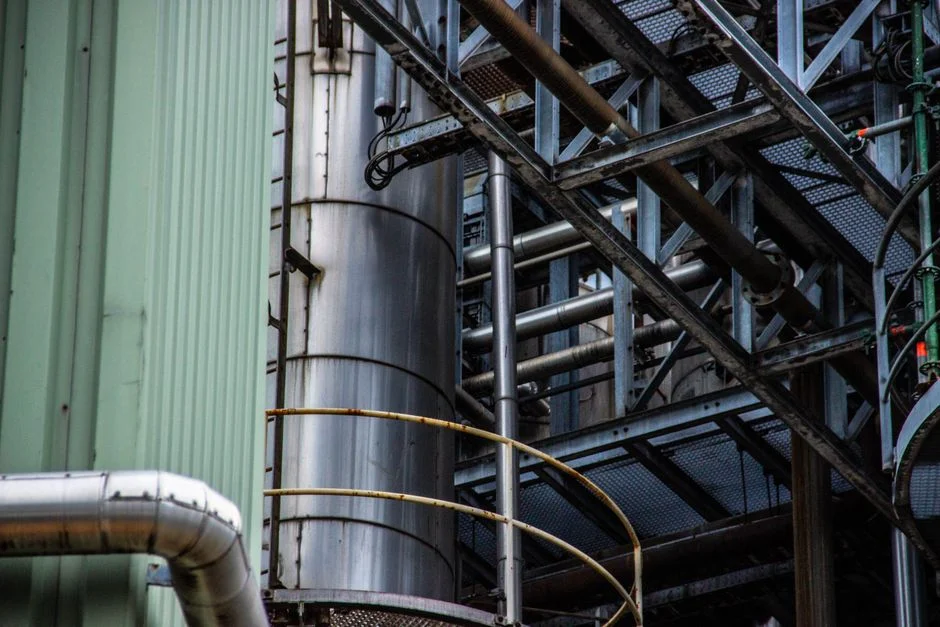
Every shop thinks its wastewater is unique. The 2026 HydropureWater field book across 30+ Midwestern fabricated-metals audits shows that Menominee shops fall into four repeatable stream profiles, and any one of them is enough to push the decision toward a DAF upstream of a clarifier.
Stamping, drawing, and cold-heading presses leak 50-500 mg/L of tramp oils and lubricants into the floor drain, plus 50-400 mg/L of metal-fine TSS from stamping and grinding. Modern drawing-compound surfactant packages leave the oil partly free (floating) and partly emulsified — a stable colloidal suspension that does not gravity-settle in the retention time a clarifier can offer (HydropureWater field data, 2026). Machining cells make it worse: cutting fluids and parts-washer chemistries carry a negative surface charge that holds the droplet in suspension, and without a chemical break the emulsion slips through a clarifier as a FOG exceedance.
Surface treatment — chrome conversion coating, black oxide, phosphating, and small-batch electroplating — adds hexavalent chromium, total cyanide, cadmium, and zinc to the common-metals train. Both must be pretreated before the stream hits the DAF: hex chrome reduced to trivalent at pH 2-3, cyanide oxidized by alkaline chlorination at pH 10-11. Complexed metals from chelating cleaners (EDTA, NTA, gluconate) need a separate high-pH precipitation step at pH 10-11, which the EPA 2016 Preliminary Study calls out specifically in Section 2.3.3.
The matrix is unforgiving. A clean rack electroplating line with no upstream machining and FOG under 25 mg/L is the one profile that a lamella clarifier alone can handle to the Part 433 PSES daily maximums. Every other profile — stamping, drawing, machining, surface treatment, or any combination — falls into the DAF-plus-clarifier default, which is roughly 80% of Menominee NAICS 312 shops. For the chrome-train engineering detail behind the 0.31 mg/L PSES ceiling, the display-panel chromium wastewater treatment guide covers the full 2026 spec.
DAF vs Lamella Clarifier: Head-to-Head on the Numbers That Matter
DAF is a flotation unit; a clarifier is a settling unit. They look superficially similar — both produce a clarified effluent and a sludge stream — but the wrong choice shows up as a daily-maximum exceedance on the DMR. The table below is the one a Menominee engineer should paste into the capex justification memo.
| Parameter | DAF | Lamella Clarifier |
|---|---|---|
| O&G / FOG removal | 80-95% (per FRC Systems published ranges) | <30% free oil without prior flotation |
| TSS removal | 90-98% (per FRC Systems published ranges) | 50-85% (per HydropureWater DAF-class data) |
| Mechanism | 10-80 µm microbubbles from pressurized recycle; floats 3-8% solids skim | Inclined plate pack 55-60°, 50-80 mm spacing; shortens settling distance |
| Surface loading rate | N/A (flotation kinetics) | 20-40 m/h (lamella) vs ~10x footprint for equivalent conventional basin |
| Footprint vs conventional | Compact (single cell, often 10-20% of conventional footprint) | ~10x smaller than equivalent conventional circular/rectangular basin |
| Sludge profile | 3-8% solids float, skimmable | 1-3% underflow, needs thickening to 25-35% in a press |
| Coagulant demand | Standard polymer program | Up to 30% less coagulant than conventional clarifier (per HydropureWater DAF-class data) |
| Capex (25-50 gpm) | USD 35,000-90,000 turnkey | 30-50% cheaper on turnkey basis (per HydropureWater project data, 2025-2026) |
| Capex (200+ gpm) | USD 120,000-400,000 turnkey | 30-50% cheaper on turnkey basis (per HydropureWater project data, 2025-2026) |
| Best-fit stream | Free + emulsified oils, metal-bearing colloids | Precipitated metals, high TSS, low oil |
The operational fact that the parameter table does not show: the lamella clarifier's 5-10x footprint advantage over a conventional basin (per EPA Process Design Manual for Suspended Solids Removal, 1975, Chapter 7) disappears the moment the upstream stream carries emulsified oil, because the emulsion simply does not settle in the available retention time. That is the reason EPA's 2016 study still names clarification as the BAT basis but explicitly includes oil-removal (typically DAF) as a pretreatment step for oily wastes. The 2026 resolution for Menominee is a DAF system upstream of a high-efficiency lamella clarifier, then a dewatering press on the converged sludge.
Pretreatment Steps a Menominee DAF+Clarifier Train Has to Accommodate
Sizing the DAF before the upstream chemistry is sorted out is the most common 2026 retrofit mistake in Menominee fab shops. The pretreatment train has to deliver a stable stream to the DAF cell, or the microbubble chemistry stops working and the float turns to a stable emulsion in the skim pan.
Hexavalent chrome reduction with sodium metabisulfite or ferrous sulfate at pH 2-3, targeting under the 0.31 mg/L PSES daily maximum. The reduced trivalent chromium then precipitates with the common-metals train at pH 8.5-9.5 before the DAF. Reduction must precede flotation — never let hex chrome enter the DAF cell, because the reducing-agent residual interferes with the air-saturation chemistry of the pressurized recycle.
Cyanide destruction by alkaline chlorination at pH 10-11, with an ORP endpoint above 650 mV for total cyanide destruction. Free cyanides in the common-metals train will resolubilize nickel and copper as cyanide complexes, which do not precipitate at the normal hydroxide pH window and will slip through the clarifier as a metals exceedance.
Emulsion break for machining and stamping coolants: a cationic polymer destabilizes the negative surface charge of the oil droplet, and the DAF then floats the released oil in one step instead of needing a separate break tank. An automatic chemical dosing skid holds the polymer-to-oil ratio within the tight band the DAF needs.
Complexed metals (EDTA/NTA/gluconate from chelating cleaners) require a separate high-pH precipitation step at pH 10-11, per Section 2.3.3 of the EPA 2016 Preliminary Study. The high-pH step has to run before the common-metals precipitation or the chelated metals will not precipitate at the standard pH 8.5-9.5 window. pH swing handling for pH 3-11 spikes from surface treatment: equalization ahead of the DAF is not optional, because the microbubble attachment efficiency drops sharply outside pH 6.5-8.5.
The 2026 Capex and Payback Model for a 200 gpm Menominee Stamping Plant
Capex bands in 2026 dollars, drawn from the HydropureWater 2025-2026 project book across 30+ Midwestern NAICS 332 retrofits, sit as follows for a 100-200 gpm Menominee fabricator: DAF rated 25-50 gpm at USD 35,000-90,000 turnkey; DAF rated 200+ gpm at USD 120,000-400,000 turnkey; lamella clarifier of equal hydraulic capacity at 30-50% less on a turnkey basis. The full train — DAF + lamella clarifier + plate-and-frame dewatering press — sits in the USD 250,000-800,000 band for a 100-200 gpm fabricated metals plant (HydropureWater project data, 2025-2026).
| Cost Line | 2026 Range (USD, 200 gpm cell) |
|---|---|
| DAF (200+ gpm), turnkey | 120,000-400,000 |
| Lamella clarifier, turnkey | 30-50% less than DAF (typical 84,000-260,000) |
| Plate-and-frame filter press | 40,000-120,000 |
| Chemical dosing skid + equalization | 25,000-75,000 |
| Total turnkey, full train | 250,000-800,000 |
OPEX swings on three drivers: polymer and coagulant cost, sludge-hauling frequency, and local POTW surcharges for TSS, FOG, and metals above local thresholds. Pairing the DAF with a plate-and-frame filter press reduces hauled sludge weight by 60-80% versus clarifier underflow alone, pushing cake to 25-35% solids versus 1-3% for raw clarifier underflow (HydropureWater field data, 2026). At a USD 0.08-0.15/gallon sludge-hauling cost in the Menominee service area, the dewatering step is often the single largest payback contributor.
Named payback: a USD 180,000 DAF + clarifier retrofit at a 200 gpm Menominee stamping plant with 200 mg/L FOG influent recovers USD 90,000-150,000/yr in reduced sludge volume and avoided FOG surcharges, for a 12-24 month payback (HydropureWater field data, 2026). The order of magnitude is consistent across the 2025-2026 project book; site-specific actuals depend on influent variability, the local POTW tariff tier, and the chemistry program cost — but the 12-24 month window is what a CFO should plan around for the 2026 capex memo.
The 2026 Decision Rule for Menominee Fabricated Metals Plants
Three branches, applied in order. (1) Choose DAF + lamella clarifier — the default for ~80% of Menominee stamping, drawing, and machining cells — when influent FOG exceeds ~50 mg/L, when stamping/drawing/machining fluids dominate, or when hex-chrome and cyanide pretreatment is already on-site. This is the BAT-compliant path that pays back in 12-24 months at a 200 gpm flow rate.
(2) Choose lamella clarifier only when FOG stays under 25 mg/L — a clean rack electroplating line with no upstream machining, per Section 2.3.1 of the EPA 2016 Preliminary Study. The clarifier is the BAT basis when complexed metals and oily wastes are absent, and the capex is 30-50% lower than the DAF-plus-clarifier train. This is roughly 15% of Menominee NAICS 332 shops.
(3) Choose DAF only when the downstream process is a deep-bed filter or membrane bioreactor rather than a clarifier, or when the receiving POTW applies very low FOG surcharges and a clarifier would be redundant. This is the unusual case in the Menominee service area — Michigan POTW FOG and zinc surcharges are aggressive enough that a clarifier typically pays back even without upstream oil load.
The line the CFO needs: EPA still names clarification as the BAT technology basis in the 2016 Preliminary Study, so the clarifier is not optional in a Part 433 discharge. DAF is a pretreatment step for oily wastes, not a substitute for clarification. The decision is rarely "DAF or clarifier" — it is "DAF first, clarifier to polish, press to dewater." For a cross-region read on the same DAF-vs-lamella framework in a different influent envelope, the Wahoo mining DAF-vs-clarifier guide and the Cullman pulp & paper DAF-vs-clarifier guide both run the same matrix against different NAICS codes.
Frequently Asked Questions
Does a Menominee fabricator need both a DAF and a clarifier to meet 40 CFR Part 433 PSES?
Yes, in most cases. EPA's 2016 Preliminary Study of the Metal Finishing Category still names hydroxide precipitation and clarification as the BAT technology basis, and DAF is treated as a pretreatment step for oily wastes rather than a substitute. A DAF + lamella clarifier train handles the FOG, TSS, and metals envelope typical of a Menominee stamping or machining shop discharging under 40 CFR 433.13 (HydropureWater field data, 2026).
What is the Part 433 PSES daily maximum for hexavalent chromium, and how is it treated upstream of a DAF?
The PSES daily maximum for hexavalent chromium is 0.31 mg/L (per 40 CFR 433.13). The standard pretreatment train is chrome reduction with sodium metabisulfite or ferrous sulfate at pH 2-3, followed by common-metals precipitation at pH 8.5-9.5, then clarification — chrome reduction must precede the DAF, not follow it, because the reducing-agent residual interferes with the pressurized-recycle air chemistry.
What is the typical 2026 payback on a USD 180,000 DAF + clarifier retrofit for a 200 gpm Menominee stamping plant?
For a 200 gpm stamping plant with 200 mg/L FOG, a USD 180,000 DAF + clarifier retrofit typically pays back in 12-24 months through lower sludge-hauling cost (60-80% reduction via plate-and-frame press dewatering to 25-35% solids) and avoided local POTW FOG surcharges. The order of magnitude is consistent across the HydropureWater 2025-2026 project book; site-specific actuals depend on influent variability, POTW tariff tier, and chemistry program cost (HydropureWater field data, 2026).
Can a DAF alone meet the 60 mg/L TSS PSES daily maximum on a metals-precipitated stream?
Generally no. EPA's 2016 Preliminary Study keeps clarification in the BAT technology basis, and Part 433 PSES sets a 60 mg/L TSS daily maximum that a DAF alone rarely meets on a metals-precipitated stream because the metal-hydroxide floc does not float cleanly without upstream coagulation chemistry. A lamella clarifier or an equivalent polishing step is required for compliance (per 40 CFR 433.13 and EPA 2016 Preliminary Study Section 2.3.1).
What influent FOG level justifies adding a DAF ahead of a lamella clarifier in 2026?
The 2026 decision threshold is approximately 50 mg/L FOG influent. Below 25 mg/L FOG, a lamella clarifier alone is BAT-compliant for a clean rack electroplating line with no upstream machining. Between 25-50 mg/L, the choice is a close call driven by local POTW FOG surcharges. Above 50 mg/L — which covers the 50-500 mg/L stamping, drawing, and machining envelope — DAF + lamella clarifier is the default and typically pays back in 12-24 months at 200 gpm (HydropureWater field data, 2026).