Why Rosario is not Buenos Aires for wastewater permitting in 2026
Rosario discharges answer to a different instrument stack than Buenos Aires, and copying the S3 Buenos Aires four-instrument list into a Rosario RFQ is the fastest path to a rejected submission. The binding regime is Santa Fe provincial — Decreto 2599/91 plus Ministerio de Ambiente y Cambio Climático resolutions — layered with Aguas Santafesinas S.A. (Assa) industrial discharge rules and, for any outfall reaching the Paraná corridor, the Ente Administrador del Puerto's port-water protocol. ACUMAR's Ley 26.168 / Matanza-Riachuelo caps apply only when the discharge physically reaches that basin, which a Rosario outfall typically does not; the Matanza-Riachuelo watershed drains roughly 2,400 km² of Buenos Aires province and does not extend to the Paraná mainstem (per ACUMAR 2024 jurisdictional map). Resolución SRT 295/03 still governs occupational ClO₂ and biocide exposure in any Argentine province, so the operator-safety section of the RFQ is the one block that does not change between the two cities.
A Santa Fe reviewer asks for items in a different order from an ADA reviewer. The provincial file typically opens with discharge-point coordinates in Gauss-Krüger Argentina Zone 5, then outfall type (sewer connection vs. surface-water release into the Paraná mainstem or a tributary arroyo), then receiving-body classification, then flow and load projections, then the compliance envelope. An EPC that sends a Buenos Aires-format file — limits first, geometry second — will be asked to refile. This is a first-week permit risk, not a month-three risk, so the proposal writer should sequence the cover letter to match.
| Outfall type | Primary instrument | Authority | Rosario-specific note |
|---|---|---|---|
| Sanitary sewer | Decreto 2599/91 + Assa industrial tariff | Assa + Ministerio de Ambiente y Cambio Climático, Santa Fe | Assa requires pre-discharge sampling plan before activation |
| Surface water to Paraná | Decreto 2599/91 + provincial Resoluciones MA | Ministerio de Ambiente y Cambio Climático, Santa Fe | Coordinate system: Gauss-Krüger Argentina Zone 5 |
| Port-side discharge | Ente Administrador del Puerto protocol | Ente Administrador del Puerto Rosario | Independent of sewer permit; coordinate via Puerto before Assa |
| Operator ClO₂ exposure | Resolución SRT 295/03 | Superintendencia de Riesgos del Trabajo (national) | Applies in every Argentine province; RFQ block is identical to Buenos Aires |
The 2026 binding ceilings a Rosario RFQ must paste into the permit
The sewer-discharge envelope under Decreto 2599/91 and the Assa industrial tariff schedule aligns with the ADA 389/98 set already documented in the Buenos Aires 2026 compliance guide: TSS ≤30 mg/L, BOD₅ ≤30 mg/L, COD ≤125 mg/L, oil & grease ≤10 mg/L, pH 6.5–10, free Cl₂ <0.5 mg/L. EPCs should reproduce these as the conservative envelope and note that Assa's industrial tariff is a separate commercial instrument applied per cubic metre discharged — it is not a limit, but it will be invoiced monthly and must be modelled into OPEX. Surface-water release into the Paraná corridor layers additional monitoring for total N, total P, and the heavy-metal suite (Cu, Cr, Ni, Zn, Pb) — the same family as the ACUMAR overlay, so the on-line analyzer stack specified for Buenos Aires (Cu, Cr, Ni, Zn, Pb plus nutrient analyzers with Modbus/TCP telemetry) transfers without modification.
Free Cl₂ <0.5 mg/L is the single parameter that fails first sampling. Sodium-hypochlorite-dosed cooling blowdown exceeds it at the sewer tap, and the Santa Fe reviewer will flag it before any other line item. On-site ClO₂ generation sized to the recirculating water volume — not just blowdown — is the standard fix, and the S3 rationale holds: ClO₂ oxidizes isothiazolone and glutaraldehyde residuals without producing the trihalomethane load that sodium hypochlorite carries at high TDS. Sludge from any of the trains falls under Ley 24.051 (national hazardous-waste manifest), and the Assa/Puerto reception protocol sets the manifest timing — generators must declare characteristic HP-08 (corrosive) or HP-09 (metal-bearing) wastes within 30 days of generation (per Ley 24.051, Art. 22). An EPC that tries to dispose of fab sludge as non-hazardous will fail the manifest step on first inspection.
| Parameter | Rosario sewer ceiling (Decreto 2599/91 / Assa) | Surface-water addition (Paraná corridor) | Sludge rule |
|---|---|---|---|
| TSS | ≤30 mg/L | — | Ley 24.051 manifest |
| BOD₅ | ≤30 mg/L | — | — |
| COD | ≤125 mg/L | — | — |
| Oil & grease | ≤10 mg/L | — | — |
| pH | 6.5–10 | — | — |
| Free Cl₂ | <0.5 mg/L | — | — |
| Total N / Total P | — | Monitor + cap | — |
| Cu, Cr, Ni, Zn, Pb | — | Monitor + cap | HP-09 if > thresholds |
Climate penalty: how the Paraná changes the blowdown math
Rosario's design wet-bulb runs 23–25°C, against 24–26°C in Buenos Aires. Both are 8–10°C above northern European hubs and roughly 1–2°C above Phoenix, which sits at 22–25°C (per ASCE 2024 cooling-tower climate data). Cycles of concentration (CoC) for a Paraná-fed cooling loop still anchor at 4–6 with 1% drift, but the 1°C wet-bulb penalty over Phoenix is what the mechanical designer has to internalize. Every 1°C rise in entering wet-bulb pushes CoC demand up and opens the blowdown valve wider to hold conductivity and silica in spec.
Reuse the blowdown = makeup / (CoC − 1) relationship from ASCE 2024 to scale the math. A 20 MW IT load on a Paraná-fed cooling loop produces roughly 220–280 m³/day in Rosario, versus 240–300 m³/day in Buenos Aires — call it 20–25% of makeup. The 5–10% reduction versus Buenos Aires is real, but it is smaller than most EPCs expect because the wet-bulb delta is only 1°C, not 3°C. The softener and the industrial RO polish must be sized off the wet-bulb percentile, not the annual mean — a 23°C mean with peaks at 25°C will under-size the softener if the design point is taken at the mean. ASCE 2024 also cites a Uptime Institute 2021 finding that only 51% of data-center operators globally track water use, a gap that ACUMAR is closing through 2026 mandatory reporting; Santa Fe is converging on the same baseline, so Modbus/TCP metering on the makeup and blowdown lines should be in the RFQ even if the Santa Fe reviewer has not yet asked for it explicitly.
Five effluent streams you must keep separate on a hybrid fab + data hall site
Treating the hybrid site as a single stream is the single most expensive mistake a Rosario 2026 RFQ can make. The five streams below each carry a distinct chemistry and each require a distinct unit operation. Designers who collapse them into one train will fail the free-chlorine limit, fail the heavy-metal caps, or both.
Stream 1 — domestic (restrooms, kitchens, floor drains): BOD₅, TSS, NH₃-N, fecal coliform. Treated by a packaged WSZ unit in the 1–80 m³/h range or an MBR module in the 10–2,000 m³/day range. Stream 2 — cooling-tower blowdown: TDS, hardness, silica, residual biocide. Side-stream filter → high-efficiency sedimentation tank → softener → on-site ClO₂. Stream 3 — UPW reject / mixed-bed regenerant: 50–200 μS/cm conductivity, 5–20 mg/L silica, trace Cu. Chemical precipitation → dual-media filter → industrial RO at 75–95% recovery. Stream 4 — fab process drain (CMP slurry, HF/NH₃ rinse, TMAH developer): pH adjust → metal precipitation (Cr dose 1.5–2.5 mg/L, As dose 0.8–1.2 mg/L Na₂S, transferred from Buenos Aires industrial dosing practice) → ammonia stripping. Stream 5 — construction fill-and-flush: corrosion inhibitors, biocides, microbes. Independent third-party pre-discharge testing, following the Cheyenne / Loudoun precedent flagged in S3 (per E&E News, 2025).
| Stream | Source | Key parameters | Unit operations |
|---|---|---|---|
| 1 — Domestic | Restrooms, kitchens, floor drains | BOD₅, TSS, NH₃-N, fecal coliform | Packaged WSZ (1–80 m³/h) or MBR (10–2,000 m³/day) |
| 2 — Cooling-tower blowdown | Recirculating loop bleed | TDS, hardness, silica, residual biocide | Side-stream filter → lamella → softener → ClO₂ |
| 3 — UPW reject | Mixed-bed regenerant, RO reject from UPW | 50–200 μS/cm, 5–20 mg/L SiO₂, trace Cu | Chemical precipitation → DMF → industrial RO (75–95% recovery) |
| 4 — Fab process drain | CMP slurry, HF/NH₃ rinse, TMAH developer | Low pH, Cr, As, NH₃ | pH adjust → metal precipitation → ammonia stripping |
| 5 — Construction fill-and-flush | Closed-loop pipe commissioning | Corrosion inhibitors, biocides, microbes | Independent pre-discharge testing before sewer release |
P&ID sequence for a Rosario 20 MW data-hall site
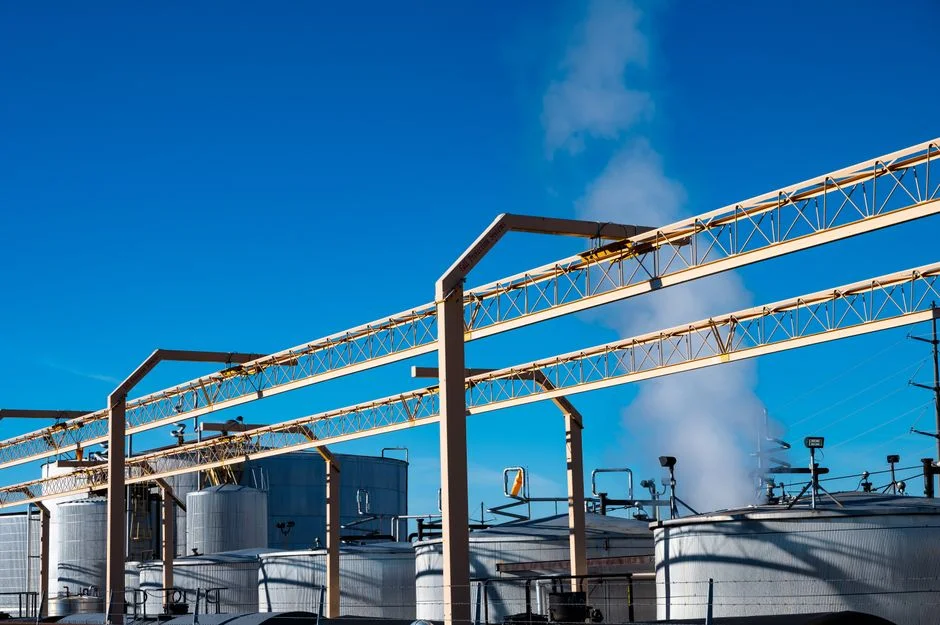
The train order below drops directly into a vendor RFQ. Influent and effluent targets are pinned to datasheet values so the EPC can score proposals on effluent guarantees rather than equipment lists. For a 20 MW IT load, lead with a lamella clarifier for TSS and silica reduction, then an industrial softener, then an on-site ClO₂ generator sized to the recirculating water volume — not just blowdown. The ClO₂ sizing rule transfers from the S3 Buenos Aires lesson: a generator sized only to blowdown will under-dose at peak summer wet-bulb and miss the 0.5 mg/L free-chlorine ceiling.
UPW reject from a co-located fab is kept off this train. Route it to chemical precipitation → dual-media filter → industrial RO system at 75–95% recovery, then reuse the RO permeate as cooling-tower makeup after a pH trim. The S3 Buenos Aires MBR module spec (DF series, 0.1 μm PVDF, 10–20 L/m²·h flux) is reusable for a Rosario domestic stream sized 5–10 m³/day for a 50-employee 24/7 team — see the MBR module reference and the MBR retrofit and upgrade guide if a packaged tank is being converted. Sludge from any train drops volume through a plate and frame filter press before Ley 24.051 manifest disposal; Buenos Aires sludge costs have risen 15% annually, and Santa Fe is moving on the same trajectory, so the dewatering step is a structural OPEX lever.
Cost bands and reuse decision framework
CapEx bands for the unit operations covered here should be taken from the Buenos Aires industrial benchmarks as the closest available proxy until Santa Fe-specific cost data is published: DAF $1.2M–$8M, MBR $1.8M–$12M, chemical precipitation $0.9M–$6M. OPEX lands at $0.80–$2.50/m³, with energy at 40%, chemicals at 30%, and sludge disposal at 20% — Argentina-wide drivers per S3. The variable an EPC should verify before locking the envelope is the industrial power tariff at the specific Assa supply node, because industrial tariffs in Santa Fe have moved independently of the Buenos Aires CAMMESA reference price over the last 18 months.
The reuse rule of thumb from S3 transfers unchanged: below 30% reuse → packaged WSZ with discharge BOD <30 mg/L as the only acceptance criterion; reuse to toilet flushing or cooling-tower makeup → MBR at 10 m³/day minimum; ≥50% reuse or blowdown hardness >200 mg/L as CaCO₃ → industrial RO polish. Pretreatment for the RO is a multi-media filter for ultra-pure water upstream plus an automatic chemical dosing system for the precipitation stage. The closed-loop reference is the Google Douglas County, GA facility: 1.3 million sq ft of data-hall space re-treating municipal wastewater for cooling (per ASCE 2024, cited in the 2026 data center blowdown treatment guide). The unit operations transfer to a Rosario site drawing on Paraná water; only inlet water quality and the discharge ceiling change. A parallel regional comparison is the Caracas data center blowdown engineering guide.
| Reuse target | Equipment selection | CapEx band (USD) | OPEX band (USD/m³) |
|---|---|---|---|
| <30% reuse, sewer discharge | Packaged WSZ (1–80 m³/h) | Low end of MBR/DAF range | 0.80–1.20 |
| Toilet-flush or cooling-tower makeup | MBR (≥10 m³/day) + lamella pretreatment | 1.8M–12M (MBR band) | 1.20–1.80 |
| ≥50% reuse or hardness >200 mg/L as CaCO₃ | Industrial RO polish (75–95% recovery) | 0.9M–6M (precipitation) + RO | 1.80–2.50 |
Frequently Asked Questions
Does ACUMAR apply to a Rosario site?
Only if the discharge physically reaches the Matanza-Riachuelo basin. The Matanza-Riachuelo watershed does not extend to the Paraná mainstem, so most Rosario outfalls default to the Santa Fe provincial framework (Decreto 2599/91 plus Ministerio de Ambiente resolutions) and Assa industrial tariff rules, not ACUMAR.
Why is free chlorine below 0.5 mg/L the parameter that fails first?
Sodium-hypochlorite-dosed cooling blowdown exceeds the 0.5 mg/L free-Cl₂ ceiling at the sewer tap. On-site ClO₂ generation in the 50–20,000 g/h range oxidizes isothiazolone and glutaraldehyde residuals without producing the trihalomethane load, and the per-sample ceiling is verifiable with a standard DPD test on the first sewer manhole.
Can UPW reject share a train with cooling-tower blowdown?
No. UPW reject runs 50–200 μS/cm conductivity, carries 5–20 mg/L silica, and holds trace copper from mixed-bed regenerant — none of which a blowdown softener is sized to remove. Route UPW reject to its own chemical precipitation → dual-media filter → industrial RO polish, then reuse the permeate as cooling-tower makeup.
How much blowdown does a 20 MW Rosario data hall produce?
Roughly 220–280 m³/day at 4–6 cycles of concentration with 1% drift, per the blowdown = makeup / (CoC − 1) relationship in ASCE 2024. The wet-bulb penalty against Buenos Aires is about 5–10% lower, but the softener and RO must be sized off the 25°C peak wet-bulb, not the 23°C mean.
What sludge rule applies?
Ley 24.051 national hazardous-waste manifest. Generators must declare HP-08 (corrosive) or HP-09 (metal-bearing) wastes within 30 days of generation, and the Assa/Puerto reception protocol sets the physical hand-off timing; a plate and frame filter press ahead of the manifest step drops volume and OPEX.