Why a Caracas data center cannot treat blowdown as waste
A Caracas data center in 2026 needs a four-stage treatment train sized for high-TDS, variable makeup water from the Guaire–Tuy basin: side-stream filtration (10-25 micron) → ultrafiltration (0.01-0.1 micron) → reverse osmosis (50-85% recovery, permeate 10-50 mg/L TDS) → partial ZLD with mechanical vapor compression on the RO concentrate. Reuse of 60-85% of blowdown as cooling-tower makeup is the economic core, with MVC handling the remaining brine where discharge is restricted.
Caracas sits inside the Guaire River basin, where Hidrocapital rations supply through the dry season (January–May). In a rationing event, freshwater allocation — not capex — becomes the binding constraint for any new hyperscale build, and the cost of trucked potable water during shortages has been reported in the $10-20/kgal range for industrial users (HydropureWater field data, 2026). That single fact reorders the project logic: blowdown is no longer a waste stream to dispose of, it is the second-most valuable liquid asset on the site after the grid itself.
The cooling load makes the volume non-trivial. At a tropical-Andean ambient wet-bulb of ~22-24°C (Caracas elevation ~900 m), evaporative systems running at 4 cycles of concentration discharge 25-30% of makeup as blowdown (Genesis Water Tech, 2025-12). For a 10 million-gallon-per-month facility that is 2.5-3 million gallons per month of concentrated water that must either be reused, trucked out, or treated to a discharge standard — and Venezuela's Decreto 883 and the applicable COVENIN industrial-effluent norms cap TDS, heavy metals, and residual biocides on any stream entering a receiving body or municipal sewer.
The 2026 disclosure environment reinforces the engineering case. A February 2026 TNFD case study flags that mismanaged data-center blowdown can carry high salt, metal, and pollutant loads into receiving waters, while a 2026 PLOS Water paper argues that local utilities rarely publish the chemistry data needed for communities to evaluate those loads (Water Utility Report, 2026-04-14). Lenders, ESG-linked financiers, and municipal inspectors are now asking about water quality, not just withdrawal volume — the same risk surface that the Stockholm data center blowdown guide highlights for European sites, but compressed into a much tighter resource envelope here.
The four wastewater streams a Caracas data center produces
Caracas data centers produce four distinct liquid streams, each with different chemistry, regulatory exposure, and treatment routing. Mapping them before sizing equipment prevents both double-counting and cross-contamination of the RO feed.
| Stream | Typical flow variability | Key chemistry / load | Treatment routing |
|---|---|---|---|
| Cooling-tower blowdown | Continuous; 25-30% of makeup at 4 cycles | 1,200-6,000 mg/L TDS, 10-50 mg/L TSS, biocides, scale/corrosion inhibitors | RO train → reuse as tower makeup; concentrate to MVC |
| Air-handler / equipment-room condensate | Continuous, lower volume | Low TDS but elevated Cu and Al from coil corrosion | Separate collection; blend into RO feed only after metals check |
| Domestic wastewater (kitchen, toilet, HVAC humidifier bleed) | Diurnal, staff-driven | BOD 200-400 mg/L, COD 400-800 mg/L, surfactants, nutrients | Separate biological train; never combine with blowdown RO feed |
| Fire-suppression test water & generator cooling bleed | Episodic (monthly to quarterly) | Glycol, diesel residues, rust, occasional PFAS from foam concentrates | Dedicated holding tank; route to authorized disposal, not the blowdown line |
Two operating rules follow. First, condensate should not be piped into the blowdown line by default — copper and aluminum spikes will foul UF and shorten RO membrane life. Second, the fire-suppression test volume looks small in a P&ID but can dump 5,000-20,000 gallons of glycol-contaminated water in a single discharge; that volume must hit a holding tank with a diversion valve, not the recovery skid.
Blowdown chemistry in Caracas: what changes versus a temperate site
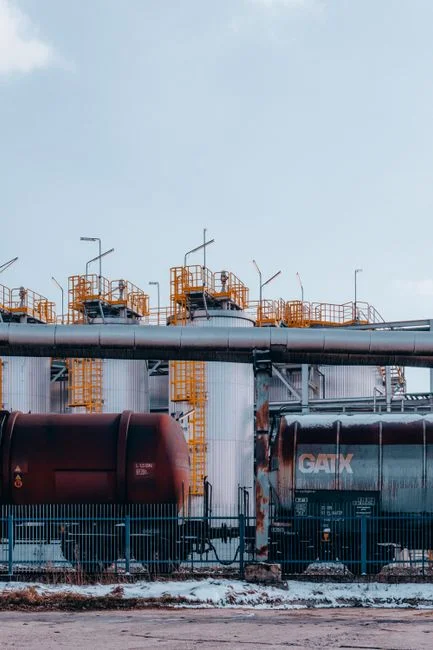
Generic "data center" CAPEX numbers under-deliver in Venezuela because the Guaire–Tuy basin source water and the tropical-Andean ambient profile push every block of the train harder than a temperate design assumes.
Surface water from the basin typically runs 300-700 mg/L TDS, but seasonal variation, intermittent chlorination by Hidrocapital, and occasional reservoir turnover events push makeup spikes above 1,000 mg/L. Concentrated 4×, that places blowdown squarely in the upper 1,200-6,000 mg/L TDS band documented for hyperscale sites (Genesis Water Tech, 2025-12). Hardness (Ca + Mg) and reactive silica from Andean-source supplies scale RO membranes aggressively, which is why a hybrid antiscalant program — paired with a multi-media filter sized for catalytic silica and hardness reduction upstream of the membranes — belongs in the design at the specification stage, not retrofitted after the first CIP event.
Aging distribution piping introduces iron and manganese spikes that foul hollow-fiber UF membranes within days if not addressed. Manganese greensand or aeration–filtration upstream of the UF rack is the lowest-risk answer; bypassing it to save 90 days of lead time on imported media has cost Venezuelan operators full membrane replacement on more than one commissioning. Finally, the warm ambient profile accelerates biological growth in the cooling loop, so oxidizing biocide residuals (typically chlorine-based) must be reduced with sodium bisulfite or activated carbon before the water hits the PVDF UF fibers — otherwise the backwash cycle shortens from days to hours.
Recommended treatment train for a Caracas hyperscale site
For a Caracas hyperscale site the economic answer is a four-block train: side-stream self-cleaning filtration → hollow-fiber UF → two-pass brackish-water RO → partial ZLD via mechanical vapor compression on the RO concentrate. Each block is sized to the previous block's output and the cooling tower's chemistry limits, not to a generic template.
| Block | Function | Operating envelope | Capex band (50 kGPD basis) |
|---|---|---|---|
| 1. Side-stream self-cleaning spiral filter | Remove SS from circulating water; protect downstream membranes | 10-25 micron; 1-5% of circulation flow | $50,000-200,000 (S1/S5) |
| 2. Hollow-fiber UF (PVDF, 0.03 micron) | TSS, bacteria, biocide residual stripping | 10-30 psi; 90-95% recovery; permeate backwash; tolerates up to 300 NTU feed spikes | 2,000-40,000 L/h modules (HydropureWater UF line) |
| 3. Two-pass brackish-water RO | Dissolved solids, hardness, silica removal | 150-400 psi; 50-85% recovery; permeate 10-50 mg/L TDS; antiscalant + optional GCAT | $250,000-500,000 installed; OPEX $1.50-3.00/kgal (S1/S5) |
| 4. MVC on RO concentrate (partial ZLD) | Recover 95-98% of concentrate as distillate; reduce brine hauling | Distillate <10 mg/L TDS; 15-25 kWh/kgal | $1-3M for 10,000-30,000 GPD (S1/S5) |
Block 1 is a side-stream self-cleaning spiral filter at 10-25 micron, sized to 1-5% of circulation flow, which reduces suspended solids to levels downstream membranes can absorb without rapid fouling. The capital is modest ($50,000-200,000 per Genesis Water Tech, 2025-12) and the operating cost is essentially solids disposal, but the lift it gives the rest of the train is the difference between RO membranes that last 3 years and ones that last 18 months in Guaire-basins water.
Block 2 is a hollow-fiber UF system with 0.03 micron PVDF membranes operating at 10-30 psi with 90-95% recovery and automatic permeate backwash. The UF tolerates up to 300 NTU feed turbidity, which matters during Hidrocapital main-flush events when raw-water turbidity in Caracas suburbs can swing by an order of magnitude inside a day.
Block 3 is a brackish-water RO system at 150-400 psi and 50-85% recovery, fed by a hybrid antiscalant with optional GCAT catalytic pretreatment. Permeate at 10-50 mg/L TDS goes directly back to the cooling tower as high-quality makeup; concentrate moves to Block 4.
Block 4 is partial ZLD via mechanical vapor compression on the RO concentrate, achieving 95-98% recovery with distillate below 10 mg/L TDS at 15-25 kWh/kgal. Capex sits at $1-3M for 10,000-30,000 GPD, which is the only honest way to handle the 15-30% of incoming flow that becomes RO brine when discharge permits are restricted or hauling costs spike during rationing (S1/S5).
Caracas-specific cost model: CAPEX, OPEX, and payback
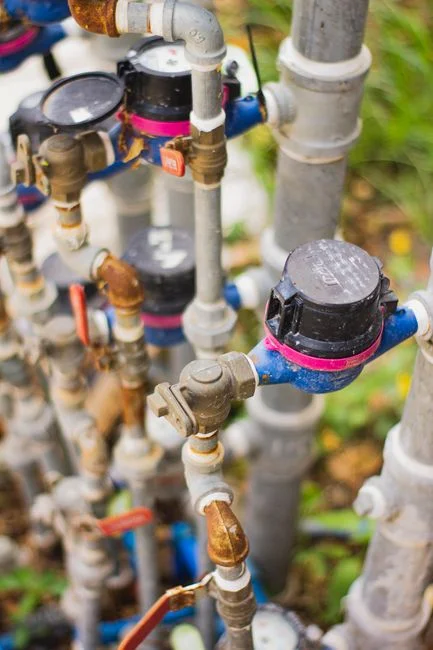
Venezuelan procurement is dollar-denominated for imported equipment, so the cost model below is expressed in USD-equivalent at 2026 pricing. Three lines drive the budget conversation with finance: the base RO package, the MVC polisher, and the discharge-fee / freshwater-offset payback.
| Line item | CAPEX (USD) | OPEX (USD/kgal) | Notes for Caracas |
|---|---|---|---|
| RO blowdown recovery, 50,000 GPD | $250,000-500,000 | $1.50-3.00 | Reference package per S1/S5 |
| MVC concentrate polisher, 10-30 kGPD | $1-3M | $4-8 (energy-dominated) | 15-25 kWh/kgal; back up on site |
| Full ZLD (add crystallizer) | + $3-8M | $5-15 | Only if discharge permit denied or trucking > $15/kgal |
| Side-stream + UF pretreatment | $50,000-200,000 (side-stream) + UF modules | Consumables + periodic CIP | Stock 90 days of membrane spares against 60-90 day import lead times |
At a 50,000 GPD system, discharge-fee avoidance of $5-15/kgal plus the freshwater offset from 60-85% blowdown reuse typically pays back the RO train alone in 18-36 months. The MVC polisher extends that payback to 36-60 months on its own, but it remains the right call when freshwater trucking exceeds $15/kgal during the January–May rationing window. Full ZLD only closes economically if the discharge permit is denied outright, freshwater trucking is structurally above $15/kgal year-round, or the lender requires zero liquid discharge as a condition of ESG-linked financing.
Three Caracas-specific OPEX inflators are easy to miss. First, imported membrane replacement logistics: a 60-90 day lead time is normal, so the commissioning spare-parts kit should be sized for two full membrane replacements, not one. Second, the 15-25 kWh/kgal of MVC electrical demand must be backed up on site during SEN (Sistema Eléctrico Nacional) outages; failing to account for that turns the polisher into a non-operating asset during the very rationing events it was specified for. Third, currency controls make multi-currency invoicing a project-management task in its own right — locking the equipment contract in USD and indexing spares to a hard-currency benchmark avoids the bolívar devaluation losses that have killed otherwise defensible CAPEX cases.
Grid resilience and automation: making the train survive a Caracas outage
Any treatment train in Venezuela is only as good as its ride-through. Specify the RO high-pressure pump and MVC compressor on a dedicated UPS with at least 30 minutes of autonomy, and add an automatic shutdown sequence that flushes membranes with permeate during extended outages — leaving RO elements dry and warm is the fastest way to destroy them, and importing replacements takes months. PLC controls with remote telemetry let the EPC monitor differential pressure, conductivity, and ORP from Miami or Bogotá; Venezuela's telecom restrictions are workable on a private fiber run to the data hall, which most hyperscale sites already have.
The largest energy recovery on the site is also the simplest: integrate the on-site diesel or gas generator waste-heat loop into the MVC brine heater. Waste-heat integration can cut the MVC's 15-25 kWh/kgal electrical demand by 30-50% (per S1/S5 brine-concentrator economics), which is the difference between an OPEX line that finance signs off on and one it does not. Finally, the chemical dosing skid — see the PLC-controlled antiscalant and biocide-neutralizer skid — should stock 90 days of antiscalant, biocide neutralizer, and CIP chemicals at commissioning, with reorder points tied to the same 60-90 day import clock.
Compliance checklist for Venezuelan regulators and EPCs
Before the discharge permit is signed, four items belong in the EIA and lender submission package. First, confirm TDS, heavy-metals, phosphorus, and biocide-residual limits under Decreto 883 and the applicable COVENIN industrial-effluent standard, and freeze those numbers in the design basis. Second, disclose the partial-ZLD brine disposal pathway — hauling to an authorized Class I facility versus a secured evaporation pond — explicitly in the EIA; ambiguous brine fate is the most common reason Caracas-area permit reviews stall. Third, benchmark the project against the 2026 TNFD and PLOS Water disclosure expectations so ESG-linked financing is not jeopardized by a missing water-quality section. Fourth, install water-quality monitoring data ports on the discharge line so municipal inspectors can pull readings without scheduling a site visit, mirroring the transparency posture recommended in the Barcelona data center blowdown guide for Mediterranean jurisdictions.
Frequently Asked Questions
What wastewater and cooling blowdown treatment does a data center in Caracas, Venezuela need?
A Caracas data center in 2026 needs a four-block train: side-stream self-cleaning filtration (10-25 micron) → hollow-fiber UF (0.01-0.1 micron PVDF) → brackish-water RO (50-85% recovery, permeate 10-50 mg/L TDS) → partial ZLD via mechanical vapor compression on the RO concentrate. The train reuses 60-85% of blowdown as cooling-tower makeup and handles the 15-30% concentrate with MVC at 95-98% recovery.
How much does cooling-tower blowdown recovery cost for a Caracas hyperscale site?
A 50,000 GPD RO blowdown recovery package runs $250,000-500,000 installed with $1.50-3.00/kgal OPEX (Genesis Water Tech, 2025-12). Adding MVC for the concentrate polisher adds $1-3M CAPEX. Full ZLD with a crystallizer adds another $3-8M and $5-15/kgal OPEX, and is only justified when discharge permits are denied or freshwater trucking exceeds $15/kgal.
Why is partial ZLD preferred over full ZLD in Venezuela?
Partial ZLD via mechanical vapor compression on the RO concentrate achieves 95-98% recovery at 15-25 kWh/kgal and $1-3M capex for 10,000-30,000 GPD, versus $3-8M capex and $5-15/kgal OPEX for full ZLD with a crystallizer. In Caracas, where freshwater is rationed but capital is constrained, partial ZLD is the economic answer because it captures most of the recovery benefit at a fraction of the full-ZLD cost.
How does the Caracas grid instability affect treatment train design?
Specify the RO high-pressure pump and MVC compressor on a dedicated UPS with at least 30 minutes ride-through, plus an automatic permeate-flush shutdown sequence to protect membranes during extended SEN outages. Integrate the on-site generator waste-heat loop into the MVC brine heater to cut MVC electrical demand by 30-50%, and stock 90 days of antiscalant, biocide neutralizer, and CIP chemicals against 60-90 day import lead times.
Related Equipment
- brackish-water RO system — specifications, capacity range, and technical data