Why Barcelona Became a Mediterranean Data-Center Build Target in 2026
Barcelona's metropolitan area is the warmest and driest of the major Western Mediterranean build clusters: average summer wet-bulb sits at roughly 24°C versus 21°C in Marseille, suppressing free-cooling hours and pushing operators toward adiabatic and evaporative designs that run at higher cycles of concentration. That climate signal, layered onto the Ter-Llobregat supply system that serves ~5 million people across the Barcelona–Girona corridor, has reshaped the conversation from "do we need on-site treatment?" to "what is the smallest train that satisfies the Agència Catalana de l'Aigua (ACA) permit?" The ACA tightened non-potable industrial allocations for cooling make-up starting in 2023, so reclaimed water has moved from a corporate-social-responsibility line to a compliance lever with hard numbers behind it. Two reporting instruments now sit on top of that: Spanish Real Decreto-ley 8/2023 on digitalization and sustainability, and the recast EU Energy Efficiency Directive 2023/1791, both of which require large data centers to report WUE and reuse metrics. The 2026 Barcelona cohort is the first to be commissioned directly into that reporting regime. For the engineering twin that establishes the baseline architecture, see the Marseille data-center treatment guide; the Marseille site runs PUE 1.11, draws ~2 million L/day, and the same chemistry logic carries forward to Barcelona with Mediterranean-specific adjustments.
The Four Waste Streams a Barcelona Data Center Must Treat
A 30–100 MW Barcelona-class site must handle four distinct waste duties, each with its own chemistry envelope and its own permit line. The intake pretreatment duty feeds the closed chilled-water loop and the heat-rejection interface, and must drop suspended solids, organic load and chlorine residual down to whatever feed spec the loop and downstream RO stages demand; Ter/Llobregat surface water plus auxiliary potable make-up is the typical blend. The cooling-tower blowdown (CTBD) duty is the largest recoverable stream: at 4 cycles of concentration, CTBD equals 25% of make-up volume, with TDS in the 1,200–6,000 mg/L band, silica at 50–150 mg/L, plus residual biocides, scale inhibitors and corrosion products (per Genesis Water Technologies, 2026). The sanitary wastewater duty is sized to the EU Urban Waste Water Directive 91/271/EEC sensitive-area envelope — BOD ≤25 mg/L, TSS ≤35 mg/L and total N ≤15 mg/L — and is typically met with a packaged MBR carrying PVDF membranes so the effluent is near-reuse quality for toilet flushing or on-site irrigation. The fourth duty is the heat-rejection interface: any condensate or closed-loop bleed exported to Barcelona's district-heating network must be polished to keep iron, copper, TOC and biological regrowth off the secondary loop, mirroring the constraint that Dalkia's Euroméditerranée network imposes in Marseille. The table below lays out the chemistry envelope a permitting engineer should expect on each stream.
| Stream | Key parameters | Typical range (Barcelona-class site) | Treatment target |
|---|---|---|---|
| Ter/Llobregat intake | TSS, TOC, free chlorine | 5–25 mg/L TSS; 2–6 mg/L TOC; 0.2–0.8 mg/L Cl₂ | Feed spec for closed loop and RO |
| Cooling-tower blowdown (4 CoC) | TDS, silica, calcium hardness, chloride, biocides | 1,200–6,000 mg/L TDS; 50–150 mg/L SiO₂; 400–1,200 mg/L Ca²⁺ as CaCO₃; 300–900 mg/L Cl⁻ | Reuse as cooling make-up; controlled-salt-precipitation RO |
| Sanitary wastewater | BOD, TSS, total N, E. coli | 200–400 mg/L BOD; 200–350 mg/L TSS; 40–70 mg/L N | UWWTD 91/271/EEC sensitive-area limits (BOD ≤25, TSS ≤35, TN ≤15) |
| Heat-rejection condensate | Fe, Cu, TOC, microbio regrowth precursors | 0.05–0.5 mg/L Fe; 0.01–0.2 mg/L Cu; 0.5–3 mg/L TOC | District-heating interface specification |
On the intake leg a multi-media filter for Ter/Llobregat intake pretreatment drops suspended solids ahead of chemical dosing, which keeps the LSI stable on the chilled-water side.
Barcelona Intake and Blowdown Chemistry: Why Standard BWRO Falls Short
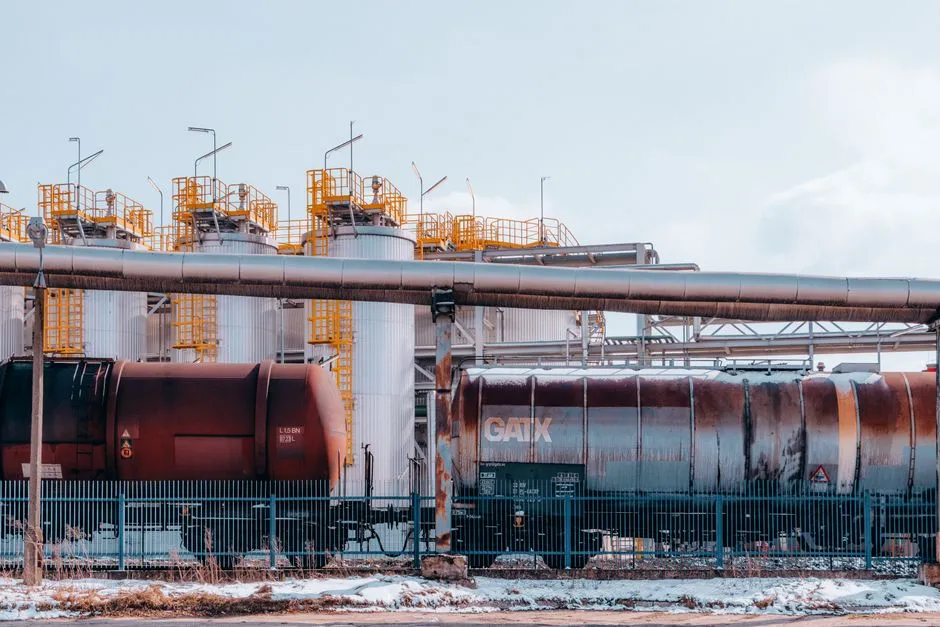
Mediterranean intake in the Barcelona basin is silica-rich and chloride-heavy. Surface sources typically run 15–40 mg/L silica and elevated chloride, so the concentrate stream in a conventional BWRO crosses both silica and CaSO₄ saturation well before reaching 80% recovery. Conventional brackish RO is therefore limited to 75–80% recovery before silica, CaCO₃ and CaSO₄ scaling become unmanageable; pushing higher with traditional layouts demands extra stages, interstage booster pumps and recirculation loops that add capex, complexity and cleaning risk (HydropureWater, 2026). The engineering ceiling is chemistry, not membranes — the supersaturation that drives scaling lives in the concentrate, not on the membrane surface, which is why decoupling salt precipitation from the membrane stage is the right architectural lever. Two reference designs do that work: a controlled-salt-precipitation RO that routes concentrate through a fluidized-bed reactor where scale inhibitors are deactivated and silica, CaCO₃ and other problematic salts precipitate as compact pellets, leaving a residual NaCl brine that can be processed at much higher overall recovery; and dynamic-flush RO, which alternates short production periods with brief, high-velocity flushes that keep the membrane inside the crystallization induction phase, extending CIP intervals and avoiding interstage boosting entirely. For cost framing: a 50,000 GPD blowdown RO installed runs $250,000–$500,000 with opex of $1.50–$3.00 per 1,000 gallons treated (Genesis Water Technologies, 2026). Pushing recovery from 75% to ~95% on a Barcelona-class site can displace hundreds of millions of liters of make-up per year, which is what unlocks the project against the ACA allocation ceiling. The relevant hardware is an industrial RO system for cooling-tower blowdown sized for high-recovery, scale-prone feed water.
A Barcelona Treatment Train Built Stream by Stream
The train has to be assembled stream by stream rather than as a single end-of-pipe solution, because each duty has its own chemistry envelope and its own permit line. On the intake leg, a multi-media filter for Ter/Llobregat intake pretreatment drops suspended solids, followed by an automatic chemical dosing system for scale and biocide control and a side-stream filter sized to 1–5% of circulation flow that keeps particulates below the threshold that would erode the downstream RO's recovery rate. On the CTBD leg, DAF pre-treatment ahead of the CTBD RO loop removes suspended solids, residual treatment chemicals and oils that would otherwise foul the high-recovery membranes; the clarified stream then feeds the controlled-salt-precipitation RO, where permeate returns to the cooling tower as make-up, pellets leave as solid waste, and residual NaCl brine is processed at higher recovery. The sanitary leg runs through rotary bar screening and a packaged MBR for the on-site sanitary stream with PVDF flat-sheet or hollow-fiber membranes, sized for the 91/271/EEC sensitive-area envelope so effluent can be reused for toilet flushing or on-site irrigation. The heat-rejection polishing leg applies polishing filtration plus UV polishing on the heat-rejection condensate to keep corrosion products and biological regrowth off the secondary network. Solids from the DAF and MBR stages are dewatered with a filter press, typically a plate-frame filter press for cake dryness above 22–25% DS. The table below sequences the equipment list against the duty it satisfies.
| Treatment stage | Equipment | Performance target | Permit link |
|---|---|---|---|
| Intake pretreatment | Multi-media filter, automatic dosing, side-stream filter | Low TSS, controlled biofilm, stable LSI on chilled water | IED 2010/75/EU intake envelope |
| CTBD pre-treatment | Media filtration + DAF | TSS <15 mg/L ahead of RO | IED 2010/75/EU discharge envelope |
| CTBD reuse | Controlled-salt-precipitation RO + dynamic-flush RO | ~95% recovery, ~1 mg/L silica permeate | IED 2010/75/EU + ACA local limits |
| Sanitary | Packaged MBR (PVDF) + disinfection | BOD ≤25 mg/L, TSS ≤35 mg/L, TN ≤15 mg/L | UWWTD 91/271/EEC sensitive area |
| Heat-rejection polishing | Polishing filter + UV | Low Fe/Cu, low TOC, no biological regrowth | District-heating interface spec (Districlima) |
| Solids handling | Plate-frame filter press | Cake dryness ≥22% DS, supernatant recycle | ACA solids management |
Regulatory Crosswalk: ACA, Spanish RD, EU IED, UWWTD, EED

Five binding instruments frame the Barcelona discharge envelope, and each treatment step maps to at least one of them. The EU Industrial Emissions Directive 2010/75/EU governs the cooling-tower and chiller discharge envelope, with BAT-AELs on TDS, total phosphorus and biocides shaping the CTBD reuse train. The EU Urban Waste Water Directive 91/271/EEC governs the on-site sanitary stream, and the sensitive-area thresholds — BOD ≤25 mg/L, TSS ≤35 mg/L, total N ≤15 mg/L — drive the MBR specification. Spanish Real Decreto-ley 8/2023 and the recast EU Energy Efficiency Directive 2023/1791 require large data centers to report WUE and reuse metrics from 2024 onward, with compliance verification from 2026, which means Barcelona's 2026 builds are the first cohort commissioned directly into that regime. The Catalan ACA permitting overlay sets local numerical limits, monitoring cadence and the coastal-discharge protections that govern any sea-facing brine line or heat-rejection outfall. The table below ties the engineering work to the regulatory instrument.
| Regulatory instrument | Scope | Treatment stage that satisfies it |
|---|---|---|
| EU IED 2010/75/EU | Cooling-tower and chiller discharge envelope | CTBD reuse loop, multi-media filtration, controlled-salt-precipitation RO |
| EU UWWTD 91/271/EEC | On-site sanitary stream | Packaged MBR with PVDF membranes |
| Spanish RD 8/2023 + EU EED 2023/1791 | WUE and reuse reporting (2024 onward, verified 2026) | Monitoring on make-up, blowdown, evaporation and water-quality parameters |
| ACA permitting (Agència Catalana de l'Aigua) | Local numerical limits, monitoring cadence | Whole treatment train; discharge log |
| Mediterranean coastal discharge protections | Sea-facing brine line, heat-rejection outfall | CTBD reuse reduces volume; residue meets local discharge limits |
Barcelona ROI: Why the Case Is Heat and PUE, Not Freshwater
The board-level case in Barcelona is not built on water savings. A hyperscale site drawing ~2 million L/day of Ter/Llobregat make-up pays a marginal water cost that is small compared to the headline savings on the energy line, and the freshwater saving is only the supporting column rather than the lead. The lead is the district-heating interface. Where Barcelona's heat-reuse networks exist (Districlima's footprint around the 22@ district, the Fira-area loops, and the urban sections of the metropolitan network), a data center running at PUE 1.11–1.15 can export low-grade heat to the secondary loop and capture both avoided-chiller energy and a heat-offtake tariff, mirroring the Euroméditerranée arrangement in Marseille. The 1.11 PUE number is the procurement lever too: hyperscalers and EU sustainability procurement frames increasingly treat sub-1.2 PUE as a hard tender requirement, and the equipment train above is what gets the project there. A 15 MW reference case under the same architecture shows a 6.7-year simple payback on water alone at $200,000 capex and 60% blowdown recovery, improving to 3–5 years once avoided discharge fees (typical range $5–15 per 1,000 gallons in water-stressed regions), heat-export revenue and WUE reporting value are included (Genesis Water Technologies, 2026). For solids handling, a plate-frame filter press sized to the DAF and MBR sludge streams keeps cake dryness at or above 22–25% DS and returns the supernatant to the head of the train, which closes the mass balance without adding a new discharge line.
Frequently Asked Questions
What wastewater and cooling blowdown treatment does a data center in Barcelona, Spain need?
A 30–100 MW Barcelona-class site needs a four-stream treatment train: intake pretreatment (multi-media filtration plus automatic dosing and side-stream filtration) on the Ter/Llobregat-derived make-up; a controlled-salt-precipitation RO train on the cooling-tower blowdown targeting ~95% recovery versus the conventional 75–80% ceiling; a packaged MBR with PVDF membranes for the on-site sanitary stream sized to EU UWWTD 91/271/EEC sensitive-area limits (BOD ≤25 mg/L, TSS ≤35 mg/L, total N ≤15 mg/L); and polishing filtration plus UV on any condensate exported to Barcelona's district-heating network. Compliance is governed by EU IED 2010/75/EU, UWWTD 91/271/EEC, Spanish RD 8/2023 and the ACA permitting layer.
Why does conventional BWRO cap at 75–80% recovery on Barcelona-class CTBD?
Mediterranean intake in the Barcelona basin is silica-rich (15–40 mg/L) and chloride-heavy, so the concentrate in a conventional BWRO crosses silica and CaSO₄ saturation well before 80% recovery; pushing higher with traditional layouts demands extra stages, interstage booster pumps and recirculation loops that add capex, complexity and cleaning risk. Chemistry-controlled designs such as a controlled-salt-precipitation RO with a dynamic-flush stage reach ~95% overall recovery with permeate silica near 1 mg/L by precipitating sparingly soluble salts as pellets before the residual NaCl brine is processed (HydropureWater, 2026).
Which regulations govern a Barcelona data center's wastewater train in 2026?
Three binding EU instruments and two Spanish/Catalan layers frame the discharge envelope. EU IED 2010/75/EU governs the cooling-tower and chiller discharge envelope and sets the BAT-AELs on TDS, total phosphorus and biocides. EU UWWTD 91/271/EEC governs the on-site sanitary stream and sets the BOD ≤25 mg/L, TSS ≤35 mg/L, total N ≤15 mg/L sensitive-area thresholds. Spanish Real Decreto-ley 8/2023 and the recast EU EED 2023/1791 require large data centers to report WUE and reuse metrics from 2024 onward, with compliance verification from 2026. The Catalan ACA permitting layer sets local numerical limits, monitoring cadence and the coastal-discharge protections that govern any sea-facing brine line or heat-rejection outfall.
What does a 50,000 GPD blowdown RO skid cost in 2026?
A 50,000 GPD RO system treating cooling-tower blowdown costs $250,000–$500,000 installed, with operating costs of $1.50–$3.00 per 1,000 gallons treated, including energy, chemicals, membrane replacement and maintenance (Genesis Water Technologies, 2026). Direct discharge fees in water-stressed regions run $5–15 per 1,000 gallons, so reuse economics on a Barcelona-class site improve materially once the train pushes recovery from the conventional 75% ceiling to ~95%.
Is there a Mediterranean twin reference for Barcelona?
Yes — the Marseille data-center treatment guide covers a 100 MW-class Mediterranean hyperscale site with PUE 1.11, ~2 million L/day intake, and the same four-stream treatment architecture. Barcelona sits 3°C hotter on summer wet-bulb, draws on the Ter/Llobregat supply rather than La Galerie de la Mer gallery water, and falls under ACA permitting rather than French Arrêté, but the controlled-salt-precipitation RO and packaged MBR legs are architecturally identical. For a contrasting continental climate, the Warsaw data-center treatment guide and the tropical Manila data-center blowdown guide are useful baselines.