Why 2026 Design Criteria Are Tighter Than Five Years Ago
Hospital effluent design criteria in 2026 sit on three numbers: a design flow of 400–1,200 L per bed per day with a peaking factor of 1.5–2.0, influent loads of 120–500 mg/L COD and 33.6 kg BOD5 / 33.8 kg TSS per 1,000 occupied bed-day under the USEPA categorical basis, and a tertiary target of 6-log virus and 4-log bacteria reduction before any reuse or surface discharge. Under the EU Urban Waste Water Directive 91/271/EEC, hospital discharges above 2,000 population equivalent (PE) must achieve ≥95% BOD removal, and the 2024 Watch List now formally covers pharmaceutical residues, forcing a tertiary AOP/activated-carbon step on most new builds (HydropureWater 2026 blog, S4). On the enforcement side, the 2025 update to the EPA Clean Water Act penalty schedule — carried into 2026 enforcement — lifts civil penalties to a ceiling of $54,833 per day per violation, which is the number a CFO will recognise before an engineer does (S4).
Public-health stakes have moved in parallel. Hospital effluent intrinsic toxicity runs 5–15× urban sewage, with documented inhibition of downstream activated-sludge biomass (PMC review, S3). Oncology, radiology and infectious-disease wards contribute 50–80% of the toxic mass to a hospital's daily discharge (S3), which is why segregated-stream design is no longer optional. A 2023 Environmental Science & Technology study confirmed proliferation of antibiotic-resistance genes downstream of untreated hospital effluent (S4) — the kind of finding that turns "best practice" into a permit condition.
Design Basis: Flow, Load and Peaking Factor
The defensible 2026 design flow for a hospital ETP is:
Qdesign = Nbeds × qbed × PF
where Nbeds = occupied bed count, qbed = 400–1,200 L/bed/day (developed-country hospitals; 200–400 L/capita/day for developing-country facilities per the PMC review, S3), and PF = 1.5–2.0 over the 24-hour diurnal curve. Use PF = 1.7 as the default; lift to 2.0 when laundry, kitchen and CSSD streams discharge without buffering.
Organic and solids design load anchors to the USEPA categorical basis: 33.6 kg BOD5 and 33.8 kg TSS per 1,000 occupied bed-day (S3). The HydropureWater 2026 field dataset puts working-band influent COD at 120–500 mg/L; use 350 mg/L as the design COD when site-specific sampling is unavailable (S4). The Indian Biomedical Waste Management Rules (1998, amended 2013, enforced in 2026) set the receiving-sewer envelope at BOD5 < 350 mg/L and COD < 250 mg/L, which is the ceiling to design against, not the design influent itself (S3).
| Parameter | Unit | Typical Influent (Hospital) | 2026 Design Target | Source / Standard |
|---|---|---|---|---|
| Per-bed flow (developed) | L/bed/day | 400–1,200 | 800 (default) | S3 (PMC review) |
| Peaking factor | — | — | 1.5–2.0 (1.7 default) | S4 (HydropureWater) |
| BOD5 | mg/L | 150–400 | <30 (reuse) / <50 (POTW) | USEPA categorical, S3 |
| COD | mg/L | 120–500 | <100 (discharge) / <50 (reuse) | S4 (HydropureWater) |
| TSS | mg/L | 100–350 | <30 (MBR effluent) | S3, S4 |
| Ammoniacal N | mg/L | 20–80 | <5 (EU sensitive areas) | S3 |
| Fecal coliform | CFU/100 mL | 106–107 | <1,000 (unrestricted irrigation) | WHO 2023, S4 |
Contaminant Classes That Drive Unit-Process Selection
Four contaminant classes govern 2026 unit-process selection, and each maps to a specific process decision rather than a generic "advanced treatment" label:
- Pharmaceutical residues — antibiotics (ciprofloxacin, sulfamethoxazole), cytotoxics, iodinated contrast media, hormones, antiepileptics (carbamazepine). A 2022 New York State monitoring study measured 27 psychoactive APIs at 0.98–1,220 ng/L in WWTP influent and 0.3–87% removal through conventional activated sludge, with negative removal on seven compounds from deconjugation (S3). The decision rule: if the influent carries recalcitrant APIs above 100 ng/L, specify a tertiary AOP/Ozone or GAC stage downstream of MBR.
- Heavy metals — Hg, Pt, Gd, Cd, Cu, Ni, Pb, Zn from dental amalgam, diagnostic reagents and laboratory discharges. WHO 2013 and EU directives list mercury as a List I dangerous substance with a 5% allowance in discharge — yet dental sources alone contribute >50% of Hg, Ag, Sn, Cu and Zn in UK/European hospital effluent (S3). Specify source segregation plus precipitation/ion-exchange pretreatment; do not rely on biological removal.
- Pathogens — 6-log virus and 4-log bacteria reduction is the working 2026 floor. For unrestricted irrigation reuse, add <1,000 CFU/100 mL fecal coliform and <1 helminth egg/L (WHO 2023, S4).
- Radionuclides — must be held in dedicated decay tanks until activity drops below safe limits before any biological train, per WHO 2013 (S3).
Stream segregation is the upstream lever: WHO 2013 distinguishes blackwater, greywater and storm water (S3), and parallel rather than fully-mixed equalisation is what keeps pharmaceutical and BOD peaks from blowing through the biological stage.
The 2026 Treatment Train: Screening to Disinfection
Walk the train in the order it sits on the P&ID:
- Headworks — a 3–6 mm aperture GX rotary mechanical bar screen ahead of an equalisation tank sized at 8–12 h HRT. Equalisation is what smooths diurnal pharmaceutical and BOD peaks; undersize it and the MBR pays for it.
- Primary/DAF — a dissolved air flotation unit at 4–25 m/h hydraulic loading removes FOG and floatables; dose PAC 50–150 mg/L and PAM 1–3 mg/L when TSS runs high (S4).
- Biological — A/O or A2/O for nitrogen removal; for flows of 50–1,000 m³/day the 2026 default is a submerged HydropureWater MBR membrane bioreactor system operating at MLSS 8,000–12,000 mg/L, which removes the secondary clarifier and tightens effluent TSS to <30 mg/L.
- Tertiary polish — UV/H2O2 or ozone for ≥99% removal of ciprofloxacin, carbamazepine and other recalcitrant APIs (S4). Energy cost is 2–3× MBR, so apply it as a polishing step on the recalcitrant slipstream, not the whole flow.
- Disinfection — an on-site chlorine dioxide generator at 5–10 mg/L for 6-log virus kill, or a medium-pressure UV sterilizer at 40 mJ/cm² for chlorine-resistant protozoa. UV is preferred on reuse loops to avoid DBPs.
- Sludge — a plate-and-frame filter press to ≥22% DS; classify as hazardous if it carries cytostatic residues and route to incineration or cement-kiln co-processing (S4).
| Unit Operation | Design Parameter | Target Removal / Performance |
|---|---|---|
| Bar screen (3–6 mm) | 3–6 mm aperture | Solids >6 mm removed |
| Equalisation | 8–12 h HRT | Peak-to-average ratio <1.5 |
| DAF | 4–25 m/h surface loading; PAC 50–150 mg/L, PAM 1–3 mg/L | 60–80% TSS, >90% FOG |
| MBR (A/O) | MLSS 8,000–12,000 mg/L; HRT 6–12 h; SRT 20–40 d | 92–97% COD, TSS <30 mg/L |
| AOP / Ozone | O3 5–15 mg/L or UV/H2O2 40 mJ/cm² | ≥99% ciprofloxacin, carbamazepine |
| ClO2 disinfection | 5–10 mg/L, CT >30 mg·min/L | 6-log virus, 4-log bacteria |
| Filter press | 8–15 bar, 2–4 h cycle | Cake DS ≥22% |
Worked Example: Sizing an MBR for a 300-Bed Hospital
Take a 300-bed tertiary hospital on a developed-country site with no on-site reuse, discharging to a POTW.
- Design flow. 300 × 800 L/bed/day × 1.7 ≈ 408 m³/day, round to 420 m³/day (≈17.5 m³/h).
- Organic load. 300 × 0.0336 = 10.1 kg BOD5/day. At MLSS 10,000 mg/L and F:M 0.10, aerobic volume ≈ 50 m³.
- Tank volumes. Anoxic ≈ 25 m³ (denitrification), equalisation 140 m³ (8 h HRT), MBR chamber 15 m³. Total hydraulic retention ≈24 h.
- Membrane area. At net flux 15 LMH and 17.5 m³/h, area = 17,500 L/h ÷ 15 L/m²·h ≈ 1,170 m². That is four DF-series PVDF flat-sheet MBR modules at 150 m² each, or two larger skids at ~600 m² (DF range 80–225 m² per cassette).
- Aeration duty. 0.8 kWh/m³ × 420 m³/d = 336 kWh/d; blowers sized ~14 m³/min at 0.5 bar with DO control 1.5–2.0 mg/L in the aerobic zone.
- Footprint. Modular MBR train at 420 m³/day fits in roughly 700 m² including galleries and chemical rooms; the 200 m³/day reference footprint is ~400 m² (S4).
Sanity check against energy: 336 kWh/d against the 0.5–0.8 kWh/m³ band for biological systems (S4) implies a specific energy of 0.80 kWh/m³ — at the upper end of the band, which is what a 300-bed tertiary hospital with on-site AOP would actually draw. If AOP is in scope, lift aeration + ozone to 1.0–1.2 kWh/m³.
Compliance Crosswalk: 2026 Discharge Limits by Region
Each limit maps to a specific unit operation; the table is what an engineer hands to procurement.
| Region / Standard | Key 2026 Limits | Process Implication |
|---|---|---|
| USA — EPA categorical (S3) | BOD5 33.6 kg / TSS 33.8 kg per 1,000 occupied bed-day; local POTW pretreatment | MBR + disinfection to <30 mg/L TSS |
| EU — Directive 91/271/EEC (S4) | ≥95% BOD removal for >2,000 PE; 2024 Watch List for pharmaceuticals | MBR + AOP/GAC for API removal |
| China — GB 18466 (S3) | pH 6–9; SS ≤400; BOD5 ≤300; COD ≤500; fecal coliform 1,000–5,000 ind./L | MBR + ClO2 or UV disinfection |
| India — BMW 1998/2013 (S3) | pH 5.5–9.0; BOD5 <350; COD <250; SS <600; O&G ≤20; ammoniacal N ≤50 mg/L | MBR + ClO2; source segregation for cytotoxics |
| Reuse — WHO 2023 (S4) | <1,000 CFU/100 mL fecal coliform; <1 helminth egg/L; turbidity <1 NTU (reuse) | MBR + UV (40 mJ/cm²) for unrestricted irrigation |
The Indian and Chinese envelopes are the toughest in absolute numbers; the EU and WHO envelopes drive the AOP/UV polish on recalcitrant APIs. For a US indirect discharger, the binding limit is the local POTW's categorical pretreatment programme plus the EPA fines ceiling of $54,833/day (S4).
Equipment Selection and Indicative 2026 Cost Bands
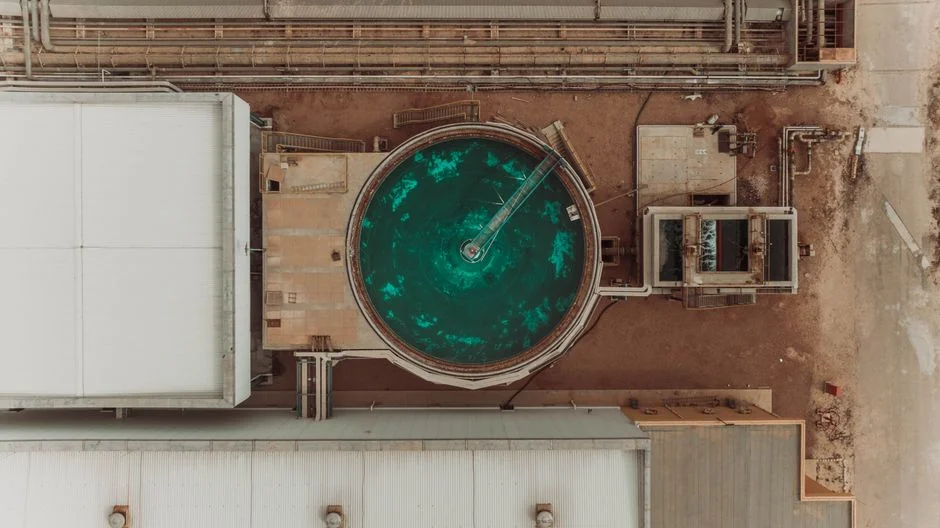
Translating the train into a procurement shortlist for a packaged 200 m³/day modular MBR:
- Headworks — GX rotary mechanical bar screen + automatic chemical dosing skid for PAC/PAM; CAPEX ≈5–8% of total plant (S4 cost structure).
- Primary clarification — DAF system sized to peak flow, with polymer make-up.
- Biological/MBR — HydropureWater MBR membrane bioreactor system with submerged DF-series PVDF flat-sheet MBR modules; CAPEX dominates at 50–55% of plant cost; membrane replacement every 5–10 years (S4).
- Disinfection — on-site chlorine dioxide generator where the hospital already handles oxidant chemicals; medium-pressure UV sterilizer where reuse is in scope.
- Sludge — plate-and-frame filter press to ≥22% DS.
For flows <50 m³/day, the medical and hospital wastewater treatment system delivers a 0.5 m²-footprint package with multi-stage filtration and ozone disinfection (S6) — small enough for a clinic basement, large enough to cover EPA and EU 91/271/EEC discharge requirements.
Indicative 2026 CAPEX for a packaged 200 m³/day modular MBR sits in the band reported on HydropureWater project pages; civil works are 30–40% of CAPEX, with a 20–30% uplift if the system goes underground (S4). ROI levers to put in front of the CFO: avoided EPA fines up to $54,833/day, water-reuse savings of $0.50–$2.00/m³, and carbon-credit eligibility when MBR is paired with solar (S4). The Kumasi hospital case study reported 22% OPEX reduction with solar-assisted MBR (S4).
Frequently Asked Questions
What is the design flow per bed for a hospital ETP in 2026?
Use 400–1,200 L/bed/day for developed-country hospitals and 200–400 L/capita/day for developing-country facilities, then apply a peaking factor of 1.5–2.0 (1.7 default) over the 24-hour diurnal curve (per PMC review, S3). For a 300-bed hospital this yields a 420 m³/day design flow at the mid-range 800 L/bed/day with PF 1.7, per the HydropureWater 2026 field dataset (S4).
How do you size an MBR for a hospital wastewater treatment plant?
Anchor organic load on the USEPA categorical basis (33.6 kg BOD5 per 1,000 occupied bed-day), target F:M 0.08–0.12 at MLSS 8,000–12,000 mg/L, and size membrane area at net flux 15 LMH using the design flow in m³/h. The 300-bed worked example in this guide gives 1,170 m² of DF-series PVDF flat-sheet MBR modules with aeration duty 0.8 kWh/m³ (S4).
Which unit operation removes pharmaceutical residues from hospital effluent?
A tertiary advanced oxidation stage — UV/H2O2 or ozone at 5–15 mg/L — achieves ≥99% removal of ciprofloxacin, carbamazepine and other recalcitrant APIs downstream of the MBR, per the 2026 HydropureWater treatment-comparison matrix (S4). Specify it as a polishing step on the recalcitrant slipstream rather than the whole flow to keep energy in the 2–3× MBR band that AOPs command.
What pathogen log reduction is required for hospital effluent reuse in 2026?
6-log virus and 4-log bacteria reduction is the working floor; unrestricted irrigation reuse under the WHO 2023 guidelines also requires <1,000 CFU/100 mL fecal coliform and <1 helminth egg/L (S4). The configuration that delivers both is MBR + medium-pressure UV at 40 mJ/cm², which avoids the DBPs that chlorine and ClO2 leave in reuse loops (S4).
Which 2026 standard applies to a hospital discharging to a US POTW?
The USEPA categorical loadings of 33.6 kg BOD5 and 33.8 kg TSS per 1,000 occupied bed-day, plus the local POTW's pretreatment programme, are binding; civil penalties under the 2025 Clean Water Act update — in force through 2026 — reach $54,833 per day per violation (S3, S4). The medical and hospital wastewater treatment system and the modular MBR both meet the <30 mg/L TSS ceiling required by most POTW programmes (S4, S6).