Why Pharmaceutical Medical Wastewater Needs Its Own Treatment Train
Pharmaceutical medical wastewater is a blend of four streams that conventional municipal plants are not designed to treat together: blackwater from staff and patients, greywater from wash-down, process effluents containing active pharmaceutical ingredient (API) residues and solvents, and laboratory waste. That mixture is fundamentally different from pure hospital sewage, which is pathogen-dominated, and from municipal effluent, which is dilution-dominated. Pharmaceutical active compounds (PhACs) are present at ng/L to μg/L concentrations, are structurally stable, persist in the environment, and resist conventional WWTPs (per ScienceDirect Energy Nexus 2022). The major contaminant classes tracked in that review include non-steroidal anti-inflammatory drugs (NSAIDs), antibiotics, the SSRI/SNRI/SARI/NRI/NDRI antidepressant family, and antibiotic resistance genes (ARGs).
Treating "medical" and "pharmaceutical" effluent identically is a design error. Hospital effluent is dominated by fecal coliforms, bloodborne pathogens, and disinfectants, and a chlorine- or UV-based system handles it adequately. Pharmaceutical effluent is dominated by APIs, organic solvents from synthesis, and cleaning-in-place (CIP) chemicals, and it carries the ARG vector. A defensible 2026 system must address both. Compliance pressure now comes from three regulators acting in parallel: the EU Urban Waste Water Treatment Directive 91/271/EEC, EPA hospital effluent guidance under the Clean Water Act, and the WHO drinking-water and sanitation guidelines, all of which converge on tighter limits for nutrient, microbial, and emerging-contaminant discharge.
Typical Influent and Effluent Quality for a Pharmaceutical Medical Stream
The numbers below represent the design envelope a procurement engineer should use for a pharmaceutical medical stream in 2026. They combine measured ranges from hospital pharmacy and small API plant operations, anchored against the WSZ A/O underground unit (1–80 m³/h) used as a hospital-grade biological compliance benchmark.
| Parameter | Typical influent range | 2026 design effluent target (sensitive areas) |
|---|---|---|
| COD | 500–5,000 mg/L | ≤125 mg/L |
| BOD₅ | 200–2,000 mg/L | ≤25 mg/L |
| TSS | 100–800 mg/L | ≤35 mg/L |
| Total nitrogen | 30–200 mg/L | ≤15 mg/L |
| NH₃-N | 10–80 mg/L | ≤10 mg/L |
| Total phosphorus | 5–50 mg/L | ≤2 mg/L |
| pH | 5–9 | 6–9 |
| Fecal coliform | 10⁴–10⁷ CFU/100 mL | ≤200 CFU/100 mL |
| Total residual chlorine | — | ≤0.5 mg/L |
| Antibiotic residues & ARGs | ng/L (below LOD of BOD/COD) | Best available technique (BAT) reduction ≥3-log where required |
Two points the table does not capture. First, antibiotic residues and ARGs are routinely below the limit of detection of standard BOD/COD tests, yet they drive the ecotoxicological case for advanced treatment (per ScienceDirect Energy Nexus 2022). Second, the effluent column is not a single number — it depends on whether the receiving water body is designated "sensitive" under EU 91/271/EEC, which tightens nutrient limits to ≤10 mg/L NH₃-N and ≤2 mg/L total phosphorus. Designs that ignore the sensitive-area classification routinely fail commissioning.
The Five-Stage Treatment Train Used in 2026
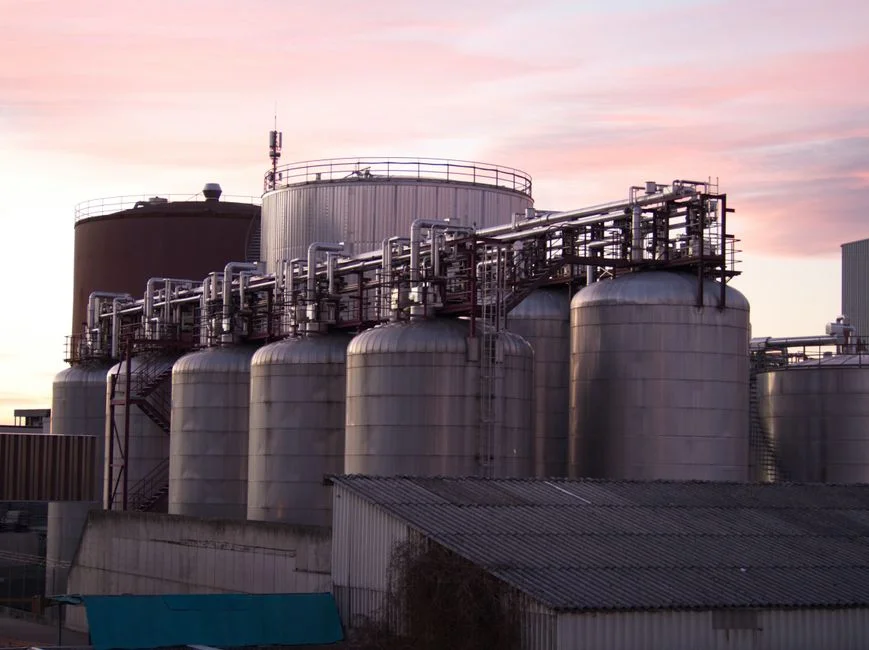
The 2026 pharmaceutical medical train is a five-stage flow with sludge handling on the side. Each stage has a defensible engineering range and a matching equipment class.
Stage 1 — Screening and equalization. A rotary mechanical bar screen (GX series) removes rags, packaging fragments, and settleable solids before they enter the biological stage. The downstream equalization tank buffers hydraulic and load peaks; a 6–12 h hydraulic retention time (HRT) is the standard 2026 envelope, sized to dampen the diurnal swings typical of pharmacy shifts and CIP cycles.
Stage 2 — Primary clarification or DAF. For API synthesis effluent with high fats, oils, and grease (FOG) load, a dissolved air flotation unit (4–300 m³/h, 13 standard models) removes colloidal matter, emulsified oils, and suspended solids that would otherwise overload the biological stage. DAF is preferred over a primary clarifier when the API stream carries synthesis solvents or fermentation residues.
Stage 3 — Biological treatment. An integrated MBR membrane bioreactor (DF flat-sheet, 0.1 μm PVDF, 32–135 m³/day per module) is the preferred workhorse in 2026 because the 0.1 μm membrane physically retains biomass and most ARG-bearing cells, outperforming conventional activated sludge (CAS) on both footprint and ARG log-reduction. An A/O (anoxic/oxic) unit such as the WSZ series is the alternative for lower-strength hospital pharmacy streams where ARG limits are not the binding constraint.
Stage 4 — Advanced oxidation or chemical disinfection. Ozone generated on-site is the preferred 2026 option for ARG and trace API destruction because it leaves no chemical residual and breaks down to oxygen. The packaged medical wastewater system delivers 99%+ microbial kill in a 0.5 m² footprint with no chemical dosing. Where the operator wants a residual disinfectant in the distribution loop, a chlorine dioxide generator (50–20,000 g/h) provides broad-spectrum disinfection with a lower THM formation potential than chlorine.
Stage 5 — UV polishing. A UV-C sterilizer in flange or open-channel configuration provides a chemical-free barrier against chlorine-resistant Cryptosporidium and Giardia, which are not reliably inactivated by ozone or ClO₂ alone. UV produces no disinfection by-products, which matters for any plant targeting reuse.
Sludge handling. Wasted biological sludge and DAF float are dewatered on a plate and frame filter press (1–500 m² filtration area) and clarified supernatant returns to the head of the train. A high-efficiency sedimentation tank (lamella clarifier, 20–40 m/h surface loading rate) thickens waste activated sludge before the press and reduces press cycle loading.
MBR vs A/O + Ozone vs DAF-Only: Which System Fits Your Plant?
The table below is the head-to-head matrix procurement should pin to the wall. Anchor specs are taken from the HydropureWater product line so the comparison is tied to specific, orderable units rather than generic technology classes.
| Selection criterion | MBR (integrated + DF module) | A/O + Ozone (packaged) | DAF + ClO₂ only |
|---|---|---|---|
| Typical capacity | 10–2,000 m³/day | ≤5 m³/day (clinic) to ~50 m³/day (hospital pharmacy) | 4–300 m³/h DAF; ClO₂ 50 g/h to 20,000 g/h |
| Footprint | ~60% smaller than CAS at equivalent load | From 0.5 m² | Moderate; sized to DAF tank |
| COD/BOD/TSS removal | >95% / >98% / near zero TSS | ~85–90% COD; BOD to <25 mg/L | ~50–70% COD; TSS to ~30 mg/L |
| ARG / log reduction | ≥3-log typical; membrane retains biomass | 1–2-log from ozone; ARG partial | Limited; ClO₂ not ARG-targeted |
| Chemical use | Minimal (CIP only) | None (ozone generated on-site) | Continuous ClO₂ precursor dosing |
| Operator skill | Mid; PLC-controlled, membrane maintenance | Low; packaged, automated | Mid; chemical handling required |
| CAPEX band | Upper-mid | Entry-level to mid | Lower |
| OPEX band | Lower (low sludge yield, no chemical) | Low (no chemical, low energy) | Higher (chemical + sludge) |
The decision rule that follows from the matrix: facilities below 5 m³/day — clinics, dental, vet, small specialty lines — should specify a packaged medical wastewater system. Hospital pharmacies and small pharma QC labs in the 5–50 m³/day range are best served by an A/O biological stage followed by ozone. Dedicated API plants in the 50–500 m³/day range need a full MBR train with a DF-series flat-sheet MBR module and UV polishing, since ARG limits drive the design. Full pharma plants above 500 m³/day should plan a hybrid train — DAF + MBR + advanced oxidation + a reuse-polishing step such as RO for pharmaceutical water treatment in 2026 — to meet both discharge and reuse targets. Disinfection preference in that hybrid train can be set with a UV-C sterilizer polishing stage for chemical-free barrier performance, or a chlorine dioxide generator where a residual is needed. Where the binding constraint is water reuse rather than discharge, RO design criteria 2026 govern the polishing train and the recovery envelope (up to 95% recovery with two-pass RO).
Sizing, Footprint, and CAPEX Ranges for 2026
Procurement needs ranges, not slogans. The 2026 bands below are tied to specific packaged units so a budget holder can defend the spend in front of a steering committee.
Packaged medical system. Sub-0.5 m² footprint, fully automated, no chemical dosing, 99%+ microbial kill. This is the entry-level CAPEX band and the right answer for clinics, dental, and vet facilities under 5 m³/day. A facility can typically install and commission a compact unit inside one week on a prepared slab.
WSZ underground A/O unit. The WSZ underground integrated sewage treatment range covers 1–80 m³/h, is fully buried, and requires no surface operator, which makes it the popular mid-range CAPEX choice for hospital retrofits where there is no surface space and the receiving sewer has tight biological limits. The buried envelope also removes noise and aesthetic objections from adjacent wards.
MBR integrated system. 10–2,000 m³/day range, factory-skid, PLC-controlled with remote telemetry. CAPEX sits in the upper-mid band, but OPEX is materially lower than CAS because sludge yield is reduced and no chemical precipitation is needed for phosphorus polishing. The MBR train is the cost optimum for the 50–500 m³/day API plant range once ARG and footprint constraints are priced in.
Hybrid train (DAF + MBR + ozone + UV). Top-tier CAPEX, justified only when the project needs water-reuse credit or ARG limits approaching 4-log reduction. The hybrid envelope typically adds a plate and frame filter press (1–500 m²) and a high-efficiency sedimentation tank as downstream CAPEX line items, and these scale roughly linearly with sludge volume. For sites in regulated jurisdictions such as KSA, the same engineering basis drives the spend case in hospital wastewater treatment compliance in 2026.
Frequently Asked Questions
What discharge limits apply to a pharmaceutical medical wastewater system in 2026?
For facilities discharging to a sensitive area under EU 91/271/EEC, design for COD ≤125 mg/L, BOD ≤25 mg/L, TSS ≤35 mg/L, NH₃-N ≤10 mg/L, total phosphorus ≤2 mg/L, total residual chlorine ≤0.5 mg/L, and fecal coliform ≤200 CFU/100 mL. EPA hospital effluent guidance converges on the same biological and microbial numbers, with limits tightened locally for ARG and trace API parameters.
Is MBR or A/O better for antibiotic resistance gene removal?
An MBR with a 0.1 μm PVDF membrane achieves ≥3-log ARG reduction by physically retaining ARG-bearing cells, while a conventional A/O stage without a membrane barrier delivers roughly 1-log biological ARG reduction. For API plants with binding ARG limits, MBR is the defensible 2026 choice.
Why specify ozone instead of chlorine for pharmaceutical effluent?
Ozone destroys trace APIs and ARGs through hydroxyl radical chemistry, generates no halogenated disinfection by-products, and leaves no chemical residual — advantages that matter when the receiving water feeds a drinking-water catchment. The packaged system delivers 99%+ microbial kill in a 0.5 m² footprint with on-site ozone generation and no chemical dosing.