Why 2026 Is the Inflection Point for Process Wastewater in Algiers
Algeria's renewable freshwater share sits below 500 m³ per capita per year against a recognised scarcity threshold of 1,700 m³, and the World Meteorological Organization projects water-demand growth of 40–50% by 2030 in hyper-arid countries including Algeria (Springer, 2025-09). National treated-wastewater reuse runs below 15%, versus roughly 60% in neighbouring Tunisia, and Algerian Executive Decree discharge standards are tightening against a backdrop where approximately 40% of national wastewater treatment plants are already non-compliant (Springer, 2025-09). The 2026 baseline is no longer a discharge permit — it is a treatment train.
The build pipeline is live, not hypothetical. On 5 July 2026 the government inaugurated the National Digital Services Center in Mohammadia, Algiers Province, an active-active twin facility across Algiers and Blida delivering 99.98% service availability, built by Huawei to host all public-administration data on national territory (WeAreTech Africa, 2026-07-08). When that much compute lands inside a single Mediterranean basin already below 500 m³ per capita, the wastewater question moves from a future regulatory risk to a current procurement specification. Direct blowdown discharge is closed off as a 2026 baseline for any new fab or sovereign-cloud hall on the Algiers coast.
Two Wastewater Streams, Not One: What a Fab vs Data Hall Actually Discharges
Top-ranking pages collapse semiconductor process wastewater and data-hall cooling blowdown into a single "data centre water" story. The engineering reality is two distinct envelopes with separate chemistry, separate unit operations, and separate discharge liabilities. Treating them as one stream is the most common planning error on Algiers sites in 2026.
Semiconductor process wastewater is a multi-stream problem. A fab generates ultrapure water (UPW) reject at 5–15% of UPW production, plus segregated streams carrying hydrofluoric acid and ammonia-bearing rinses, chemical-mechanical planarisation (CMP) slurry with silica and metallic abrasives, organic solvents from photolithography, and — for third-generation compound semiconductors on GaN and SiC substrates — arsenic and cobalt-bearing waste. Each of these needs fluoride neutralisation, ammonia stripping or breakpoint chlorination, metals precipitation, and organics destruction before any of it can join a common membrane train. The unit operations upstream of the BWRO skid are not optional.
Data-hall cooling blowdown is a different chemistry altogether: evaporation-driven concentrate at 1,200–6,000 mg/L TDS, suspended solids 10–50 mg/L from corrosion products and biofilm fragments, residual biocides, scale inhibitors, and accumulated silica, calcium, and magnesium (Genesis Water Tech, 2025-08). No HF, no CMP slurry, no arsenic — but the salinity, silica, and scale-inhibitor load is what binds the recovery ceiling on the RO.
The global context is not reassuring. The semiconductor industry consumes around 210 trillion litres of water annually, almost half in areas facing higher-than-average water scarcity; data centres use 25 million to 770 million litres per year, with hyperscale facilities exceeding 2 billion litres annually; 45% of data centres globally sit in river basins at high risk of water-availability disruption (TNFD, 2026). Africa holds only 0.6% of global data centre capacity against 19% of the world's population, and Algiers is now on the build-out curve (ADCA 2026 via WeAreTech Africa, 2026-07-08). The two streams must be engineered separately, then integrated at the membrane train — not muddled at the basin.
| Parameter | Semiconductor process wastewater | Data-hall cooling blowdown (4 COC) |
|---|---|---|
| Dominant TDS source | UPW reject (5–15% of UPW production) | Evaporation concentrate of makeup |
| TDS range | Variable by stream, often low after segregation | 1,200–6,000 mg/L (Genesis, 2025-08) |
| Key contaminants | HF, NH₃, CMP slurry, organic solvents; As, Co on GaN/SiC lines | Residual biocides, scale inhibitors, silica, Ca, Mg |
| Suspended solids | Stream-dependent (CMP slurry high) | 10–50 mg/L (Genesis, 2025-08) |
| Required upstream unit ops | Fluoride neutralisation, ammonia treatment, metals precipitation, organics destruction | Side-stream screen, UF, optional lamella clarifier |
| Discharge liability | Hazardous-waste classification for several streams | Brine concentrate, scaling risk |
The Algiers Permit and Discharge Envelope in 2026
Algerian Executive Decree discharge standards govern the parameters that matter most — TDS, BOD, TSS, and residual chlorine — and SONALGAZ/ministry reviewers read any discharge application against the backdrop of approximately 40% non-compliant national wastewater treatment plants (Springer, 2025-09). For a 10 MW site whose cooling-tower concentrate at 4 COC lands at 1,200–6,000 mg/L TDS, the regulatory question is not whether to treat but how to engineer the permeate and the final brine to clear the cap.
Several water-stressed jurisdictions have already enforced a <1,500 mg/L TDS discharge cap, and direct-discharge fees in those regions run $5–$15 per 1,000 USG — turning blowdown into a real line item rather than a sunk cost (Genesis Water Tech, 2025-08). Algiers concentrate at 4 COC sits inside that band on the high end, which is why partial ZLD is the defensible default. On the supply side, SEAAL industrial tariffs make every cubic metre of displaced freshwater a billable saving; SONALGAZ subsidised industrial electricity narrows but does not erase MVC energy OPEX, and the energy line should be modelled explicitly (Genesis Water Tech, 2025-08; Algeria Tech News, 2025-10).
| Parameter / Cost Line | 2026 Algiers Reference Value | Source |
|---|---|---|
| Discharge TDS cap (water-stressed benchmark) | <1,500 mg/L | Genesis Water Tech, 2025-08 |
| Direct-discharge fee (water-stressed regions) | $5–$15 per 1,000 USG | Genesis Water Tech, 2025-08 |
| Concentrate TDS at 4 COC | 1,200–6,000 mg/L | Genesis Water Tech, 2025-08 |
| Algiers tap water TDS | 500–1,000 mg/L | Genesis Water Tech, 2025-08 |
| National WWTP non-compliance rate | ~40% | Springer, 2025-09 |
| Treated-wastewater reuse (Algeria vs Tunisia) | <15% vs ~60% | Springer, 2025-09 |
Reference Case: Water Balance for a 10 MW Algiers Site
At 4 cycles of concentration, blowdown equals 25–30% of cooling-tower makeup water (Genesis Water Tech, 2025-08). A 100 MW facility can reach 2 million litres per day of makeup, roughly 528,000 USG (IDE Water Tech, 2025-11). Scaling linearly, a 10 MW sovereign-cloud site in Algiers draws on the order of 200,000 L/day of makeup water and generates roughly 60,000–180,000 L/day of blowdown at 4 COC — the band that frames the entire treatment-train sizing exercise.
Algiers tap water typically sits at 500–1,000 mg/L TDS, so concentrate at 4 COC easily exceeds 2,000 mg/L — well inside the discharge-restriction band that several jurisdictions have already enforced at <1,500 mg/L. A 10 MW site is the smallest envelope that exercises every stage of the three-stage train without over-specifying capacity for a build that has not yet been built.
| Stream | 10 MW Algiers Site (L/day) | TDS (mg/L) | Notes |
|---|---|---|---|
| Cooling-tower makeup | ~200,000 | 500–1,000 (tap) | SEAAL industrial tariff applies |
| Evaporation + drift loss | ~50,000 (calculated) | N/A | Atmospheric loss only |
| Cooling-tower blowdown (4 COC) | 60,000–180,000 | 1,200–6,000 | Above 1,500 mg/L cap in many stressed jurisdictions |
| BWRO permeate (design target) | 40,000–150,000 (recovered) | 10–50 | Reuse as cooling-tower makeup |
| Final brine (Strategy C) | 3,000–18,000 (concentrated) | 20–30% solids | Hauled off-site as solid/slurry |
The 2026 Three-Stage Treatment Train
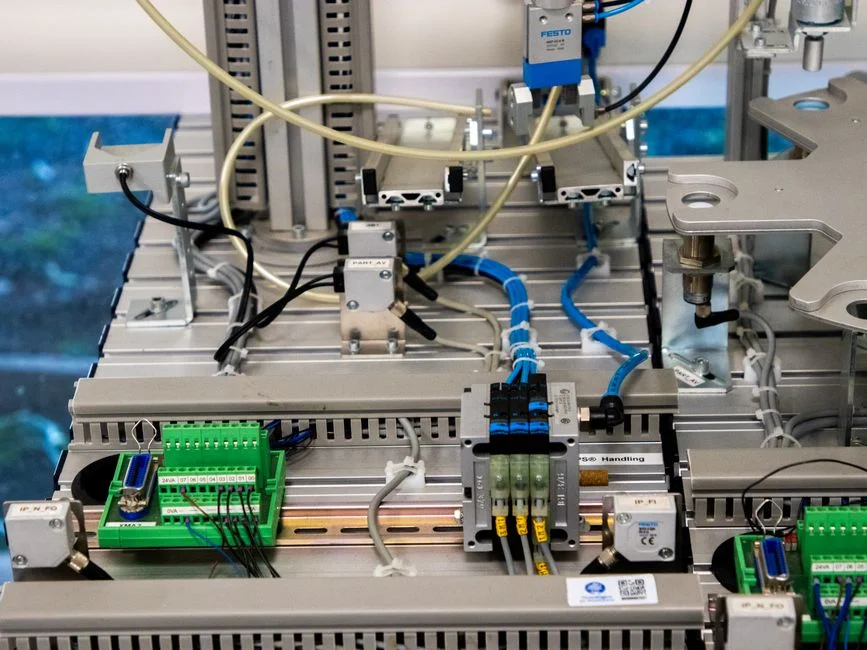
The 2026 reference train for a 10 MW Algiers site runs in three stages, each sized to the working stream rather than to the full circulation flow. The objective at every stage is to protect the next one down and earn a measurable recovery percentage on the way through.
Step 1 — Side-stream filtration. Self-cleaning spiral units operating at 1–5% of circulation flow and 10–25 µm cut size drop suspended solids and biological load before blowdown leaves the basin. Capital sits in the $50,000–$200,000 band for a typical data-centre installation (Genesis Water Tech, 2025-08). A multi-media filter for RO pretreatment adds the polish that protects the membrane. The objective is membrane protection, not water polishing: lower SDI and TSS feed makes the downstream RO run at higher recovery with fewer cleanings.
Step 2 — Ultrafiltration. Hollow-fiber UF at 0.01–0.1 µm pore size, 90–95% recovery, and 10–30 psi operating pressure removes bacteria, colloids, and biofilm fragments that pass the side-stream screen. Chemical cleaning is typically required every 1–3 months (Genesis Water Tech, 2025-08). For the Algiers case, a hollow-fiber UF pretreatment ahead of BWRO is the standard configuration, paired with a lamella clarifier for inorganic carryover from the basin.
Step 3 — BWRO. Brackish-water reverse osmosis delivers 95–99% dissolved-solids rejection with permeate at 10–50 mg/L TDS. Operating pressure runs 150–400 psi with antiscalant injection; recovery in the 50–85% range is realistic for Mediterranean feed. A 50,000 GPD blowdown RO skid costs $250,000–$500,000 installed, with OPEX of $1.50–$3.00 per thousand gallons treated (Genesis Water Tech, 2025-08). For Algiers feed where hardness is the binding constraint, nanofiltration at 75–150 psi and 70–85% recovery offers a lower-energy alternative, with permeate TDS at 30–50% of feed (IDE Water Tech, 2025-11). The BWRO stage is delivered as an industrial RO skid for BWRO blowdown treatment, fed by a PLC-controlled antiscalant and biocide dosing system.
Why BWRO Alone Is Not Enough: Brine, Silica, and the Recovery Ceiling
Conventional BWRO caps at 75–80% recovery on silica-bearing Mediterranean blowdown because calcium carbonate, calcium sulfate, and silica reach antiscalant thresholds before osmotic limits (IDE Water Tech, 2025-11). Adding more RO stages with booster pumps raises complexity and energy without solving the chemistry; aggressive antiscalant dosing raises membrane fouling risk and discharge liability.
The fluidized-bed crystallization approach is fundamentally different. Scale inhibitors are deliberately deactivated inside a fluidized-bed reactor so silica, calcium carbonate, and other sparingly soluble salts precipitate onto seed pellets as compact solids rather than accumulating in solution. After the precipitation step, the residual brine is mostly NaCl and can be processed in a closed loop at roughly 95% overall recovery, with permeate silica near 1 mg/L (IDE Water Tech, 2025-11). For Algiers, where Mediterranean makeup water carries measurable silica that concentrates under evaporation, this matters more than at sites with soft, low-silica feed. High-recovery designs of this type also reduce chemical consumption versus multi-pass RO cascades because antiscalant is not being pushed to its performance ceiling. The seed-sludge handling step is typically sized using a lamella clarifier for inorganic carryover from the basin and pellet withdrawal, a configuration borrowed from semiconductor and advanced-packaging water reuse where a comparable high-recovery treatment train for high-purity water reuse has been demonstrated at 99.8% contaminant removal (HydropureWater field data, 2026).
Strategy A, B, C, D: Picking the 2026 Algiers Default
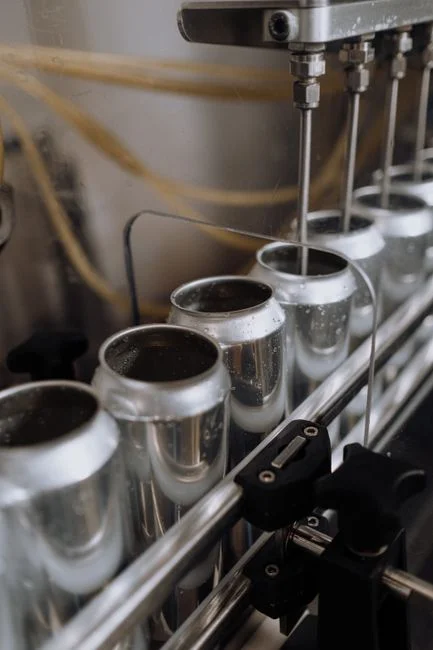
For a 10 MW Algiers sovereign-cloud site, the procurement question is not whether to treat blowdown — it is which of four strategies to specify. Each option carries a different CAPEX, OPEX, and recovery profile, and each maps differently to the Algerian Executive Decree discharge regime and the water-stress reality on the Algiers coast.
Strategy A — Direct discharge only. Lowest CAPEX, but effectively closed off by discharge-fee economics ($5–$15 per thousand gallons in water-stressed regions) and tightening TDS limits of <1,500 mg/L (Genesis Water Tech, 2025-08). Not viable as a 2026 baseline.
Strategy B — RO reuse only. 50,000 GPD RO skid at $250,000–$500,000 installed returns permeate as cooling-tower makeup at 60–85% blowdown recovery; OPEX sits at $1.50–$3.00 per thousand gallons (Genesis Water Tech, 2025-08). A workable baseline where discharge permits allow brine sewering, but brine is still a liability.
Strategy C — Partial ZLD (RO + MVC). RO at 50–75% recovery, with the concentrate fed to mechanical vapor compression producing distillate at <10 mg/L TDS. MVC CAPEX is $1–3 million for 10,000–30,000 GPD; energy is 15–25 kWh per 1,000 USG of distillate; overall system recovery is 85–95% (Genesis Water Tech, 2025-08). The brine stream concentrates to 20–30% dissolved solids and is hauled off-site as a manageable solid or slurry — distinct from full-ZLD salt cake in both volume and disposal cost. This is the recommended 2026 default for Algiers: most of the freshwater-saving benefit of full ZLD without the crystalliser capex, and salt cake is disposable at permitted facilities. PUE improvement of 15–25% achievable through waste-heat reuse strengthens the case for the higher-recovery systems (Algeria Tech News, 2025-10).
Strategy D — Full ZLD (RO + brine concentrator + crystalliser). 95–99% overall recovery, CAPEX $3–8 million, OPEX $5–$15 per thousand gallons (Genesis Water Tech, 2025-08). Justified only where discharge is fully prohibited or where freshwater sourcing is more expensive than ZLD energy. For most 2026 Algiers sites, this is over-specified.
| Strategy | Recovery | CAPEX | OPEX ($/1,000 USG) | 2026 Algiers fit |
|---|---|---|---|---|
| A — Direct discharge | 0% | Lowest | $5–$15 discharge fees | Non-compliant under tightening TDS caps |
| B — RO reuse only | 60–85% | $250K–$500K (RO skid) | $1.50–$3.00 | Workable where brine sewering allowed |
| C — Partial ZLD (RO + MVC) | 85–95% | $1.3M–$3.5M total | $3–$8 | Recommended 2026 default |
| D — Full ZLD | 95–99% | $3M–$8M | $5–$15 | Over-specified unless discharge banned |
Integrating Process Wastewater with Cooling Blowdown: The Real Algiers Project Question
On a site that has both a fab UPW reject and a data-hall cooling loop — which is the realistic 2026 Algiers build — the integration question is the one no top page answers cleanly. The two streams should be treated separately upstream, then integrated at the membrane train.
Fab UPW reject needs fluoride neutralisation, ammonia treatment (breakpoint chlorination or air stripping), and metals precipitation for arsenic and cobalt before it can join the common RO feed. Organic solvents from lithography require dedicated destruction upstream. Once those unit operations are in place, the segregated fab stream can be combined with cooling blowdown — and this is the key insight: cooling blowdown is the lower-TDS dilution stream that lets the RO run at higher overall recovery without aggressive antiscalant. The streams should not co-mingle at the basin; they should be sized and metered separately, then blended at the membrane feed.
MVC waste-heat recovery should be modelled against SONALGAZ subsidised industrial electricity and the EU EED 2023/1791 PUE ≤1.2 trajectory as the planning baseline — not a binding Algerian rule, but the realistic benchmark for any Algiers facility that will operate into the 2030s. High-recovery trains for advanced packaging have demonstrated 99.8% contaminant removal at comparable envelopes (HydropureWater field data, 2026), and the design logic transfers directly. For projects that also need to compare Mediterranean and Southern-African water envelopes, the parallel Southern-Africa data-centre blowdown reference and the comparable Asian emerging-market data-centre guide frame the same three-stage train on different feedwater chemistries.
Planning Path: SONALGAZ, SEAAL, and the High Commission for Digitization
The stakeholder sequence is the part that turns a paper design into a 2026 permitted site. Engage SONALGAZ, SEAAL, and the High Commission for Digitization in parallel — not in series — to lock in discharge, makeup, and waste-heat agreements before construction. SONALGAZ sets the electricity tariff and the waste-heat-recovery interface at the substation boundary; SEAAL sets the industrial potable-water tariff and the discharge permit envelope; the High Commission for Digitization sits inside the digital-sovereignty track that the July 2026 Algiers–Blida national data centre launch has now made operational (WeAreTech Africa, 2026-07-08).
Community and regulatory backlash on data-centre water discharge is reshaping site selection globally, and the Visakhapatnam precedent for treated-wastewater reuse in India is a regulator-direction signal worth tracking (TNFD, 2026). The EU EED 2023/1791 trajectory — annual waste-heat cost-benefit assessments for data centres above 1 MW from October 2025, and a PUE ≤1.2 target by 2026 — is not binding in Algeria but is the realistic planning baseline for any facility that will operate into the 2030s. For projects that also need a third-generation semiconductor analogue, the third-generation semiconductor ZLD hybrid design with 99.8% removal benchmark provides the closest published reference for arsenic- and cobalt-bearing fab streams.
Frequently Asked Questions
Can a 2026 Algiers semiconductor fab or data hall legally discharge cooling blowdown to sewer without treatment?
No. At 4 COC, Algiers concentrate lands at 1,200–6,000 mg/L TDS, well above the <1,500 mg/L discharge cap already enforced in water-stressed jurisdictions; direct-discharge fees of $5–$15 per 1,000 USG apply on top (Genesis Water Tech, 2025-08).
What is the reference water balance for a 10 MW Algiers data-hall or fab support building?
Makeup is roughly 200,000 L/day; blowdown at 4 COC is 60,000–180,000 L/day, which becomes the design stream for the three-stage train (Genesis Water Tech, 2025-08; IDE Water Tech, 2025-11).
Is BWRO alone sufficient, or does an Algiers site need partial ZLD?
BWRO caps at 75–80% recovery on silica-bearing Mediterranean feed; partial ZLD via MVC reaches 85–95% overall recovery and is the recommended 2026 default at $1.3M–$3.5M total CAPEX, $3–$8 per 1,000 USG OPEX (Genesis Water Tech, 2025-08). The BWRO stage is delivered as an industrial RO skid for BWRO blowdown treatment.
What changed in 2026 versus 2024 or 2025 for process wastewater in Algiers?
Executive Decree TDS caps tightened below 1,500 mg/L, SONALGAZ/SEAAL enforcement pressure rose against the ~40% non-compliant national WWTP backdrop, and the Algiers–Blida national data centre launch in July 2026 set the digital-sovereignty build-out in motion (Springer, 2025-09; WeAreTech Africa, 2026-07-08).
How should a site with both a fab UPW reject and a data-hall cooling loop integrate the two streams?
Treat the two streams separately upstream — fluoride/ammonia neutralisation and metals precipitation for UPW reject, side-stream filtration and UF for cooling blowdown — then blend at the membrane feed to let the lower-TDS blowdown lift RO recovery (HydropureWater field data, 2026; IDE Water Tech, 2025-11).
Related Equipment
- hollow-fiber UF pretreatment ahead of BWRO — specifications, capacity range, and technical data
- multi-media filter for RO pretreatment — specifications, capacity range, and technical data