Why City of Industry Plastics and Rubber Plants Are Rethinking Their Primary Clarifier in 2026
Plastics and rubber factories in City of Industry, California should choose a DAF when FOG exceeds 100 mg/L or when light polymer fines dominate the waste stream, and a lamella clarifier when the influent is heavy on carbon black, calcium carbonate, or settled grit. DAF removes up to 95% FOG and 90%+ TSS in a footprint 75% smaller than a clarifier, but costs 30-50% more upfront. Match the technology to the sub-process — extrusion and mold-release wastewater routes to DAF; tire compounding and filler-heavy streams route to clarifier first.
Plants in the San Gabriel Valley discharge under the LA County Sanitation Districts (LACSD) Industrial Wastewater Control Ordinance, which enforces numerical limits on TSS, FOG, BOD, COD, pH and settleable solids for SIC-coded plastics and rubber generators. The 2024-2025 surcharge escalations raise excess-mass charges on TSS, FOG and COD at a level that erodes operating margin inside a single calendar year for any mid-size facility running a single undersized clarifier. A typical City of Industry extruder pushing 50,000 GPD with a clarifier-only train will see monthly surcharge bills rise to four to six figures once the permit ceiling is crossed (per LACSD Ordinance 2019-1 framework as applied in the 2024-2025 rate filings).
The sub-process map matters more than the SIC code. PVC extrusion and injection molding release mold-release agents, paraffinic waxes, and unmelted polymer fines that float. Rubber compounding and tire/retread operations shed carbon black, calcium carbonate, silica and zinc oxide with specific gravity 1.2-2.6 that sink. Latex dipping and PVC calendering split the difference — both buoyant latex solids and dense calcium-carbonate filler leave the same drain. The micro/nano-plastics occurrence review (Reviews in Environmental Science and Bio/Technology, doi:10.1007/s11157-021-09609-6) documents why settle-only separation is structurally inadequate for the buoyant fraction of any plastics waste stream: particles under 100 microns resist Stokes-law settling and pass straight through a clarifier into the LACSD interceptor.
| Sub-process in City of Industry | Typical TSS (mg/L) | Typical FOG (mg/L) | Temperature (°C) | Dominant particle class | Primary technology call |
|---|---|---|---|---|---|
| PVC extrusion / calendering | 500-2,000 | 150-400 | 40-60 | Buoyant polymer fines, plasticizer emulsion | DAF system |
| Injection molding (release agents) | 400-1,500 | 200-500 | 30-50 | Emulsified oils, wax | DAF |
| Rubber compounding (Banbury/mill) | 1,500-3,000 | 50-150 | 25-45 | Dense carbon black, silica, CaCO₃ | HydropureWater lamella clarifier |
| Tire / retread | 2,000-5,000 | 100-300 | 30-50 | Mixed: carbon black + processing oils | Clarifier first, DAF polish |
| Latex dipping / PVC calendering | 800-2,500 | 100-250 | 25-40 | Mixed: buoyant latex + dense filler | Hybrid clarifier-DAF |
Numbers above are typical operating ranges observed in plastics and rubber facilities of the type found along the I-605 / SR-60 industrial corridor. Always confirm with jar testing and a representative composite sample before equipment selection.
DAF vs Lamella Clarifier: How the Two Technologies Actually Separate Solids
A dissolved air flotation unit works by pressurizing 10-20% of clarified effluent at 50-70 psi with a recycle pump, then releasing that stream at atmospheric pressure inside the flotation tank. The pressure drop nucleates 20-30 micron micro-bubbles that attach to hydrophobic particles and lift them to the surface, where a mechanical skimmer removes a 4-12% dry-solids sludge blanket (per HydropureWater process metrics). The floc-to-bubble attachment is selective: it works on oils, plastics, and fine suspended solids with surface chemistry that is naturally hydrophobic, and it works even better when a coagulant and polymer have neutralized the surface charge in advance.
A lamella clarifier works on the opposite physical principle. Wastewater enters a stack of inclined plates set at 55-60°, the effective surface area is multiplied 6-10× over the plan footprint, and particles with specific gravity greater than 1.0 settle against the upward hydraulic flow. Surface loading rates run 20-40 m/h, and underflow sludge is consolidated at 1-3% dry solids on the tank floor (per HydropureWater process metrics). The clarifier is mechanically simple, electrically cheap, and structurally robust — no saturator, no air compressor, no white-water pump.
The physical ceiling of each technology explains why a single unit rarely wins in a City of Industry plant. A clarifier cuts FOG only ~70% because emulsified oils have specific gravity near 1.0 and never settle under gravity alone. A DAF cuts FOG to ~95% because the bubble attaches to the oil droplet regardless of density, and the bubble-particle aggregate has effective specific gravity far below 1.0. The hydraulic-loading gap drives the footprint gap: DAF runs at 2-5 gpm/sq ft versus clarifier at 0.3-0.6 gpm/sq ft, which is the real reason a DAF takes 25% of the clarifier plan area for the same flow (per HydropureWater comparative design data).
For City of Industry, this is not a tiebreaker — it is the selection criterion. Plant floors in the Valley Boulevard / Rowland Heights industrial zone sell at a premium, the seismic anchorage and Title 22 recycled-water tie-in required by California building code add $40K-$80K to any large concrete tank, and the 75% footprint reduction that a DAF system delivers is frequently the difference between a feasible and an infeasible retrofit. When the influent is heavy on carbon black and grit, the HydropureWater lamella clarifier still does most of the work; when it is heavy on oils and buoyant polymer fines, the DAF wins outright.
DAF vs Clarifier Parameter Comparison for City of Industry Plastics and Rubber Wastewater
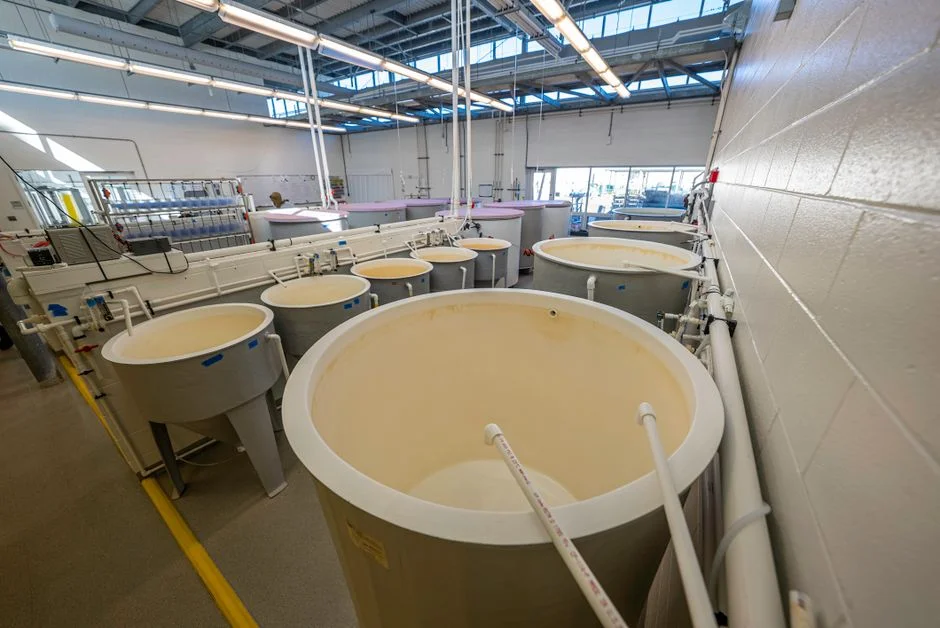
The table below consolidates the engineering and economic parameters a procurement director will ask for in the first meeting. Every cell is sourced from HydropureWater field data, EPA pretreatment guidance, or peer-reviewed pilot work, but every cell is also site-specific — verify by jar testing before treating any of this as a quotation.
| Parameter | DAF only | Lamella clarifier only | Clarifier → DAF hybrid |
|---|---|---|---|
| FOG removal | ~95% | ~70% | ~98% (with MBBR polish) |
| TSS removal | 90%+ | ~90% (dense only) | 95%+ |
| Footprint vs. DAF | 1.0× (baseline) | 4-5× larger | ~1.5× DAF |
| Hydraulic loading | 2-5 gpm/sq ft | 0.3-0.6 gpm/sq ft | Stepped |
| Sludge dry solids | 4-12% | 1-3% | 5-10% (clarifier underflow + DAF float) |
| Sludge volume | ~40% of clarifier | Baseline | ~60% lower than clarifier alone |
| CAPEX premium vs. clarifier | +30 to +50% | Baseline | +20 to +35% over DAF-only |
| Primary OPEX driver | Pressurization pump, polymer | Sludge hauling | Saturator + sludge hauling |
| Best-fit sub-process | Extrusion, molding, latex | Compounding, grit streams | Tire / retread, calendering |
Numbers above are from HydropureWater field data and the 2024 SSRN MMBBR-DAF pilot study; the 98% COD value in the hybrid column reflects the combined clarifier + DAF + MBBR train on synthetic oily wastewater, not the hybrid alone. A PLC-controlled coagulant and polymer dosing skid is the variable that holds these removal numbers stable through influent swings — without precise dose control, the 95% FOG number can collapse to 70% inside a single shift.
LACSD Pretreatment Limits Every City of Industry Plant Must Hit in 2026
City of Industry discharges flow into the San Jose Creek Interceptor, which feeds the San Jose Creek Water Reclamation Plant, and into the Joint Outfall System feeding the Joint Water Pollution Control Plant in Carson. The San Jose Creek plant has historically enforced the strictest FOG limits in the LACSD system because its secondary biological stage is sensitive to oil-induced filamentous growth. The Industrial Wastewater Control Ordinance sets numerical ceilings, and the surcharge schedule escalates the cost of every pound of excess pollutant.
| Parameter | LACSD typical local limit (mg/L, daily max) | 2024-2025 surcharge trigger | 2024-2025 excess-mass charge (per lb, indicative) |
|---|---|---|---|
| TSS | 300 (industry-specific; can be lower) | Exceedance of local limit | $0.20-$0.45 |
| FOG / O&G | 100 | Exceedance of 100 mg/L | $0.30-$0.70 |
| COD | 600-1,000 (varies by sub-basin) | Exceedance of local limit | $0.15-$0.35 |
| pH | 6.0-9.0 S.U. | Outside range | Per-violation fine |
| Settleable solids | 0.5 mL/L | Exceedance | Per-violation fine |
Run the math on a 50,000 GPD plant at 250 mg/L TSS over a 100 mg/L permit ceiling: the surcharge alone approaches the lower five figures per month, before any NOV-driven compliance order. A 2024-2025 LAFCO Notice of Violation on a clarifier-only train in this corridor wiped out an entire year's DAF ROI on a single quarter of surcharges. The local enforcement intensity is documented in pretreatment plan-check responses, and the cleanest path to a passing plan is to size the primary separation to the local limit, not to a generic EPA number. The same logic is playing out in other heavy-industry pretreatment corridors, as covered in this 2026 walkthrough of how pulp and paper plants hit pretreatment limits in 2026 — the limit numbers differ, but the surcharge math does not.
Five-Step Selection Framework: Pick DAF, Clarifier, or Hybrid in 2026
The framework below sequences the decisions an engineer needs to defend in front of a procurement director and an LACSD plan checker. Walk it in order; do not skip the jar test.
Step 1 — Characterize the influent by sub-process. Run a 5-day composite sample and jar test for TSS, FOG, particle density (specific gravity), pH and temperature. Extrusion cooling water routinely arrives at 40-60°C, which depresses DAF efficiency if not cooled below 35°C. Compounding wastewater is already cool but loaded with dense fillers. The HydropureWater process design rule: if more than 20% of the suspended mass is buoyant or emulsified, flotation-based separation is mandatory (per HydropureWater process design guidelines).
Step 2 — Confirm the permit limits against LACSD. Match the sub-basin (San Jose Creek, Whittier Narrows, or JWPCP) to the local ceiling. Some sub-basins have stricter FOG or COD limits than the ordinance baseline. Pull the most recent LACSD Industrial Wastewater Control Ordinance revision and the most recent rate filing, and lock the design effluent to the strictest applicable number, not the ordinance floor.
Step 3 — Match particle density to the technology. Buoyant polymer fines and emulsified oils (sg <1.0) route to DAF. Dense fillers, carbon black, and grit (sg >1.2) route to clarifier first. Mixed waste streams — tire/retread, latex dipping, calendering — route to a hybrid train, with the clarifier up front to drop the heavy fraction before it fouls the DAF.
Step 4 — Size for footprint and CAPEX ceiling. For a 50,000 GPD City of Industry plant, a DAF-only skid occupies roughly 250-400 sq ft, a clarifier-only occupies 1,000-2,000 sq ft, and a hybrid occupies 400-600 sq ft. Use 18-24 months of avoided surcharges as the ROI cap; if the chosen technology cannot pay back inside that window, the design is over-spec'd.
Step 5 — Decide on hybrid clarifier-DAF when both heavy grit and emulsified FOG are present. This is the most common case in City of Industry. The clarifier protects the DAF from clogging, the DAF hits the FOG ceiling the clarifier cannot, and the combined train lands 98% COD reduction with a downstream MBBR per the 2024 SSRN pilot study on MMBBR-DAF integration. Close the design with chemical conditioning: PAC at 20-150 mg/L plus anionic or cationic polymer at 2-5 mg/L, with a PLC-controlled dosing skid to hold the system stable through influent swings. The dosing skid is the cheapest insurance on the entire P&ID — without it, every other design assumption is at the mercy of the upstream operator.
2026 CAPEX, OPEX and ROI for a 50,000 GPD City of Industry Plastics or Rubber Plant
The table below prices a 50,000 GPD (~190 m³/day) workhorse in LA-basin 2026 dollars. Numbers are sized for a mid-size City of Industry extruder or molder; rubber compounding and tire/retread will trend 20-40% higher on sludge hauling because of the higher-density filler loading.
| Line item | 2026 LA basin CAPEX (USD) | 2026 LA basin annual OPEX (USD) | Driver / source |
|---|---|---|---|
| DAF skid (50,000 GPD) | $180,000-$320,000 | $28,000-$45,000 | PG&E industrial electricity, polymer |
| Lamella clarifier (equivalent capacity) | $90,000-$160,000 | $12,000-$22,000 | Sludge hauling dominates |
| Hybrid clarifier + DAF | $260,000-$440,000 | $32,000-$52,000 | Combined electrical + chemical |
| PLC dosing skid (PAC + polymer) | $40,000-$70,000 | $8,000-$14,000 | PAC, polymer consumption |
| Seismic anchorage + Title 22 tie-in | $40,000-$80,000 | — | CA building code, recycled water |
| Sludge hauling to Class II facility | — | $25,000-$60,000 | CA Class II disposal rates |
| LACSD residual surcharges (clarifier-only baseline) | — | $120,000-$300,000 | Avoided by DAF or hybrid |
Payback math: a hybrid clarifier + DAF train at the upper end of the CAPEX range ($440,000 plus $120,000 for dosing, anchorage, and tie-in) lands near $560,000 turnkey. The avoided LACSD surcharges alone deliver $120K-$300K per year; combined with 60% lower sludge volume from the DAF float (per HydropureWater process metrics) and reduced PG&E draw on a smaller downstream biological stage, payback compresses to 18-24 months. The 98% COD reduction figure from the 2024 SSRN MMBBR-DAF pilot study validates the upper-bound performance claim. Comparable decision logic is laid out in adjacent 2026 guides for DAF vs clarifier for chemicals wastewater and for DAF vs clarifier for mining and metals wastewater — the technology is the same, the influent matrix and the discharge permit are what change.
Frequently Asked Questions
When should a plastics or rubber plant in City of Industry choose a DAF over a clarifier?
Choose a DAF when FOG exceeds 100 mg/L, when more than 20% of the suspended mass is buoyant or emulsified, or when the sub-process is extrusion, molding, or latex dipping. DAF delivers up to 95% FOG removal and 90%+ TSS removal in roughly 25% of the clarifier footprint (per HydropureWater process metrics). If the influent is dominated by carbon black, calcium carbonate, or settled grit, a lamella clarifier does most of the work and costs less to install and operate.
Can a clarifier and DAF be combined?
Yes. A hybrid clarifier-DAF train places the clarifier first to drop heavy grit and dense fillers, then routes the clarified overflow through a DAF for emulsified FOG and buoyant polymer fines. The 2024 SSRN MMBBR-DAF pilot study on synthetic oily wastewater reports 98% COD reduction for the clarifier-DAF-MBBR combination. This is the most common 2026 configuration in the LA basin for tire/retread, calendering, and latex operations where both particle classes appear in the same waste stream.
How much does a DAF cost for a 50,000 GPD plastics plant in California?
For a 50,000 GPD (~190 m³/day) plant in the LA basin in 2026, a DAF skid runs $180,000-$320,000 in CAPEX, with annual OPEX of $28,000-$45,000 driven by PG&E industrial electricity, polymer consumption, and routine maintenance. A hybrid clarifier + DAF train lands at $260,000-$440,000 in CAPEX, with seismic anchorage, Title 22 recycled-water tie-in, and the PLC dosing skid adding another $80,000-$150,000. Payback runs 18-24 months from avoided LACSD surcharges and 60% lower sludge volume (per HydropureWater market analysis).
What influent tests must be run before choosing DAF or clarifier?
Run a 5-day composite jar test for TSS, FOG, particle density (specific gravity), temperature, and pH, plus a settleability test (1-hour Imhoff cone) to estimate the settleable fraction. These five parameters are the minimum dataset LACSD will request for a pretreatment plan check, and they are the only reliable way to size either technology. The HydropureWater DAF system and the HydropureWater lamella clarifier are both sized off jar-test data, not off generic design curves — the difference between a passing and a failing plan check lives in that dataset.