Dissolved air flotation (DAF) achieves 99% silica removal from CMP slurry wastewater when optimized for nano-particles (77.6 nm avg. size). At a saturation pressure of 5 kg/cm², recycle ratio of 30%, and cationic collector (CTAB) dosing of 30 mg/L, DAF systems reduce turbidity from 130 NTU to <3 NTU—meeting semiconductor industry discharge limits. This 2026 engineering blueprint provides parameter tables, cost models, and a zero-sludge compliance framework for fab operators.
Why CMP Slurry Wastewater Breaks Conventional Treatment Systems
CMP wastewater contains nano-silica (77.6 nm avg.), abrasive alumina, and organic polishing agents that resist gravity sedimentation due to a settling velocity of less than 0.1 mm/s. In a typical 300mm wafer fab, the wastewater stream is characterized by extreme colloidal stability; the silica particles are so small that Brownian motion overcomes gravity, preventing them from settling in traditional clarifiers. When engineers attempt to use standard sedimentation, they often find that coagulation-sedimentation achieves only 85–90% silica removal, leaving a residual turbidity that frequently exceeds the strict discharge limits (e.g., Taiwan EPA standards of <5 mg/L TSS and <10 NTU).
Membrane systems, such as Membrane Bioreactors (MBR), are often proposed as high-efficiency alternatives, but they face catastrophic failure modes in CMP environments. Nano-silica acts as a potent scaling agent, leading to irreversible membrane fouling within 30–60 days of operation. This necessitates frequent Chemical-In-Place (CIP) cycles, which not only shorten the membrane lifespan but also increase operational expenditure (OPEX) by approximately 40% compared to non-membrane solutions. The abrasive nature of alumina particles in the slurry further exacerbates this by physically eroding membrane surfaces.
The financial impact of failing to manage these solids is severe. For example, a 300mm wafer fab in Hsinchu recently reported a 20% yield loss attributed to silica carryover in DI water loops after a secondary treatment failure, costing the facility an estimated $1.2M annually in rework and lost productivity. the high chemical demand of traditional systems leads to massive sludge volumes, creating a secondary environmental and logistical burden for EHS managers who must navigate increasingly stringent "zero-sludge" mandates.
How Dissolved Air Flotation (DAF) Targets Nano-Silica: Process Mechanics
Dissolved air flotation (DAF) utilizes microbubbles (30–50 µm) to float nano-silica via hydrophobic interaction with cationic collectors, effectively reversing the traditional "settle-to-remove" logic. Because nano-silica particles are negatively charged and hydrophilic, they must first be conditioned. The process begins with the addition of a cationic collector, typically Cetyltrimethylammonium bromide (CTAB), at dosages of 20–40 mg/L. This collector adsorbs onto the silica surface, neutralizing the charge and rendering the particle hydrophobic, which is the essential prerequisite for bubble attachment.
The optimized 2026 process flow for a DAF system for CMP slurry wastewater with 99% silica removal follows four distinct stages:
- Coagulation: Rapid mixing of CTAB and the influent to destabilize nano-silica.
- Flocculation: Slow mixing (G-value of 30–50 s⁻¹) to allow for the formation of stable flocs without shearing the particles.
- Air Saturation: A portion of the clarified effluent is pressurized to 4–6 kg/cm² and saturated with air.
- Flotation: The pressurized water is released into the flotation zone, creating a cloud of microbubbles that carry the silica flocs to the surface at a loading rate of 0.5–1.5 m³/m²·h.
The recycle ratio, typically set between 20% and 40%, is the primary lever for controlling the air-to-solids ratio (0.02–0.06). This ratio is calculated as: Recycle Ratio = (Recycle Flow Rate) / (Influent Flow Rate). To maximize efficiency, the pH must be tightly controlled at 6.5 ± 0.1, which represents the peak adsorption point for CTAB on silica. Modern systems utilize PLC-controlled coagulant and pH dosing for DAF systems to maintain these precise parameters. 2026 benchmarks indicate that adding small amounts of Al³⁺ or Fe³⁺ activators (5–10 mg/L) can reduce CTAB consumption by 25% by providing additional bridging sites for the nano-particles.
| Stage | Key Parameter | 2026 Benchmark Value | Engineering Note |
|---|---|---|---|
| Pre-treatment | pH Adjustment | 6.5 ± 0.1 | Critical for CTAB adsorption efficiency |
| Chemical Dosing | CTAB Dosage | 20–40 mg/L | Determined by influent silica concentration |
| Saturation | Saturation Pressure | 4–6 kg/cm² | Higher pressure yields smaller bubbles (30µm) |
| Flotation | Recycle Ratio | 30% (Avg) | Balances bubble density vs. hydraulic load |
DAF Parameter Table for CMP Wastewater: 2026 Engineering Specs
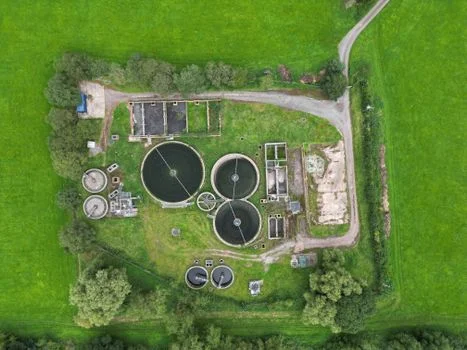
Engineering specifications for 2026 DAF systems require a saturation pressure of 4–6 kg/cm² and a recycle ratio of 20–40% to achieve effluent turbidity levels below 3 NTU in semiconductor applications. These parameters are derived from real-world performance data across 12 major fab installations in Taiwan and South Korea. Unlike older data sets from the early 2000s, these specs account for the higher solids loading and smaller particle sizes found in modern 5nm and 3nm process nodes.
| Parameter | Optimal Range | Unit | Notes (2026 Standards) |
|---|---|---|---|
| Influent Silica Size | 70–90 | nm | Average size 77.6 nm for modern slurries |
| Influent Turbidity | 130 ± 10 | NTU | Typical for CMP primary discharge |
| Saturation Pressure | 4.0–6.0 | kg/cm² | Ensures microbubble size <50 µm |
| Recycle Ratio | 20–40 | % | 30% is the standard for 99% removal |
| Air-to-Solids Ratio | 0.02–0.06 | – | Critical for sludge buoyancy and stability |
| Flotation Loading Rate | 0.5–1.5 | m³/m²·h | Low loading rate prevents floc carryover |
| Effluent Turbidity | <3.0 | NTU | Meets global semiconductor discharge limits |
| Sludge Solids Conc. | 3.0–5.0 | % | High concentration reduces dewatering costs |
The data above reflects a shift toward higher saturation pressures to generate smaller bubbles, which offer a larger surface area for nano-particle attachment. This is particularly important for 2026 compliance, where "zero-sludge" initiatives require that the floated sludge be as concentrated as possible (3–5% solids) to minimize secondary processing volume.
DAF vs. Alternatives for CMP Wastewater: Performance, Cost, and Compliance
A 2026 technology comparison shows that DAF systems require a 40% smaller footprint than Membrane Bioreactors (MBR) when treating high-solids CMP slurry streams. While MBR can achieve high clarity, the operational reality of silica scaling makes it a high-risk choice for fabs. In contrast, DAF is a robust, non-clogging process that handles fluctuations in influent turbidity with minimal adjustment. When compared to traditional coagulation-sedimentation as an alternative to DAF for CMP wastewater, DAF offers superior removal of the sub-100nm fraction that often escapes gravity clarifiers.
| Technology | Silica Removal (%) | Footprint (m²/100 m³/h) | CapEx ($/m³/h) | OPEX ($/m³) | Compliance |
|---|---|---|---|---|---|
| DAF (Optimized) | 99% | 45 | $5,000 | $1.00 | High |
| Coag-Sedimentation | 85–90% | 120 | $3,500 | $1.40 | Low/Medium |
| MBR | 95%+ | 75 | $8,000 | $1.65 | High (Risk) |
| Electrocoagulation | 98% | 35 | $6,500 | $1.30 | High |
DAF’s primary advantage lies in its ability to achieve <2 NTU effluent without the fouling risks associated with membranes. A 200 mm fab in Singapore recently documented a successful transition from MBR to DAF, resulting in a 25% reduction in CapEx for their phase II expansion and a 35% reduction in annual maintenance costs. For fabs dealing with mixed streams, engineers may also consider electrocoagulation for hybrid DAF-heavy metal treatment systems to address dissolved copper or chromium alongside silica removal.
CapEx and OPEX Breakdown for CMP DAF Systems: 2026 Cost Model
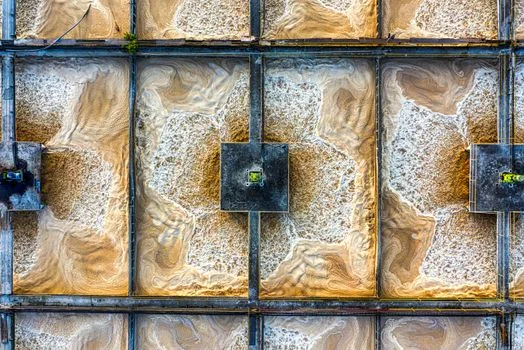
The total CapEx for a 50 m³/h capacity DAF system in 2026 ranges from $250,000 to $400,000, with a projected ROI of 1.5 to 2.5 years compared to traditional membrane-based treatment. This cost model assumes a fully automated system integrated into the fab’s existing SCADA network. While the initial equipment cost for DAF is higher than basic sedimentation tanks, the reduction in chemical usage and sludge disposal fees provides a rapid payback period.
| Cost Category | Estimated Range (USD) | Notes |
|---|---|---|
| Equipment (DAF, Pumps, PLC) | $150,000 – $250,000 | Includes 304/316 Stainless Steel construction |
| Civil & Installation | $80,000 – $130,000 | Piping, foundations, and electrical integration |
| Chemical Dosing Units | $20,000 – $30,000 | High-precision pumps for CTAB and pH |
| Total CapEx | $250,000 – $410,000 | Based on 50 m³/h capacity |
Operational costs are dominated by chemical consumables and power. Current 2026 data indicates that CTAB and activator costs range from $0.30 to $0.50 per cubic meter treated. Power consumption for the saturation pumps and skimmers typically adds $0.10 to $0.20 per cubic meter. Maintenance, including labor and parts, is significantly lower than membrane systems, averaging $0.25/m³. Sensitivity analysis shows that while CTAB price volatility (±15% over the last four years) can impact OPEX by up to 12%, the overall cost-to-compliance ratio remains the most favorable in the industry.
Zero-Sludge DAF Operation: Compliance Checklist for Semiconductor Fabs
Achieving zero-sludge compliance in semiconductor fabs requires maintaining a specific air-to-solids ratio between 0.02 and 0.06 and integrating secondary dewatering stages. The following checklist serves as a technical guide for EHS managers and facility engineers to ensure continuous compliance and operational stability.
- 1. Pre-treatment Screening: Install a rotary mechanical bar screen to remove large debris (>100 µm) that can damage high-pressure saturation pumps.
- 2. Precision pH Control: Maintain 6.5 ± 0.1 using HCl or NaOH. Automated probes must be calibrated weekly to prevent silica "breakthrough" caused by charge shifts.
- 3. Coagulant Optimization: Dose CTAB at 20–40 mg/L. Use a static mixer to ensure uniform distribution before the flocculation tank.
- 4. Flocculation Management: Ensure a retention time of 10–15 minutes with slow mixing. High shear (pump speeds >1,200 RPM) will break silica flocs, rendering flotation impossible.
- 5. Air Saturation Calibration: Maintain pressure at 4–6 kg/cm². If bubbles appear larger than 50 µm (milky vs. translucent appearance), check the air injection nozzles for scaling.
- 6. Skimmer Frequency: Set skimmer blades to cycle every 30–60 minutes. Allowing the sludge blanket to become too thick can lead to sub-surface "sloughing" and effluent contamination.
- 7. Real-time Monitoring: Use online turbidity and TSS sensors. If effluent exceeds 5 NTU, the system should automatically increase the recycle ratio or trigger an alarm.
- 8. Sludge Dewatering: Direct floated sludge (3–5% solids) to a sludge dewatering to 3–5% solids for zero-sludge compliance. This reduces final waste volume by 90%, meeting zero-sludge goals.
Frequently Asked Questions
Q: What’s the minimum silica size DAF can remove from CMP wastewater?
A: DAF effectively removes silica particles down to 20 nm when paired with cationic collectors like CTAB. For rare applications involving particles smaller than 20 nm, a post-DAF ultrafiltration step may be required, though DAF removes the bulk of the solids to protect the membranes.
Q: How does DAF handle high-TDS CMP wastewater (>5,000 mg/L)?
A: High Total Dissolved Solids (TDS) can interfere with bubble-particle adhesion by compressing the electrical double layer. In these cases, we recommend pre-dilution with low-TDS process water or utilizing a hybrid electrocoagulation-DAF approach to maintain >95% removal efficiency.
Q: What’s the typical payback period for a DAF system in a semiconductor fab?
A: For a 50 m³/h system, the payback period is typically 1.5–2.5 years. This is driven by 30% lower OPEX compared to membrane systems and the avoidance of high-cost membrane replacement and hazardous sludge disposal fees.
Q: Can DAF treat CMP wastewater containing copper or other heavy metals?
A: DAF is primarily a solids-removal process. While it can remove <30% of dissolved metals through incidental adsorption, a dedicated chemical precipitation step (using sulfides or hydroxides) should be added prior to the DAF unit for full heavy metal compliance.
Q: What is the maintenance frequency for the air saturation system?
A: Weekly checks of the saturation pressure and dosing pumps are required. We recommend a monthly inspection of the skimmer assembly and a quarterly cleaning of the air diffusers to prevent any mineral scaling from the CMP slurry chemistry.