Why Opelika-Area Pulp & Paper Mills Are Indirect Dischargers
An indirect discharger routes its treated wastewater to a municipal sewer rather than straight to a river, and is regulated through the local publicly owned treatment works' (POTW) pretreatment program rather than a direct NPDES permit. The EPA's Pulp, Paper and Paperboard Effluent Guidelines at 40 CFR Part 430 were first promulgated in 1974 and 1977, amended in 1982 and 1986, and saw a major amendment covering toxic pollutants in 1998 (per EPA, epa.gov/eg/pulp-paper-and-paperboard-effluent-guidelines). For a kraft, sulfite, deink, or secondary-fiber mill in the Lee County / Opelika / Chattahoochee Valley service area, that framework means the City of Opelika Water Works — acting as the control authority — sets day-to-day enforcement through its pretreatment program, while 40 CFR Part 430 still defines the universe of regulated pollutants and the subcategory logic behind the numerical limits (per EPA, 2026).
Which subcategory a mill sits in — kraft, sulfite, semi-chemical, groundwood, deink, secondary fiber, non-wood, or one of the purchased-pulp categories — is what drives the actual limit values. Get the subcategory wrong, and the rest of the design work is misaligned from day one. For the typical recycled-fiber or non-integrated purchased-pulp operation in the Opelika area, the assignment most often lands on subcategory J (secondary fiber) or subcategory L (tissue, filter, non-woven, and paperboard from purchased pulp) (per EPA, 40 CFR Part 430).
What Pollutants a Paper Mill Must Remove Before the Sewer
A paper-mill wastewater stream is defined by a short list of universal parameters plus a few that depend on whether chlorine bleaching is in the mix. The BioResources NCSU review identifies biochemical oxygen demand (BOD), chemical oxygen demand (COD), total suspended solids (TSS), color, pH, and toxicity as the parameters that any successful treatment system must address (per BioResources NCSU, Hubbe et al.). Where chlorine-based bleaching is used, adsorbable organic halides (AOX) become the signature regulated parameter — AOX has fallen by over 80% industry-wide since 1990 thanks to the EPA's cluster rules and process changes such as elemental chlorine free (ECF) bleaching (per BioResources NCSU).
The BOD-to-COD ratio is a design indicator engineers can use to size the biological stage. Chemical pulping generates more than 40% poorly biodegradable organics within the total organic load, which is why a low BOD/COD ratio pushes the design toward extended aeration, MBR polishing, or an anaerobic front-end (per BioResources NCSU). Process water volume is the other half of the design constraint: pulp and paper production can generate up to 70 m³ of wastewater per tonne of paper, with roughly 70% of plant water intake used as process water — a hydraulic load that justifies aggressive in-plant reuse before end-of-pipe treatment (per BioResources NCSU). The conventional polluting source points are wood preparation, pulping, pulp washing, screening, the paper machine, and coating operations, with bleaching being the largest single source of recalcitrant organics (per BioResources NCSU).
| Parameter | Why it matters for a 2026 indirect discharger | Typical target before the sewer |
|---|---|---|
| BOD / COD | Drives biological-stage sizing; low BOD/COD means poor biodegradability | Meet local POTW BOD limit, often 250–400 mg/L ceiling |
| TSS | Fiber and filler carryover; protects POTW biomass | Local limit, typically 200–450 mg/L |
| AOX | Only relevant if chlorine-based bleaching is in the line; ECF mills are typically well controlled | Local limit, often ≤ 1–3 mg/L for bleached mills |
| pH | Protects POTW biology and sewer infrastructure | 5.0–10.0 continuous, 6.0–9.0 typical target |
| Color / toxicity | Reciprocal of AOX; cluster-rule driven | Set by local POTW pretreatment schedule |
The 2026 Pretreatment Train Most Mills Near Opelika Actually Run
A realistic 2026 pretreatment train for an indirect-discharging pulp and paper mill in Lee County has five blocks: rotary screening, equalization, dissolved air flotation, biological treatment, and polishing. This is the same sequence the BioResources NCSU review describes for mills that have moved beyond primary clarification, and it maps cleanly onto the equipment catalogs most engineers are already specifying (per BioResources NCSU).
- Rotary mechanical bar screens. A GX series rotary mechanical bar screen removes rags, plastics, and large fiber bundles that would blind downstream pumps and clog DAF nozzles. Continuous-duty fine screening at the head of the plant is the single cheapest insurance against unplanned shutdowns.
- Flow and pH equalization. Equalization basins smooth the hydraulic load of up to 70 m³/tonne and stabilize pH, which is essential to keep downstream biology in its working range. Surge events from batch pulping or wash cycles are flattened here so DAF and activated-sludge units see a steady feed.
- Dissolved air flotation. A dissolved air flotation (DAF) system (4–300 m³/h) handles primary TSS, FOG, and fiber recovery. DAF outperforms a primary clarifier on fiber-rich streams because the micro-bubble cloud attaches to low-density fiber and floats it rather than waiting for it to settle; for a side-by-side look at the trade see the DAF vs clarifier comparison for fiber-laden streams. For a deeper dive on hydraulic loading, recycle ratio, and air-to-solids ratio, the 2026 DAF design parameters guide is the working reference.
- Biological treatment. Conventional activated sludge is the workhorse for BOD/COD reduction, with anaerobic pretreatment as an option for high-COD streams where methane yield can offset aeration cost (per BioResources NCSU). Chemical oxygen is converted in aeration basins, and a clarifier or membrane stage separates the biomass from the clarified effluent.
- Polishing. An integrated MBR membrane bioreactor system with submerged PVDF membranes at 0.1 µm pore size is the most common 2026 polishing step for mills that need to guarantee low TSS in a small footprint. For typical effluent quality expectations see the MBR effluent quality standards reference. Sand filtration or UF can substitute where MBR is over-spec.
Chemical conditioning is injected at two points: coagulant and flocculant ahead of DAF to build a strong floe, and pH adjustment plus nutrient dosing at the biological stage. A PLC-controlled automatic chemical dosing skid is the standard 2026 way to keep those feed rates tied to flow and online TSS meters.
| Train block | Unit operation | Parameter it removes | Typical 2026 sizing |
|---|---|---|---|
| 1. Screening | GX rotary bar screen | Rags, large fiber, plastics | Continuous-duty, sized to peak hourly flow |
| 2. Equalization | EQ basin + mixers | Hydraulic surge, pH spikes | 8–24 h retention at average flow |
| 3. DAF | DAF | TSS, FOG, fiber recovery | 4–300 m³/h per unit |
| 4. Biological | Activated sludge (± anaerobic) | BOD, COD, toxicity | Designed on F/M and BOD/COD ratio |
| 5. Polishing | MBR (PVDF 0.1 µm) or sand/UF | Residual TSS, turbidity | 10–2,000 m³/day packaged MBR |
Choosing the Right 40 CFR Part 430 Subcategory for Your Mill
40 CFR Part 430 organizes the industry into 12 subcategories, A through L, each tied to a specific pulping chemistry and product mix (per EPA, epa.gov/eg/pulp-paper-and-paperboard-effluent-guidelines). The full list: A — Dissolving kraft, B — Bleached papergrade kraft and soda, C — Unbleached kraft, D — Dissolving sulfite, E — Papergrade sulfite, F — Semi-chemical, G — Groundwood, H — Wastepaper deink, I — Non-wood chemical, J — Secondary fiber (without deinking), K — Fine and lightweight papers from purchased pulp, and L — Tissue, filter, non-woven, and paperboard from purchased pulp.
Why this matters: the numerical limits change by subcategory because the raw material, the pulping chemicals, and the bleaching sequence change. A bleached papergrade kraft mill under subcategory B carries a very different AOX and color load than a secondary-fiber mill under subcategory J making tissue from wastepaper. Many of the smaller mills in the Lee County / Opelika area are either secondary-fiber operations under subcategory J or non-integrated purchased-pulp operations under subcategory L — both of which are typically lower-strength wastewaters but still subject to local limits on BOD, TSS, and pH (per EPA, 40 CFR Part 430).
The local POTW can — and often does — impose limits stricter than the federal guideline, especially for conventional pollutants like TSS and BOD, so the controlling instrument is the local pretreatment permit or control mechanism, not the federal effluent guideline table by itself (per EPA, 2026).
Equipment Sizing Benchmarks Engineers Use in 2026
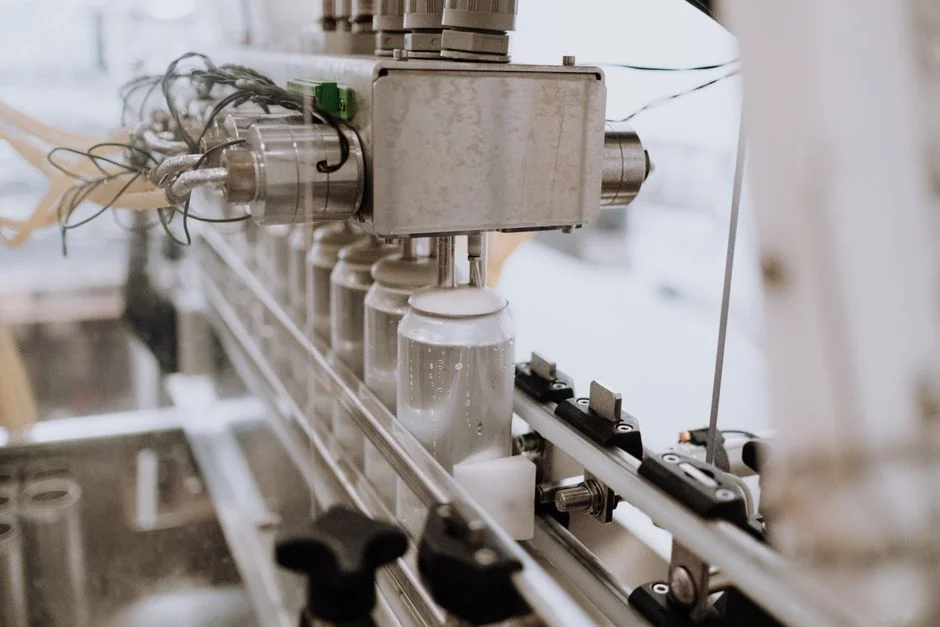
Vendor catalogs give a wide range of standard sizes; the engineer's job is to pick the right unit for the flow and load, then sanity-check the quote against published hydraulic and sizing ranges. The 2026 benchmarks below are drawn from typical supplier specifications and should be treated as design ranges, not guarantees (per HydropureWater catalog data, 2026).
| Unit operation | Standard 2026 size range | Key design parameter | Notes |
|---|---|---|---|
| DAF | 4–300 m³/h per unit | Hydraulic / surface loading sized low-to-moderate for fiber-rich streams | Micro-bubble attachment floats low-density fiber and filler |
| MBR (PVDF submerged) | 10–2,000 m³/day packaged | 0.1 µm pore size; ~60% smaller footprint than CAS | Effluent TSS typically ≤ 5 mg/L |
| Lamella clarifier | Per project | Surface loading 20–40 m/h; ~30% chemical savings vs conventional clarifier | Used where MBR is not justified |
| Rotary bar screen (GX) | Per channel width | Bar spacing sized to downstream pump and DAF tolerance | Continuous-duty fine screening |
| Automatic chemical dosing | Skid-mounted | PLC-controlled injection of coagulant, flocculant, pH adjusters | Tied to flow and online TSS / pH meters |
Pretreatment vs Zero-Liquid-Discharge: Where to Draw the Line
Zero-liquid-discharge (ZLD) is the right answer in a few situations and the wrong answer in most. For most indirect dischargers near Opelika, a well-run DAF + activated sludge + MBR polishing train that consistently meets the POTW's local limits is more cost-effective than chasing full ZLD. The BioResources NCSU review is explicit that total water-circuit closure is limited by contaminant accumulation in the process loop — corrosion, deposits, odors, and runnability problems on the paper machine — and that further closure requires extensive treatment before reuse (per BioResources NCSU).
The practical 2026 path is hybrid: deploy kidney loops, filtration save-alls, and DAF on clarified streams to drive in-plant reuse higher, which both shrinks the sewer bill and reduces the CAPEX needed on biological capacity. ZLD is justified only where the local limits are very tight, water is scarce enough to make reuse economics compelling, or the mill is losing high-value chemicals in the effluent. For most Lee County indirect dischargers, the marginal cost of going to ZLD does not pencil out against a working DAF + activated sludge + MBR train hitting the local pretreatment schedule (per BioResources NCSU; per EPA, 40 CFR Part 430).
Frequently Asked Questions
What regulation governs a pulp and paper mill that discharges to the Opelika sewer?
40 CFR Part 430, the EPA's Pulp, Paper and Paperboard Effluent Guidelines (first promulgated 1974/1977, last major toxic-pollutant amendment 1998) defines the regulated pollutants and subcategories. Day-to-day enforcement runs through the City of Opelika Water Works pretreatment program, whose local limits can be stricter than the federal guideline (per EPA, 2026).
How much wastewater does a pulp and paper mill generate per tonne of product?
Up to 70 m³ per tonne of paper, with about 70% of plant water intake used as process water. That hydraulic load is the reason a five-block train (screening, equalization, DAF, biological, polishing) is standard at indirect-discharging mills in 2026 (per BioResources NCSU).
Which unit operation removes the most TSS from a fiber-laden paper-mill stream?
Dissolved air flotation is the workhorse for primary TSS, FOG, and fiber recovery because micro-bubbles attach to low-density fiber and float it. A DAF (4–300 m³/h) is typically followed by an MBR (submerged PVDF, 0.1 µm) to polish residual TSS below 5 mg/L before the sewer (per HydropureWater catalog data, 2026).
What is AOX and does every paper mill have to monitor it?
AOX (adsorbable organic halides) is a measure of chlorinated organics in the effluent and is directly tied to chlorine consumption in bleaching. It is a regulated parameter for any mill using chlorine-based bleaching; industry-wide AOX emissions have dropped over 80% since 1990 thanks to the cluster rules and ECF bleaching (per BioResources NCSU).