Why Mining Feed Breaks Conventional Activated Sludge
Conventional activated sludge fails on mining and metals feed because the feed violates almost every design assumption the original activated-sludge textbook was written around. Mining influents routinely arrive at the secondary stage with BOD/COD ratios below 0.3, hardness in the thousands of mg/L as CaCO₃, sulfate often above 1,000 mg/L, and total dissolved solids climbing past 5,000 mg/L in recycle-heavy sites (HydropureWater mining MBR field reference, 2026). That matrix drives filamentous bulking in secondary clarifiers and wrecks the settling that CAS depends on.
Heavy metals — As, Pb, Zn, Cu, Ni, Cd — at milligram-per-liter levels shock biomass during upset events. CAS systems typically lose 30–60% of their removal efficiency for a 24–72 hour window after a metal pulse because the floc itself is what carries the contaminant out in the wasted sludge stream (HydropureWater mining MBR field reference, 2026). Salinity above roughly 5,000 mg/L TDS inhibits nitrifying autotrophs, and a standard 5–15 day SRT CAS basin does not give slow-growing nitrifiers enough time to recover. An MBR at 30–60 day SRT retains biomass through the shock and lets the autotroph population rebuild. Cyanide, ammonia, and thiosulfate from cyanidation circuits add an oxygen-demand swing that a clarifier cannot ride out without equalization.
For a Jasonville site specifically, Greene County hosts active coal preparation, historical metals recovery, and legacy abandoned mine drainage (AMD) that contributes Fe, Mn, Al, and acidity straight to the secondary stage. The coal-prep and AMD envelopes hit the same CAS failure modes — variable metals, high TDS, episodic low pH — and the local geology means the feed rarely stays inside the narrow envelope a secondary clarifier needs to function. An integrated MBR membrane bioreactor system is sized for exactly this envelope.
40 CFR Part 440 and the Indiana IDEM Layer on Top
The binding US standard for ore mining and dressing effluent is 40 CFR Part 440, which sets daily-maximum and monthly-average effluent limits for the parameters that drive the MBR-versus-CAS comparison — TSS, total metals, pH, and total residual chlorine (40 CFR Part 440). For any Jasonville-area coal-prep or metals-recovery plant, the permit numbers on the page will trace back to this federal rule. The mining pretreatment compliance guide walks through how those numbers land on a real feed.
Indiana IDEM layers additional caps on top of the federal baseline. NPDES permits issued for coal-mine drainage in Indiana typically require additional limits on iron, manganese, total dissolved solids, sulfate, and selenium, which push the biological stage harder than a generic metals plant would experience. Both MBR and CAS still need upstream chemical precipitation — typically pH 8.5–9.5 with lime or caustic — to take dissolved metals out of solution before biology (HydropureWater mining MBR field reference, 2026). The MBR is what protects the downstream RO from fouling once precipitation is done.
For the reuse question, "reuse" in this regulatory context means RO permeate brought to under 500 mg/L TDS, suitable for grinding dilution water or heap-leach makeup. A brackish-water reverse osmosis (BWRO) unit running at 70–85% recovery on the MBR permeate is the standard finishing step, and the BWRO feed quality — sub-1 mg/L TSS, low SDI — is what the MBR is actually buying. CAS effluent at 5–15 mg/L TSS typically needs an additional sand or media filter before the RO to protect the membranes, partially eroding the CAS footprint advantage (HydropureWater mining MBR field reference, 2026).
MBR vs CAS Parameter Comparison for Mining Duty
The table below consolidates the parameters a process engineer will copy into their own evaluation memo. MBR numbers are drawn from the EPA Membrane Bioreactor Fact Sheet (Calls Creek and Cauley Creek facilities) and from Jijingi et al. (2024) for industrial-MBR review; CAS numbers are typical secondary-clarifier performance for municipal-style activated sludge adapted to mining influents.
| Parameter | Integrated MBR | Conventional Activated Sludge (CAS) |
|---|---|---|
| MLSS | 8,000–12,000 mg/L | 2,000–4,000 mg/L |
| SRT | 30–60 days (mining), 20–40 (typical) | 1–5 days (nitrifying); 5–15 days (non-nitrifying) |
| HRT | 6–12 hours | 8–24 hours |
| Footprint ratio | ~0.4× of CAS | 1.0× baseline |
| Effluent TSS | <1 mg/L | 5–15 mg/L |
| Effluent ammonia-N | 0.10–0.72 mg/L | 5–15 mg/L |
| Heavy-metal removal (Pb, Zn, Cu, Cd) | 70–95% (biosorption + bioaccumulation) | 30–60%, with 30–60% loss during metal shocks |
| Membrane area per 1,000 m³/day | 1,800–3,200 m² (DF series flat-sheet cassettes) | n/a |
| Installed CAPEX per m³/day (2026) | USD 800–2,500 | USD 550–1,700 (with tertiary filter) |
| Operating resilience to metal shock | Holds biomass; <10% efficiency dip | 30–60% loss for 24–72 hours |
| Membrane service life (mining duty) | 5–8 years with proper CIP | n/a |
The resilience row is the one that matters for Jasonville. CAS pays less in OPEX and CAPEX but loses 30–60% of removal efficiency during metal shocks that an MBR rides out because the membrane keeps biomass in the tank regardless of floc condition (HydropureWater mining MBR field reference, 2026). For procurement purposes, a packaged skid built around a DF series flat-sheet MBR membrane module at 0.1 μm with integrated aeration falls in the MBR column for the 10–2,000 m³/day flow band that defines most metals-plant retrofits. For the cost-per-cubic-metre math, the MBR cost per m3 2026 guide breaks the same numbers down for procurement.
Pretreatment and Sludge Handling for a Jasonville MBR
Most MBR failures in mining service trace back to skipped pretreatment. All MBR systems require 1–3 mm fine screening immediately before the membranes, with the cutoff depending on the manufacturer: 1–2 mm for hollow-fiber bundles (GE/Zenon ZeeWeed, Siemens Memcor) and 2–3 mm for flat-plate (Kubota-style) modules (HydropureWater mining MBR field reference, 2026). The screening cutoff drives both CAPEX and the headworks design — undersized screening is the single most common cause of torn membranes and shortened cassette life. A GX-series rotary bar screen at the headworks is the standard mining-duty answer, paired with a HydropureWater automatic chemical dosing system for lime, caustic, or coagulant to hold pH at 6.5–7.5 before the MBR.
For high-turbidity or oil-laden mine-water feeds upstream of the equalization basin, a dissolved air flotation unit in the 4–300 m³/h range removes 60–80% of influent oil and 30–50% of TSS, extending MBR cleaning intervals from weekly to monthly and cutting chemical clean-in-place (CIP) consumption by 50–70% (HydropureWater mining MBR field reference, 2026). The DAF protects a CAS clarifier from sludge loss during shock loads too, so the upstream choice does not move the needle between the two technologies.
The MBR waste activated sludge has lower settleability and more colloidal particles than CAS waste activated sludge, so a plate-and-frame filter press is the right dewatering choice to hit 25–35% dry solids for landfill or mine backfill (HydropureWater mining MBR field reference, 2026). Chemical precipitation upstream of the biology generates 3–8 kg of dry solids per cubic metre treated, and the press handles both the MBR waste sludge and the precipitation cake.
2026 CAPEX, OPEX, and 20-Year Lifecycle for a 1,000 m³/day Train
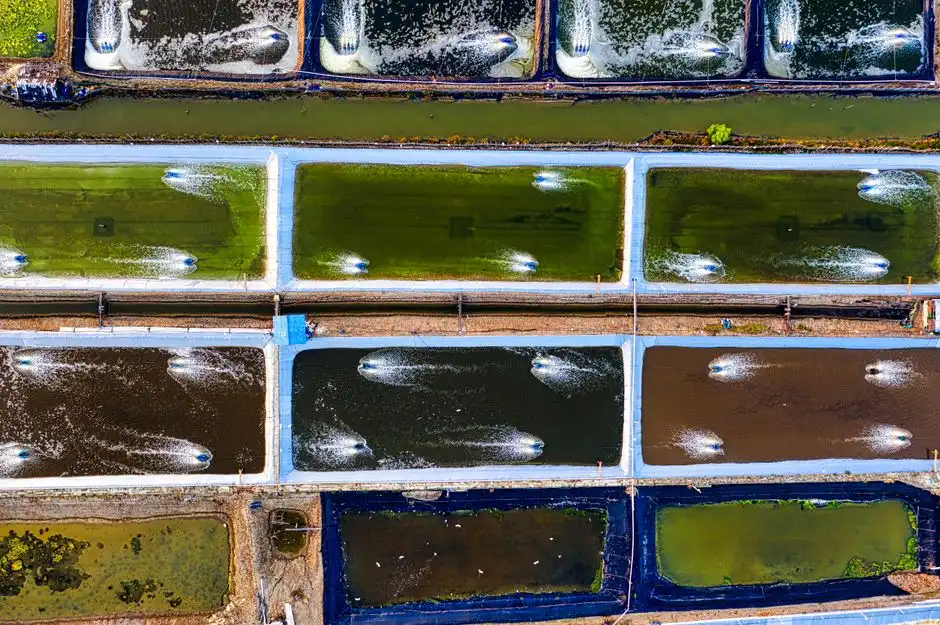
For a 1,000 m³/day mining plant in the US Midwest, MBR CAPEX runs roughly 20–40% above an equivalent-flow CAS basin because of the membrane cassettes, fine screens, permeate pumps, and PLC upgrade. OPEX runs 15–30% higher per m³ driven by air-scour energy, periodic chemical cleaning with sodium hypochlorite and citric acid, and membrane replacements over a 20-year horizon (HydropureWater mining MBR field reference, 2026). The two OPEX swing factors that flip the answer for a Jasonville site are the electricity tariff and the value of reused water.
The table below frames the decision for a 1,000 m³/day feed at 2026 Indiana industrial power (~$0.08–0.10/kWh) and water tariffs:
| Scenario (1,000 m³/day, 20-yr) | 20-yr Cost Position | Verdict |
|---|---|---|
| Case A: MBR + reuse, make-up water >$2/m³ | CAPEX premium paid back in 4–6 years; 20-yr NPV 15–25% below CAS | MBR wins |
| Case B: MBR + reuse, make-up water $1–2/m³ | Payback 6–10 years; 20-yr NPV roughly equivalent to CAS | Tie — driven by ZLD/reuse mandate |
| Case C: MBR, no reuse, electricity <$0.07/kWh | Higher 20-yr NPV than CAS; reuse value unrealized | CAS retrofit preferred |
| Case D: CAS retrofit of existing aeration basin with 20+ years life | Lowest 20-yr NPV; OPEX 15–30% below MBR per m³ | CAS wins on legacy civil |
When purchased make-up water exceeds roughly $2/m³ or brine disposal is a real cost line, the reuse revenue from an MBR permeate stream pays back the CAPEX premium inside 4–6 years (HydropureWater mining MBR field reference, 2026). For an Indiana industrial site without a closed-loop reuse mandate, Case D is often the cheapest answer, but it forecloses the option of a future ZLD or heap-leach makeup loop. A more detailed MBR versus CAS analysis for an arid-region site is in the parallel MBR vs CAS comparison for chemicals wastewater.
The 30-Second Procurement Score and Pilot Plan
Run a 30-second score against three questions: (1) Is the available footprint below 500 m²? (2) Does the site have a reuse or ZLD driver? (3) Is the flow below 2,000 m³/day? Two out of three "yes" answers means MBR; zero or one means CAS or a hybrid clarifier-plus-MBR polish (HydropureWater mining MBR field reference, 2026). For a Jasonville site specifically, the regional factors that push the answer are the coal-mine drainage envelope under IDEM NPDES, the selenium and sulfate caps that 40 CFR Part 440 does not fully cover, and the closed-loop reuse economics that come from Indiana industrial water and power tariffs.
Before committing CAPEX, rent one MBR cassette for a 60–90 day pilot against the actual Jasonville feed and verify metals removal and CIP interval on the real influent matrix. Hand procurement a five-line checklist:
- 7-day composite influent characterization (metals, hardness, sulfate, TDS, BOD/COD ratio)
- Equalization volume expressed in hours of average flow
- Fine-screen specification in mm (1–2 mm for hollow-fiber, 2–3 mm for flat-sheet)
- Membrane warranty length in years
- 10-year membrane replacement cost in dollars per m² of membrane area
Flag the operator-readiness risk separately: 36–68% of MBR OPEX is aeration, and sites without membrane-CIP training pay for that gap in unplanned membrane replacements (HydropureWater mining MBR field reference, 2026). The upstream and downstream stages around the MBR are covered in the mining pretreatment compliance guide and the coal mining wastewater characteristics and treatment guide.
Frequently Asked Questions
Does MBR or CAS win for a 1,000 m³/day mining site in Jasonville, Indiana?
For a 1,000 m³/day Jasonville site in 2026, MBR wins when the footprint is under ~500 m² and a reuse or ZLD driver exists; CAS wins when existing aeration basins have 20+ years of life left and no reuse mandate is in place. Both trains are bound by 40 CFR Part 440 effluent limits, with Indiana IDEM layering iron, manganese, and sulfate caps on top (HydropureWater mining MBR field reference, 2026).
What is the 2026 installed CAPEX per m³/day for a mining-grade MBR?
Installed CAPEX in 2026 runs USD 800–2,500 per m³/day for a mining-grade integrated MBR, with CAS 30–50% lower membrane-free but adding clarifier civil, polymer dosing, and a tertiary media filter ahead of any RO (HydropureWater mining MBR field reference, 2026). The wide MBR range is driven by influent variability, automation scope, and containerized versus skid build.
What membrane life should be expected on mining duty?
Mining-duty MBR membranes last 5–8 years with proper CIP and pretreatment, including 1–3 mm fine screening and pH adjustment to 6.5–7.5 before the membrane tank (HydropureWater mining MBR field reference, 2026). Poor CIP discipline is the leading cause of unplanned membrane replacement and is the single largest OPEX risk for a first-time MBR operator.
Does Indiana IDEM require anything beyond 40 CFR Part 440 for coal-mine drainage?
Yes. Indiana IDEM NPDES permits for coal-mine drainage typically require additional limits on iron, manganese, total dissolved solids, sulfate, and selenium that are not fully covered by the federal baseline. Both MBR and CAS trains still need upstream chemical precipitation at pH 8.5–9.5 to take dissolved metals out of solution before biology (HydropureWater mining MBR field reference, 2026).
What pilot duration is appropriate before committing CAPEX on a Jasonville MBR?
Rent one MBR cassette for a 60–90 day pilot against the actual Jasonville feed and verify metals removal, CIP interval, and air-scour energy draw on the real influent matrix before any CAPEX commitment. The pilot is the only credible defense in front of IDEM and procurement in the same week (HydropureWater mining MBR field reference, 2026).