
Why the MBR vs CAS Question Is Different in East Saint Louis
East Side chemical plants discharge to the Metropolitan Sewer District (MSD) system, which feeds the Lemay WWTF headworks, and the 2025–2026 Illinois EPA NPDES reissuance cycle has tightened whole-effluent toxicity (WET) limits and added PFAS precursor scan monitoring at four Central US chemical facilities (HydropureWater, 2026). The receiving water is the Mississippi River, so any TSS or nitrogen slip from a settling-based clarifier shows up in the permit record and the discharge monitoring report. Influent on the Illinois side is rarely textbook: 800–4,000 mg/L COD swings, surfactant and solvent slugs, pH excursions, and chloride above 5,000 mg/L are common (per the chemicals wastewater 2026 Central US analysis). The 2026 decision is therefore not generic MBR versus CAS — it is whether a brownfield site reuses its existing aeration basin, retrofits a submerged membrane cassette train into it, or tears down for a greenfield plant on a 20-year permit horizon with a possible reuse obligation.
How Each Process Treats a Chemical Stream
CAS treats chemicals wastewater by growing a bacterial-protozoan consortium in an aeration basin, allowing floc aggregation, and separating cleaned water from biomass in a downstream clarifier at SRT 5–15 d and HRT 6–12 h (HydropureWater, 2026). Surfactant batches, solvent washdowns, and ammonia shocks trigger bulking, pinpoint floc, and clarifier upsets that drive higher polymer dose and lost capacity. MBR keeps the same biological stage but replaces the clarifier with a 0.1–0.4 μm PVDF submerged membrane at SRT 20–60 d, MLSS 8,000–15,000 mg/L, and flux 10–25 LMH. The membrane decouples HRT from SRT and tolerates slug events that would wash out a gravity settler — the long-SRT window also retains slow-growing nitrifiers and PAH-degrading specialists (HydropureWater, 2026 Central US chemicals guide). The biological stage is essentially identical; the separator is the entire decision.
| Process train | Separator | SRT | HRT | MLSS | Flux / settling basis |
|---|---|---|---|---|---|
| CAS — aeration basin + secondary clarifier | Gravity clarifier, RAS/WAS split | 5–15 d | 6–12 h | 2,000–5,000 mg/L | SVI must stay < ~150 mL/g |
| MBR — aeration basin + submerged membrane | 0.1–0.4 μm PVDF flat sheet or hollow fiber | 20–60 d | Decoupled from SRT | 8,000–15,000 mg/L | 10–25 LMH sustained flux |
Operating Envelope for an East Saint Louis Chemical Plant
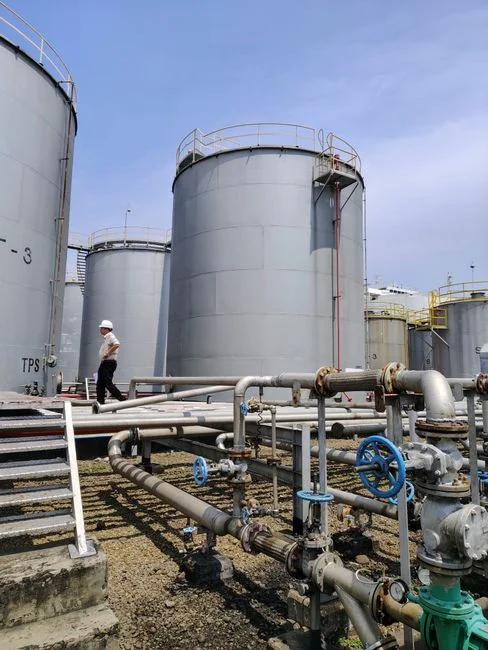
The table below consolidates the operating envelope an engineer needs for a 2026 design basis memo, with values drawn directly from the Central US chemicals analysis and the broader 2026 MBR vs CAS engineering comparison. The MLSS, SRT, and footprint factor numbers are the same data an Illinois EPA Region 4 reviewer will expect to see in a basis-of-design narrative. MBR's long-SRT operation is not theoretical — the 2009 Banu et al. A2O-MBR study ran a reactor at a designed flux of 77 LMH for 270 days at industrial scale, demonstrating that high-MLSS MBR operation is stable when flux and air-scour are sized correctly. Operating at the upper end of the SRT range (40–60 d) generally extends CIP interval from weekly to monthly, but raises MLSS viscosity and mixed-liquor oxygen demand.
| Parameter | CAS | MBR |
|---|---|---|
| MLSS | 2,000–5,000 mg/L | 8,000–15,000 mg/L |
| SRT | 5–15 d | 20–60 d |
| HRT | 6–12 h | Decoupled from SRT |
| F/M | 0.2–0.5 d⁻¹ | 0.05–0.15 d⁻¹ |
| Pore / settling basis | Gravity, SVI < 150 mL/g | 0.1–0.4 μm PVDF membrane |
| Yobs (kg VSS/kg COD) | 0.30–0.45 | 0.10–0.25 |
| Effluent TSS | 10–30 mg/L | < 5 mg/L |
| Effluent turbidity | 5–20 NTU | < 1 NTU |
| Footprint factor (CAS = 1.0) | 1.0 | 0.4 |
Effluent Quality, Reuse, and MSD Pretreatment Fit
MBR permeate delivers TSS < 5 mg/L, turbidity < 1 NTU, and a Silt Density Index typically < 3 — that SDI is the threshold below which an RO unit can be fed without additional clarification, which is why MBR has become the standard RO pretreatment for industrial reuse loops (HydropureWater 2026 MBR vs CAS engineering comparison). CAS effluent lands at 10–30 mg/L TSS and degrades sharply when SVI climbs, so reuse requires DAF, multimedia, or cloth-media polish — a hidden CAPEX line that should be priced into any CAS baseline. For East Side chemical sites, the MBR→RO train for cooling-tower or scrubber dilution is the standard 2026 reuse path, and MSD pretreatment surcharges on high-strength chemical discharge make that reuse revenue a real offset against the MBR CAPEX premium. The chemicals-stream MBR advantage is wider than the municipal LCA suggests because higher SRT further reduces residual SVOC load, and the membrane retains biomass during slug events that would crash a clarifier (HydropureWater, 2026 Central US chemicals guide). For a side-by-side parameter breakdown at adjacent flow rates, the MBR vs CAS for mining wastewater in Ganado article applies the same envelope to a different high-strength stream.
Winter Operation and Sludge Hauling in the Metro
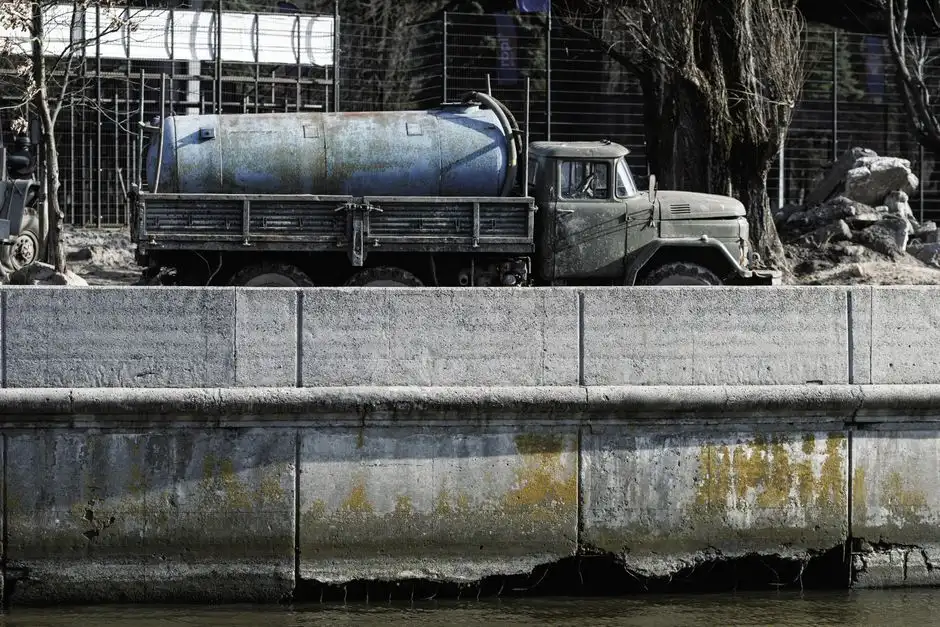
January and February mixed-liquor temperatures in the St. Louis metro sit at 8–12 °C, and nitrification rates roughly halve per 10 °C drop (HydropureWater, 2026 Central US chemicals guide). A 30-day SRT MBR at 10 °C still supports full nitrification; a 10-day SRT CAS at the same temperature typically does not, and the colder water raises mixed-liquor viscosity enough to slow settling. The MBR's enclosed tank and physical separation barrier hold effluent stable through these months when a clarifier-based train is most likely to fail. Biosolids hauling is the second cost vector: land application sites are often more than 100 km from the plant, and Class B dewatering cake is hauled at $35–55 per wet ton in 2026 dollars. MBR's 20–40% lower observed sludge yield compounds across 20 years into six figures of OPEX avoided at a 1,000–5,000 m³/d plant.
2026 Cost Model for a 1,000 m³/d Chemical Plant
Indicative 2026 turnkey CAPEX for skid-integrated, EPC-scope plants runs $80–$220 per m³/d for CAS and $180–$420 per m³/d for MBR; OPEX lands at $0.10–$0.22/m³ for CAS and $0.18–$0.42/m³ for MBR (HydropureWater 2026 MBR vs CAS engineering comparison). On a chemicals stream the multiplier tightens: MBR CAPEX is 1.4–1.8× CAS and OPEX is 1.2–1.5× CAS per cubic meter treated. Membrane replacement amortizes across 5–8 years; scouring air is 30–50% of MBR energy; CIP regime is weekly NaOCl at 500–1,000 mg/L plus semi-annual citric or NaOH (HydropureWater, 2026 Central US chemicals guide). Reuse revenue at $1.50–3.00 per cubic meter of displaced purchased process water shrinks the OPEX crossover from decades to years, and the directional payback is 3–6 years when any one of three conditions holds: reuse obligation, < 10 mg/L TSS consent, or land cost that makes the 40–60% footprint saving material. The cost table below sizes a 1,000 m³/d East Side chemical plant on the conservative end of each range.
| Cost axis (1,000 m³/d, 2026 directional) | CAS | MBR |
|---|---|---|
| Turnkey CAPEX | $0.08–0.22M | $0.18–0.42M |
| OPEX ($/m³ treated) | $0.10–0.22 | $0.18–0.42 |
| Energy (kWh/m³, biology + scouring) | 0.3–0.6 | 0.6–1.2 (scouring adds 0.3–0.6) |
| Membrane replacement (% CAPEX/yr) | n/a | 2–3% |
| Sludge hauling ($/yr, > 100 km haul) | $0.20–0.35M | $0.12–0.21M (20–40% lower yield) |
| Reuse offset ($/yr at $2/m³) | Marginal (after tertiary) | $0.50–0.70M |
The MBR premium closes on a 20-year horizon once reuse, hauling, and clarifier-upset risk are priced in. For a deeper per-m³ treatment cost walkthrough, the MBR cost-per-m³ guide breaks the same CAPEX/OPEX bands into a line-item format. Brownfield packages such as the integrated MBR membrane bioreactor system are now specified to slot into repurposed CAS basins on the Illinois side of the metro without a civil expansion.
Decision Matrix: When to Pick MBR, CAS, or MBR-Retrofit
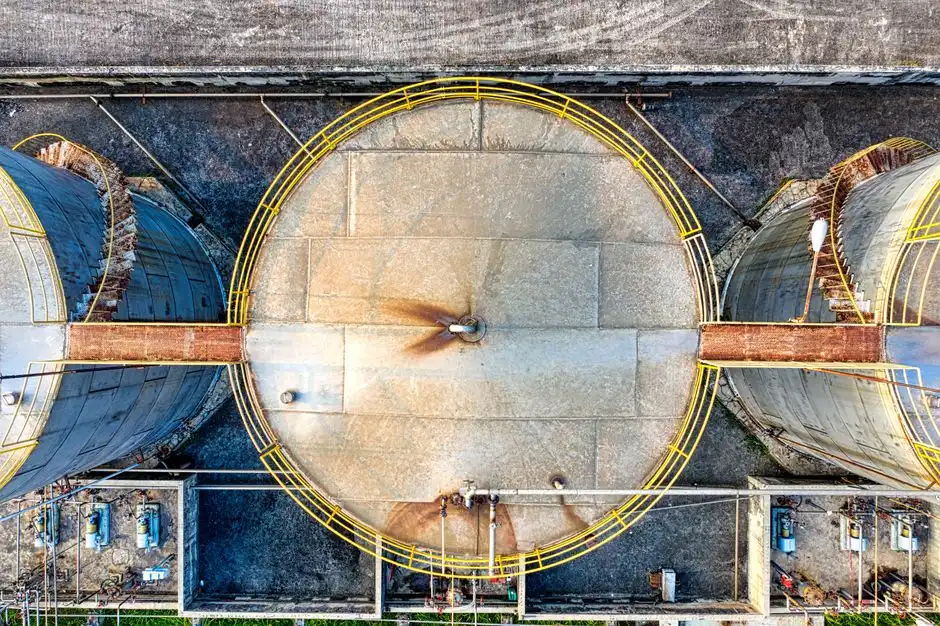
The matrix below is sized to be pasted into a 2026 procurement memo. If the site score lands in the MBR column on at least three of the five rows, the procurement package should be written around an MBR or an MBR-retrofit train (HydropureWater, 2026 Central US chemicals guide). A hybrid retrofit — keeping the existing CAS aeration basin in service, adding submerged membrane cassettes, and removing the clarifier — is the lowest-risk upgrade path for a brownfield East Side site. The DF-series MBR flat sheet membrane module is rated for surfactant and solvent slugs typical of chemicals streams. Greenfield municipal-style CAS only wins on large sites with no reuse obligation and no PFAS scan requirement.
| Decision row | Lean CAS | Lean MBR (or retrofit) |
|---|---|---|
| Discharge destination | POTW with permit headroom | Tightening WET, PFAS precursor scan |
| Reuse obligation | None | Cooling tower, scrubber, boiler feed |
| Site footprint | Ample land, civil expansion feasible | Tight brownfield, civil expansion constrained |
| Influent profile | Readily biodegradable, stable | 800–4,000 mg/L COD swings, SVOCs, slugs |
| Biosolids haul distance | < 50 km | > 100 km to Indiana or Michigan |
For a parallel case on a related high-strength stream, the DAF vs clarifier for chemicals wastewater in Indianapolis guide applies the same scoring logic to the upstream separation step.
Frequently Asked Questions
What is the main difference between MBR and conventional activated sludge for a chemical plant?
MBR replaces the secondary clarifier with a 0.1–0.4 μm PVDF membrane and operates at 8,000–15,000 mg/L MLSS, versus 2,000–5,000 mg/L for CAS, which depends on a clarifier settling step (HydropureWater 2026 MBR vs CAS engineering comparison).
Is MBR worth the higher CAPEX for a 1,000 m³/d East Saint Louis chemical plant?
Yes, when reuse, land cost, or a < 10 mg/L TSS consent applies — payback is typically 3–6 years, and the OPEX crossover shrinks from decades to years once reuse offsets purchased water at $1.50–3.00/m³ (HydropureWater 2026 Central US chemicals guide).
Can MBR handle cold St. Louis metro winters better than CAS?
Yes. A 30-day SRT MBR at 10 °C still supports full nitrification, while a 10-day SRT CAS at the same mixed-liquor temperature typically does not, and the enclosed MBR tank avoids the cold-water clarifier failure mode that has hit East Side sites in past winters (HydropureWater 2026 Central US chemicals guide).
What influent swings should an East Saint Louis chemical plant design MBR for?
Design for 800–4,000 mg/L COD swings, pH excursions, surfactant and solvent slugs, and high chloride; MBR's high MLSS and physical barrier tolerate these events that would crash a clarifier (HydropureWater 2026 Central US chemicals guide).
How does the 2025–2026 Illinois EPA permit reissuance affect the MBR vs CAS choice?
The 2025–2026 Illinois EPA NPDES cycle has tightened whole-effluent toxicity limits and added PFAS precursor scan monitoring, which favors MBR's < 5 mg/L TSS permeate and stable biological stage over a settling-based CAS train at the same site (HydropureWater 2026 Central US chemicals guide).