Why a Packaged MBR Is the Default for Hotels in Lahore
A packaged MBR (Membrane Bioreactor) combines activated-sludge biology with submerged ultrafiltration in a single skid-mounted unit, and that integration is exactly what a 50–300 room urban hotel in Punjab needs. Hotel wastewater is FOG-rich, BOD-strong (typical design basis 400 mg/L, COD 500 mg/L per the Kaveri 200 KLD reference), and swings sharply between morning check-out surges and overnight lows — a profile that punishes conventional activated sludge and breaks SBR timers. An integrated packaged MBR STP holds Mixed Liquor Suspended Solids (MLSS) at 8,000–12,000 mg/L, more than triple the 2,000–4,000 mg/L of conventional plants, which means the biological stage absorbs FOG and laundry peaks without losing treatment efficiency.
The effluent numbers drive the case. MBR delivers TSS below 5 mg/L, BOD below 5 mg/L, and COD below 30 mg/L in one step (per the 2026 HydropureWater engineering brief and the 200 KLD Kaveri design note), versus MBBR or SBR which typically need a tertiary polish — sand filter or UF cartridge — to reach reuse quality. Submerged MBR cassettes also occupy 50–60% less land than conventional activated sludge with a separate clarifier, a decisive factor on Gulberg, DHA, or Mall Road plots where basement footprint costs are high. Lahore hotels face a specific risk: PEPA Punjab inspections rose 30% in 2024, and documented fines near Lahore for non-compliant discharge can exceed PKR 500,000 per month, with forced shutdown on repeat offence. MBR's 95–98% BOD removal provides a 5–10× compliance buffer against WASA/LDA sewer rejections. Globally — and increasingly in Pakistan — hotels choose MBR specifically to enable treated sewage effluent (TSE) reuse for toilet flushing, landscape irrigation, and cooling-tower make-up, which a tertiary-less MBBR cannot deliver economically.
How to Size a Packaged MBR STP for a Hotel
Use 200–300 L per occupied bed-day as the Lahore mid-rise 3–4 star benchmark, or 0.15–0.20 m³ per guest-night when restaurants, banquet kitchen, laundry, and back-of-house are folded in. This is the formula no generic vendor brochure publishes, and it is the single most defensible number a project owner can bring to a consultant's first meeting.
Apply a peak factor of 1.5–2.0 over the average daily flow to handle the morning check-out plus breakfast-service surge and the evening bath-and-laundry load. The Kaveri MBR design brief specifies an 8-hour hydraulic retention time (HRT) in the equalization tank specifically to flatten these surges, which is consistent with — and validates — the 1.5–2.0 peak factor convention used in Pakistani STP practice.
Worked example for a 150-room, 3-star Lahore property at 70% occupancy: 150 × 0.70 × 2 guests × 250 L = 52.5 m³/day average. Add 30% for F&B kitchen, banquet, and on-site laundry, then apply a peak factor of 1.8 — the engineered design point lands at 100–120 m³/day. A 5-star property with spa, two restaurants, and a 300-cover banquet hall should add 30–50% on top; the documented Imemflo 200-bed 5-star reference plant runs at 250 m³/day, which validates the per-bed formula at the upper end of the band. Always cross-check the designer's influent assumption against a 24-hour composite sample: hotels with on-site laundry and high-occupancy banquets routinely run BOD 450–550 mg/L and COD 600–700 mg/L, 10–30% above the generic domestic assumption.
Influent vs Effluent vs NEQS: The Numbers Your Vendor Must Hit
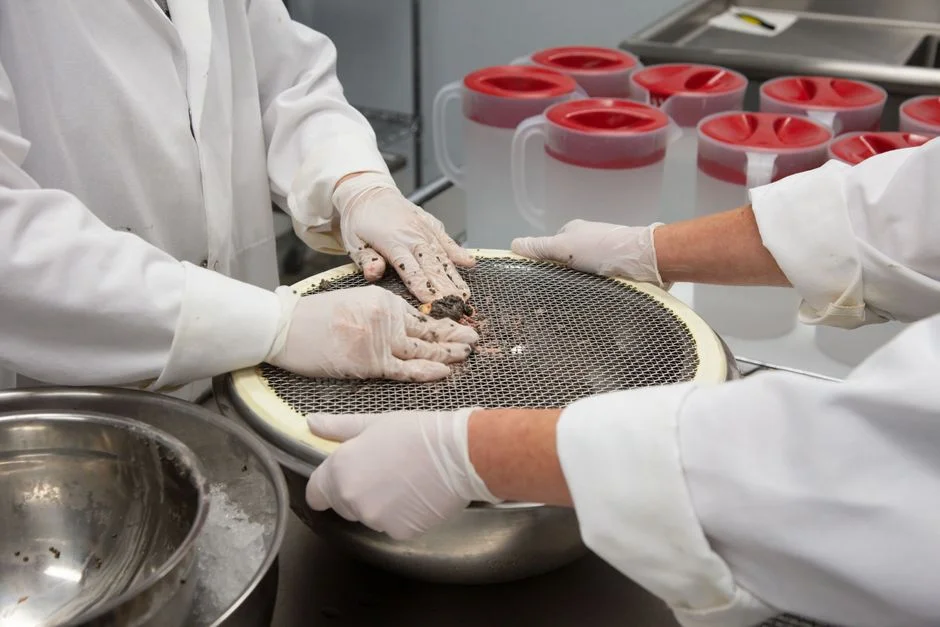
Three columns matter in a PEPA Punjab submission: the actual hotel influent, the MBR design effluent, and the National Environmental Quality Standards (NEQS) limit for municipal sewer discharge. The table below consolidates the parameters an EPC procurement manager should require in writing before signing a PO.
| Parameter | Typical Hotel Influent | MBR Design Effluent | NEQS Municipal Discharge Limit |
|---|---|---|---|
| pH | 7.5–8.5 | 7.0–8.0 | 6.0–9.0 |
| TSS (mg/L) | ~300 | < 5 | ≤ 200 (municipal sewer) |
| BOD₅ (mg/L) | ~400 | < 5 | ≤ 80 (municipal sewer; WASA often requires 90% removal) |
| COD (mg/L) | ~500 | < 30 | ≤ 150 |
| Turbidity (NTU) | — | < 2 | — |
| Fecal coliform (CFU/100 mL) | 10⁶–10⁷ | Log 3–4 reduction | < 200 if reused for irrigation/toilet flushing |
| MLSS in bioreactor (mg/L) | — | 8,000–12,000 | — |
Local authorities such as WASA Lahore and LDA frequently tighten sewer-discharge consent conditions beyond the bare NEQS — the documented Sindh/KWSB mandate is up to 90% BOD removal, and Lahore enforcement is moving in the same direction as Punjab's inspection intensity rises. MBR's 95–98% BOD removal gives the owner a clear margin even when influent BOD spikes to 600 mg/L during banquet events. If the hotel plans to reuse TSE for toilet flushing, garden irrigation, or cooling-tower make-up, add a disinfection step — UV disinfection for TSE reuse or a chlorine dioxide generator — and confirm fecal coliform below 200 CFU/100 mL per NEQS reuse values. Note that NEQS values are nationally defined; in Punjab the enforcing authority is EPA Punjab (PEPA Punjab), and the operating permit is issued at the provincial level rather than through WASA alone.
Hotel Vendor Decision Framework: Membrane Type, Footprint, Service
Two membrane formats dominate the Lahore hotel market: submerged flat-sheet PVDF and submerged hollow-fibre (HF). Pick the format against site constraints, not on vendor preference. The table below is the shortlisting matrix a project owner should run each bidder through.
| Criterion | Submerged PVDF Flat-Sheet | Submerged Hollow-Fibre (HF) |
|---|---|---|
| Cleaning method | Manual wipe / spray — easy with Lahore hard water | Backwash + chemical CIP only |
| Footprint per m³/day | ~0.08–0.10 m² | ~0.05–0.07 m² (slightly smaller) |
| FOG tolerance | High (rigid sheet, less fouling) | Moderate (fibre sludge accumulation) |
| Element replacement | Individual sheet replaceable | Whole fibre bundle typically replaced |
| Best fit | Hotels with kitchen/laundry-heavy flows | Hotels with extreme space constraint |
| Pre-treatment required | 1–2 mm fine screen, oil & grease, equalization | Same — never skip FOG removal |
Demand a documented hotel reference with comparable flow — a vendor who can show a 200-bed, 250 m³/day 5-star installation is a stronger bid than one quoting only textile or food-industry plants. Require a minimum 5-year membrane warranty, food-grade PVDF at 0.1 µm pore size, an ABS or SS-304 cassette frame, and individually replaceable elements so a single fouled sheet does not force a full-cassette replacement. Insist on a local service hub in Lahore or Karachi with 24/7 support and a stocked membrane inventory — five-star hotel downtime is reputational, not just financial. Confirm PLC automation with remote telemetry, automatic chemical dosing for clean-in-place, and an MBR cleaning tank sized for backwash plus chemical wash. The pre-treatment chain is non-optional for hotel flows: a rotary bar screen for hotel headworks, an oil & grease separator, an equalization tank with 8-hour HRT, and a fine screen must all be in the supplier's scope, paired with a PVDF flat-sheet MBR cassette and an automatic chemical dosing system for CIP and pH control.
2026 Cost Benchmarks: CAPEX, OPEX, and 10-Year TCO

Small packaged MBRs in Pakistan start at PKR 60–120 lakh for 50–200 m³/day systems; a 100 m³/day mid-size plant runs approximately PKR 25 million (USD 85,000), split 60% equipment, 20% civil, 10% installation, and 10% commissioning per the 2026 HydropureWater Pakistan brief. OPEX is dominated by energy at roughly 40% of the annual budget: an MBR consumes 0.6–1.2 kWh/m³, and at Pakistan's 2026 industrial tariff of PKR 22–28/kWh, a 100 m³/day hotel STP runs approximately PKR 0.5–0.8 lakh per month in electricity alone. Reserve a membrane replacement fund of PKR 1.2M–2.5M per module every 5–8 years — that is about 25% of annual OPEX and must be budgeted, not treated as a surprise. Add a sludge dewatering filter press downstream; the 0.1–0.3 kg TSS per kg BOD sludge yield from an MBR is roughly half that of conventional activated sludge, but plate-and-frame dewatering is still the standard Pakistan choice. The financial case for MBR over MBBR closes on water reuse: the World Bank Pakistan Water Sector Report 2024 documents 20–40% freshwater savings through reuse, equivalent to PKR 1.5–3 lakh per month in offset water cost for a 100 m³/day hotel, which can cut 5-year net OPEX by 20–40%.
| Cost Line | 50 m³/day Hotel | 100 m³/day Hotel | 200 m³/day Hotel |
|---|---|---|---|
| CAPEX (packaged MBR skid + civil + install + commissioning) | PKR 60–80 lakh | PKR 2.0–2.8 crore | PKR 4.0–5.5 crore |
| Monthly electricity (PKR 25/kWh blended) | PKR 0.25–0.40 lakh | PKR 0.5–0.8 lakh | PKR 1.0–1.5 lakh |
| Membrane replacement fund (annual, amortized) | PKR 1.5–2.5 lakh | PKR 2.5–4.0 lakh | PKR 4.0–6.5 lakh |
| Reuse offset (TSE for toilet flushing/irrigation) | PKR 0.7–1.5 lakh/month | PKR 1.5–3.0 lakh/month | PKR 3.0–6.0 lakh/month |
For regional cost context and a Punjab-specific ROI calculator, the Punjab wastewater treatment cost benchmarks 2026 break down civil, mechanical, and electrical line items for a comparable sized plant, while the broader Pakistan MBR engineering and compliance guide covers membrane chemistry, NEQS alignment, and reuse payback. A useful parallel for design intent — though not for Lahore discharge rules — is the hotel and resort wastewater treatment guide, which documents occupancy-driven flow patterns and reuse targets at 4–5 star properties.
5-Step Selection Workflow for a Lahore Hotel
Step 1 — Characterize the waste. Pull 24-hour composite samples from the kitchen grease line, the laundry discharge, and a guest-wing stack for BOD, COD, TSS, FOG, pH, and temperature. Do not size off "domestic average" alone — hotel effluent is a blend, and a one-size assumption will undersize the equalization tank by 20–30%.
Step 2 — Size with the formula. Apply 200–300 L per bed × peak factor 1.5–2.0, add 30% for F&B and laundry, and cross-check against an 8-hour HRT in the equalization tank. Validate that the vendor's MBR tank volume supports the chosen MLSS band of 8,000–12,000 mg/L without exceeding available basement or service-yard footprint. DAF design for hotel FOG pre-treatment is worth reviewing if the kitchen flow is large relative to the guest load.
Step 3 — Shortlist three vendors minimum. Each must provide a documented hotel reference plant, a 5-year membrane warranty, and a Lahore or Karachi service hub. Require BOD, COD, and TSS performance guarantees backed by liquidated damages for non-compliance during the first 12 months of operation.
Step 4 — Pilot or factory acceptance test. For plants at or above 200 m³/day, insist on a factory acceptance test on the actual cassettes at the supplier's yard. If the hotel's commissioning window is tight, run a 7-day pilot on real hotel wastewater to verify flux, MLSS, and cleaning intervals before shipment.
Step 5 — Commission and submit to PEPA Punjab. Validate BOD below 5 mg/L, COD below 30 mg/L, and TSS below 5 mg/L against NEQS municipal discharge values. Submit the results to EPA Punjab along with the disinfection plan and TSE reuse scheme; this locks the operating permit and protects the owner against the rising inspection intensity documented for 2024–2026.
Frequently Asked Questions
How much wastewater does a hotel in Lahore generate per day?
200–300 L per occupied bed for a 3–4 star property. A 150-room hotel at 70% occupancy generates roughly 50–60 m³/day before F&B and laundry uplift; a 5-star property with spa and banquet can run 0.18–0.22 m³ per guest-night including all support functions.
What effluent quality must a hotel STP achieve in Pakistan?
BOD below 5 mg/L, COD below 30 mg/L, and TSS below 5 mg/L to meet NEQS municipal discharge standards. If the treated water is reused for irrigation, toilet flushing, or cooling, add disinfection and confirm fecal coliform below 200 CFU/100 mL per NEQS reuse values.
What is the cost of a packaged MBR STP for a hotel in Lahore in 2026?
PKR 60–120 lakh for 50–200 m³/day systems. A 100 m³/day mid-range plant lands at approximately PKR 2.0–2.8 crore including equipment, civil works, installation, and commissioning, with electricity running PKR 0.5–0.8 lakh per month at current industrial tariffs.
How long do MBR membranes last in Pakistan?
5–8 years for high-quality PVDF modules with proper pre-treatment and routine chemical cleaning. Replacement cost is PKR 1.2M–2.5M per module depending on surface area, and a sinking fund of 25% of annual OPEX covers the cycle.
Can a packaged MBR STP be installed underground at a hotel?
Yes. Semi-buried or fully buried packaged MBRs are common for urban Lahore hotels to free up landscape and parking space, provided the design includes forced ventilation, membrane access hatches rated for traffic loading where applicable, and a pumped final-effluent sump.