Why the Textile Industry Needs Compact, Modular Sewage Treatment in 2026
Textile manufacturing discharged 1.84 billion tons of wastewater in 2015, ranking third among 41 key Chinese industries for five consecutive years, and emitted 206,000 tons of COD, fourth in the same peer set (per Ministry of Environmental Protection data cited in the PeerJ decoupling study). That volume makes the textile sector one of the largest industrial point-source polluters in any given watershed, and the regulatory pressure has only tightened since. The 2016–2020 textile industry development plan set a 23% reduction in water intake per unit of industrial added value and a 10% reduction in total discharge of major pollutants by 2020 — targets that continue to shape enforcement and pretreatment requirements in 2026.
The water-reuse case is just as sharp. Textile industry water reuse sits below 70%, against a national industrial average of around 80%, and printing and dyeing specifically runs at roughly 30% reuse (per the same PeerJ analysis citing the China National Textile and Apparel Council, 2018). That gap is a direct operating cost: every cubic meter of effluent discharged is a cubic meter of fresh intake and treatment chemical, and in many Chinese and South Asian basins it is also a cubic meter of compliance risk. Compact, modular, reuse-ready package STPs are the practical answer for 10–500 m³/day dye-house and finishing operations that cannot justify poured-concrete civil works or the long permitting window they trigger. For a deeper dive on the integrated textile plant configuration, see the integrated textile wastewater plant guide.
Textile Effluent Characteristics That Define Compact Unit Design
Typical textile wastewater carries COD of 800–2,000 mg/L, BOD₅ of 200–500 mg/L, TSS of 200–600 mg/L, color of 500–3,000 Pt-Co units, pH swinging between 6 and 10, and temperature of 30–50 °C when dye-bath spent liquor is dumped directly to sewer. These are not worst-case envelope numbers — they are the median operating window for a reactive-dye house or print works that has not yet installed flow equalization. A compact unit that does not include equalization, pH correction, and at least a coagulant dosing stage upstream of the biological step will be overwhelmed by the first batch discharge.
Flow variability is the second design driver. Batch dye-bath dumps, print-line wash cycles, and finishing-rinse transients create peak-to-average ratios of 3–5× across a single shift, and the resulting hydraulic and organic spikes drive biological stage sizing more than the daily average ever does. Reactive azo dyes dominate the color load and resist aerobic biodegradation; sizing agents (PVA, starch, CMC) push BOD into the 300–500 mg/L range; and the salt load from reactive dyeing — commonly NaCl or Na₂SO₄ at 2–6 g/L — disrupts nitrification kinetics once it climbs above roughly 5 g/L. A package STP specified for textile duty must therefore include an equalization tank sized for at least 8–12 hours of average flow, pH correction with a two-point dosing skid, and a coagulant feed (typically PAC or polyaluminum chloride plus polymer) ahead of the bioreactor. Compact units intended for reuse downstream of biology should be paired with a chemical dosing system rated for textile pH swings.
Compact Unit Process Options: MBR vs A/O Package vs SBR
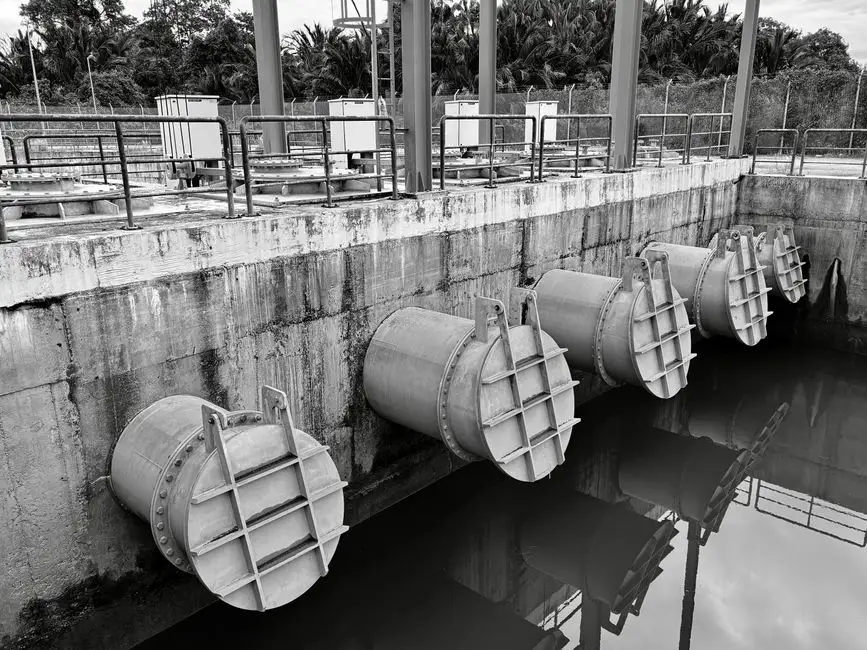
Three compact configurations dominate textile bids in 2026: the buried A/O package (WSZ-type), the submerged-membrane MBR, and the SBR batch reactor. Each fits a different influent envelope and footprint constraint, and choosing wrong here is the single most expensive mistake a procurement lead can make on a dye-house project. The table below summarizes the head-to-head comparison an EPC engineer should run before requesting quotes.
| Parameter | A/O Package (WSZ-type) | MBR (Submerged PVDF) | SBR |
|---|---|---|---|
| Typical capacity | 1–80 m³/h (24–1,920 m³/day) | 10–2,000 m³/day | 5–500 m³/day per basin |
| Best-fit influent COD | < 800 mg/L (residential-mixed or light textile) | 800–2,000 mg/L (dye-house, print works) | 500–1,500 mg/L, highly variable |
| Effluent quality | COD ≤ 80–100 mg/L; reuse possible with polishing | COD ≤ 30–50 mg/L, TSS ≤ 5 mg/L, < 1 μm turbidity | COD ≤ 60–80 mg/L; TSS variable |
| Reuse readiness | Limited (polishing RO/UF required) | High — direct RO feed in many cases | Moderate — polishing required |
| Footprint per m³/day | ~0.15–0.25 m² | ~0.05–0.10 m² | ~0.10–0.18 m² |
| CAPEX class per 100 m³/day | USD 25,000–80,000 | USD 80,000–180,000 | USD 40,000–110,000 |
| Operator skill required | Low (PLC automated) | Medium (membrane CIP, integrity testing) | Low–medium (sequencing logic) |
| Key risk | Cannot handle > 1,000 mg/L COD shocks | Membrane fouling on poorly equalized feed | Larger tankage; cycle-time sensitive to load |
The buried A/O package (WSZ-type) is the lowest-cost option and the right call for residential-mixed streams or finishing lines that stay below 800 mg/L COD — it combines anoxic and aerobic contact oxidation, sedimentation, and disinfection in a single buried skid and needs no membrane service. The buried A/O package plant fits 1–80 m³/h (24–1,920 m³/day) and is the default where civil works budget is the binding constraint.
An integrated MBR system pairs activated sludge with 0.1 μm PVDF membranes to deliver reuse-grade effluent from 800–2,000 mg/L COD dye-house feed. Footprint runs about 60% smaller than conventional activated sludge, but CAPEX is 2–3× the A/O package and the operator must manage membrane cleaning-in-place, integrity testing, and a 5–8 year replacement cycle. SBR — fill/draw batch — is the flexible middle ground: simpler controls than MBR, better able to absorb irregular dye-bath loads than a continuous-flow A/O skid, but with larger tankage per m³/day and tighter cycle-time sensitivity. For containerized or mobile textile deployments, see the containerized textile wastewater treatment guide.
Sizing a Compact Sewage Treatment Unit for a Textile Plant
Five steps, in order, will get you from a vendor brochure to a defensible sizing spec:
- Quantify average and peak flow. Build the daily hydrograph from metered wash-water, dye-bath spent liquor, and print-line cleaning water across at least one full production week. Do not use nameplate capacity alone — batch dumps will push peak to 3–5× average.
- Confirm influent character. Run grab-sample COD, BOD₅, TSS, color, salinity, and temperature across the same week. The single most common sizing error in textile bids is averaging grab samples that miss a peak shift; insist on composite sampling.
- Apply a peak factor of 1.5–2.0 to the biological stage hydraulic loading to absorb the dye-bath spikes the equalization tank cannot fully flatten. Below 1.5 the biology will wash out on a peak day; above 2.0 you are paying for tankage you will not use.
- Set effluent targets first. Discharge to sewer typically requires meeting local pretreatment limits (e.g. COD ≤ 500 mg/L, color ≤ 200 Pt-Co in many jurisdictions). Reuse loops typically demand COD ≤ 50 mg/L, TSS ≤ 10 mg/L, color ≤ 50 Pt-Co — and they are the reason most 2026 buyers move from A/O to MBR.
- Check footprint against the plant layout. Plan on 0.05–0.10 m² per m³/day for an MBR and 0.15–0.25 m² per m³/day for an A/O package, plus a 1–2 m clear working aisle around every tank. A 100 m³/day MBR will fit in roughly 5–10 m² of process area, which is why compact units now displace civil STPs in any plant with less than 0.5 hectare of available footprint.
Upstream of the bioreactor, plan a rotary bar screen headworks sized for 1.2–1.5× peak flow to strip fibers, lint, and plastic debris before they blind the equalization tank.
Pretreatment and Sludge-Handling Stages Around a Compact Unit
A compact STP does not run alone on a textile site. The biology will fail in a matter of weeks if upstream screening, equalization, and coagulation are undersized — and downstream sludge handling determines whether the OPEX numbers in the vendor proposal are realistic. The standard envelope for a textile compact unit in 2026 includes:
- Upstream screening — rotary bar screen (GX series) for fibers, lint, and plastic debris; automatic chemical dosing for pH correction and coagulant addition ahead of the biological stage. Expect 0.5–1.0 mm bar spacing for dye-house duty.
- Upstream flotation (optional) — a dissolved air flotation unit (4–300 m³/h) for high TSS or FOG loads from sizing and finishing stages; the DAF design parameters guide covers hydraulic and air-to-solids sizing in detail.
- Sludge dewatering — a plate-and-frame filter press (1–500 m² filter area) to bring sludge cake to roughly 25–35% dry solids for off-site disposal or incineration. Without this stage, biological sludge lagoon storage becomes a permit liability.
- Disinfection — a UV sterilizer for reuse loops (no chemical by-products, no residual toxicity to dye-house process water) or chlorine dioxide for discharge-only effluents where a residual is required by the local sewer authority.
2026 CAPEX and OPEX Benchmarks for Compact Textile STPs
Vendors will quote a wide spread; these bands are the 2026 screening range a procurement lead should use to filter out non-comparable bids. All figures are per 100 m³/day of treated flow, factory-equipment scope, excluding civil works, freight, and installation labor, which typically add 25–40% on top.
| Cost item | A/O Package (WSZ-type) | MBR (Submerged PVDF) | SBR |
|---|---|---|---|
| CAPEX per 100 m³/day | USD 25,000–80,000 | USD 80,000–180,000 | USD 40,000–110,000 |
| OPEX per m³ treated | USD 0.10–0.25 | USD 0.25–0.55 | USD 0.12–0.30 |
| Dominant OPEX driver | Aeration energy, sludge haul | Membrane CIP chemicals, aeration, sludge haul | Aeration energy, sludge haul |
| Membrane replacement cycle | N/A | 5–8 years (PVDF) | N/A |
The CAPEX spread is driven by membrane area (for MBR), automation level (PLC vs full SCADA with remote telemetry), and effluent reuse targets — an MBR sized to feed an RO polishing loop will price at the top of the band. OPEX is dominated by aeration energy (typically 0.3–0.6 kWh per m³ treated for activated-sludge systems) and sludge disposal cost, which varies sharply by region. A practical rule of thumb: a compact unit typically cuts civil-works cost by 40–60% versus a poured-concrete STP, and on a 100 m³/day plant that saving will offset the higher MBR equipment CAPEX within 3–5 years. For a broader cost-and-spec context beyond textile, see the compact sewage treatment unit selection guide.
Selection Checklist Before You Sign the PO
Five checks that catch roughly 80% of post-PO disputes on textile compact-unit procurements:
- Verify vendor influent/effluent guarantees on COD, BOD, color, TSS, and reuse parameters tied to your grab-sample data — not generic "meets GB 4287 or local discharge standard" claims.
- Confirm membrane warranty terms, replacement cost per m², and expected cleaning frequency for MBR units — get the CIP chemical consumption in kg per cycle, not just "annual estimate".
- Check factory acceptance test (FAT) scope, PLC/automation platform, and remote-monitoring capability — a textile plant that cannot see the STP from the dye-house control room will ignore it until it fails.
- Ask for a reference plant in textile or dye-house duty with at least 12 months of operating data — influent/effluent logs, membrane CIP records, and energy bills, not just a site visit to a hospitality install.
- Confirm local after-sales service: response time, spare-parts inventory, and operator training scope — a 72-hour membrane-replacement lead time in a remote printing cluster is a permit liability, not a service contract.
Frequently Asked Questions
What is the typical capacity range for a compact sewage treatment unit in a textile plant?
Compact sewage treatment units for textile dye-house and finishing duty are typically sized from 10 m³/day (small print works) to 500 m³/day (mid-capacity dye-house), with modular units that can be paralleled for higher flows. A/O package (WSZ-type) plants commonly span 1–80 m³/h, equivalent to 24–1,920 m³/day per train.
How does an MBR compact unit differ from a conventional A/O package plant for textile effluent?
An MBR compact unit adds submerged 0.1 μm PVDF membranes to the activated-sludge stage, producing effluent with TSS ≤ 5 mg/L and COD ≤ 30–50 mg/L from textile influents of 800–2,000 mg/L — suitable for direct RO feed. A conventional A/O package plant relies on sedimentation and typically achieves COD ≤ 80–100 mg/L, requiring additional polishing before any reuse loop.
What is the 2026 CAPEX range for a compact textile STP per 100 m³/day?
In 2026, factory-equipment CAPEX per 100 m³/day runs USD 25,000–80,000 for an A/O package, USD 80,000–180,000 for an MBR, and USD 40,000–110,000 for an SBR (per HydropureWater field data, 2026). Civil works and installation typically add 25–40% on top of the equipment figure, and compact units usually cut that civil component by 40–60% versus a poured-concrete STP.
Why is textile water reuse still below 70% in 2026?
Textile industry water reuse sits below 70% against an industrial average near 80%, and printing-and-dyeing specifically runs at roughly 30% reuse (per the 2018 China National Textile and Apparel Council data cited in the PeerJ decoupling study). Salt accumulation from reactive dyes, residual color, and inconsistent influent quality are the main barriers — all of which an MBR-based reuse loop with RO polishing is designed to overcome.