Why Bangkok Blowdown Treatment Is Its Own Engineering Problem in 2026
Bangkok sits inside the Chao Phraya basin, not the Ping basin that frames a typical northern Thailand design, and that single distinction rewrites the whole process envelope. A Bangkok data center discharging to a Bangkok Metropolitan Administration (BMA) drainage canal or to an Industrial Estate Authority of Thailand (IEAT) outfall inside estates such as Bang Phli, Lat Krabang, or Rojana answers to a different receiving-water model than the Ping — lower dry-season assimilative capacity, tighter salinity accumulation in the tidal reach below Nonthaburi, and stricter IEAT effluent covenants on flow peaks. The legal floor is PCD Notification on Industrial Effluent Standards (B.E. 2560), which caps surface-water discharge at BOD ≤20 mg/L, COD ≤120 mg/L, TSS ≤50 mg/L, TDS ≤3,000 mg/L, pH 5.5–9.0, and temperature ≤40 °C (per PCD B.E. 2560). Sites above 5 MW IT load generally trigger an Initial Environmental Examination or full Environmental Impact Assessment under Thailand's Enhancement and Conservation of National Environmental Quality Act, including a site water balance.
Bangkok's climate is the second differentiator. Average wet-bulb runs 28–30 °C and pushes past 32 °C in the March–April hot season, roughly 10–15% above temperate spec sheets, which forces oversizing of heat exchangers and RO high-pressure pump motors and lifts evaporation losses at any given cycle of concentration (per HydropureWater 2026, Chiang Mai). The MEA industrial water tariff of THB 18–25/m³ is the third pillar: it sets the avoided-cost line item that decides whether RO, MBR, or ZLD pays back, and at THB 18–25/m³ (≈$0.51–$0.71/m³) the site sits well below the $3/m³ ZLD threshold.
Bangkok Cooling Tower Blowdown Chemistry at a Glance
At 4 cycles of concentration (CoC) a Bangkok cooling-tower blowdown stream carries TDS 5,000–15,000 mg/L, conductivity 8,000–25,000 µS/cm, COD 100–500 mg/L, TSS 50–200 mg/L, and pH 7.5–9.0 (per Veolia 2026, cited in HydropureWater 2026). The blowdown fraction is governed by 1/(CoC−1): at 4 CoC roughly 25% of makeup exits as blowdown, at 5 CoC about 20%, and at 6 CoC 20% — the step from 4 to 6 CoC is a 5 percentage-point reduction, not the 50% that often gets quoted in vendor decks (per Genesis Water Technologies 2026).
Cooling chemistry additives complicate the influent. Phosphonates, molybdate-based corrosion inhibitors, bromine biocides, isothiazolones, and residual chlorine all enter the blowdown stream and raise COD; residual chlorine in particular can pass through an RO membrane unless a biological polishing stage is placed upstream (per Genesis Water Technologies 2026). Bangkok EGAT tap-water hardness runs roughly 80–150 mg/L as CaCO3, which sets the starting-point calcium and alkalinity load and is the reason antiscalant programs are non-optional above 5 CoC on any site chasing high recovery. The parameter table below is the influent envelope a Bangkok engineer should be planning against on day one.
| Parameter | Makeup (EGAT tap) | Blowdown at 4 CoC | PCD B.E. 2560 surface-water cap |
|---|---|---|---|
| TDS | 100–300 mg/L | 5,000–15,000 mg/L | ≤3,000 mg/L |
| Conductivity | 200–600 µS/cm | 8,000–25,000 µS/cm | — |
| COD | ≤20 mg/L | 100–500 mg/L | ≤120 mg/L |
| TSS | ≤10 mg/L | 50–200 mg/L | ≤50 mg/L |
| pH | 7.0–8.0 | 7.5–9.0 | 5.5–9.0 |
| Hardness (as CaCO3) | 80–150 mg/L | 320–900 mg/L | — |
| Temperature | 28–32 °C | 30–38 °C | ≤40 °C |
The Four Design Levels for a Bangkok Site in 2026
Four design levels cover the realistic range of Bangkok sites, from a 10 MW colocation hall on municipal sewer to a 50 MW hyperscale build targeting water-positive certification. Each level trades capex and operator complexity against discharge volume and freshwater draw.
Level 1 — Side-stream filtration only. A multi-media filter paired with a self-cleaning spiral strainer extends CoC from 3–4 to 5–6 by stripping suspended solids that would otherwise force premature blowdown, and capital lands at $50K–$200K installed (per Genesis Water Technologies 2026). It fits a ≤10 MW colocation site with municipal sewer discharge rights and no PCD zero-discharge obligation.
Level 2 — DAF + RO recovery. A DAF unit with coagulation and flocculation integrated on one skid removes emulsified oils, residual flocculants, and a portion of the COD before single-pass brackish RO at 70–75% recovery. A 10–20 m³/h skid occupies under 25 m² of plan footprint and cuts polymer use by roughly 30% against separate lamella clarifiers (per Genesis Water Technologies 2026, re-cited in HydropureWater 2026). Permeate TDS <500 mg/L feeds the cooling-tower makeup line.
Level 3 — MBR + RO polishing. An MBR system drops COD to <50 mg/L and TSS to <5 mg/L before the RO, which lifts recovery to 80–85% and pushes clean-in-place frequency from monthly to quarterly; an MBR footprint is roughly 60% smaller than conventional activated sludge for the same loading (per HydropureWater 2026, Chiang Mai). This is the 2026 Bangkok default for hyperscale.
Level 4 — RO + brine concentrator + crystallization (ZLD). For hyperscale sites operating under PCD zero-discharge permits or chasing water-positive certification, recovery runs 95%+ with mechanical vapor compression energy of 15–25 kWh/m³ and a thermal-section capex of $1.2M–$3M (per Veolia 2026 and HydropureWater 2026). The industrial RO unit lands the first 70–80% recovery; the brine concentrator and crystallizer handle the 15–20% reject. The 2026 Bangkok default for hyperscale above 10 MW is the Level 3 hybrid (MBR → RO → evaporator) because the MBR protects the RO and the evaporator disposes of the brine reject that would otherwise hit the Chao Phraya basin.
| Level | Process train | Recovery | Capex (USD) | Footprint / fit |
|---|---|---|---|---|
| 1 | Multi-media filter + self-cleaning strainer | 0% (CoC 5–6) | $50K–$200K | ≤10 MW colocation, municipal sewer |
| 2 | DAF + single-pass brackish RO | 70–75% | $300K–$800K | 10–30 MW, PCD surface discharge |
| 3 | MBR → RO → evaporator | 80–85% (RO) | $800K–$2.3M | 10–50 MW hyperscale, Bangkok default |
| 4 | MBR → RO → brine concentrator → crystallizer | 95–99% | $1.2M–$3M thermal section alone; $3M–$8M full | Hyperscale, water-positive targets |
Sizing the Bangkok Skid: From Megawatts to Cubic Meters per Hour
Design flow for cooling-tower blowdown runs 1.2–1.5 m³/h per MW IT at 4 CoC, so a 10 MW site sits at 12–15 m³/h, a 30 MW site at 36–45 m³/h, and a 50 MW hyperscale hall at 60–75 m³/h (per HydropureWater 2026, Chiang Mai). Above 20 MW, the RO skid should be a 2-stage array to keep the second-stage feed below scaling indices; sites at or below 20 MW can run a single-stage array with antiscalant dosing (per HydropureWater 2026).
Pretreatment targets drive component selection. A multi-media filter ahead of the RO drops the silt density index (SDI15) below 3, and RO membranes sized for 70–80% single-pass recovery with an energy-recovery device on the concentrate stream deliver permeate at TDS <500 mg/L and turbidity <0.1 NTU — the threshold that meets SEMI F63-0921 for direct microchannel cooling reuse. Where the cooling loop is conventional rather than microchannel, blending 30–50% fresh MEA makeup with permeate is acceptable and reduces overall capex. Because Bangkok's ambient design temperature runs 10–15% above temperate spec sheets, oversize heat exchangers, pump heads, and RO high-pressure pump motors by the same margin to hold rated flow through March–April peak wet-bulb (per HydropureWater 2026, Chiang Mai).
5-Year TCO in THB for a Bangkok 10 MW and 50 MW Site
Procurement leads defending a 2026 budget need three cost lenses: unit capex, opex per cubic meter treated, and 5-year total cost of ownership. The numbers below are 2026 Veolia cost models, converted to THB at approximately THB 35/USD.
An RO-only system lands at capex $300K–$800K and opex $0.50–$1.20/m³, with energy consumption of 2–4 kWh/m³ (per Veolia 2026, cited in HydropureWater 2026). Adding an MBR upstream adds $500K–$1.5M to capex but reduces CIP chemical cost by $0.10–$0.30/m³ and extends RO membrane life from 3–5 years to 5–7 years because the feed is cleaner (per HydropureWater 2026, Chiang Mai). Full ZLD with evaporator and crystallizer is the heavyweight option: capex $1.2M–$3M for the thermal section, opex $2.00–$4.00/m³, and thermal energy of 15–25 kWh/m³ (per Veolia 2026).
A 10 MW Bangkok site treating roughly 300,000 m³/year sees a 5-year TCO of THB 25–40M for RO-only and THB 60–100M for full ZLD, with MBR + RO hybrid in the THB 40–70M window. A 50 MW hyperscale site scales roughly linearly with treated volume, landing in the THB 125–200M range for RO-only and THB 300–500M for full ZLD. The MEA industrial tariff of THB 18–25/m³ is the avoided-cost line item that makes any recovery option cash-positive inside 36 months on a 10 MW site.
| Site size | Process train | 5-year TCO (THB) | Energy | OPEX (THB/m³) |
|---|---|---|---|---|
| 10 MW (~300,000 m³/yr) | RO-only | 25–40M | 2–4 kWh/m³ | 17.5–42 |
| 10 MW | MBR + RO (Level 3) | 40–70M | 3–5 kWh/m³ | 24.5–59.5 |
| 10 MW | Full ZLD (Level 4) | 60–100M | 15–25 kWh/m³ (thermal) | 70–140 |
| 50 MW (~1.5M m³/yr) | RO-only | 125–200M | 2–4 kWh/m³ | 17.5–42 |
| 50 MW | MBR + RO (Level 3) | 200–350M | 3–5 kWh/m³ | 24.5–59.5 |
| 50 MW | Full ZLD (Level 4) | 300–500M | 15–25 kWh/m³ (thermal) | 70–140 |
A Four-Question Decision Tree for Bangkok 2026 Builds
Four binary questions put a 10 MW edge build or a 50 MW hyperscale on the right design level in under a minute.
- Is freshwater cost above $2/m³, or is the site on a PCD zero-discharge permit? If yes, plan Level 4 ZLD; if no, Levels 2 or 3 are sufficient (per HydropureWater 2026, Chiang Mai).
- Is the site hyperscale above 50 MW on a tight plot? Yes points to Level 3 (MBR + RO) because an MBR footprint is roughly 60% smaller than conventional activated sludge for the same loading.
- Does the operator have in-house membrane cleaning capability? If not, hold to Levels 1–2 and contract O&M to a specialist; running a Level 3 RO without trained CIP staff leads to irreversible fouling within 12 months.
- Is the receiving water the Chao Phraya main stem or a tributary canal? Main-stem sites have more assimilative capacity and can accept ≤500 m³/day of treated discharge; tributary sites should target Level 3 reuse and aim for zero surface-water discharge.
PCD Compliance, SCADA, and Sludge Handling for Bangkok Sites
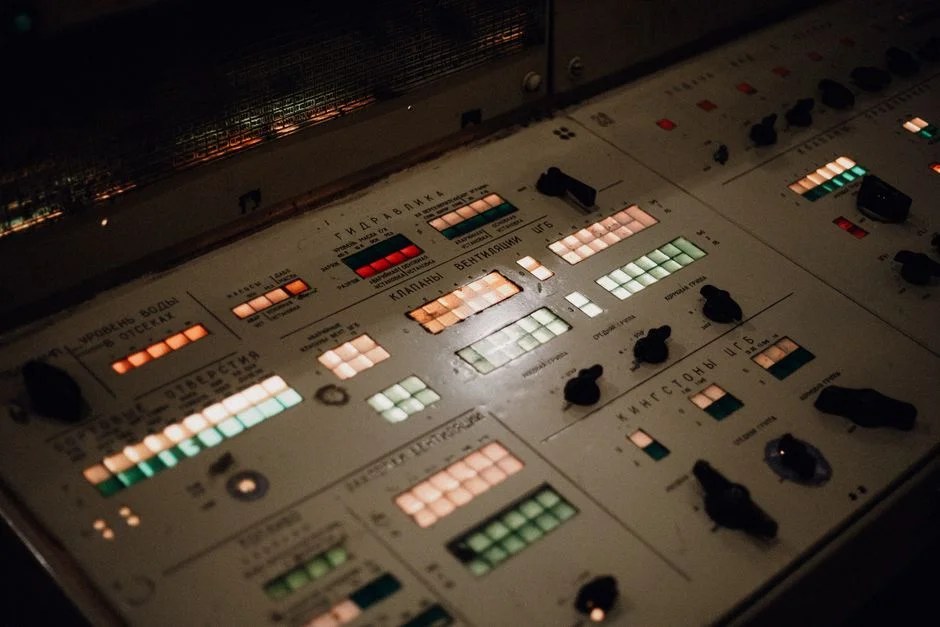
The PCD self-monitoring report expects online instrumentation on both influent and effluent: pH, conductivity, flow, and turbidity at minimum, with data logged to SCADA at one-minute resolution (per HydropureWater 2026, Chiang Mai). Quarterly third-party lab analysis is required for COD, BOD, TSS, TDS, heavy metals, and residual chlorine or biocide — the PCD auditor will request chain-of-custody forms on site.
Sludge from the DAF and MBR stages should be dewatered with a plate-and-frame filter press to below 60% moisture before pickup by a licensed industrial waste hauler. An automatic chemical dosing system keeps coagulant and polymer feed inside the operating envelope that satisfies PCD chemical-usage disclosure. Records must be retained for at least five years under the Thai Factory Act, and the same archive should be aligned with Uptime Institute Tier III/IV documentation for colocation tenants who need to demonstrate continuity of utilities operations.
Frequently Asked Questions
What are the PCD B.E. 2560 effluent limits a Bangkok data center must meet on surface-water discharge?
BOD ≤20 mg/L, COD ≤120 mg/L, TSS ≤50 mg/L, TDS ≤3,000 mg/L, pH 5.5–9.0, and temperature ≤40 °C (per PCD B.E. 2560). Any hyperscale site discharging more than 100 m³/day needs RO to land below the 3,000 mg/L TDS cap because blowdown at 4 CoC already runs 5,000–15,000 mg/L. See Bangkok Cooling Tower Blowdown Chemistry at a Glance.
What is the default 2026 process train for a Bangkok hyperscale data center above 10 MW?
MBR → RO → evaporator, sized for 80–85% RO recovery with the evaporator disposing of the 15–20% brine reject. The MBR drops COD to <50 mg/L and TSS to <5 mg/L, extending RO membrane life from 3–5 years to 5–7 years (per HydropureWater 2026, Chiang Mai). See The Four Design Levels for a Bangkok Site in 2026.
When does ZLD pencil out in Bangkok?
ZLD only pays back when freshwater cost exceeds $3/m³ or a PCD zero-discharge permit is in hand (per Veolia 2026). The MEA industrial tariff of THB 18–25/m³ (≈$0.51–$0.71/m³) sits well below that threshold, so full ZLD 5-year TCO of THB 60–100M for a 10 MW site is rarely defensible. See 5-Year TCO in THB for a Bangkok 10 MW and 50 MW Site.
How much blowdown does a 50 MW Bangkok hyperscale site generate per day?
At 4 CoC the design flow is 1.2–1.5 m³/h per MW IT, so a 50 MW site produces 60–75 m³/h or roughly 1,440–1,800 m³/day (per HydropureWater 2026, Chiang Mai). Annual treated volume is about 1.5 million m³, which sets the operating envelope for chemical and membrane budgeting. See Sizing the Bangkok Skid.