
Why a packaged MBR is the default choice for Oslo hotels
A packaged MBR delivers 90–95% contaminant removal in roughly 60% of the footprint of a conventional activated-sludge plant (Imemflo MBR spec, 2026; integrated packaged MBR system), which is the first reason it fits an Oslo hotel: urban sites rarely have room for a separate clarifier, sludge thickener, and chlorine contact tank. The second reason is the climate. Oslo's mean winter air temperature sits below −7 °C and routinely drops below −15 °C in January (Meteorologisk institutt, 2025–2026 normals), so any open-tank biological plant has to be either insulated, buried, or housed — a constraint that a factory-built 40-ft containerized skid (Smith & Loveless TITAN MBR QUBE) absorbs by design. A third reason is construction logistics: tight Oslo service-yards and short crane windows reward a skid that arrives pre-plumbed, pre-wired, and FAT-tested rather than a stick-built concrete tank that has to be poured on a frozen site in February. The membrane material itself is part of the climate story — PVDF flat-sheet cassettes tolerate sub-zero ambient risk when housed, and they keep working at mixed-liquor temperatures of 8–12 °C that would slow a conventional CAS plant to a near-dormant state. For a 200-room hotel generating on the order of 115 m³/d (see sizing section), a single 40-ft QUBE-class skid is normally sufficient; for properties above ~300 m³/d, two skids are paralleled with shared blowers.
Norwegian and EU discharge rules a hotel MBR must meet
EU Urban Waste Water Directive 91/271/EEC sets the baseline a packaged MBR must hit before a Norwegian permit authority will sign off: BOD ≤25 mg/L, COD ≤125 mg/L, TSS ≤35 mg/L for discharges from agglomerations above 10,000 PE (EU Council Directive 91/271/EEC, Annex I). In practice, any Oslo hotel discharging to the fjord or to the Akerselva catchment is treated as a "sensitive area" under Article 5, which tightens the design envelope further and typically pushes designers toward a tertiary polishing stage. Norway transposes the directive through Forurensningsloven (Pollution Control Act, LOV-1981-06-19-52) and the Norwegian Environment Agency (Miljødirektoratet) under the Wastewater Regulation (FOR-2004-06-01-931); Oslo VAV (Vann- og avløpsetaten) layers additional local requirements on top of that for sewer-connection permits and on-site reuse. The hospitality reference plant sized in the next section — a 250 m³/d hollow-fiber installation at a 200-bed five-star property — runs comfortably under the EU bar (Imemflo, 2026), and a flat-sheet PVDF MBR will sit well below the UWWTD limits on every parameter, leaving headroom for a stricter local fjord-discharge consent. Where the hotel reuses the effluent for toilet flushing, irrigation, or laundry, the design bar rises again: turbidity typically <1 NTU and E. coli <10 CFU/100 mL are the reuse targets that the MBR's <1 μm membrane filtration can meet when paired with UV or chlorine dioxide disinfection (see Nova Scotia hospital MBR compliance guidance for a North-Atlantic parallel). The macro driver is set out in UNESCO's 2026 Water Reuse within a Circular Economy Context report, which frames reuse rather than discharge as the new baseline for new hotel builds in dense European capitals.
| Parameter | UWWTD 91/271/EEC limit (sensitive area) | Typical Oslo VAV requirement | Flat-sheet PVDF MBR typical effluent | Reuse target (toilet/irrigation) |
|---|---|---|---|---|
| BOD5 | ≤25 mg/L | ≤15 mg/L (fjord catchments) | <5 mg/L | <10 mg/L |
| COD | ≤125 mg/L | ≤80 mg/L (fjord catchments) | <30 mg/L | <50 mg/L |
| TSS | ≤35 mg/L | ≤10 mg/L (reuse permits) | <1 mg/L | <1 mg/L |
| Total nitrogen | ≤15 mg/L (sensitive) | ≤10 mg/L | <8 mg/L (with anoxic zone) | ≤10 mg/L |
| Total phosphorus | ≤2 mg/L (sensitive) | ≤1 mg/L | <0.5 mg/L (chemical precip.) | ≤1 mg/L |
| Turbidity | — | — | <0.5 NTU | <1 NTU |
| E. coli | — | — | <100 CFU/100 mL | <10 CFU/100 mL (with UV/ClO2) |
Sizing the plant: per-guest, peak factors, and grey-water splits
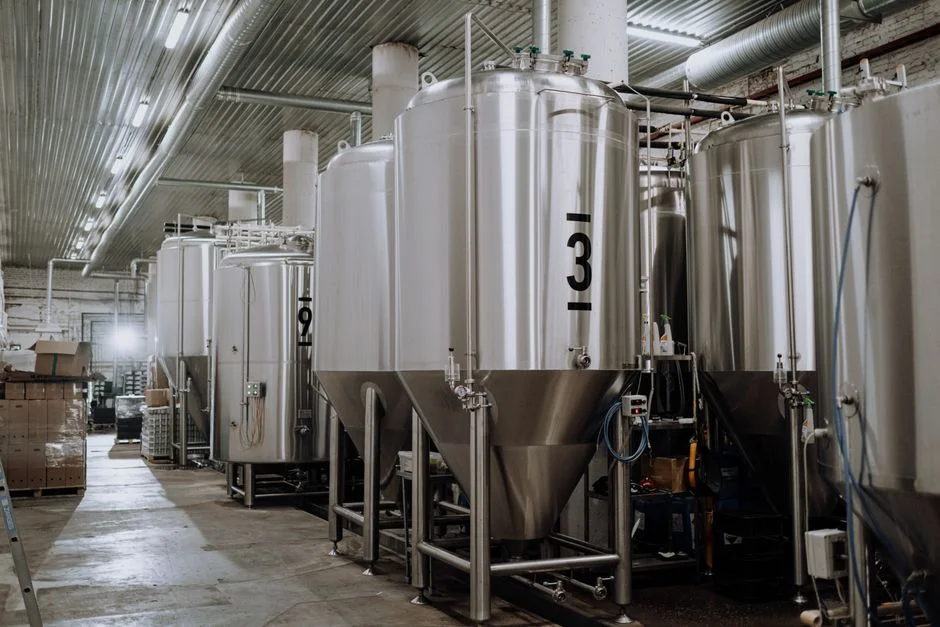
Start with a design average flow of 0.20–0.30 m³ per guest-night for a Nordic full-service hotel, then layer food-and-beverage load at 0.05–0.10 m³ per covered restaurant seat and on-site laundry at 0.04–0.06 m³ per kg of dry laundry. Apply a 1.5–2.0× peak factor for morning shower turnover and evening dinner service; the hydraulic buffer built into an MBR's equalization zone typically absorbs 4–8 hours of peak flow without effluent quality loss. Worked example for a 200-room Oslo full-service hotel: 200 rooms × 1.8 average occupancy × 0.25 m³/guest-night = 90 m³/d base; add 15 m³/d for the 200-seat restaurant and bar; add 10 m³/d for the on-site laundry running ~200 kg/d; that lands at ~115 m³/d average daily flow. The packaged MBR should be specified at 150–200 m³/d to leave a 30–40% hydraulic and load margin for banquets, conferences, and seasonal peaks. Many warm-climate hotels split off a separate grey-water plant for laundry (Imemflo, 2026), but in Oslo the default is to combine black and grey water: the combined stream gives a 3–5 °C warmer mixed liquor in winter, which stabilizes nitrification at the 8–12 °C operating window, and it removes the duplication of blowers, controls, and service visits. Specify upstream hair/lint screening at 3 mm to protect the flat-sheet cassettes from the laundry stream, especially when the hotel runs >150 kg dry laundry per day. For properties that prefer a buried, lower-capex option on a generous site, a buried A/O packaged plant alternative can handle up to ~80 m³/d; above that flow and on tight Oslo sites, a packaged MBR remains the more defensible spec.
| Hotel parameter | Unit | Quantity (200-room example) | Design flow contribution (m³/d) |
|---|---|---|---|
| Guest rooms (occupancy 1.8) | 0.25 m³/guest-night | 200 × 1.8 = 360 guests | 90 |
| Restaurant / bar covers | 0.08 m³/seat | 200 seats | 15 |
| On-site laundry | 0.05 m³/kg | 200 kg/d | 10 |
| Spa / pool backwash (allowance) | flat | — | 5 |
| Average daily flow (sum) | 120 | ||
| Peak factor (×1.7) | 204 | ||
| Spec size (30% margin) | 160–200 |
Hollow-fiber vs flat-sheet membranes for cold-climate hotels
The two dominant MBR membrane formats behave very differently under Norwegian operating conditions. Hollow-fiber modules (Suez, Dow/DuPont, Mitsubishi) pack more filtration area per cassette and have lower headline capex, but the fiber bundles are vulnerable to fouling, breakage, and sludging when the influent load swings — exactly what a 200-room hotel produces between 02:00 and 09:00. Smith & Loveless's own flat-plate marketing states the fibers "do bundle or break, unlike hollow fiber types" (TITAN MBR QUBE, 2026), and the operational pattern is well known to plant managers: hollow-fiber plants average 2–3× more CIP events per year than flat-sheet in variable hotel loads. Flat-sheet PVDF at 0.1 μm pore size is the Nordic default because the rigid cassettes can be backflushed and air-scoured in place, run in-situ CIP roughly every six months (TITAN MBR QUBE reference), and require no pressurized permeate pumps. On energy, the DF-series flat-sheet MBR uses an order of magnitude less pumping energy than external cross-flow designs; total aeration energy for a hotel MBR is typically 0.4–0.8 kWh/m³ treated, which in a Norwegian power market of NOK 1.0–1.5/kWh industrial tariff is a non-trivial OPEX line worth specifying up front. DF-series flat-sheet PVDF membrane modules are the format to specify for any hotel above 100 m³/d; hollow fiber is defensible only for small lodges below 30 m³/d where budget dominates and load swings are small.
| Criterion | Hollow-fiber MBR (Suez / Dow / Mitsubishi) | Flat-sheet PVDF MBR (Toray / DF-series) |
|---|---|---|
| Typical pore size | 0.03–0.1 μm | 0.1 μm |
| Module packing density | High | Moderate |
| Headline capex per m² membrane | Lower | ~10–25% higher |
| CIP frequency (hotel load) | ~6–8× per year | ~2× per year (every 6 months per S&L) |
| Permeate pump required | Yes (pressurized) | No (gravity / siphon) |
| Aeration energy | 0.5–0.9 kWh/m³ | 0.4–0.8 kWh/m³ |
| Tolerance to sub-zero ambient | Poor if uninsulated (fiber damage) | Good in housed / buried skid |
| Suitability for Oslo hotel | Acceptable <30 m³/d only | Preferred for >100 m³/d |
Pretreatment, disinfection, and sludge handling around the MBR
Upstream of the membrane cassette, specify a 3 mm automatic fine screen and a rotary mechanical bar screen — the TITAN MBR QUBE ships with a 3 mm automatic fine screen, and a separate rotary mechanical bar screen ahead of it protects the membranes from hair, lint, kitchen FOG, and the fibrous load a hotel laundry generates. DAF pre-treatment is rarely justified on a hotel influent but is worth specifying if a high-volume kitchen or spa contributes heavy grease. Post-MBR, the disinfection choice depends on whether the effluent is discharged or reused: for chemical-free reuse loops, UV disinfection for reuse loops at 30–40 mJ/cm² is the standard; where a residual is required for a long reuse pipe run or a public-facing amenity, specify on-site chlorine dioxide generation compliant with EU Drinking Water Directive 98/83/EC and WHO guidelines, dosed to a 0.2–0.5 mg/L ClO2 residual. Sludge handling is the last scope item: MBR waste sludge concentrates to 1–2% dry solids, roughly 4–5× the strength of conventional activated sludge, and a small plate-and-frame filter press sized to the expected 8–15 kg DS per 100 m³ treated will dewater to 18–22% DS cake for periodic off-site disposal by a licensed Norwegian waste contractor.
CAPEX, OPEX, and ROI for a packaged MBR hotel plant
A 150–200 m³/d packaged flat-sheet MBR delivered to Oslo as a single 40-ft skid typically lands at NOK 2.5–4.0 million installed (equipment, civil, electrical, commissioning, 2026 pricing), with 60–70% of that in the equipment and PLC scope and the balance in site work, housing, and permit engineering. Annual OPEX is dominated by energy (blowers + permeate pumps + controls) at NOK 70,000–120,000 per year, followed by membrane replacement reserves of ~NOK 80,000–120,000 amortized over the 8–10 year membrane life, and sludge disposal at NOK 25,000–40,000 per year. The ROI lever is reuse: at Oslo's 2026 non-potable water tariff of roughly NOK 50–70 per m³, a 200-room hotel that reuses 30–50% of its 115 m³/d effluent for toilet flushing and landscape irrigation saves NOK 200,000–500,000 per year in potable-water purchase and discharge fees, which under most financing structures returns the incremental capex over a packaged MBR (vs. a buried A/O plant with no reuse) within 4–6 years. See the broader OPEX framework in this 2026 ultrafiltration OPEX breakdown and ROI reference.
| Line item | Annual cost (NOK, 150–200 m³/d hotel) | Notes |
|---|---|---|
| Energy (blowers + controls) | 70,000–120,000 | 0.4–0.8 kWh/m³ × ~150 m³/d × NOK 1.2/kWh |
| Membrane replacement reserve | 80,000–120,000 | Amortized over 8–10 yr life |
| Sludge disposal | 25,000–40,000 | ~15 kg DS/100 m³ × NOK 1.5/kg |
| UV lamp / ClO2 reagents | 10,000–20,000 | Reuse-loop dependent |
| Routine service / spares | 30,000–50,000 | Local Norwegian service contract |
| Reuse-driven water-cost saving | −200,000 to −500,000 | 30–50% reuse of 115 m³/d |
| Net OPEX (with reuse) | ~15,000 to ~150,000 | Or cost-neutral / positive at higher reuse |
Selection checklist and supplier evaluation
Convert the article into an action-ready sequence a consulting engineer can walk through in one sitting. First, confirm design flow and load using the 0.20–0.30 m³ per guest-night baseline plus F&B, laundry, and a 1.5–2.0× peak factor, and confirm the compliance target — UWWTD 91/271/EEC baseline, Oslo VAV local requirements, and any reuse-water bar. Second, choose flat-sheet PVDF in a 40-ft containerized skid above 100 m³/d; specify housing or burial for the cold-climate envelope, and confirm a minimum mixed-liquor operating temperature of 8 °C through skid insulation and, if practical, heat recovery from the blower room. Third, confirm the pretreatment, disinfection, and sludge path before the supplier's P&ID is locked, and request a factory-tested, pre-plumbed, pre-wired skid (per the S&L QUBE model) with PLC, HMI, and remote monitoring. Fourth, evaluate suppliers on cold-climate hotel references, OEM membrane disclosure (Toray, Mitsubishi, DF-series), CE marking, EN 12255 compliance, and spares lead time to Norway. The decision rule that closes the spec: if the site is tight and the hotel is above 100 rooms, specify a packaged flat-sheet MBR; if the site is open and the hotel is below 80 rooms, a buried A/O packaged plant (WSZ series) is a defensible lower-capex alternative where reuse quality is not required. For tropical-climate parallels on the same packaged-MBR decision logic, see this tropical-climate packaged MBR sizing for hotels reference, and for cold-climate industrial parallels see this Stockholm cold-climate water treatment engineering guide and this Helsinki industrial wastewater engineering specs reference.
Frequently asked questions
What discharge limits does a packaged MBR STP have to meet for an Oslo hotel?
At minimum, the EU Urban Waste Water Directive 91/271/EEC baseline of BOD ≤25 mg/L, COD ≤125 mg/L, and TSS ≤35 mg/L, transposed into Norwegian law through Forurensningsloven and the Wastewater Regulation (FOR-2004-06-01-931). For fjord and Akerselva catchments, Oslo VAV typically tightens BOD to ≤15 mg/L, COD to ≤80 mg/L, and adds nitrogen ≤10 mg/L and phosphorus ≤1 mg/L, all of which a flat-sheet PVDF MBR clears comfortably.
How do I size a packaged MBR STP for a 200-room hotel in Oslo?
Use 0.20–0.30 m³ per guest-night as the baseline; for 200 rooms at 1.8 average occupancy that is 72–108 m³/d. Add 0.05–0.10 m³ per F&B seat and 0.04–0.06 m³ per kg of laundry, then apply a 1.5–2.0× peak factor. The worked example in this article lands at ~115 m³/d average and ~200 m³/d peak, which means a 150–200 m³/d packaged MBR is the right spec.
Can a packaged MBR operate through an Oslo winter?
Yes, if the skid is housed, insulated, or buried and the membrane format is flat-sheet PVDF. The mixed-liquor temperature should be held above 8 °C to keep nitrification active, and the membrane cassettes are routinely rated for sub-zero ambient conditions when enclosed. Hollow-fiber modules in uninsulated enclosures are not recommended for Oslo because fiber damage and sludging under freeze-thaw cycling drive CIP frequency and O&M cost up sharply.