Why Nova Scotia Hospital Effluent Is Regulated Differently Than Municipal Sewage
Hospital wastewater carries a contaminant load that municipal sewage works were never designed to treat — pathogens, cytotoxics, antibiotics, X-ray contrast media, aldehyde-based disinfectants, and short-lived radioisotopes from nuclear medicine — and NS authorities treat it as a separate discharge class for that reason. The Nova Scotia Health Authority (NSHA) operates 8 regional hospitals, 1 tertiary hospital, 8 collaborative emergency centres, and approximately 135 community locations, supported by more than 23,400 employees (per the 2016–2017 NSHA waste management review; current NSHA figures are consistent with this footprint). Every one of those sites that discharges above the federal 100 m³/day threshold now falls inside the federal Wastewater Systems Effluent Regulations (WSER), which since the 2026 update require BOD, TSS, cBOD₅, and acute toxicity monitoring on raw or pre-treated hospital effluent, not just final effluent.
The provincial layer sits on top. Direct environmental discharge requires an industrial approval from the Nova Scotia Department of Environment and Climate Change under the Environment Act. Discharge to municipal sewer — Halifax Water for the Halifax Regional Municipality, Cape Breton Regional Municipality (CBRM) for Cape Breton — is governed by the receiving utility's sewer use bylaw, which sets stricter limits on mercury, silver, aldehydes, and total residual chlorine than the federal baseline because those substances damage biological secondary treatment at the downstream plant. A facility director who treats hospital sewer as a free pass into the HRM trunk main will be answering enforcement letters inside twelve months.
2026 Effluent Parameter Targets for Nova Scotia Hospital Discharges
The table below consolidates the 2026 effluent envelope a Nova Scotia hospital should be designed to meet — a copy of the typical NS hospital influent concentration range against the treated-effluent target a procurement specification should reference. The targets are anchored to NSECC industrial-approval practice, WSER Schedule 1 limits, and the Pauwels & Verstraete (2006) appraisal framework updated for 2026.
| Parameter | Typical hospital influent | 2026 treated-effluent target | Governing reference |
|---|---|---|---|
| BOD₅ | 250–1000 mg/L | ≤25 mg/L | WSER Schedule 1 |
| TSS | 100–350 mg/L | ≤30 mg/L | WSER Schedule 1 |
| NH₃-N | 20–60 mg/L | ≤10 mg/L (≤5 mg/L to sensitive receiving waters) | NSECC industrial approval |
| Fecal coliform | 10⁵–10⁶ CFU/100 mL | ≤200 CFU/100 mL (surface water); ≤1000 CFU/100 mL to sewer | NSECC / Halifax Water bylaw |
| Total residual chlorine | n/a | <0.02 mg/L to sewer; <0.5 mg/L to surface water | Halifax Water bylaw / NSECC |
| pH | 6–9 | 6–9 | WSER |
| Temperature | 18–38°C (laundry + sterilisation) | ≤38°C at discharge; biological design minimum 15°C | NSECC |
| Pharmaceutical residues (X-ray contrast media, antibiotics, cytotoxics) | µg/L to low mg/L range | No numeric limit in NS 2026; minimisation expected | UBA pharmaceutical database review (2024) |
The pharmaceutical row is the one procurement teams miss. The UBA pharmaceutical database review (per Environmental Science and Pollution Research) identifies X-ray contrast media and antibiotics as the highest-priority therapeutic classes in hospital effluent — iopamidol alone can pass through a municipal biological plant at >80% removal efficiency and still appear at µg/L in receiving waters. NSECC does not yet set a numeric limit, but reviewers will look for an active minimisation plan in the design report.
Treatment Train Options Used in Atlantic Canadian Hospitals
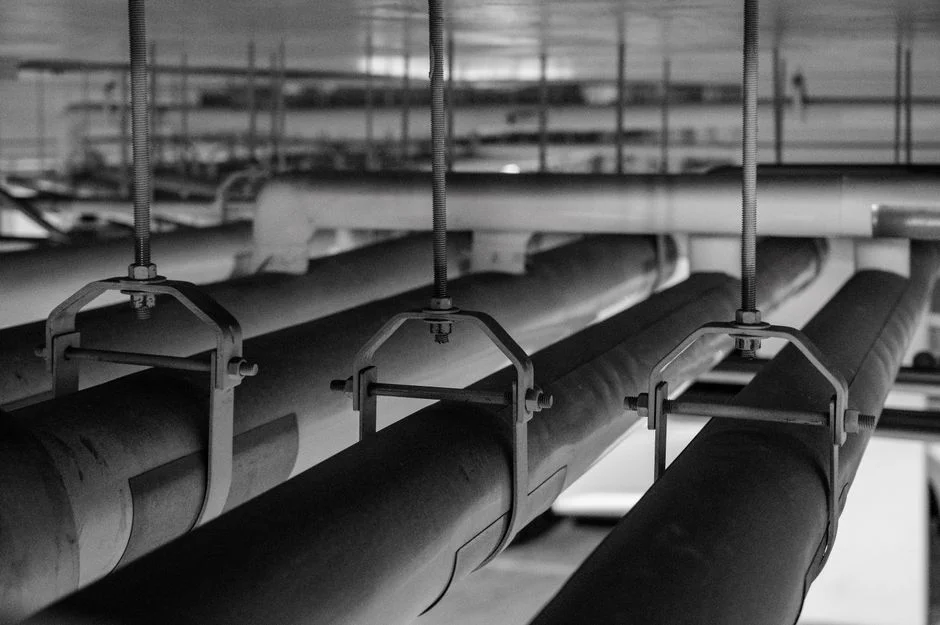
Three configurations dominate the Atlantic Canadian hospital market. The right pick depends on site footprint, reuse intent, and whether the discharge point is sewer or surface water.
| Configuration | Process | Footprint | Best fit in NS | Key 2026 spec |
|---|---|---|---|---|
| A — Conventional | Screening → equalization → activated sludge → clarifier → UV | Largest | Older 100+ bed sites, ample land | MLSS 3000–5000 mg/L; UV dose ≥40 mJ/cm² |
| B — MBR + ClO₂ | Screening → equalization → biotank → submerged PVDF membrane → ClO₂ | ~60% of A | NS regional hospitals (QEII-class) with constrained sites | 0.1 µm pore; 32–135 m³/day per DF-series cassette |
| C — Package chemical/ozone | Pre-filter → equalization → ozone or peracetic → polishing | Smallest (~0.5 m² per skid) | Community hospitals and the ~135 NSHA community locations | 99%+ microbial kill; skid pre-wired |
Configurations B and C correspond to HydropureWater's MBR Membrane Bioreactor Wastewater Treatment System and the Medical Wastewater Treatment System respectively. The MBR configuration uses submerged flat-sheet PVDF modules — DF-series cassettes deliver 32–135 m³/day each at 0.1 µm nominal pore size, with air-scour cleaning that keeps the system online without backwash shutdowns. The compact package is designed for sites that need a 0.5 m² skid, no chemical dosing on the disinfection step, and ≥99% microbial kill.
The process flow in every case runs fine screening (≤2 mm) → flow equalization (typically 8–24 h HRT) → biological reduction → membrane or clarifier separation → disinfection → discharge. One pre-treatment detail that gets forgotten: high-TSS laundry streams and kitchen waste should bypass the biological step or pass through a dissolved air flotation (DAF) system first, because lint and grease from hospital laundries will blind an MBR membrane inside weeks if the streams are co-mingled.
Disinfection Choice: Chlorine Dioxide vs Ozone vs UV in Cold Maritime Climates
Chlorine dioxide is the default for any Nova Scotia hospital discharging to surface water or to a sewer that feeds a drinking-water source area, and the 2026 case for it is straightforward. ClO₂ remains effective across pH 6–9, kills BTEX and chlorine-resistant spores that chlorine misses, and decays without forming trihalomethanes at the doses used for hospital effluent. The HydropureWater Chlorine Dioxide Generator covers eight configurations from 50 g/h to 20,000 g/h and is specified to meet EPA, EU Drinking Water Directive 98/83/EC, and WHO Guidelines for Drinking-water Quality — relevant for NS facilities whose sewer eventually discharges into a watershed above an intake.
| Disinfection | Cold (<10°C) performance | Residual | Footprint | Best NS application |
|---|---|---|---|---|
| ClO₂ | Stable | Yes (controllable) | Medium | Tertiary hospitals, surface-water discharge |
| Ozone | Stable (but power cost rises) | No | Small | Community hospitals, sewer discharge |
| UV | Lamp output drops; fouling from hard water | No | Small | Secondary barrier only; size duty/standby with wiper |
UV is the wrong primary kill step for an NS winter. Lamp output falls roughly 0.3% per °C below 20°C, and Maritime raw water is hard enough that wiper maintenance becomes weekly. Ozone has no residual and a higher power draw, but in a packaged skid the footprint wins for community hospitals. Decision rule: ClO₂ for tertiary hospitals and any surface-water discharge; ozone for community hospitals discharging to municipal sewer; UV only as a polishing barrier downstream of one of the above.
Sludge Handling and Residuals from Hospital Treatment Plants

The most common planning mistake on a 200-bed regional hospital is forgetting the sludge. Every cubic metre of effluent at 200 mg/L TSS produces roughly 0.2 kg of dry secondary solids; a 300 m³/day hospital therefore generates about 60 kg DS/day of biological waste alone, before chemical sludge from DAF pre-treatment is counted.
Routing in Nova Scotia is constrained. NSHA's contaminated waste is sent to incineration rather than to the Otter Lake facility that handles general HRM waste, which means sludge storage has to be sized for the incinerator pickup cycle — 7 to 14 days of holding capacity is the safe design range. A HydropureWater plate and frame filter press in the 1–500 m² filtration area range, PLC-controlled, will dewater hospital biological sludge to 25–35% DS — the right cake consistency for incinerator feed. For chemical sludge from DAF pre-treatment, a lamella clarifier operating at 20–40 m²/h surface loading rate is the standard thickener; for full DAF residuals a high-efficiency sedimentation tank typically reaches the same discharge target as the biological line.
CAPEX, OPEX, and Procurement Path for a 50–500 m³/day NS Hospital Plant
For budget planning, the 2026 capital envelope below is what a Nova Scotia hospital should expect to see in a Class A estimate, in CAD, exclusive of building works and HST.
| Hospital size band | Daily flow | Representative NS facility | CAPEX envelope (CAD) | Recommended train |
|---|---|---|---|---|
| Community / emergency department | ~50 m³/day | Collaborative emergency centre | $180,000–$320,000 | Compact package with ozone |
| Regional | ~200 m³/day | Colchester East Hants, Valley Regional | $650,000–$1,100,000 | MBR + ClO₂ polishing |
| Tertiary | ~500 m³/day | QEII Halifax, IWK, Cape Breton Regional | $1,800,000–$3,200,000 | MBR + ClO₂ + sludge dewatering |
Operating cost runs $0.06–$0.18/m³ for a well-maintained biological plant (per the CASS process maintenance cost in 2026 OPEX guide). ClO₂ chemical cost adds $0.005–$0.015/m³ treated. The compact system is sized for the smaller end of this band and aligns with EU Urban Waste Water Directive 91/271/EEC effluent criteria, which is the closest internationally recognised benchmark for small-flow hospital packages. The automatic chemical dosing system and the WSZ underground integrated sewage treatment skid shorten NS on-site installation to 2–4 weeks — a practical advantage given the short shutdown windows NSHA facilities can offer.
Procurement path under 2026 NS oversight: pre-design (flow audit + contaminant inventory) → NSECC application for an industrial approval if discharging to the environment, or a Halifax Water / CBRM permit-to-discharge for sewer — the receiving utility's limits are usually tighter than NSECC's, so this step sets the design envelope → optional 30–90 day pilot for tertiary sites → detailed design → factory acceptance test → commissioning → 12-month proving period before final sign-off. A defensible tender should reference the Total Nitrogen Discharge Limit for Industry 2026 Global Standards Guide for the nitrogen envelope, and the parallel Hospital Wastewater Treatment in Penang Malaysia 2026 Engineering Guide for a comparable tropical-climate reference case.
Frequently Asked Questions
Q1: Do all Nova Scotia hospitals need on-site wastewater treatment?
Only those discharging directly to the environment or above the federal 100 m³/day threshold. Smaller sites may discharge to municipal sewer subject to Halifax Water or CBRM bylaw limits, but sewer-use permits still require pre-treatment for mercury, aldehydes, and residual chlorine.
Q2: What is the typical fecal coliform limit in 2026?
≤200 CFU/100 mL for surface water discharge. Halifax Water's industrial discharge bylaw typically accepts ≤1000 CFU/100 mL to sewer, but NSECC will require the surface-water number for any direct discharge application.
Q3: How is hospital sludge disposed of in Nova Scotia?
Contaminated waste from NSHA facilities is routed to incineration rather than the Otter Lake landfill used for general waste, per the NSHA waste management review.
Q4: Is MBR cost-justified for a 100-bed regional hospital?
Yes where footprint is constrained or where reuse-quality effluent offsets downstream capacity charges. Typical pay-back is 5–8 years at 200 m³/day when reuse is monetised.
Q5: Which disinfection works best in cold NS winters?
ClO₂ outperforms UV below 10°C and is the right primary kill step for tertiary hospitals. Ozone is acceptable for community hospitals on sewer discharge. UV should be specified with a duty/standby lamp bank and automatic wiper, and treated as a polishing barrier rather than the primary disinfection step.