Why Hospitals Are Ideal Candidates for Water Recycling
Hospitals consume 400–1,200 L of water per bed per day, of which 50–80% serves non-potable end-uses — toilet flushing, laundry, cooling-tower makeup, and landscape irrigation (per peer-reviewed hospital water audits, 2024). A 200-bed facility running a 30–50% recycle loop reclaims 50,000–150,000 m³ of municipal water per year, decoupling operations from tariff shocks and intermittent supply. The drivers behind that payback have tightened sharply in 2025–2026: WHO 2022 Guidelines for the safe use of wastewater, excreta and greywater elevated reuse risk management into the international reference framework, ISO 16075 standardized reuse-system design, and pharmaceutical extended-producer-responsibility rules in the EU and several US states now hold hospitals accountable for trace-active-pharmaceutical load in their discharge. Treating effluent as a resource — not a compliance burden — is the engineering frame that lets a hospital convert regulatory pressure into freshwater independence and a measurable ESG line item.
Influent Characteristics That Define the Reuse Train
Hospital wastewater is stronger and more variable than municipal sewage. Typical ranges reported across 2023–2025 hospital STP monitoring studies: COD 250–1,000 mg/L, BOD₅ 150–500 mg/L, TSS 100–400 mg/L, ammonia 20–80 mg/L, and fecal coliform 10⁶–10⁸ CFU/100 mL. On top of that baseline, four contaminant classes govern reuse design: antibiotic resistance genes (ARGs), pharmaceutical residues (ciprofloxacin, metformin, sulfamethoxazole measured at μg/L levels), endocrine-disrupting compounds from lab and imaging waste, and human pathogens — with SARS-CoV-2 surveillance data from 2023–2024 confirming persistent RNA shedding in stool up to 30 days post-symptom, which is why the WHO 2022 guidelines apply a precautionary log-removal framework to hospital effluent. Hydraulic load is also non-uniform: peak flows hit between 06:00 and 09:00 from morning ward rounds, and BOD spikes follow laundry and food-service cycles. Equalization is therefore mandatory in any reuse design — without it, downstream MBR membranes see flux shocks and disinfection contact times drift outside spec.
The 2026 Reuse Process Train: From Blackwater to Reuse-Grade Effluent
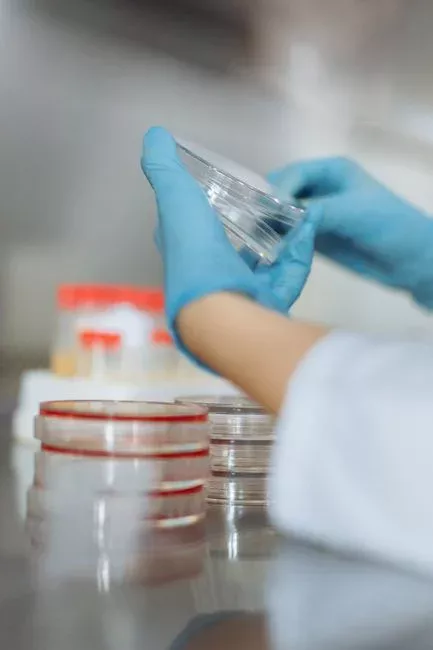
A defensible 2026 hospital reuse train runs in four stages, each matched to a unit operation that can be specified and shipped today.
Stage 1 — Pre-treatment. Influent passes a 3–6 mm rotary bar screen to strip rags, wipes, and surgical textile fragments that would rag pumps and shred membrane fibers. Grit removal follows, then a flow-equalization tank sized to ≥8 hours of average daily flow to flatten the morning peak and the laundry-cycle BOD spike.
Stage 2 — Biological + membrane (MBR). An MBR membrane bioreactor couples activated-sludge biology (MLSS 8,000–12,000 mg/L, SRT 20–40 days) with submerged PVDF ultrafiltration membranes at 0.03–0.1 μm nominal pore size. Verified MBR performance on hospital effluent: COD removal 95–98%, BOD₅ <5 mg/L, TSS <1 mg/L, and a footprint roughly 60% smaller than a conventional activated-sludge train of equivalent capacity (HydropureWater DF series, 2025 catalog). The MBR effluent is the pivot point of the train — everything downstream is sized to that water quality.
Stage 3 — Disinfection. A chlorine dioxide generator sized from 50 g/h to 20,000 g/h delivers a 0.5–1.5 mg/L ClO₂ residual with a 30-minute contact time. ClO₂ is the disinfectant of choice over chlorine for hospital effluent because it achieves ≥4-log inactivation of viruses and bacteria without forming trihalomethanes when dosed against pharmaceutical residues and iodinated contrast media.
Stage 4 — Reuse polishing. For cooling-tower makeup, boiler feed, or any reuse where TDS <500 mg/L is required, an industrial RO polishing unit runs at 70–95% recovery and brings conductivity below 50 µS/cm in a single pass. For toilet-flushing- and irrigation-grade reuse, a multi-media filter or UF stage is sufficient. The full liquid train: screening → equalization → MBR → ClO₂ → RO/UF → reuse storage. A side-stream filter press for sludge dewaterings wasted biosolids to ≥22% dry solids for off-site disposal, closing the mass balance.
Matching Reuse End-Use to Effluent Quality
Reuse design collapses into one question: how clean does the water need to be for the intended end-use? The table below maps each common hospital reuse application to the parameter envelope a design engineer must hit, anchored to WHO 2022 and ISO 16075.
| Reuse end-use | BOD₅ (mg/L) | TSS (mg/L) | Turbidity (NTU) | Fecal coliform (CFU/100 mL) | Additional limits |
|---|---|---|---|---|---|
| Toilet flushing | <10 | <10 | <5 | <200 | No visible color/odor |
| Cooling-tower makeup | <10 | <10 | <5 | <200 | TDS <500 mg/L; silica <50 mg/L; conductivity <1,000 µS/cm |
| Laundry | <20 | <20 | <10 | <200 | No visible color or odor; pH 6.5–8.5 |
| Restricted irrigation (ornamental, landscape) | <20 | <30 | — | <200 | WHO 2022 ≤1 CFU/100 mL target where public contact is likely |
| Unrestricted irrigation (food crops) | <10 | <10 | <2 | <1 | Per WHO 2022; full disinfection train required |
| Boiler feed (low pressure) | <5 | <2 | <1 | <1 | Conductivity <30 µS/cm; silica <0.7 mg/L; RO + softening |
Two takeaways: toilet flushing and irrigation are the lowest-cost reuse targets and should be designed first. Cooling-tower and boiler-feed reuse are higher-value but require RO, which roughly doubles the per-m³ treatment cost and should be sized to actual makeup demand rather than total cooling-water flow.
Regulatory Framework: WHO 2022, ISO 16075, EPA, and EU UWWTD
Four documents anchor a defensible hospital reuse project in 2026. The WHO 2022 Guidelines for the safe use of wastewater, excreta and greywater replace the 2006 version and apply a quantitative microbial risk-assessment (QMRA) framework that lets a designer match log-removal targets to specific reuse crops. ISO 16075 series covers irrigation reuse design, monitoring, and management; ISO 11731 controls Legionella in reuse distribution piping, a real risk in warm hospital mechanical rooms. In the US, EPA Hospital Effluent Guidelines sit alongside 40 CFR Part 460, with the 2022 Dental Amalgam rule serving as the most recent analogue of a healthcare-facility category-specific effluent limit. In the EU, Urban Waste Water Directive 91/271/EEC remains the legal baseline, with member states layering hospital-specific requirements — Germany’s AbwV Annex 25 (updated 2024) sets a 20 mg/L COD limit for hospital discharges to municipal sewers, and the UK’s BS 6700:2025 revision tightened hot-water Legionella control to LST 1–4 risk categories. Citing these four documents by name is the cheapest way to win capital-committee approval.
2026 Cost Envelope: CAPEX and OPEX for Hospital Recycling Systems
Budget numbers for a packaged hospital reuse system in 2026 USD, drawn from manufacturer quotes and 2025 EPC benchmarks:
| System scope | Capacity (m³/day) | CAPEX (USD, 2026) | OPEX (USD/m³ treated) |
|---|---|---|---|
| Packaged MBR + ClO₂ + UF (toilet/irrigation grade) | 50–500 | $180,000–$1,200,000 | $0.30–$0.55 |
| Packaged MBR + ClO₂ + RO (cooling/boiler grade) | 50–500 | $320,000–$1,500,000 | $0.55–$0.85 |
| Turnkey plant with civil works, buildings, SCADA | 200–1,000 | $1,500,000–$3,500,000 | $0.45–$0.90 |
OPEX is dominated by membrane aeration energy (typically 0.6–1.0 kWh/m³ for the MBR stage) and the high-pressure RO pump (0.5–0.8 kWh/m³), with ClO₂ chemical adding $0.02–$0.05/m³. Simple payback runs 4–7 years where municipal water exceeds $1.50/m³ and effluent discharge fees apply; in water-stressed regions or where ESG-linked financing is available, payback compresses to 3–5 years. Modular pre-engineered units such as the WSZ underground integrated sewage treatment package and the compact medical wastewater unit cut install time to 8–14 weeks versus 6–9 months for stick-built — a real schedule advantage on a constrained hospital campus. For plants that need remote monitoring, a SCADA for sewage treatment overlay typically adds 4–8% to CAPEX and reduces operator labor by 30–50%.
When Reuse Makes Sense: A 2026 Decision Framework
Run this five-criterion screen before commissioning a reuse design:
- Bed count ≥200. Below 50 beds, recycle volumes rarely justify MBR+RO CAPEX; a compact medical wastewater unit in discharge-compliance mode is more economic.
- Municipal water tariff >$1.50/m³. Below $0.50/m³, the freshwater savings cannot amortize membrane replacement every 7–10 years.
- Site water-stress classification "high" or worse per WRI Aqueduct or local equivalent — drives ESG and resilience value beyond pure dollar payback.
- Non-potable demand ≥30% of total hospital water use (toilet + laundry + cooling + irrigation combined). This is the market for the recycled water.
- Site area allows a buried or skid-mounted unit with the required setback (typically 5–10 m from the nearest occupied building) and a sludge-handling bay.
Hit at least four of the five and a full hospital reuse design is justified. Hit three and the answer is usually "scope to toilet flushing and irrigation first, defer cooling-tower reuse to phase two." Two or fewer and the hospital should stay with a discharge-compliance-only STP until water tariffs or bed count rise. For regional context, see how a comparable design was specified for hospital wastewater treatment in Tamale and for hospital wastewater treatment in Rawalpindi.
Frequently Asked Questions
What reuse quality does a hospital need for toilet flushing under WHO 2022? Per WHO 2022 and ISO 16075, toilet-flushing reuse water must meet BOD₅ <10 mg/L, TSS <10 mg/L, turbidity <5 NTU, and fecal coliform <200 CFU/100 mL — a target an MBR + ClO₂ train clears with a 2-log safety margin. The full WHO 2022 QMRA framework applies a ≤10⁻⁶ DALY disability-adjusted life year risk target.
How much does a packaged hospital water recycling system cost in 2026? A 50–500 m³/day packaged MBR + ClO₂ + UF/RO system runs $180,000–$1,500,000 CAPEX in 2026 USD, with OPEX of $0.30–$0.85/m³ treated. Turnkey plants with buildings and civil works reach $1.5–3.5M. Payback is typically 4–7 years at municipal water rates above $1.50/m³.
Is RO polishing required for hospital reuse, or is MBR + ClO₂ enough? For toilet flushing, laundry, and restricted irrigation, MBR + ClO₂ alone meets WHO 2022 and ISO 16075 limits. RO becomes mandatory only for cooling-tower makeup (TDS <500 mg/L, conductivity <1,000 µS/cm) and boiler feed (conductivity <30 µS/cm, silica <0.7 mg/L).
How is pharmaceutical residue removed in a hospital reuse train? MBR biology degrades 60–80% of common pharmaceuticals through extended SRT (20–40 days), and the 0.03–0.1 μm membrane physically rejects most micro-pollutants. For trace residuals of iodinated contrast media and persistent compounds, an RO polishing stage achieves >99% rejection.