Helsinki’s industrial wastewater treatment is governed by HSY’s stringent limits (e.g., COD ≤ 125 mg/L, TSS ≤ 35 mg/L for centralized discharge) and the Finnish Industrial Wastewater Guide. With Viikinmäki WWTP at 840,000 PE capacity, decentralized systems (e.g., MBR or DAF) are often required for high-strength effluents (COD > 1,000 mg/L). Compliance costs vary: centralized sewer fees average €1.20–€2.50/m³, while on-site MBR systems range from €500K–€2M CAPEX for 50–200 m³/day capacity. For a facility manager in the Pitäjänmäki or Herttoniemi industrial districts, the challenge is not merely meeting these thresholds but doing so while mitigating the steep surcharges applied to "heavy" wastewater. Exceeding the 500 mg/L COD threshold shifts the financial burden from a utility expense to a major operational liability, necessitating a deep-technical evaluation of pre-treatment versus full on-site reclamation.
Helsinki’s Industrial Wastewater Regulations: HSY Limits and Compliance Requirements
Helsinki Region Environmental Services (HSY) enforces industrial effluent limits for centralized discharge that mandate COD levels at or below 125 mg/L and Total Suspended Solids (TSS) at or below 35 mg/L to protect the biological processes at the Viikinmäki and Blominmäki treatment plants. These standards are rooted in the Finnish Industrial Wastewater Guide (2018), which establishes a collaboration model between the municipality, the water utility, and the industrial enterprise. An Industrial Wastewater Agreement (IWA) is a legal prerequisite for any facility generating non-domestic wastewater. This agreement stipulates the maximum allowable concentrations of pollutants and the required frequency of self-monitoring and laboratory reporting.
Compliance is particularly rigorous regarding heavy metals and persistent organic pollutants, which can inhibit the nitrification-denitrification cycles of Helsinki’s centralized activated sludge systems. Metal thresholds are aligned with or exceed the EU Urban Waste Water Directive 91/271/EEC, with Copper (Cu) capped at 0.5 mg/L and Zinc (Zn) at 2.0 mg/L. Failure to meet these limits results in immediate sewer surcharges, ranging from €3.50 to €10.00 per cubic meter for COD concentrations exceeding 500 mg/L, according to the HSY 2024 fee schedule. These surcharges reflect the additional aeration and sludge handling costs incurred by the utility.
| Parameter | HSY Limit (Centralized Discharge) | Typical Industrial Raw Effluent (Food/Pharma) | Surcharge Threshold |
|---|---|---|---|
| Chemical Oxygen Demand (COD) | ≤ 125 mg/L | 1,500 – 5,000 mg/L | > 500 mg/L |
| Total Suspended Solids (TSS) | ≤ 35 mg/L | 400 – 1,200 mg/L | > 200 mg/L |
| Biochemical Oxygen Demand (BOD5) | ≤ 25 mg/L | 800 – 2,500 mg/L | > 150 mg/L |
| pH Range | 6.5 – 9.0 | 3.0 – 11.0 | Outside 6.0 – 10.0 |
| Total Phosphorus (P) | ≤ 1.0 mg/L | 10 – 50 mg/L | > 5 mg/L |
| Copper (Cu) | ≤ 0.5 mg/L | 2 – 10 mg/L | Strict Limit |
For specialized facilities, such as those in the medical sector, implementing hospital wastewater treatment solutions for Helsinki’s medical facilities is critical to managing pharmaceutical residues that HSY’s standard biological systems are not designed to fully mineralize. The integration of advanced oxidation or membrane separation is often the only way to remain compliant with the IWA while avoiding the highest tier of surcharges.
The balance between centralized and decentralized treatment options must be evaluated for each industrial facility.Centralized vs. Decentralized Treatment: Cost, Compliance, and Capacity Trade-offs
The Viikinmäki wastewater treatment plant treats the sewage of approximately 840,000 population equivalents (PE) with a 95% BOD removal efficiency.The Viikinmäki wastewater treatment plant treats the sewage of approximately 840,000 population equivalents (PE) with a 95% BOD removal efficiency, yet its capacity for high-concentration industrial loads is finite. As Helsinki expands, industrial operators face a choice: pay increasing centralized sewer fees, which currently range from €1.20 to €2.50/m³ (HSY 2024), or invest in decentralized, on-site treatment systems. While centralized treatment offers lower CAPEX, the long-term OPEX for high-strength dischargers—particularly those in the food processing or textile sectors—often makes on-site systems the more economical choice over a 5-to-10-year horizon.
Decentralized CAPEX for a 50–200 m³/day facility typically ranges from €500K to €2M for MBR systems and €150K to €800K for DAF systems. However, the Total Cost of Ownership (TCO) favors on-site treatment when the raw effluent COD exceeds 1,000 mg/L. For example, a Helsinki-based food processor producing 200 m³/day with a COD of 2,500 mg/L would face annual sewer fees and surcharges exceeding €400,000. By installing an on-site system, the facility can reduce COD to <100 mg/L, saving approximately €250,000 per year in utility costs, resulting in a payback period of less than three years.
| Cost Category | Centralized (HSY Sewer) | Decentralized (On-site MBR + DAF) |
|---|---|---|
| Initial CAPEX | €0 (Connection fees only) | €650,000 – €1,200,000 |
| Annual Sewer Fees (200 m³/day) | €146,000 – €182,500 | €0 (or minimal for polishing) |
| Annual Surcharges (COD > 500 mg/L) | €250,000 – €450,000 | €0 |
| Annual OPEX (Power/Chemicals/Sludge) | €0 | €85,000 – €120,000 |
| 5-Year Total Cost (TCO) | €1,980,000 – €3,162,500 | €1,075,000 – €1,800,000 |
For industries with high fat, oil, and grease (FOG) loads, such as dairy or meat processing, food processing wastewater treatment for Helsinki’s dairy and meat industries provides a roadmap for integrating pre-treatment technologies. In many cases, a hybrid approach is used: on-site DAF for FOG removal to avoid sewer blockages, followed by centralized discharge of the clarified water to HSY, which balances CAPEX with the avoidance of heavy surcharges.
Equipment Technologies for Helsinki’s Industrial Wastewater: Performance, Costs, and Use Cases
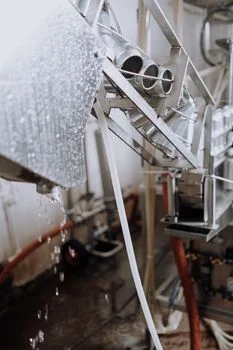
MBR systems for Helsinki’s high-strength industrial wastewater represent the gold standard for pharmaceutical and textile effluents where COD removal efficiencies must exceed 95%. These systems combine biological treatment with ultrafiltration, achieving TSS levels below 10 mg/L, which is significantly cleaner than HSY’s 35 mg/L requirement. Modern MBR units operate with an energy intensity of 0.8–1.2 kWh/m³. The ability to reuse MBR-treated water for non-potable industrial processes further offsets the OPEX by reducing freshwater procurement costs.
In sectors like food processing and pulp and paper, DAF systems for FOG and TSS removal in Helsinki’s food/pulp industries are the most effective primary treatment technology. DAF units remove 90–98% of FOG and 85–95% of TSS. For engineers deciding on capacity, the DAF line handles flow rates from 4 to 300 m³/h. Understanding how to select DAF systems for Helsinki’s industrial wastewater involves calculating the surface loading rate and air-to-solids ratio specific to the effluent's temperature—a critical factor in Helsinki’s colder climate.
Chemical management ensures that reagents are delivered with precision.Chemical management is equally vital for meeting HSY’s pH 6.5–9.0 mandate and heavy metal thresholds. Utilizing chemical dosing systems to adjust pH and precipitate metals for HSY compliance ensures that reagents like sodium hydroxide or ferric chloride are delivered with precision. Automatic dosing systems can reduce chemical consumption by up to 30% compared to manual batch dosing. Once pollutants are precipitated, sludge dewatering presses to reduce disposal costs in Helsinki become necessary to handle the resulting solids. Plate-and-frame presses can achieve 30–40% dry solids, which is essential given that disposal fees in Finland are calculated by weight and moisture content.
Finally, for facilities requiring high-level disinfection, such as those recycling wash water, ClO&sub2; generators for pathogen-free effluent in Helsinki offer a compliant solution under the EU Drinking Water Directive standards. Chlorine dioxide is preferred over traditional chlorination because it does not produce harmful trihalomethanes (THMs) and remains effective across a wider pH range.
| Technology | Target Contaminants | Removal Efficiency | Typical Application |
|---|---|---|---|
| MBR (Membrane Bioreactor) | Dissolved COD, BOD, TSS | 95% – 99% | Pharmaceuticals, Textiles |
| DAF (Dissolved Air Flotation) | FOG, TSS, Insoluble COD | 85% – 98% | Food Processing, Pulp/Paper |
| Chemical Dosing | Acids/Alkalis, Heavy Metals | N/A (Stabilization) | Metalworking, Electroplating |
| Filter Press | Sludge Volume | 30% – 40% Dryness | All high-solids industries |
| ClO&sub2; Generators | Pathogens, Biofilm | 99.9% Inactivation | Water Reuse, Food Safety |
How to Select the Right Wastewater Treatment System for Your Helsinki Facility
The first step is to characterize the wastewater through HSY-approved laboratory testing.The first step is to characterize the wastewater through HSY-approved laboratory testing, focusing on the 24-hour composite sampling of COD, TSS, pH, and specific heavy metals. Industrial eff