Why Durban Is a Different Design Problem From Joburg
A 5–20 MW colocation hall in the Umhlanga, La Mercy, or Mt Edgecombe corridor draws 100,000–400,000 L/day of make-up water at full load from the uMgeni system, not the Vaal (per ide-tech.com 2026). uMgeni Water's Reconciliation Strategy documents the supply stress: Durban sits on a coastal system with a documented drought-restriction history and a much higher rainfall seasonality than Gauteng, so the binding constraint is seasonal curtailment, not the year-round Rand Water allocations that drive the Joburg envelope (per hydropurewater.com 2026 field data).
Discharge options also diverge. eThekwini sites can route trade effluent to a marine outfall via the Southern Wastewater Treatment Works or to a sea outfall pipeline under controlled conditions, instead of the inland Rand Water sewer that Joburg sites are forced into. The marine pathway lowers consent complexity in some respects but adds a TDS and salt-loading cap that the Rand Water envelope does not impose. The design can trade inland discharge-consent complexity for salt-loading optimisation.
The biology is different too. Activated sludge at the Durban wastewater treatment works has been shown to harbour pentachlorophenol-degrading Bacillus tropicus, confirming that xenobiotics including PCP and related compounds are present in Durban-sourced mixed liquor (per UKZN, doi:10.29086/10413/22655). That evidence reinforces the case for a dedicated MBR biological stage on a Durban data-hall train rather than relying on physical-chemical treatment alone, and informs the conservative design baseline for equalisation, where local high-strength industrial characterisation is sparse.
The Four Wastewater Streams a Durban Data Hall Generates
Stream segregation is the single most cost-determining decision in a Durban treatment train, and getting it wrong on day one is the most common reason MBR biology fails within the first quarter of operation. The four-stream matrix below is adapted from the 2026 SADC data-hall envelope and re-anchored to uMgeni-derived make-up chemistry (per hydropurewater.com 2026).
| Stream | Source | Typical characterisation | Primary unit operation |
|---|---|---|---|
| 1 — Process waste (CMP slurry, tool wash) | Semiconductor / electronics back-end | pH 1–13 swings, fluoride 10–100 mg/L, sulfate up to 1,500 mg/L, IPA residues | Neutralisation via a PLC-controlled chemical dosing skid with NaOH/H₂SO₄ |
| 2 — Slurry polishing waste | CMP polishing lines | TSS 200–1,000 mg/L, residual H₂O₂, trace metals | DAF system with 2–10 mg/L cationic polyacrylamide |
| 3 — Closed-loop fill-and-flush | Commissioning & maintenance drains | Corrosion inhibitors, biocides, low TDS, unusual microbes | Neutralisation + carbon adsorption; on-site reuse wherever possible |
| 4 — CTBD (uMgeni-derived) | Cooling-tower blow at 4–6 COC | TDS 3–6× feed, silica 50–150 mg/L, scale inhibitor, biocide residuals | Scale-inhibitor break + chlorine dioxide (ClO₂) generator shock; prime RO candidate |
Never co-mingle Stream 2 with Stream 1. Residual peroxide carried over from slurry polishing reacts violently with low-pH acid waste and releases H₂, which has caused documented explosions during batch transfers (per E&E News reporting on the 2024–2025 Cheyenne fill-and-flush incident).
Durban Compliance Frame: eThekwini By-Laws, DWS Section 21 and the WHO 2017 Backstop
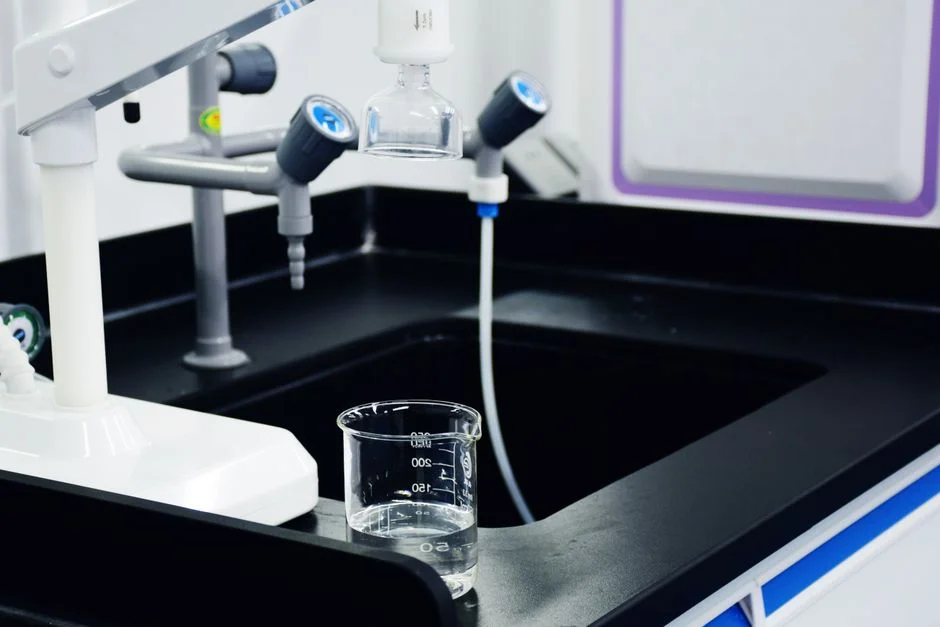
South Africa has no DWS-published data-hall effluent standard in 2026, so every Durban design defaults to the eThekwini Municipality Trade Effluent By-laws administered through the eThekwini Water and Sanitation unit, and to the DWS National Water Act Section 21 water-use authorisation process (per hydropurewater.com 2026). Section 21(c) (impeding or diverting flow) and Section 21(i) (discharging waste) trigger at any meaningful reuse or off-site discharge; the moment on-site storage or reuse exceeds the prescribed thresholds, a Path A design converts into a Path B design, so flag this in the design basis memo from day one rather than retro-fitting after the SANAS-accredited lab's first sampling round.
Where local limits are silent on fluoride, total silica, or peroxide residuals, the practical fallback is to borrow international benchmarks: the WHO Guidelines for Wastewater Reuse (2017) for reuse parameters, and the U.S. EPA industrial effluent framework for the chemistry local by-laws do not name. The 2017 WHO reuse guidelines remain the most defensible international reference until a local SANS code is promulgated.
Specify a SANAS-accredited lab with industrial effluent experience; confirm accreditation scope against the specific eThekwini parameter list before issuing the purchase order, because the 12-line COA in a generic lab's report will not satisfy a consent audit. Sanitary and fire-water-test flows stay on a separate WSZ underground package sewage treatment plant sized for 50–200 population equivalent so organic load and trace metals never enter the process consent; this is the single cheapest way to keep the eThekwini consent pathway clean.
The 2026 Treatment Train: From Equalisation to Reuse-Grade RO Permeate
Once the streams are segregated and equalised, the engineered envelope below is what an EPC process engineer can lift directly into a PFD for a 2026 Durban data hall (per hydropurewater.com 2026 field data).
| Unit operation | Specification | Function |
|---|---|---|
| High-efficiency lamella clarifier | Surface loading 20–40 m/h; footprint ~⅕ of conventional clarifier | Buffers high-TSS surges ahead of MBR; up to 30% coagulant saving |
| DAF system | 4–300 m³/h; TSS to <30 mg/L; alum/ferric chloride/ferric sulphate coagulants | Lifts TSS on slurry stream; captures residual FOG from polishing compounds |
| Submerged PVDF MBR membrane bioreactor | 0.1–0.4 μm; 6–10 h HRT; MLSS 8,000–12,000 mg/L | Tolerates higher MLSS and IPA foaming; produces near-particle-free effluent |
| PVDF ultrafiltration system | Feed <10–15 μm; automatic backwash | Stabilises SDI ahead of RO; protects membrane on borehole blends with Fe/Mn spikes |
| Industrial reverse osmosis system | 70–90% recovery on Stream 4; 65–75% on combined stream; permeate conductivity <50 μS/cm | Produces cooling-tower make-up; drives Path A/B/C decision |
Equalisation tanks sized for 8–24 h residence dampen the pH and flow swings that arrive whenever a downstream process dumps a batch, and pH correction on Stream 1 is handled through a PLC-controlled chemical dosing skid dosing NaOH or H₂SO₄, both routinely available through Durban chemical distributors. The submerged PVDF module format (0.1–0.4 μm) is preferred over side-stream configurations because it tolerates the higher MLSS needed to absorb batch swings and produces the near-particle-free effluent downstream RO actually needs. The combined feed hits the MBR at 6–10 h HRT, with the module often delivered as a pre-engineered skid to cut on-site installation time in Durban where specialised construction labour is thin and the coastal working window is weather-limited. Cooling-tower blowdown from the uMgeni-derived supply is the most chemically forgiving of the four streams once scale-inhibitor break and chlorine dioxide shock dosing are applied upstream, and that is precisely why it becomes the prime RO reuse candidate rather than the most difficult stream to dispose of. A chlorine dioxide (ClO₂) generator for shock biocide control ahead of RO is the standard Durban design choice because ClO₂ does not react with residual scale inhibitors the way chlorine does.
Path A, B or C: Choosing the Right Compliance Pathway for a Durban Site
Three compliance pathways are realistic in 2026, and the choice depends on site size, ESG commitments, and the speed of the eThekwini consent process (per hydropurewater.com 2026).
| Path | Scope | CAPEX band | OPEX envelope | Fit |
|---|---|---|---|---|
| A — Segregation + DAF + neutralisation | Trade effluent charge + monthly self-monitoring | Lowest (entry-level packaged train) | Municipal line items, lab self-monitoring | Small sites, slow ESG pressure, no DWS Section 21 trigger |
| B — Segregation + DAF + MBR + industrial RO | 3–5 year payback on MBR+RO | Mid-range packaged train | Chemicals US$0.10–0.30/m³, power US$0.08–0.15/m³, membrane replacement every 5–7 years | Default for 2026 Durban data hall; cuts uMgeni draw 60–80% |
| C — Path B + brine concentrator + crystalliser | 2–3× Path B; full ZLD | US$3–8M for full ZLD; convert at 2026 Rand rate | Higher chemical and thermal energy demand | Above 500 m³/day combined flow or closed consent pathway |
The recommended 2026 default for a Durban data hall with light process waste is Path A for sanitary flows via the WSZ underground package plant and Path B for cooling-tower blowdown, with a phased option to add Path C once 12 months of actual brine data are measured. Keep the consents split so organic load from sanitary flow never contaminates the process stream. Partial ZLD at 80–90% volume reduction often captures the discharge-fee benefit at data-hall scale without committing to full crystallisation on day one.
2026 CAPEX and OPEX Bands in Rand for a Durban Data Hall
Procurement needs a directional envelope, not a fabricated line item. The bands below are anchored in 2026 HydropureWater packaged skid pricing for SADC export and should be converted to Rand at the prevailing 2026 rate before going into the design basis memo (per hydropurewater.com 2026).
| Line item | Directional 2026 pricing (USD) | Notes |
|---|---|---|
| Data-hall packaged train (segregation + DAF + MBR + industrial RO) | Directional; convert at 2026 Rand rate | Front-end segregation + neutralisation + DAF skid sized separately to reuse target |
| Conventional RO skid for South-African-exported data-hall scope | US$250,000–500,000 installed for a 50,000 GPD unit; 50–85% recovery, 95–99% TDS removal, 10–50 mg/L permeate TDS | OPEX US$1.50–3.00/kgal (per genesiswatertech.com 2026) |
| MBR+RO OPEX | Chemicals US$0.10–0.30/m³; power US$0.08–0.15/m³ | Membrane replacement every 5–7 years |
| Recurring compliance (eThekwini trade effluent charges, by-law compliance, SANAS-accredited lab self-monitoring) | 10–25% above the chemical dosing line item, every month | Recurs for the life of the consent |
Containerised or skid-mounted designs cut on-site installation cost in Durban where specialised construction labour is thin and the coastal working window is weather-limited. Specify RO and UF membrane elements from a single supplier to consolidate the replacement inventory and the CIP protocol. The Idetech MAXH₂O benchmark puts high-recovery, chemistry-aware RO at approximately 95% overall recovery with permeate silica around 1 mg/L, which is the direction Durban sites should be benchmarking against when justifying the move from Path A to Path B (per ide-tech.com 2026).
Frequently Asked Questions
What regulatory frame governs a Durban data center's wastewater discharge in 2026?
The eThekwini Municipality Trade Effluent By-laws govern any discharge to the Durban municipal sewer, with the eThekwini Water and Sanitation unit as the consent authority (per hydropurewater.com 2026). Where local limits are silent on fluoride, silica, or peroxide, the design falls back to the WHO 2017 reuse guidelines and the U.S. EPA industrial effluent framework. The same compliance logic is used in our 2026 Johannesburg data-center cooling blowdown guide, with the marine-outfall option swapped in for the marine discharge capacity eThekwini holds.
When does the DWS Section 21 water-use authorisation trigger on a Durban data-hall project?
DWS National Water Act Section 21(c) (impeding or diverting flow) and Section 21(i) (discharging waste) authorisations fire at any meaningful on-site storage or reuse, so the moment the design moves from Path A disposal to Path B reuse the Section 21 process has to be initiated (per hydropurewater.com 2026). Flag the Section 21 trigger in the design basis memo from day one, not after the SANAS-accredited lab's first sampling round.
How much cooling-tower blowdown can a 5–20 MW Durban data hall actually recover?
70–90% recovery through RO is realistic on Stream 4 cooling-tower blowdown with permeate conductivity below 50 μS/cm, subject to a scale-inhibitor break and chlorine dioxide shock dosing upstream (per hydropurewater.com 2026). On a 200,000 L/day make-up feed that translates to 50,000–60,000 L/day of recoverable blowdown, which is the volume that turns the reuse business case from ESG theatre into a 3–5 year payback, mirroring the envelope documented in our 2026 Manila data-center cooling blowdown guide and the 2026 Warsaw envelope for data-center wastewater treatment in Warsaw.
Is ZLD justified for a Durban data hall in 2026?
Only above 500 m³/day combined flow or when the eThekwini consent pathway is closed, because ZLD CAPEX runs 2–3× Path B reuse. At data-hall scale, partial ZLD at 80–90% volume reduction often captures the discharge-fee benefit at a fraction of full crystallisation cost, and the brine envelope can be absorbed under a negotiated eThekwini consent provided TDS and heavy-metal limits are met.