Why a Packaged MBR STP Makes Sense for Hotels in Rabat
Rabat's coastal Mediterranean climate delivers dry summers of 4-5 months with very low rainfall, and the Bouregreg watershed and the MASM (Maîtrise d'Eau de la Région de Rabat-Salé-Kénitra) repeatedly flag treated wastewater as a strategic resource rather than a waste stream. For a 100-300 room hotel, that framing turns a packaged MBR STP from a compliance line item into a water-security asset that protects the property against municipal restrictions during peak tourist months (June-September). Membrane bioreactor technology is reported to remove 90-95% of harmful substances from hotel wastewater and produce reuse-grade effluent (source: imemflo hotel MBR benchmark, 2026).
Compared with MBBR, SBR, and conventional activated sludge (ASP), a packaged MBR combines activated sludge with submerged PVDF membrane filtration at less than 1 μm in a single skid. That eliminates the secondary clarifier, cuts the plant footprint by roughly 30-50% versus ASP, and produces an effluent with TSS under 5 mg/L — clean enough for non-potable reuse without tertiary filtration. Hotels with constrained basements or service yards, which is the norm in central Rabat and the Agdal/Hassan districts, benefit most from that compactness. The integrated MBR membrane bioreactor system spans 10-2,000 m³/day, which covers the full 150-400 m³/day range typical of 3-5 star Rabat hotels.
Moroccan Compliance and Discharge Limits Hotels Must Meet
Loi 10-95 on water protection against pollution, and its implementing decrees, is the umbrella framework for any hotel discharging treated wastewater in Morocco, with the Secrétariat d'État chargé de l'Eau and ONEE holding the technical review role for new STP installations connected to municipal networks. Permit values must be confirmed against the current ONEE/SEE circular at design stage, because the circulars are revised periodically and differ slightly between sewered and non-sewered zones (per Secrétariat d'État chargé de l'Eau guidance, 2025-11).
For domestic STPs, the national discharge envelope widely used by Moroccan consultants sits in the following bands, and engineers should treat these as values to verify with the current circular, not as fixed law:
| Parameter | Typical national discharge band | Reuse target (irrigation/toilet) |
|---|---|---|
| TSS | 30-50 mg/L | ≤ 10 mg/L |
| BOD5 | 25-40 mg/L | ≤ 10 mg/L |
| COD | 90-120 mg/L | ≤ 50 mg/L |
| Fecal coliforms | 10²-10³ CFU/100 mL | ≤ 10² CFU/100 mL (WHO 2006 for irrigation) |
| pH | 6.5-8.5 | 6.5-8.5 |
For reuse, the practical benchmark is the WHO 2006 Guidelines for Safe Wastewater Use, paired with FAO 56 irrigation quality thresholds for salinity and SAR. Hotels targeting reuse should also plan a polishing barrier — either UV or chlorine dioxide — sized to the post-MBR flow. The chlorine dioxide generator and the UV sterilizer are the two skid-mounted options that bolt onto a packaged MBR without civil works. In peri-urban Rabat zones without municipal sewer coverage, the package must be fully self-contained: biological treatment, sludge handling, and disinfection, with no assumption of offsite sludge reception.
Sizing the Packaged MBR: Guests, Rooms, and Peak Factor
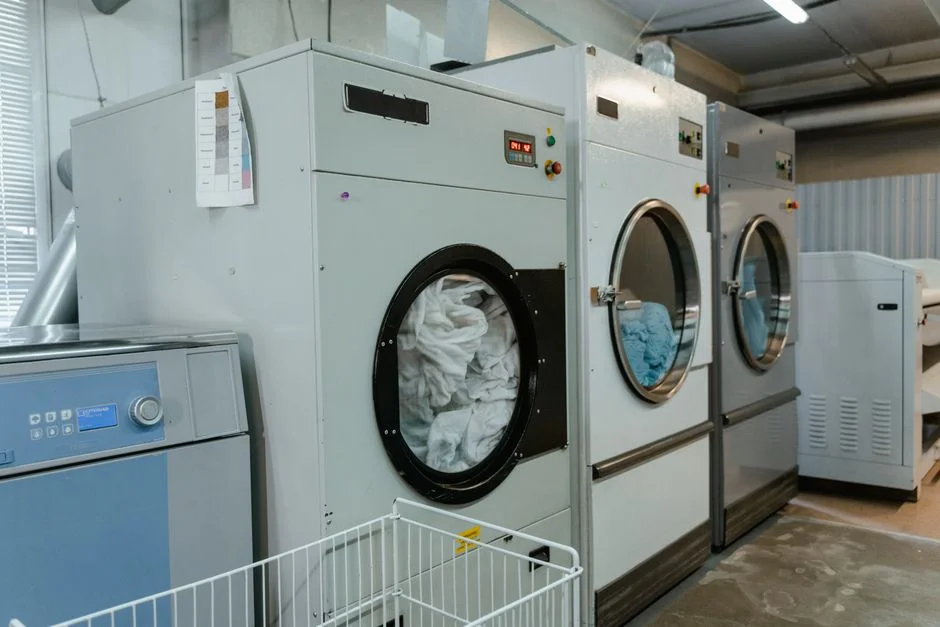
The defensible sizing logic for a Rabat hotel is built from three multipliers — occupancy, per-guest water use, and wastewater return — and then de-rated with a peak factor and an FOG buffer. For mid-market 3-4 star properties, occupancy runs 0.6-0.85 of room count, water use sits at 200-300 L per guest-day, and the wastewater return factor is 0.85-0.90 (per Moroccan hospitality engineering practice, 2025-08). Worked example: a 200-bed hotel at 70% occupancy produces 200 × 0.70 × 0.25 m³ × 0.85 = roughly 30 m³/day per "design bed" once you apply the multipliers, which lines up with the imemflo 200-bed 5-star reference plant operating at 250 m³/day in steady state (source: imemflo hotel MBR reference, 2026).
Two adjustments move the design number from "average" to "what the skid must handle on the worst August weekend":
- Summer peak factor: apply 1.3-1.5× to the average daily flow to absorb tourist-season occupancy, conference blocks, and pool backwash peaks. A 200-bed hotel averaging 250 m³/day should be sized for 325-375 m³/day peak.
- FOG and lint buffer: add 10-20% on top of peak if the hotel runs a large kitchen, banquet operation, or on-site laundry, because FOG and microfiber loading drive fouling rate on the membrane.
| Hotel profile | Rooms | Avg flow (m³/day) | Peak flow (m³/day) | Recommended packaged MBR size |
|---|---|---|---|---|
| 3-star business | 100 | 120-150 | 160-225 | 150-200 m³/day |
| 4-star mid-market | 200 | 240-300 | 320-450 | 300-400 m³/day |
| 5-star resort | 300 | 360-450 | 470-675 | 500-700 m³/day |
Modular packaged designs allow the owner to buy two skids of 150 m³/day instead of a single 300 m³/day unit, which spreads CAPEX and keeps one train on-line during membrane CIP cycles. The integrated MBR membrane bioreactor system scales from 10 to 2,000 m³/day, so modularity is built into the platform rather than added at site.
Hollow-Fiber vs Flat-Sheet MBR: Which Membrane Fits a Rabat Hotel
The two mainstream submerged MBR formats are hollow-fiber (HF) and flat-sheet (FS). Mainstream HF suppliers include Suez, Dow, DuPont, and Mitsubishi; mainstream FS suppliers include Toray and HydropureWater's DF series. The decision is not about membrane quality — both formats use PVDF at sub-micron pore size and deliver comparable effluent — but about fouling behavior under hotel-specific loading (per imemflo supplier survey, 2026).
- Hollow-fiber MBR: higher packing density (m²/m³), lower CAPEX per m³ of capacity, and proven in municipal plants. Trade-off: HF bundles trap hair, lint, and FOG more easily, so a robust fine screen (≤ 2 mm) and a working grease trap are mandatory. A single fouled fiber can compromise a cassette.
- Flat-sheet MBR: rigid panels with spacers, easier to wash down on-site, and tolerant of the FOG and microfiber spikes that come with hotel kitchens and laundries. Trade-off: footprint per m² of membrane is 20-30% larger than HF at equal flow.
| Parameter | Hollow-fiber (HF) MBR | Flat-sheet (FS) MBR — HydropureWater DF |
|---|---|---|
| Pore size | 0.1-0.4 μm | 0.1 μm |
| Module area | 20-40 m² per element | 80-225 m² per cassette |
| Flow per module | 10-25 m³/day per element | 32-135 m³/day per cassette |
| FOG / lint tolerance | Low — needs strict pretreatment | High — easier to clean in place |
| CAPEX per m³/day | Lower | Slightly higher |
| Footprint per m² of membrane | Compact | 20-30% larger than HF |
| Element replacement | Cassette-level | Individually replaceable elements |
| Specific energy | 0.3-0.6 kWh/m³ | 10-20× lower than external cross-flow designs |
For most Rabat hotels — particularly 4-5 star properties with kitchens, restaurants, and on-site laundry — flat-sheet is the default because it tolerates real-world FOG and lint loading. HF is the right call for tight-footprint, budget-driven projects where pretreatment can be controlled. HydropureWater DF series flat-sheet MBR modules ship with 0.1 μm PVDF panels in 80-225 m² cassettes producing 32-135 m³/day each, with individually replaceable elements that simplify the 5-7 year membrane swap.
Pretreatment and Sludge Handling Built Into the Package
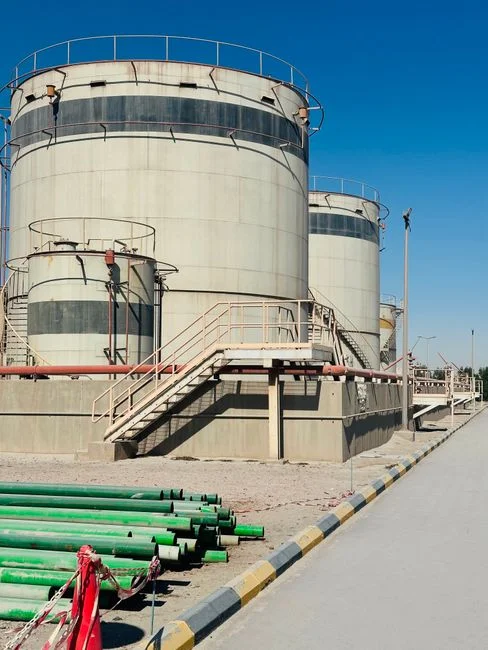
MBR performance is set by the equipment in front of the membrane tank, not the membrane itself. The standard headworks chain for a hotel MBR is a rotary bar screen at 2-3 mm aperture for rags, hair, and lint, followed by a grit chamber and a DAF or grease trap for kitchen FOG. The rotary mechanical bar screen handles the solids load, and the Dissolved Air Flotation (DAF) unit handles 4-300 m³/h of FOG-laden flow, removing 60-90% of油脂 before it reaches the bioreactor.
MBR eliminates the secondary clarifier, but the waste activated sludge still has to be dewatered. The standard option is a plate and frame filter press with 1-500 m² filtration area, dewatering waste activated sludge to an 18-25% dry cake that can be hauled offsite to a licensed disposal site or, in some Rabat peri-urban zones, applied to non-edible landscaping. For hybrid hotels with very tight footprints, the WSZ underground integrated sewage treatment plant can be paired with a packaged MBR — biological pretreatment underground, membrane polishing at grade — which is a common configuration for renovations of older Riad-style properties in the Medina. Factory-tested PLC panels ship with the skid, so on-site installation is mostly lift-and-plumb plus electrical termination, with typical commissioning in 5-10 days.
Reuse Pathways: Turning Treated Effluent Into a Hotel Asset
Rabat's dry-summer climate makes reuse the strongest economic case for a packaged MBR, and the realistic streams a hotel can target are: landscape irrigation of gardens and grounds, golf course or large garden watering for resort properties, toilet flushing, cooling-tower make-up, and laundry (with UF polishing). Each stream has a different polishing requirement, and the owner should not pay for more treatment than the worst stream demands.
For toilet-flushing and cooling-tower reuse, an ultrafiltration polishing step is the practical choice. A UF polishing system at 2,000-40,000 L/h and 0.03 μm PVDF removes any residual turbidity and microbiological carryover, dropping SDI below 3 for cooling-tower duty. For irrigation and toilet reuse, the polishing barrier is a disinfection step — either a UV sterilizer at 30-40 mJ/cm² for chemical-free operation, or chlorine dioxide where residual disinfection is wanted in the distribution loop.
The order-of-magnitude water-cost impact is meaningful: a 200-bed hotel reusing 250 m³/day of treated effluent offsets roughly 80,000-90,000 m³/year of municipal water purchases, which at current Rabat ONEE rates puts the annual water-cost saving in a band that recovers a meaningful share of the MBR CAPEX over a 7-10 year horizon (per HydropureWater field data, 2026). Reuse is the line that converts the STP from a compliance cost into a balance-sheet asset, and the owner brief should frame it that way.
Vendor Selection Scorecard for a Rabat Hotel MBR
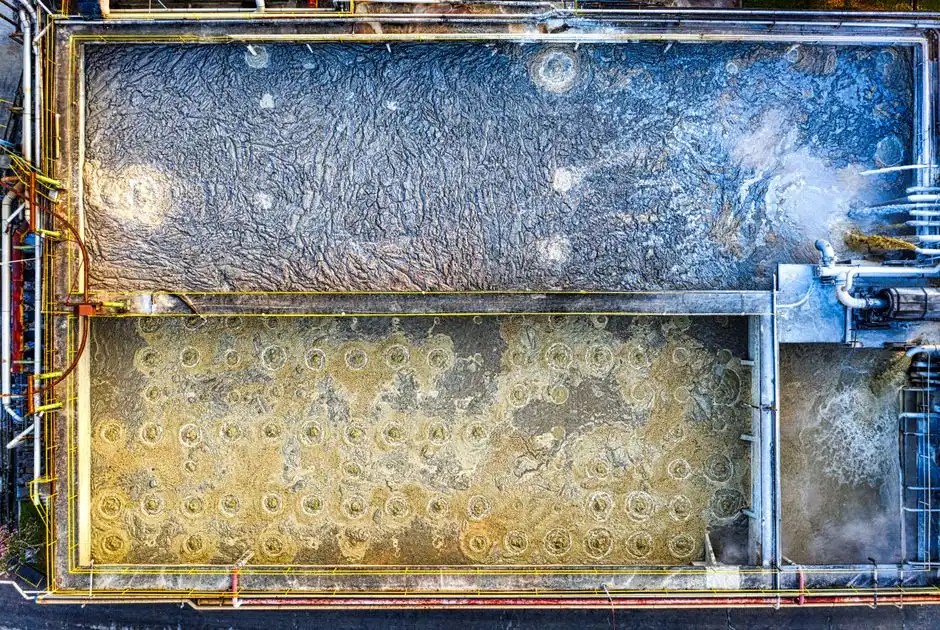
Seven criteria separate a credible packaged MBR supplier from a container-on-a-truck outfit. Apply the scorecard before signing, not after:
| Criterion | Pass condition | Red flag |
|---|---|---|
| Hotel reference list | ≥ 3 commissioned hotels of similar capacity | Generic "municipal" references only |
| Regional footprint | Moroccan or North African installations | No installations in the region |
| Membrane OEM | Named brand (Suez, Toray, HydropureWater DF, etc.) | "Proprietary" or white-label membrane |
| Local service partner | Engineer based in Casablanca-Rabat axis | Remote support only, no local boots |
| O&M training language | French or Arabic documentation and training | English-only O&M manuals |
| Spare parts lead time | ≤ 2 weeks for membrane modules and pumps | Sealed supply chain, single source |
| Membrane warranty | ≥ 3 years prorated on membrane modules | 12 months only, or "process warranty" only |
Vendors that cannot name the membrane brand, show a reference list, or provide a chemical-cleaning protocol document should be cut at the first review. Ask for the P&ID, the electrical load list, the membrane replacement schedule, and the CIP procedure as part of the technical submittal — a serious supplier will hand these over before the commercial discussion. A single supplier that can deliver UF polishing, sludge dewatering, and disinfection in one package — backed by stocked valves, instruments, and media and replacement membrane elements — simplifies O&M and compresses the spare-parts lead time to days rather than weeks.
Frequently Asked Questions
What capacity of packaged MBR do I need for a 200-room Rabat hotel?
For a 200-bed 4-5 star hotel at 70% occupancy, plan for 250-300 m³/day average flow and 325-450 m³/day peak, which matches the imemflo 200-bed 5-star reference plant running at 250 m³/day. Buy a packaged MBR rated to the peak, not the average, and prefer modular skids sized at 150-200 m³/day each so one train can stay on-line during CIP.
How much floor space does a packaged MBR take?
Roughly 0.3-0.5 m² per m³/day of capacity for a flat-sheet MBR package including headworks and sludge handling, so a 300 m³/day hotel plant fits inside 100-150 m² of ground or basement footprint. Hollow-fiber packages run 20-30% smaller at the same flow, but require more disciplined pretreatment.
How long do the MBR membranes last in a hotel duty cycle?
HydropureWater DF flat-sheet modules are rated for 5-7 years under typical hotel loading (FOG ≤ 50 mg/L, MLSS 8,000-12,000 mg/L) with routine CIP. Hollow-fiber modules from named OEMs (Suez, Dow, Mitsubishi) typically run 5-8 years. Membrane life shortens sharply if the upstream grease trap and bar screen are bypassed or undersized, so the headworks is the real warranty on membrane life.
Can the treated water be reused for garden irrigation in Rabat?
Yes. MBR effluent with UV or chlorine dioxide polishing meets the typical reuse envelope for landscape irrigation — TSS under 10 mg/L, fecal coliforms under 10² CFU/100 mL, and SAR/salinity within FAO 56 bands for ornamental irrigation. Confirm the final numbers against the current ONEE/SEE circular and WHO 2006 guidelines at design stage.
What OPEX band should a hotel owner budget for a packaged MBR?
For a 200-300 m³/day packaged MBR, OPEX typically lands in the 0.25-0.45 EUR/m³ band including energy (0.3-0.6 kWh/m³), membrane CIP chemicals, sludge hauling, and routine maintenance. Reuse-driven savings of 80,000-90,000 m³/year of offset municipal water can bring the net OPEX down materially. For the underlying biology and process flow behind these numbers, the MBR process explainer is the next read. For comparable hotel MBR projects in Latin America, the Mexico City hotel MBR guide and the Guadalajara hotel MBR guide show how the same selection logic transfers to other urban hotel markets.