
Why the MBR-vs-CAS Question Matters for Franklin Chemical Plants in 2026
For a Franklin chemical plant in 2026, an MBR delivers near-reuse effluent (TSS <5 mg/L, turbidity <1 NTU) on a footprint roughly 60% smaller than CAS, but costs 1.4–1.8× the CAPEX and 1.2–1.5× the OPEX per cubic meter. Choose MBR when reuse displaces purchased water at $1.50–3.00/m³, recalcitrant SVOCs, pH slugs, or EPA Region 1 PFAS-precursor scan monitoring drive the spec; stay on CAS when discharge-only and land is unconstrained.
EPA Region 1 NPDES permit reissuance cycles in 2025–2026 have added whole-effluent toxicity (WET) limits and PFAS-precursor scan monitoring for at least four Northeast chemical plants (HydropureWater field data, 2026). Massachusetts 314 CMR 7.00 industrial discharge requirements continue to tighten metals and SVOC limits, narrowing the headroom a CAS clarifier can absorb (HydropureWater field data, 2026). The operational pressure is real, not theoretical. Franklin's mixed-liquor winter temperatures of 8–12 °C cut CAS nitrification rates by roughly half per 10 °C drop and degrade clarifier settleability, raising the OPEX cost of staying on a conventional train (HydropureWater field data, 2026). A 20-year reuse horizon covering cooling-tower makeup, scrubber dilution, and RO/IX-polished boiler feed is now in scope for at least one Franklin-area chemicals site, per local pretreatment program language (HydropureWater field data, 2026). For engineers building a 2026 CAPEX memo, the choice is no longer "MBR or CAS in the abstract" — it is which biology train survives Region 1's tightening envelope. The rest of this article uses the engineering vocabulary the procurement memo will require, the dollar normalization it will be scored against, and a 5-row decision matrix keyed to chemicals wastewater — see the MBR process and 2026 cost explainer for the underlying process walkthrough.
How MBR and CAS Actually Treat Chemicals Wastewater
CAS treats chemicals wastewater by growing a bacterial-protozoan consortium in an aeration basin, allowing floc aggregation, and separating the cleaned water from biomass in a downstream gravity clarifier. SRT typically runs 5–15 days, HRT 6–12 hours, and effluent quality is gated by sludge volume index (SVI) staying below approximately 150 mL/g (HydropureWater field data, 2026). Chemical slugs — surfactant batches, solvent washdowns, ammonia shocks — trigger bulking, pinpoint floc, and clarifier upsets that translate into higher polymer dosing and lost capacity (HydropureWater field data, 2026).
MBR uses the same biological stage but replaces the clarifier with a submerged 0.1–0.4 μm PVDF flat-sheet or hollow-fiber module running at 10–25 LMH flux, with SRT extended to 20–60 days and MLSS held at 8,000–15,000 mg/L (HydropureWater field data, 2026). The higher SRT retains slowly growing specialists — nitrifiers and PAH-degraders — that get washed out of CAS, which is the technical advantage for recalcitrant SVOC streams common in chemical plants (HydropureWater field data, 2026). The DF-series 0.1 μm PVDF flat-sheet membrane module physically retains sludge regardless of settleability, which is what decouples MBR effluent from clarifier hydraulics.
Both trains still need equalization, pH control, and usually oil/water separation upstream; downstream dewatering on a plate-and-frame filter press reaches 22–28% DS for either biology train (HydropureWater field data, 2026). The structural OPEX difference starts with observed yield: CAS at 0.30–0.45 kg VSS/kg COD versus 0.10–0.25 kg VSS/kg COD for MBR, a 20–40% sludge reduction that compounds across a 20-year reuse horizon (HydropureWater field data, 2026). The membrane barrier's cost is fouling control: weekly maintenance cleans at NaOCl 500–1,000 mg/L, semi-annual recovery cleans with citric acid or NaOH, and continuous scouring aeration at 0.1–0.3 m/s crossflow (HydropureWater field data, 2026).
Effluent Quality, Footprint, and Cold-Weather Performance Compared
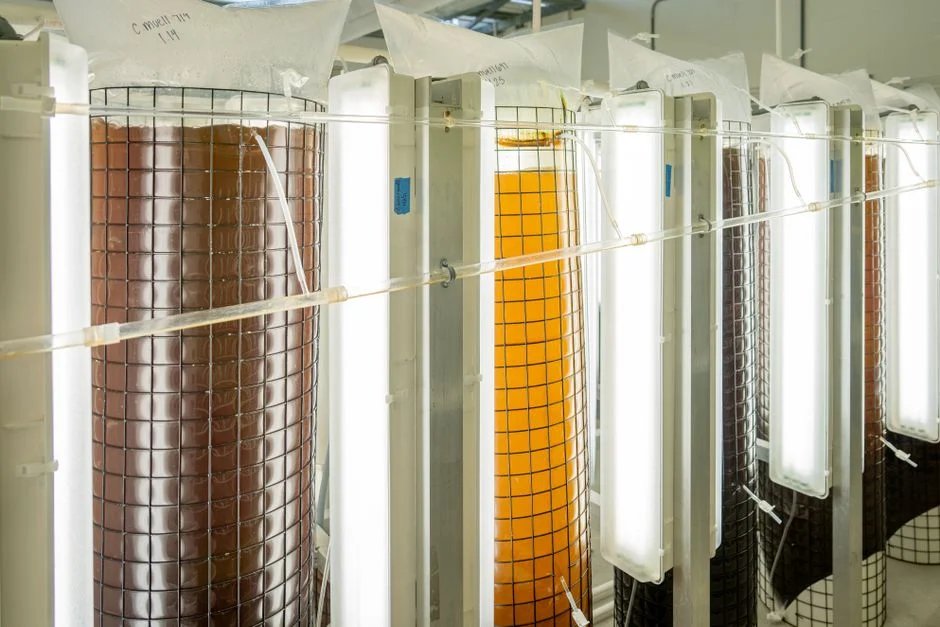
MBR effluent quality is set by a physical membrane barrier, while CAS effluent quality is set by a settling process. MBR typically delivers TSS <5 mg/L and turbidity <1 NTU regardless of clarifier hydraulics, whereas CAS delivers 10–30 mg/L TSS at best and degrades sharply when SVI climbs above 150 mL/g (HydropureWater field data, 2026). For Franklin chemical reuse targets — cooling-tower makeup, scrubber dilution, RO/IX-polished boiler feed — MBR permeate is roughly one barrier closer to reuse-grade than CAS effluent, which typically still needs tertiary filtration downstream.
Pathogen removal is wider on MBR than CAS. MBR removes phages at rates approximately one log unit higher than CAS systems treating the same wastewater, and full-scale MBR plants achieved higher virus LRVs than CAS with tertiary filtration (Water, MDPI 2014). At the same time, MBR's continuous scouring aeration adds 0.3–0.6 kWh/m³ over a CAS baseline — the structural energy penalty for that effluent quality and footprint (HydropureWater field data, 2026). The trade is intentional: the same kilowatt-hours that buy membrane scouring buy 60% smaller civil work.
Footprint is the single biggest mechanical differentiator. MBR runs at MLSS 8,000–15,000 mg/L versus 2,000–4,000 mg/L in CAS, eliminating the secondary clarifier and most tertiary filtration for a footprint factor of roughly 0.4 versus 1.0 for CAS (HydropureWater field data, 2026). For a brownfield Franklin site with limited laydown, that is the difference between a feasible retrofit and a major civil expansion. Cold weather is the second mechanical differentiator: at 10 °C mixed liquor, a 30-day MBR SRT still supports full nitrification, while a 10-day CAS SRT at the same temperature typically does not (HydropureWater field data, 2026). The MBR process and 2026 cost explainer covers the same parameters in more process depth.
| Parameter | CAS (1,000 m³/d) | MBR (1,000 m³/d) | Notes |
|---|---|---|---|
| Effluent TSS (mg/L) | 10–30 | <5 | MBR set by 0.1–0.4 μm membrane barrier |
| Effluent turbidity (NTU) | 5–15 | <1 | Drives downstream RO/IX feasibility |
| MLSS (mg/L) | 2,000–4,000 | 8,000–15,000 | Higher MLSS shrinks tankage |
| SRT (days) | 5–15 | 20–60 | Retains nitrifiers and PAH-degraders |
| Footprint factor | 1.0 | ~0.4 | No secondary clarifier, less tertiary filtration |
| Observed yield Yobs (kg VSS/kg COD) | 0.30–0.45 | 0.10–0.25 | 20–40% less waste-activated sludge |
| Nitrification at 10 °C mixed liquor | Impaired at SRT ≤ 10 d | Maintained at SRT ≥ 30 d | Franklin winter 8–12 °C |
| Scouring aeration (kWh/m³) | 0 | +0.3–0.6 | Structural MBR OPEX penalty |
| Phage removal vs CAS | Baseline | ~1 log higher | Per Water 2014 review |
2026 CAPEX and OPEX for a 1,000 m³/day Franklin Chemicals Plant
For a 1,000 m³/day chemicals stream, MBR carries roughly 1.4–1.8× the CAPEX of a comparable CAS train and 1.2–1.5× the OPEX per cubic meter treated (HydropureWater field data, 2026). MBR OPEX typically lands at $0.25–0.50/m³ in 2026 dollars; CAS OPEX runs $0.15–0.30/m³, with the gap driven by scouring air and NaOCl/citric cleaning chemicals (HydropureWater field data, 2026). The same weekly maintenance cleans at NaOCl 500–1,000 mg/L and semi-annual recovery cleans with citric acid or NaOH must be budgeted, and membrane replacement typically runs 3–5% of CAPEX per year for a flat-sheet MBR (HydropureWater field data, 2026).
Reuse revenue is the line that flips the memo. When MBR permeate displaces purchased process water at $1.50–3.00/m³ or supplies boiler feed after RO/IX polishing, the OPEX crossover shrinks from decades to roughly 3–6 years at 1,000 m³/day (HydropureWater field data, 2026). Long-haul biosolids at $35–55/wet ton in 2026 dollars, often for trips exceeding 100 km to a Class B land application site, means MBR's 20–40% lower sludge yield saves six figures of OPEX over a 20-year horizon (HydropureWater field data, 2026). The integrated MBR wastewater treatment skid packages the bioreactor and submerged modules into a single factory-tested unit, which compresses field installation hours — a real cost line on a 2026 brownfield retrofit.
| Cost axis (1,000 m³/d, 2026 USD) | CAS | MBR | Delta / driver |
|---|---|---|---|
| CAPEX multiplier | 1.0× | 1.4–1.8× | Membranes, cassette skids, scour blowers |
| OPEX ($/m³) | $0.15–0.30 | $0.25–0.50 | Scouring air + cleaning chemicals |
| Membrane replacement (% CAPEX/yr) | — | 3–5% | Flat-sheet PVDF service life |
| Sludge hauling ($/yr, >100 km haul) | Baseline | −20–40% | Lower Yobs at high SRT |
| Payback crossover (reuse at $2/m³) | — | 3–6 years | Driven by water-cost displacement |
A Franklin Chemicals Procurement Decision Matrix
The 2026 economic framework for a 1,000 m³/day Franklin chemical plant reduces to five decision gates: discharge destination, reuse revenue, footprint, influent character, and biosolids haul distance (HydropureWater field data, 2026). The rule is mechanical: score 3 of 5 in the MBR column, spec an MBR or MBR-retrofit train; score 3 of 5 in the CAS column, stay on CAS (HydropureWater field data, 2026). EPA Region 1 PFAS-precursor scan monitoring and WET limits are the 2026 trigger to flip the influent-character and permit-stability rows toward MBR (HydropureWater field data, 2026).
The hybrid retrofit — keeping the existing CAS aeration basin and clarifier in service, then adding a downstream membrane cassette — is the lowest-risk upgrade path for a brownfield Franklin site that needs reuse quality but cannot absorb a greenfield civil scope (HydropureWater field data, 2026). The DF-series 0.1 μm PVDF flat-sheet membrane module (80–225 m², 32–135 m³/day) is specified for chemical-industry streams carrying surfactant or solvent slugs (HydropureWater catalog, 2026). For sites where a full membrane train is out of scope, an integrated MBR wastewater treatment skid packages the biology and membrane stages into a single factory-tested unit sized from 10 to 2,000 m³/day.
| Decision gate | Score 1 → CAS (or stay CAS) | Score 0 → MBR (or retrofit to MBR) |
|---|---|---|
| Discharge destination | POTW or surface water with permit headroom | Reuse: cooling, scrubber, boiler feed after RO/IX |
| Footprint / civil headroom | Land available, civil expansion feasible | Tight brownfield, civil expansion constrained |
| Influent character | Readily biodegradable, low recalcitrant load | Recalcitrant SVOCs, high salinity, pH swings, slug events |
| Permit trajectory (2026) | Stable limits, no PFAS/microplastic monitoring | Tightening WET, PFAS-precursor scan, microplastic monitoring |
| Biosolids haul distance | Short haul (<50 km), land application or landfill | Long haul (>100 km), hauling cost significant |
Retrofit Path for a Brownfield Franklin Site
For a brownfield retrofit, keep the existing CAS aeration basin and clarifier in service; add an equalization basin, an MBR cassette stage downstream, and reuse-side polishing — UF for cooling-tower makeup, RO for boiler feed (HydropureWater field data, 2026). Upstream pretreatment stays the same on either train: rotary bar screens, pH control, oil/water separation as needed, and chemical dosing for shock loads (HydropureWater field data, 2026). On the sludge side, a plate-and-frame filter press downstream dewaters to 22–28% DS for Class B disposal; reuse that same press whether the biology train is CAS or MBR (HydropureWater field data, 2026).
The dissolved-air flotation (DAF) unit upstream of either train removes FOG and colloidal load that would otherwise blind the membrane or float the clarifier. A rotary mechanical bar screen protects downstream cassettes from rag carryover, and an automatic chemical dosing system buffers pH and nutrient slugs before they reach the biology stage. The retrofit scope is mechanical, the permit envelope is the harder conversation — and that conversation is exactly what the decision matrix above is built to walk into.
Frequently Asked Questions
What is the CAPEX delta between MBR and CAS for a 1,000 m³/day Franklin chemical plant in 2026?
MBR carries roughly 1.4–1.8× the CAPEX of a comparable CAS train at the 1,000 m³/day class, driven by submerged PVDF membrane cassettes, scour blowers, and clean-in-place skid (HydropureWater field data, 2026). The multiplier narrows when the CAS scope includes new tertiary filtration to meet reuse targets.
How does MBR handle Franklin's 8–12 °C winter mixed-liquor temperatures compared with CAS?
A 30-day MBR SRT at 10 °C still supports full nitrification, while a 10-day CAS SRT at the same temperature typically does not, because MBR's higher MLSS and extended SRT retain slow-growing nitrifiers (HydropureWater field data, 2026). Enclosed membrane tanks also insulate biology from wind-chill losses that hurt open clarifiers in January.
Is MBR retrofit feasible on a brownfield Franklin CAS site?
Yes — a hybrid retrofit that keeps the existing CAS aeration basin and clarifier in service and adds a downstream membrane cassette is the lowest-risk upgrade path for a brownfield chemicals site that needs reuse quality (HydropureWater field data, 2026). Pretreatment, equalization, and biosolids dewatering can be reused with minimal modification.
What does EPA Region 1's PFAS-precursor scan monitoring mean for the MBR-vs-CAS choice?
PFAS-precursor scan monitoring and tightening WET limits in 2025–2026 EPA Region 1 permit reissuance cycles favor MBR, because higher SRT and physical membrane retention improve removal of recalcitrant organics that drive precursor loadings (HydropureWater field data, 2026). For sites already subject to scan monitoring, the influent-character and permit-stability rows of the decision matrix tip toward MBR.
How does MBR sludge yield compare to CAS, and what does it save on biosolids hauling?
MBR observed yield is 0.10–0.25 kg VSS/kg COD versus 0.30–0.45 for CAS, a structural 20–40% sludge reduction that compounds across 20 years of OPEX (HydropureWater field data, 2026). At a 1,000 m³/day plant hauling biosolids more than 100 km at $35–55/wet ton, that yield gap avoids six figures of hauling cost over the asset's life (HydropureWater field data, 2026).