
Why galvanizing sludge is both a liability and a metal resource
Galvanizing wastewater sludge is classified as hazardous waste and can contain up to 18 wt.% zinc and 8 wt.% iron, making it a candidate for metal recovery rather than landfill. A 2026 treatment train typically combines hydroxide precipitation and lamella clarification, sulfuric or sodium-hydroxide leaching (commonly 20% H2SO4 at 50–60 °C for 4–8 h, or 20% NaOH at 60 °C for 8 h), and plate-and-frame filter press dewatering to a 60–70% moisture cake, with Zn recovery to battery- or smelter-grade product.
That dual identity — hazardous waste on one side, recoverable metal on the other — is what makes galvanizing sludge a 2026 engineering problem rather than a pure disposal line item. Hydrometallurgical treatment of sludge sampled from six galvanizing plants in 2020–2022 produced a residue with up to 18 wt.% Zn and 8 wt.% Fe, confirming that the contained metal value is not theoretical (MDPI Metals 2022, six-plant campaign, 2020–2022). Under the European Waste Catalogue, neutralization sludge and filter cakes are listed as hazardous because of the potential release of metals, and analogously, US generators must run Toxicity Characteristic Leaching Procedure (TCLP) screening to demonstrate non-hazardous status before any non-hazardous waste path is even an option.
Compliance baselines themselves are shifting in 2026. The EPA's 19 Sept 2026 rescission of the 2022 PFAS wastewater permit guidance is the most visible signal that federal rule-of-the-road documents are being rewritten, which puts more pressure on plant engineers to document metal-sludge handling with first-principles chemistry rather than off-the-shelf permit templates. Add tightening state-level odor and discharge enforcement and the landfill-only option becomes harder to defend on either cost or compliance grounds.
How galvanizing wastewater sludge is generated
Galvanizing rinse water carries dissolved zinc and iron out of the process bath, and most of what reaches the treatment plant ends up as hydroxide sludge. In hot-dip lines, spent acid pickling (HCl or H2SO4) generates a high-iron, low-pH stream that gets co-treated with the alkaline Zn-bearing rinses. In electro-galvanizing, drag-out from the zinc electrolyte is the dominant Zn load, typically an acidic Zn/Cl or Zn/SO4 stream that gets neutralized to precipitate the metal as Zn(OH)2 and Fe(OH)3.
Treatment-plant pH control is where the sludge actually forms. Lime or NaOH dosing to pH 8–9 is the standard precipitation window: high enough to drop both metals as hydroxides, low enough to keep the precipitate filterable. The MDPI 2022 study pre-conditioned every sludge sample by drying at 105 °C and crushing to a fine fraction before leaching — that is the same drying/grinding step a plant lab would use to characterize a filter cake for moisture, Zn, and Fe.
For engineers cross-referencing rinse-water chemistry, the same neutralization-and-clarifier pattern shows up in the adjacent phosphating wastewater treatment buyer's guide, where the metal-bearing rinse stream follows the same hydroxide-precipitation → thickening → filter cake pathway.
Pre-treatment and dewatering before any metal-recovery step
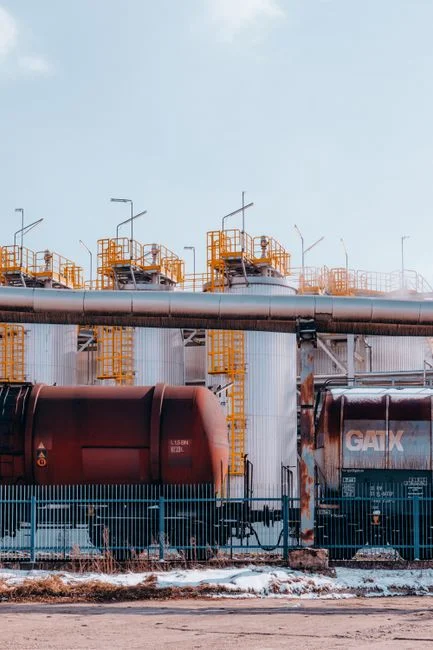
Upstream dewatering is what makes downstream leaching or landfill transport economically possible. A lamella clarifier with sludge recirculation, designed for 20–40 m/h surface loading, is the standard first separation for the hydroxide flocs generated at pH 8–9. Underflow solids then feed a plate-and-frame filter press operating at 6–10 bar with a cationic polymer conditioner, producing a 60–70% moisture cake and cutting sludge mass roughly 4–6× compared with thickened sludge alone.
Zn/Fe hydroxide sludge dewaters poorly without conditioning, so PLC-controlled chemical dosing of cationic polymer is a hard prerequisite, not an option. The dose-response is what an operator tunes: under-dose leaves a wet, slow-filtering cake; over-dose floats fines and clogs the cloth. Skid-mounted dosing systems for caustic, polymer, and pH adjuster are typically quoted alongside the press because dosing errors are the single biggest driver of cake-moisture excursions in hydroxide service.
For sizing, the 2017-published HydropureWater filter press range (1–500 m² filtration area, manual to PLC) is a useful envelope: small electro-galvanizing lines typically land in the 5–30 m² range, mid-size hot-dip lines in the 30–100 m² range, and centralized sludge-processing hubs in the 100–500 m² range. Plate count, chamber volume, and cake thickness set hydraulic throughput, and the 1–500 m² envelope is the most direct sizing anchor a procurement engineer can give a vendor.
| Unit operation | Typical parameter | 2026 design value | Notes |
|---|---|---|---|
| Lamella clarifier | Surface loading | 20–40 m/h | First solids separation for hydroxide flocs |
| Filter press | Filtration area | 1–500 m² | Sized to dry-solids throughput |
| Filter press | Operating pressure | 6–10 bar | Required for 60–70% cake moisture target |
| Filter press | Cake moisture | 60–70% | Baseline for transport or downstream leach |
| Polymer dosing | Cationic polyacrylamide | Tuned by jar test | Under-dosing raises cake moisture; over-dose blinds the cloth |
| pH control | Precipitation pH | 8–9 | Zn/Fe co-precipitation as hydroxides |
Vendors typically quote the upstream train as a lamella clarifier for primary hydroxide thickening, a plate-and-frame filter press for hydroxide cake dewatering, and a PLC-controlled chemical dosing for pH and flocculant as a single integrated package, because changes in clarifier underflow density cascade directly into press cycle time and cake moisture.
Hydrometallurgical recovery: acid leaching vs alkaline leaching
The MDPI 2022 study tested both acid and alkaline leaching on dried, crushed sludge from six plants, which is the cleanest 2022–2026 dataset an engineer can use to choose between the two routes. The acid route (100 g dried sludge in 400 mL 20% H2SO4, 50 °C, 5 h, with 40 mL H2O2 oxidant) dissolves the bulk of both Zn and Fe into the liquor. Alternative acid conditions reported in the same paper include 0.5 M H2SO4 at 20 °C, 1 M H2SO4 at pH 1.5 and 25 °C for 1 h, 0.5 M H2SO4 at pH 4 with L:S 10:1 at 20 °C for 60 min, and 3 M HNO3 + 2 M HCl at 80 °C for 3 h. Each variant trades reagent cost against Fe co-dissolution and downstream iron-removal load.
The alkaline route is the Zn-selective option. The MDPI data used 125 g sludge in 620 mL of 20% NaOH or 20% KOH at 60 °C with mechanical mixing, sampling at 4 h and 8 h, and concluded that 8 h is adequate for the zinc transition into the leach, with no significant difference between NaOH and KOH performance. After alkaline leach, zinc is typically recovered by precipitation with ammonia or caustic to drop ZnO or Zn(OH)2, a product that downstream smelters and battery-grade ZnSO4 producers will accept with minimal further refining.
The trade-off is straightforward: acid gives higher total metal yield but loads the downstream with iron, forcing an extra Fe-removal step before electrowinning or precipitation; alkaline is Zn-selective, produces cleaner downstream precipitates, and tolerates a wetter cake, but requires tighter reagent control and longer residence time. A plant picking between them in 2026 is really picking between "high yield, more separation hardware" and "lower yield, simpler downstream."
| Parameter | Acid route (H2SO4) | Alkaline route (NaOH / KOH) |
|---|---|---|
| Reagent concentration | 20% H2SO4 (≈ 0.5–1 M variants documented) | 20% NaOH or 20% KOH |
| Temperature | 20–80 °C depending on variant | 60 °C |
| Residence time | 1–5 h | 4–8 h (8 h adequate per MDPI 2022) |
| Liquid-to-solid ratio | 4:1 (100 g / 400 mL) or 10:1 (pH 4 variant) | ~5:1 (125 g / 620 mL) |
| Oxidant | 40 mL H2O2 per batch | None required |
| Selectivity | Dissolves Zn and Fe together | Zn-selective; Fe stays in residue |
| Downstream step | Fe removal, then electrowinning or precipitation | Direct NH3 or caustic precipitation to ZnO / Zn(OH)2 |
| Best fit | High total metal yield, integrated Zn+Fe recovery | Zn-only recovery, cleaner precipitates, simpler downstream |
Choosing the right equipment train for a 1–20 t/day sludge throughput
For a plant in the 1–20 t/day dry-sludge band, the equipment train is the same upstream-to-downstream sequence scaled to throughput. A lamella clarifier in the 10–200 m³/h capacity range handles primary hydroxide thickening; a DAF unit is the standard fallback when the rinse stream carries oils or flotation aids that would otherwise overload the clarifier. The filter press is sized at roughly 0.5–2 m² of filtration area per 100 kg dry solids/day for hydroxide cake, and PLC-controlled presses reduce operator exposure to Zn-bearing liquor and stabilize cycle time across shifts.
The chemical dosing skid carries caustic, polymer, and the leach reagent (H2SO4 or NaOH), and PLC-controlled injection is the 2026 baseline because manual dose adjustments are the single largest source of cake-moisture and leach-yield variability. For the optional Zn-recovery loop, an FRP-lined, 60 °C jacketed leach reactor feeds either an electrowinning cell or a simple precipitation tank; current density is set by the cell designer once the feed Zn concentration is known, and it should not be specified in advance.
| Equipment | Capacity / sizing anchor | Function in the train |
|---|---|---|
| Lamella clarifier | 10–200 m³/h | Primary hydroxide thickening |
| DAF unit | Sized to peak oily rinse flow | Fallback for oil-laden rinse streams |
| Plate-and-frame filter press | 0.5–2 m² per 100 kg dry solids/day | Dewatering to 60–70% cake moisture |
| Chemical dosing skid | PLC-controlled, multi-stream | Caustic, polymer, H2SO4/NaOH reagent |
| Leach reactor (optional) | FRP-lined, 60 °C jacketed | Alkaline or acid leach, 4–8 h residence |
| Zn-recovery unit (optional) | Electrowinning cell or precipitation tank | ZnO, Zn(OH)2, or ZnSO4 product |
When quoting a full train, most vendors will combine a DAF unit for oil-laden rinse streams, a plate-and-frame filter press for hydroxide cake dewatering, and a PLC-controlled chemical dosing for pH and flocculant as the standard upstream package, with the leach and recovery loop quoted separately as a recovery option.
Decision framework: landfill vs on-site recovery vs full ZLD
The 2026 go/no-go for a galvanizing plant comes down to sludge volume, metal content, and local enforcement pressure. Landfill remains the baseline: hazardous-waste disposal is technically available, but the MDPI 2022 paper explicitly notes a strong desire across the European industry to avoid landfill impacts, and US generators face TCLP screening plus rising landfill surcharges on hazardous waste. On-site hydrometallurgical recovery is justified above roughly 200–500 t/yr of dry sludge where the contained Zn supports reagent and CapEx payback; below that band, landfill is usually cheaper once full lifecycle cost is counted. Full zero-liquid-discharge (ZLD) is relevant only for sites with zero-discharge permits, acute water-stress constraints, or strict local discharge limits, and it carries the highest CapEx and energy demand of the three options.
Two 2026 enforcement signals make the proactive-treatment case stronger. The 17 Sept 2026 Maryland odor-control bill and the 22 Sept 2026 California disaster declaration both point to tighter local enforcement on industrial wastewater handling, including metal-bearing streams. Plants that document a treatment train with measured cake moisture, TCLP-passing residue, and (where applicable) recovered Zn product are in a much stronger position with regulators than plants running a pure landfill-disposal path.
| Option | When it fits (2026) | CapEx / OpEx posture | Compliance risk |
|---|---|---|---|
| Landfill (off-site) | < 200 t/yr dry sludge; no permit pressure | Low CapEx, rising OpEx (gate fees, surcharges) | Hazardous-waste classification, TCLP screening, public exposure |
| On-site hydromet recovery | 200–500+ t/yr dry sludge; Zn content supports payback | Mid CapEx, reagent + polymer OpEx | Lower landfill volume; documented Zn product |
| Full ZLD | Zero-discharge permit or acute water-stress site | High CapEx, high energy OpEx | Lowest discharge risk, highest permit value |
For a side-by-side look at how similar sludge-handling decisions play out in a different industry, the industrial sludge dewatering and handling guide walks through the same upstream-to-disposal logic in beverage wastewater, with a comparable dewatering-and-disposal matrix.
Frequently Asked Questions
How is galvanizing wastewater sludge treated in 2026?
The 2026 train is hydroxide precipitation at pH 8–9, lamella clarification, plate-and-frame filter press dewatering to 60–70% cake moisture, and either sulfuric or alkaline leaching followed by zinc precipitation or electrowinning. The MDPI 2022 acid-leach baseline (100 g sludge in 400 mL 20% H2SO4, 50 °C, 5 h, with 40 mL H2O2) is the most-cited 2022 anchor for the acid route; the same paper documents 20% NaOH at 60 °C for 8 h as the alkaline alternative.
What is the typical zinc content of galvanizing plant sludge?
Eight to eighteen wt.% zinc is the documented range, with up to 8 wt.% iron in the same samples. The MDPI Metals 2022 study sampled six galvanizing plants between 2020 and 2022 and reported the 18 wt.% Zn / 8 wt.% Fe ceiling; per-plant values vary with production campaign and sludge age.
Is galvanizing sludge hazardous waste?
Yes, under the European Waste Catalogue, neutralization sludge and filter cakes are listed as hazardous because of the potential release of metals; in the US, generators must run TCLP screening to confirm hazardous or non-hazardous classification. Local rules vary by state and by generator, so any compliance position should start with a TCLP result on the actual filter cake rather than a generic classification.
Which filter press works best for metal hydroxide sludge?
Plate-and-frame filter presses are the workhorse, operated at 6–10 bar with cationic polymer conditioning, targeting 60–70% cake moisture. Belt presses are sometimes used on lower-solids streams, but hydroxide cake above 10–15% dry solids is reliably handled only by plate-and-frame or recessed-chamber designs.
Can zinc be recovered profitably from galvanizing sludge?
Profitability is directional, not guaranteed, and depends on throughput. Above roughly 200–500 t/yr of dry sludge with the 8–18 wt.% Zn range documented by MDPI 2022, alkaline leach followed by precipitation to ZnO or Zn(OH)2 typically pencils out; below that band, reagent and CapEx costs erode the case. Plant-specific factors (local landfill gate fees, Zn market price, electricity cost for any electrowinning step) drive the final number.