Why Nottingham Industrial Dischargers Are Rethinking Their ETP in 2026
The Environment Agency's 2025 permit for Toton Sewage Treatment Works (STW) caps phosphorus at 1 mg/L on discharges entering the Severn Trent catchment, with sector-specific limits of COD below 125 mg/L and TSS below 35 mg/L (per HydropureWater's Nottingham industrial wastewater engineering guide). The same EA enforcement data published in 2024 shows penalties of £10,000–£100,000 per violation, plus enforcement notices and the credible threat of plant shutdown for repeat offenders. For a Nottingham food processor that drifts above 1 mg/L phosphorus for a single quarter, a six-figure fine is not a hypothetical — it is a line item on a worst-case budget.
Practical risk sits at the intersection of two pressures. First, the regulator is moving: Severn Trent's catchment plan anticipates a tightening toward 0.5 mg/L phosphorus once AMP8 upgrades land, so any ETP commissioned today is likely to be non-compliant within 10 years unless it is sized for the next limit. Second, modular packaged systems sized in 50 m³/h increments have shifted the economics — a packaged ETP is now within reach of mid-sized processors who would previously have absorbed permit risk rather than capital.
Choosing an effluent treatment plant in Nottingham in 2026 is therefore less about buying a reactor and more about building a defensible compliance case: influent data, a permit-driven process train, and a CAPEX/OPEX envelope that converts fine avoidance into a payback number the finance team can sign.
Nottingham Influent Profiles vs EA Permit Limits
Three industrial profiles dominate Nottingham trade-effluent loadings into Severn Trent: food processing, metals and chemicals, and textile finishing. Each carries a different signature contaminant and a different EA ceiling, so the first job is to map your own site against the table below before any unit operation is selected. The numbers come from the HydropureWater 2026 Nottingham spec guide and Environment Agency discharge consent templates.
| Sector | Typical Influent Signature | EA Discharge Ceiling |
|---|---|---|
| Food processing | FOG 100–800 mg/L; high organic load; intermittent wash-out spikes | COD <125 mg/L, TSS <35 mg/L, P <1 mg/L |
| Metals & chemicals | Heavy metals 1–50 mg/L; cyanide; low pH excursions | Combined metals <0.5 mg/L, pH 6–9, P <1 mg/L |
| Textile finishing | ADMI color, surfactants 50–300 mg/L, hot dye-bath discharges | COD <150 mg/L, color <50 ADMI, P <1 mg/L |
Two terms need quick definition for procurement readers. FOG is fats, oils and grease — the floatable layer that DAF units target. ADMI color is a spectrophotometric method (American Dye Manufacturers Institute) used to quantify true color in filtered effluent; it is what Severn Trent reads, not "the water looks brown." COD (chemical oxygen demand) measures total oxidisable load, including non-biodegradable fractions; BOD (biochemical oxygen demand) measures only the biodegradable portion. Permit limits are almost always written in COD because it is faster to test and harder to game.
No table replaces a real audit. Run a two-week composite sampling campaign on every shift pattern, including the worst-case wash-down, before committing to a train. Auto-samplers and replacement filter membranes for that work are stocked on the HydropureWater parts and media reference page.
How an ETP Train Is Built: From Bar Screen to Discharged Effluent

A compliant train for a Nottingham industrial site is conventionally a five-stage sequence. Solids removal first: a rotary bar screen (typically 2–6 mm aperture) protects downstream pumps and membranes from ragging. Flow smoothing second: an equalisation tank with mixing and aeration damps the spikes that would otherwise knock out the biological stage. Primary separation third: a HydropureWater DAF system for FOG and floatables, or a lamella clarifier where FOG is low and the load is mostly settleable solids. Biological treatment fourth: MBR, packaged A/O (WSZ) or conventional activated sludge, depending on flow and footprint. Polishing and disinfection fifth: chemical precipitation for residual phosphorus, pH trim, and chlorine or UV before the consent point.
Where the train has to reach reuse quality rather than just consent quality, academic work confirms that nanofiltration polishing on MBR permeate is a recognised route to Water Framework Directive-class effluent, with coagulation–flocculation as the standard workhorse for color and colloidal metals removal (Schrader, University of Twente; Applied Sciences 2024, 14(5):2184). For sites with land available, constructed-wetland polishing is a low-energy tertiary option for trace organics, with documented micropollutant removal across the Wageningen thesis literature (Lei, Wageningen UR, doi:10.18174/575408). The rotary mechanical bar screen up front and the DAF in the middle are the two unit operations that decide whether everything downstream stays in spec.
DAF vs MBR vs WSZ: Which Technology Fits a Nottingham Permit
Three packaged technologies cover most Nottingham industrial flows between 1 m³/h and 2,000 m³/day. They are not competing for the same job — they sit at different points in the train — but a procurement lead is usually choosing between an MBR-centric build, a packaged WSZ build, or a DAF-fronted biological system. The decision hinges on flow, footprint, and what the consent actually requires.
| Criterion | DAF | MBR (Integrated / DF) | WSZ Packaged A/O |
|---|---|---|---|
| Flow range | 4–300 m³/h | 10–2,000 m³/day | 1–80 m³/h (modular) |
| Primary target | FOG, TSS, floatables, some particulate COD | Soluble COD, ammonia, TSS to <5 mg/L | COD, ammonia, TSS; bundled in a single buried tank |
| Footprint | Small (skim tank area) | ~60% smaller than CAS at equivalent load | Buried; zero above-ground footprint |
| Soluble P removal alone | <30% — pair with chemical dosing | Limited — pair with chemical dose or RO | Limited — pair with chemical dose |
| Operator skill | Low–medium | Medium (membrane cleaning, MLSS control) | Low (pre-commissioned, PLC-locked) |
| Best-fit sector | Food, dairy, meat — pre-treatment | Metals, chemicals, food — discharge- or reuse-grade | Small food sites, hotels, hospitals, depots, remote yards |
The HydropureWater DAF system is a front-end workhorse: it strips FOG and floatables, but on its own it leaves soluble phosphorus largely untouched, so the 1 mg/L Toton limit has to be closed downstream by chemical precipitation. The HydropureWater integrated MBR system and the DF flat-sheet PVDF module (0.1 μm nominal pore size) deliver near-reuse effluent and cut civil footprint by roughly 60% against conventional activated sludge — the right answer when the site is constrained or the consent is tight. The WSZ underground packaged plant covers 1–80 m³/h and can be trailer-mounted for mobile deployment, which is why it dominates smaller food processors, hotel laundries, and remote depots across the East Midlands. For a deeper DAF vs lamella debate in food-and-beverage, the DAF vs clarifier for food and beverage wastewater piece walks through the same logic in a U.S. permit context.
Phosphorus, Heavy Metals, and FOG: The Unit Operations That Decide Compliance
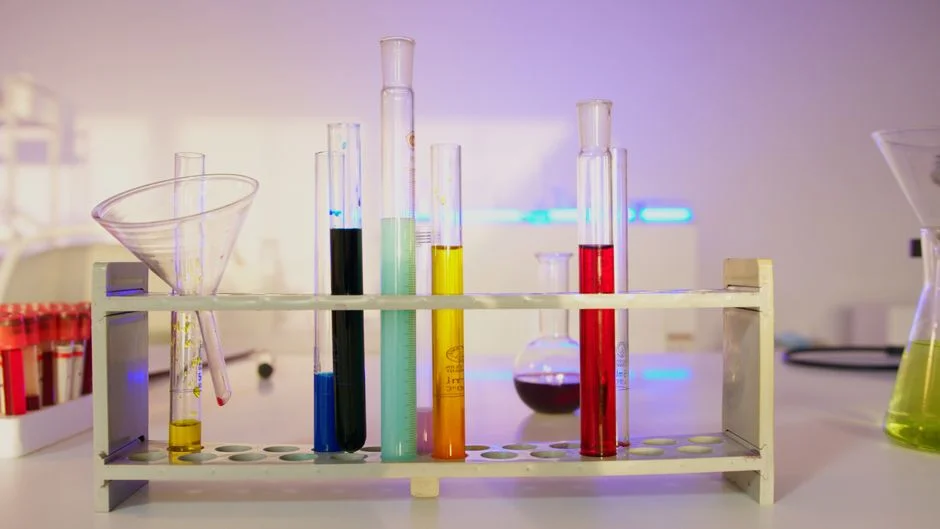
Three contaminant families trigger the majority of EA notices at Nottingham industrial sites, and each has a different unit-operation answer.
Phosphorus. Chemical precipitation is the workhorse: ferric chloride (FeCl₃) or polyaluminium chloride (PACl) dosed through a HydropureWater automatic chemical dosing skid (rated 50–300 m³/h) takes residual soluble P from typical biological effluent (3–8 mg/L) down past 1 mg/L. Expect a 30–50% increase in chemical sludge volume versus undosed operation, and budget a HydropureWater plate and frame filter press downstream to keep that sludge at 22–28% dry solids for off-site disposal. For a parallel comparison of dewatering options, the filter press vs decanter centrifuge comparison is the relevant engineering read.
Heavy metals. pH adjustment to 8.5–9.5 followed by coagulation–flocculation (the standard hybrid-materials route documented in Applied Sciences 2024, 14(5):2184) drops combined metals below the 0.5 mg/L ceiling that the EA applies to Nottingham metals and chemical permit holders. A high-efficiency sedimentation tank or MBR downstream captures the floc; supernatant polishing on a sand or multimedia filter is belt-and-braces for sites close to the consent line.
FOG. DAF remains the primary unit op, with a lamella clarifier as a polish step when the food processor is operating close to the 125 mg/L COD ceiling and cannot afford floatable carry-over into the biological stage.
CAPEX, OPEX, and ROI: Budgeting an ETP in Nottingham
The honest way to budget an ETP in 2026 is to anchor on a representative mid-sized build and then stress-test the deltas. The numbers below are drawn from the HydropureWater 2026 Nottingham engineering guide and are consistent with the wider UK packaged-plant market.
| Build Profile | Flow | CAPEX (Equipment + Install) | OPEX | Notes |
|---|---|---|---|---|
| Packaged WSZ (modular, buried) | 50–300 m³/h | £100K–£600K | £0.40–£0.70/m³ | ~20–30% below fixed MBR builds; expandable in 50 m³/h steps |
| MBR system, 100 m³/h (worked midpoint) | 100 m³/h | £250,000–£400,000 | £0.50–£0.80/m³ | Includes DF membrane modules, blower room, chemical dose skid |
| DAF-only retrofit (front of existing ASP) | Site-specific | £60K–£180K | £0.05–£0.10/m³ (polymer + power) | Relevant where ASP is already consented and compliant for COD/N |
The ROI argument does not rest on water-revenue alone. A single avoided EA violation in the £10,000–£100,000 band (per EA 2024 enforcement data) covers a meaningful share of incremental CAPEX over a 5–10-year horizon, and modular scalability in 50 m³/h increments has been shown to cut long-term compliance risk by ~40% versus fixed infrastructure (HydropureWater field data, 2026). Add avoided trade-effluent volumetric charges from Severn Trent — typically £1.50–£3.00/m³ above a rising-block tariff — and the payback window for the modular build narrows to 3–6 years for most mid-sized food and metal-finishing sites. Comparable plant economics in a different UK permit context are covered in the Effluent Treatment Plant in Newcastle — 2026 buyer's guide.
Frequently Asked Questions
What are the EA discharge limits for industrial wastewater in Nottingham?
The Environment Agency's 2025 permit for Toton STW sets a 1 mg/L phosphorus limit on discharges entering the catchment. Sector-specific caps include COD below 125 mg/L and TSS below 35 mg/L for food processing, combined heavy metals below 0.5 mg/L and pH 6–9 for metals and chemical sites, and color below 50 ADMI for textile finishers (per the EA 2025 Toton consent and the HydropureWater 2026 Nottingham guide).
How much does an MBR system cost for a 100 m³/h facility in Nottingham?
CAPEX for a 100 m³/h MBR system using the HydropureWater integrated MBR system with DF flat-sheet PVDF modules typically lands between £250,000 and £400,000 installed. OPEX runs £0.50–£0.80/m³, covering blower energy, chemical dose, membrane cleaning and periodic replacement over a 8–10 year membrane life.
Can a DAF system meet the 1 mg/L phosphorus limit without chemical dosing?
No. The HydropureWater DAF system removes less than 30% of soluble phosphorus because its mechanism (buoyancy of attached air bubbles) targets floatable and particulate matter, not dissolved phosphate. Chemical dosing with ferric chloride or polyaluminium chloride on an automatic dosing skid is required to precipitate residual P to below 1 mg/L, with a 30–50% increase in chemical sludge volume that has to be handled downstream.
What penalties apply for exceeding EA limits at a Nottingham site?
EA enforcement data for 2024 shows fines of £10,000–£100,000 per violation, escalating to enforcement notices, prosecution, and plant shutdown for repeat or severe offences. Even one avoided violation in a single year is material against the incremental CAPEX of a modular ETP build.
How can I future-proof my wastewater system for a 0.5 mg/L phosphorus limit?
Specify modular packaged capacity in 50 m³/h increments — the WSZ underground packaged plant and skid-mounted MBR modules both allow this — and oversize the chemical dose and sludge-dewatering stages to handle the higher coagulant demand and 30–50% greater sludge volume that a tighter P limit implies. Severn Trent's AMP8 catchment plan is widely expected to move toward 0.5 mg/L, and modular builds cut long-term compliance risk by roughly 40% versus fixed infrastructure (HydropureWater field data, 2026).