
What a Packaged MBR STP Is and Why Hotels Use It
A packaged MBR STP combines activated-sludge biological treatment with submerged ultrafiltration membranes in a single factory-built tank or skid, eliminating the secondary clarifier and producing reuse-grade effluent in a footprint roughly 50–70% smaller than a conventional activated-sludge plant of the same capacity (Scribd MBR design basis, 2025-09). For a hotel, that footprint compression matters: the plant room is usually below the porte-cochère or on a basement mezzanine where every square meter costs revenue.
Hotel wastewater is not domestic sewage in the municipal sense. It carries kitchen fats, oils, and grease (FOG), laundry surfactants, pool backwash spikes, and a guest-driven diurnal curve that swings from near-zero at 03:00 to full design flow at 08:30 and again at 19:00. Imemflo's 250 m³/d hollow-fibre MBR installed at a 200-bed 5-star hotel has run on that load profile since start-up, and the reference plant confirms that an MBR with proper equalization absorbs the swing without effluent excursions. In a Japanese setting, the same architecture can be delivered as a packaged MBR wastewater treatment system sized for 100–300 m³/d.
The reuse case is what justifies the MBR premium over a cheaper sequencing batch reactor (SBR) or moving-bed biofilm reactor (MBBR). Treated water polished to BOD5 <5 mg/L and turbidity <2 NTU can be routed to four on-site destinations: toilet flushing, landscape irrigation, cooling-tower makeup, and laundry feed. Imemflo cites 90–95% removal of harmful substances in its hotel MBR train, which is the operating envelope Japanese hotel owners need to write a credible water-reuse business case.
Sizing the MBR for a Nagoya Hotel: Flow, Load, and Peak Factor
Daily flow for a hotel MBR is back-calculated from occupancy, not from pipe diameter, and the working formula is: Daily flow (m³/d) = rooms × guests/room × L per guest-day × occupancy ÷ 1000. Apply 250–300 L per guest-day as a starting point for a full-service Nagoya hotel; the 250 m³/d Imemflo reference plant for a 200-bed 5-star property back-solves to roughly 300 L per guest-day once kitchen, laundry, and pool backwash are added to room fixture load.
Apply a peak factor of 1.5–2.0× on the morning and evening shoulders, and feed the MBR through an equalization tank sized for 8 hours of hydraulic retention time (HRT) so the membranes see a constant suction head (Scribd MBR design basis, 2025-09). The 8-hour buffer is not optional in a hotel — breakfast service, housekeeping turnover, and a sold-out night create three sequential peaks the membranes cannot ride without it.
Design influent parameters for a Nagoya hotel should match the Scribd domestic MBR design basis of pH 7.5–8.5, TSS 300 mg/L, BOD5 400 mg/L, and COD 500 mg/L, with an 18-hour inflow window; the Imemflo 5-star reference plant runs in the same band. Add a Nagoya-specific operating note: mixed-liquor temperature drops to 5–10 °C in January–February, which reduces the nitrification rate by roughly 50% per 10 °C drop below 20 °C. Size the aeration tank with an extra 20–30% HRT or include a pre-anoxic stage to keep ammonia in check on the coldest weekends.
| Parameter | Design value | Source / note |
|---|---|---|
| Daily flow range (100–250 room hotel) | 100–300 m³/d | Back-calculated from 250–300 L/guest-day, Imemflo 5-star reference |
| Peak factor (morning + evening) | 1.5–2.0× | Hotel diurnal pattern, Scribd MBR design note |
| Equalization HRT | 8 h | Scribd MBR design basis, 2025-09 |
| Influent BOD5 | 400 mg/L | Scribd domestic MBR input |
| Influent TSS | 300 mg/L | Scribd domestic MBR input |
| Influent pH | 7.5–8.5 | Scribd domestic MBR input |
| Winter mixed-liquor temperature (Nagoya) | 5–10 °C | Add 20–30% HRT or pre-anoxic stage |
Membrane Selection: Hollow Fiber vs Flat Sheet in Hotel Duty
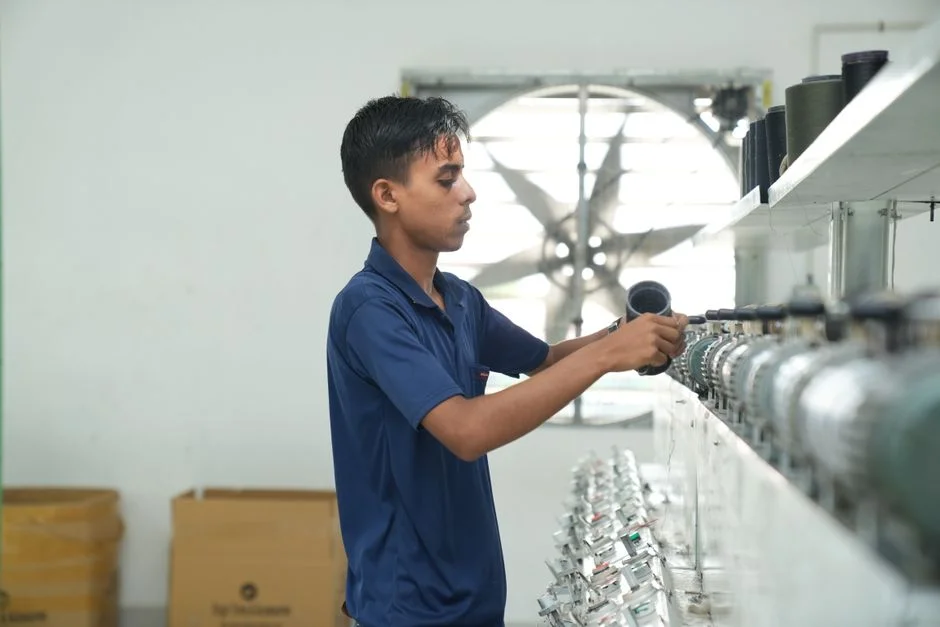
Two membrane geometries dominate Japanese hotel MBR bids: hollow fibre (HF) and flat sheet (FS), and the choice is not aesthetic. Hollow-fibre cassettes pack more square meters of membrane area per cassette, which is why Imemflo and most Mitsubishi-spec hotel plants use HF, but the bundled fibres clog faster when kitchen FOG or laundry lint slips past the headworks. Flat-sheet modules tolerate FOG shocks better and clean in place (CIP) without the bundle-handling risk that HF cassettes carry.
Both geometries in current Japanese service use PVDF with a nominal pore size of 0.1 µm (Scribd MBR design basis, 2025-09), which is the de facto hotel standard and the spec you will see on every domestic supplier's data sheet. The Smith & Loveless TITAN MBR QUBE™ ships flat-plate modules rated for on-site CIP "on average once every six months without system interruption" — a realistic maintenance benchmark for any flat-plate train, Japanese or otherwise.
Design flux for hotel duty should sit at 25 LMH, well inside the 15–70 LMH envelope published in the Scribd design note and well below the 40 LMH threshold above which fouling accelerates non-linearly. The DF series flat-sheet MBR membrane module is one option in this duty class. Budget one spare cassette on day one if the hotel has no on-site wastewater operator; a 6-hour membrane swap on a Sunday is cheaper than a CIP callout at midnight.
| Parameter | Hollow-fibre (HF) | Flat-sheet (FS) |
|---|---|---|
| Material / pore size | PVDF / 0.1 µm | PVDF / 0.1 µm |
| Effective area per cassette | Higher (20–25 m²) | Lower (0.8–1.5 m² per panel, more panels per cassette) |
| Design flux range | 15–25 LMH hotel duty | 20–40 LMH hotel duty |
| FOG tolerance | Lower; bundle clogging risk | Higher; CIP-friendly |
| CIP interval (typical) | 2–3 months | ~6 months (S&L TITAN MBR QUBE benchmark) |
| Spare cassette strategy | Recommended for unstaffed sites | Recommended for unstaffed sites |
Three Packaged Configurations: Containerized, Skidded, and Underground
The packaged MBR market offers three physical configurations, and the right choice is driven by Nagoya site constraints more than by treatment performance, because all three hit the same effluent targets when properly sized. The containerized option, exemplified by the Smith & Loveless TITAN MBR QUBE™ at a 40-ft ISO footprint, ships pre-plumbed and pre-wired, installs in days, and relocates if the hotel redevelops the site — but it sits above grade and will be visible from the frontage. Skidded systems mount tanks and equipment on galvanized frames, drop into a basement plant room with minimal civil work, and are the default in urban Nagoya city hotels where ground-level plant area is not available. Underground integrated packages such as the WSZ underground integrated sewage treatment plant bury the entire train under landscaping, eliminate visual impact, and free the surface for guest use, but require seismic-rated structural design, groundwater control, and a dewatering plan during construction.
For a 100–250 m³/d hotel in central Nagoya, the configuration matrix is short. If the site allows ground-level equipment with a 1.5 m equipment-clearance envelope, a 40-ft containerized MBR installs fastest. If the only available plant room is in the basement with limited headroom, a skidded MBR plus a separate buried equalization tank fits the geometry. If the developer needs the surface footprint returned to landscaping or a driveway, the underground package wins, but only with seismic design certified to the Building Standards Act and a JIS-rated tank structure.
| Configuration | Footprint (100–250 m³/d) | Install time | CAPEX band (indicative) | Best-fit Nagoya site |
|---|---|---|---|---|
| Containerized (40-ft ISO) | ~12 m × 2.5 m ground pad | 2–4 weeks | Higher equipment cost, lower civil cost | New-build suburban Nagoya, visible pad acceptable |
| Skidded + buffer tank | ~80–120 m² basement floor | 6–10 weeks | Mid-range; civil cost = building cost | Urban Nagoya with basement plant room |
| Underground integrated | ~6 m × 12 m × 3 m deep | 10–16 weeks | Higher civil cost (excavation + seismic) | Landscaped frontage, no surface plant visible |
Effluent Targets and Japanese Compliance Context
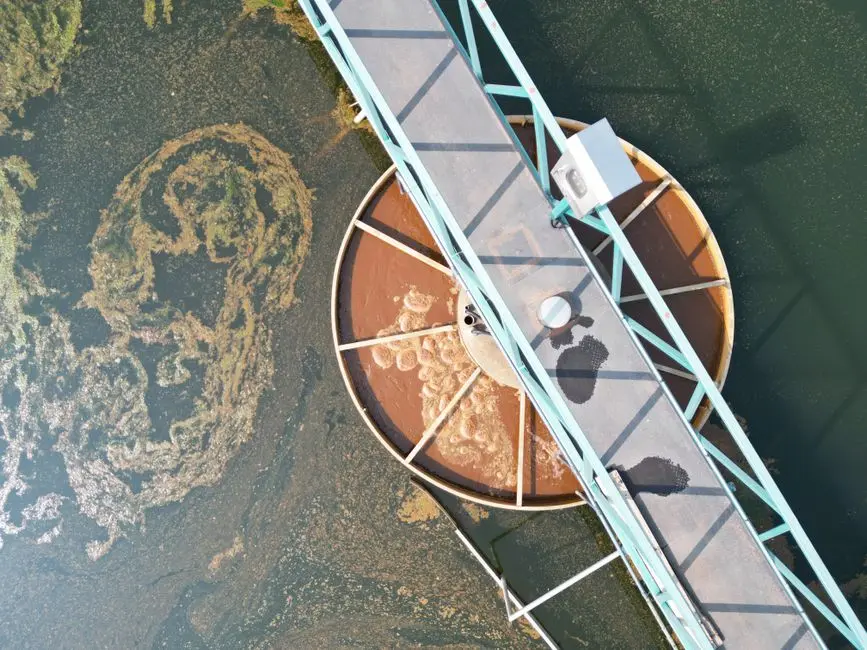
A properly operated MBR will discharge TSS near zero, BOD5 under 5 mg/L, COD under 20 mg/L, and turbidity under 2 NTU (Scribd MBR design basis, 2025-09) — numbers that meet or exceed the JEOL effluent quality standards under the Water Pollution Control Act and the typical ceilings set by Aichi Prefecture and the Nagoya municipal sewer-connection ordinance. Hotels discharging to the public sewer follow the prefectural sewer-connection rules, which generally track the JEOL-type envelope for BOD, COD, and SS, while hotels discharging to surface water or reusing treated water on-site face the tighter JEOL ceilings, particularly for nitrogen and phosphorus in designated lake-basin catchments.
The 0.1 µm PVDF membrane stage removes the bulk of pathogens, so the residual disinfection job is small; a UV sterilizer sized for the design flow polishes the water for reuse without dosing chlorine, which keeps the cooling-tower and laundry loops free of trihalomethane precursors. For sewer discharge, an in-line chlorination step is acceptable and cheaper. Either way, the MBR does the heavy lifting; disinfection is the final 1-log polish, not the primary barrier.
For readers comparing plant archetypes and cost lines, the MBR vs MBBR cost comparison breaks out where the MBR premium sits and where the SBR or MBBR alternative is honestly competitive.
Pretreatment, Sludge, and Disinfection: Completing the Package
An MBR is only as good as the headworks in front of it, and a hotel's headworks must catch two specific waste streams: long hair and fibrous laundry lint, and emulsified kitchen FOG that will blind a membrane in 48 hours if it reaches the cassette. The standard hotel train starts with a coarse bar screen (6–8 mm openings) at the inlet channel, then a 2–3 mm automatic fine screen — Smith & Loveless ships a 3 mm auto screen on the TITAN MBR QUBE™ and a rotary mechanical bar screen in the GX series is the typical Japanese equivalent. Follow the screens with an oil and grease separator ahead of the equalization tank; this is non-negotiable for any hotel with a commercial kitchen.
The equalization tank is sized for 8 hours of HRT with coarse-bubble mixing to prevent septicity, per the Scribd design basis (2025-09). On the back end, MBR waste-activated sludge is concentrated (8,000–12,000 mg/L TSS typical), so a small filter press or sludge-bagging station is enough for a hotel-scale plant; the plate-frame filter press family covers 1–500 m² of plate area, which brackets every hotel-class capacity from 50 m³/d to 500 m³/d. Final polish is a UV unit sized to the design flow, with chlorination as a fallback for sewer-discharge-only sites.
CAPEX, OPEX, and Supplier Evaluation
Packaged MBR CAPEX for sub-300 m³/d hotel duty sits in the upper band of packaged-plant pricing because the membrane cassettes, blowers, and CIP system are the dominant cost lines; the flow-banded range from the MBR vs MBBR cost comparison is roughly ¥800K–¥12M for the equipment train, with containerized systems at the top of the band and skidded systems in the middle. Civil works — excavation, equalization tank, seismic-rated structural design for underground units — are a separate line item and can add 30–60% to the turnkey number on tight urban Nagoya sites.
OPEX is dominated by the aeration blower, which typically draws 1.5–2.0 kg O₂ per kg BOD removed and is the single largest line on the electricity bill (Scribd MBR design basis, 2025-09). Membrane replacement every 5–7 years, CIP chemicals (NaOCl and citric acid typically), UV lamp replacement, and labour round out the OPEX stack. For an Aichi Prefecture hotel with industrial power pricing, budget blower power at roughly 1.2–1.8 kWh per m³ treated.
Use the checklist below when you sit down with a domestic supplier. Cross-check every item, and ask for the documentation behind it.
| Checklist item | Why it matters in Nagoya |
|---|---|
| Domestic service network in Aichi / Chubu | Response time under 24 h for membrane alarms |
| JIS-certified materials (SS400, SUS304/316) | Required for insurance and Building Standards Act sign-off |
| Seismic design certification | Mandatory for buried tanks; Building Standards Act seismic zone check |
| Remote monitoring (LTE/GSM SCADA) | Hotels rarely have on-site wastewater staff |
| Spare cassette inventory | Same-day swap instead of 2-week factory delivery |
| Blower redundancy (1W + 1S) | Single-blower failure is the most common MBR shutdown cause |
| Equalization volume (8 h HRT) | Undersized EQ tanks are the #1 cause of membrane fouling |
For a parallel checklist covering the supplier shortlisting and contract review, the packaged wastewater treatment plant supplier checklist lays out the same evaluation logic for the U.S. context, and most items transfer directly. Readers comparing hotel configurations across markets can also see how a similar-sized hotel in a different regulatory environment is handled in the packaged MBR STP for hotels in Lyon guide.
Frequently Asked Questions
What flow rate should I size a packaged MBR STP for in a 200-room Nagoya hotel?
Plan for 200–300 m³/d at 80% occupancy using 250–300 L per guest-day, and apply a 1.5–2.0× peak factor with an 8-hour equalization tank ahead of the membranes (per the sizing worksheet in this article's Sizing section).
Which membrane type is better for hotel wastewater — hollow fibre or flat sheet?
Both use PVDF 0.1 µm and hit the same effluent targets; hollow-fibre packs more area per cassette but fouls faster on FOG, while flat-sheet modules CIP cleanly about every 6 months — for a hotel kitchen plus laundry, flat-sheet is the lower-risk default.
Do I need seismic-rated structural design for an underground MBR in Nagoya?
Yes — buried tanks in Japan must be designed to the Building Standards Act seismic load case, and a JIS-rated tank structure with documented seismic certification is the minimum a Nagoya building inspector will sign off on.
What BOD and COD can a packaged MBR realistically hit for a hotel in Japan?
A properly operated MBR delivers BOD5 under 5 mg/L, COD under 20 mg/L, and turbidity under 2 NTU, which meets the JEOL effluent envelope and the typical Aichi Prefecture sewer-connection ceilings without a tertiary polish.