
What Counts as Domestic Sewage in Newcastle and Why It Matters for Design
Domestic sewage in the Hunter region covers blackwater (toilets) and greywater (showers, kitchens, laundries) from residential dwellings, hotels, schools, and aged-care facilities. Trade waste from commercial kitchens, laundries, or industrial tenants sits outside this scope and is handled separately through Hunter Water's trade-waste schedule; mixing the two at the design stage is one of the fastest ways to fail a discharge permit.
Australian per-capita design loadings drive every downstream calculation: 150 L/person·day of hydraulic flow, BOD₅ of 200–250 g/person·day, TSS ~70 g/person·day, NH₃-N 6–10 g/person·day, total N 10–15 g/person·day, and total P 1–2 g/person·day. These figures set aeration tank volume, sludge yield, and the nitrogen-loading envelope for any buried A/O or MBR being evaluated.
Newcastle's climate is mild but not warm: mean sewage temperature runs 13–22°C year-round, with July minima near 13°C. A 12-month pilot-scale microbial electrolysis cell (MEC) operated on raw domestic wastewater at 1–22°C showed COD removal "inconsistent and below the standards required" at the cold end of that range (source: Bioresource Technology, 2014, doi:10.1016/j.biortech.2014.09.083). The same low-temperature limitation has been documented for anaerobic bioreactors seeded with mesophilic sludge (source: Water Science & Technology, doi:10.2166/wst.2013.821). The practical implication is that buried insulated packages — where the sewage stays at 12–16°C through winter — outperform open or uninsulated systems in the Hunter's coolest months. Combined with a coastal water table at Stockton and Salt Ash plus sandy alluvial soils along the Hunter river flats, this strongly favours sealed buried packages over open earthen systems.
Single-household septic systems follow NSW Health's Onsite Sewage Management for Single Households (2018, still current 2026). Developments of ≥5 EP move into POEO-licensed packaged-plant territory and, if discharging to the Hunter Water sewer, also need trade-waste sign-off — a serial dependency that this guide unpacks in the next section.
The Newcastle Approval Pathway: NSW Health, POEO and Hunter Water
Four approval steps gate any domestic sewage treatment plant (STP) installation in the Hunter LGA, and they run in series — a design change after Hunter Water sign-off resets the clock, so getting process choice right up front matters more here than in jurisdictions with a single regulator.
Step 1 — Onsite sewer approval. For lots ≥2,000 m², lodge an Application to Install an Onsite Sewer (or septic-to-sewer conversion) with the City of Newcastle. Confirmation is required before any earthworks begin; the form and process are documented in the council's knowledge base (source: City of Newcastle, cn.t1cloud.com).
Step 2 — POEO licence. Any system serving ≥5 EP or discharging to a waterway must hold a licence under the NSW Protection of the Environment Operations Act 1997 (POEO) and meet ANZECC/ARMCANZ water-quality guidelines for the receiving environment. Without this licence, the plant cannot legally operate.
Step 3 — Hunter Water trade-waste approval. If the STP discharges to the Hunter Water sewer network rather than irrigation or reuse, lodge a Trade Waste Application. The admission limits effectively set the polishing-train specification: typical ceilings are pH 6–10, temperature <38°C, oil & grease ≤50 mg/L, NH₃-N ≤50 mg/L, and suspended solids ≤600 mg/L. Hot food-service sites regularly see upstream grease at 200–400 mg/L, which is why most packaged plants discharging to sewer need a DAF polish on the back end.
Step 4 — Engineer sign-off. The design must be certified by a NSW-credentialed wastewater engineer (CWP, CPEng, or equivalent) and include an operational plan, sludge dewatering specification, and emergency storage. Skipping this step invalidates the council and POEO submissions above. Following the framework in the performance-based wastewater O&M contracts guide from the outset avoids the most common handover gaps.
Choosing the Right Process: Buried A/O, SBR, or MBR for Newcastle Sites
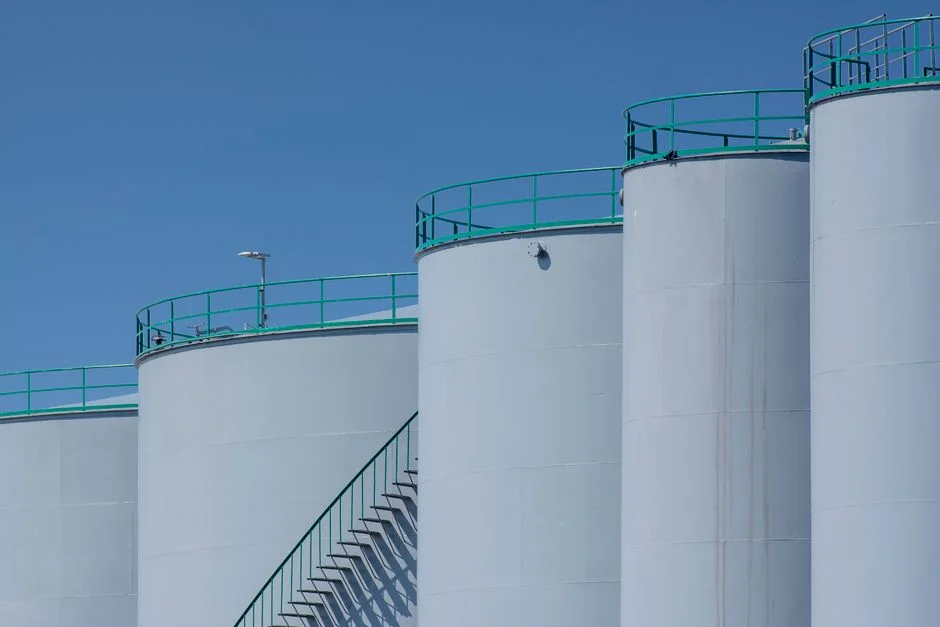
Process choice in the Hunter is driven by four site variables: available footprint, reuse mandate, flow variability, and discharge destination. A buried A/O package like the WSZ series (1–80 m³/h, anoxic + aerobic contact oxidation, sedimentation, disinfection in a single buried unit) is the dominant Newcastle solution for suburban subdivisions, rural fringe sites, hotels, schools, and aged-care facilities on lots ≥0.5 ha where the developer wants the plant invisible, operator-free, and at the lowest capex. Its limitation is that the secondary-clarifier effluent cannot meet tight reuse targets, and a buried package is harder to retrofit if the council later demands Class A+ water.
An SBR (sequencing batch reactor) consolidates equalise–aerate–settle–decant in a single tank, making it a strong fit for 50–500 EP sites with variable flows — exactly the load profile of an aged-care facility or a school. Nutrient removal is excellent, and footprint beats continuous-flow systems, but the decant phase demands reliable equalisation volume and timer-based control that needs commissioning discipline.
An integrated MBR system (10–2,000 m³/day) using DF-series flat-sheet MBR cassettes (each rated 32–135 m³/day) is the right pick when footprint is constrained (<1,000 m²) or reuse is mandated. MBR delivers ~60% smaller footprint than conventional activated sludge, effluent at <1 μm, and near-reuse quality for toilet flushing or irrigation. The trade-offs are membrane cleaning, replacement every 8–12 years, and higher energy draw from the permeate pump and cross-flow aeration. Constructed wetlands and vermifiltration (per the IntechOpen vermifiltration study, doi:10.5772/intechopen.103920) are decentralised options, but their 3–6 month start-up and large land take make them rare in time-pressed Newcastle developments.
Decision rule: choose buried A/O when land is cheap and reuse is not required; choose SBR when flows are variable; choose MBR when footprint is constrained or reuse is mandated by council or an ESG brief.
| Process | Footprint | Effluent quality | Capex (per PE) | Best fit in Newcastle |
|---|---|---|---|---|
| Buried A/O (WSZ) | Large (≥0.5 ha) | BOD <20 mg/L, TSS <30 mg/L | A$1,800–2,800 | Subdivisions, rural fringe, schools, hotels |
| SBR | Medium | BOD <20 mg/L, NH₃-N <5 mg/L | A$2,200–3,200 | Aged care, schools, variable flows 50–500 EP |
| MBR (DF cassettes) | Small (60% of CAS) | BOD <5 mg/L, TSS <5 mg/L, <1 μm | A$2,600–3,800 | Urban infill, reuse mandates, tight sites |
Sizing Rules and the Design Parameters Behind a Working Newcastle STP
Vendor proposals can be sanity-checked against a small set of first-principles numbers. Hydraulic design starts at 150 L/person·day average with a 1.8× peaking factor (Hunter Water guideline) — a 200-EP hotel at 30 m³/day average therefore needs 54 m³/day peak hydraulic capacity, not the 30 m³/day figure most brochures quote.
Biological sizing uses 200–250 g BOD/person·day with a food-to-microorganism ratio (F/M) of 0.05–0.15 kg BOD/kg MLSS·day for conventional A/O and 0.03–0.08 for MBR. Any vendor whose aeration tank volume implies F/M above 0.20 is underspecified. Aeration should target dissolved oxygen of 1.5–2.5 mg/L in the aerobic zone with a solids retention time of 15–25 days to sustain nitrification across Newcastle's 13–22°C envelope; buried packages hold 12–16°C in winter, sidestepping the nitrification stall below 10°C documented in the UK anaerobic pilot (source: Water Science & Technology, doi:10.2166/wst.2013.821).
Disinfection is sized for a 30 mJ/cm² UV dose to cover Cryptosporidium and Giardia, or by a chlorine dioxide generator rated 50–20,000 g/h, compliant with WHO drinking-water values and EU 98/83/EC — ClO₂ is preferred where chlorinated by-products are a concern. Sludge production runs 0.3–0.5 L/person·day of thickened sludge, dewatered by a plate-and-frame filter press for sludge dewatering (1–500 m² filtration area across the standard range) with monthly haulage assumed within 50 km.
| Parameter | Design value | Source / check |
|---|---|---|
| Hydraulic per EP | 150 L/person·day, 1.8× peak | Hunter Water guideline |
| BOD per EP | 200–250 g/person·day | Australian STP design standard |
| F/M — A/O | 0.05–0.15 kg BOD/kg MLSS·day | Conventional design |
| F/M — MBR | 0.03–0.08 | Membrane bioreactor design |
| SRT for nitrification | 15–25 days at 13–22°C | Newcastle sewage temperature |
| UV dose | 30 mJ/cm² | Protozoan inactivation |
| Sludge yield | 0.3–0.5 L thickened/person·day | Operational benchmark |
Polishing to Meet Hunter Water's Sewer Admission Limits
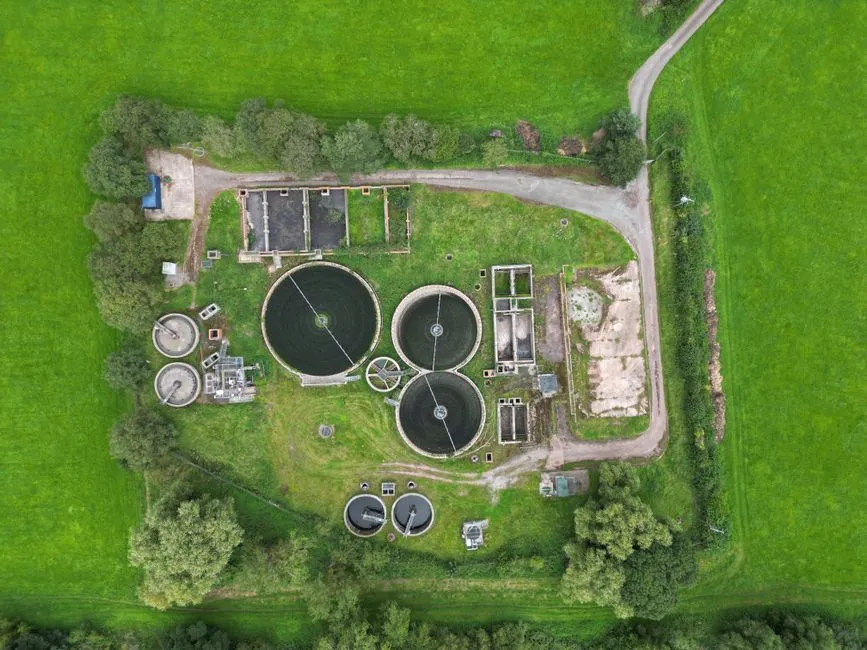
Even a well-run biological stage rarely meets Hunter Water's trade-waste admission limits without a polishing train. Biological effluent typically lands at BOD <20 mg/L and TSS <30 mg/L, but oil & grease ≤50 mg/L and pH 6–10 still need targeted removal — particularly for hotels and any domestic stream with attached food service, where upstream grease can hit 200–400 mg/L.
A DAF polishing unit (4–300 m³/h, 13 standard models) is the standard step for FOG and colloidal solids, paired with a PLC-controlled coagulant/polymer dosing skid ahead of the float cell. Where the discharge target is reuse — school ovals, hotel gardens, office cooling towers — a UV steriliser or ClO₂ generator brings the residual to the 0–10 cfu/100 mL E. coli target set by NSW Health recycled-water guidance. Bundling dosing, DAF, and disinfection on a single skid avoids field-wiring surprises and shortens commissioning by 2–3 weeks on Hunter-region installs.
A Newcastle Case: Refitting a 120-Bed Aged-Care Facility in the Hunter
A 120-bed aged-care facility in the Hunter LGA needed a sewage plant on a constrained 600 m² footprint, with no room for irrigation reuse and a mandatory connection to the Hunter Water sewer. Design flow was set at 28 m³/day from a 1.8× peaking factor on a 150 L/person·day base.
The chosen process was an integrated MBR system with DF-series flat-sheet cassettes — it fit the 600 m² envelope with room left for a DAF and chemical dosing skid. Approval ran in the order set out above: POEO licence first, then Hunter Water trade-waste approval (oil/grease ≤50 mg/L drove the DAF inclusion), then the City of Newcastle building permit, then commissioning sign-off.
Measured effluent from a properly commissioned MBR at this scale typically lands at BOD₅ <10 mg/L, TSS <5 mg/L, NH₃-N <5 mg/L, and E. coli <10 cfu/100 mL after UV. The plant passed the Hunter Water acceptance test on the first attempt. Sludge is dewatered to ~22% dry solids via a plate-and-frame filter press and hauled off-site at a running cost of ~A$1,200/month. The polishing train (DAF + ClO₂) came in at 18% of total capex — and was the difference between approval and a failed trade-waste test. Plan for it from day one on any Hunter Water discharge.
2026 Cost Benchmarks and Total-Cost Thinking for Newcastle Projects
Installed capex in the Hunter for 2026 runs A$1,800–2,800 per person-equivalent for buried A/O packages, A$2,600–3,800/PE for MBR, and the SBR sits between the two. OPEX is dominated by aeration energy (~55%) and sludge haulage (~25%). For the 120-bed aged-care case above, 5-year OPEX tracks at ~A$190,000 against ~A$340,000 capex — a ratio worth modelling in any developer's feasibility.
The lifecycle crossover between buried A/O and MBR sits at roughly 10,000 m³/day: below that, MBR's capex premium is recovered through smaller land take; above it, buried A/O wins on simplicity and lower operator risk. For context on how UK pricing compares, see the UK STP supplier cost benchmarks for Manchester, and for a sizing comparison in a similar temperate coastal setting, the containerised MBR sizing guide for Auckland is a useful parallel. A comparable dry-climate reference is the domestic-sewage engineering guide for Tehran. Always request an itemised BoM, not a per-PE lump sum — vendors that won't break out membranes, blowers, and control panels are usually padding.
Frequently Asked Questions
Which body approves a first-time domestic STP installation in Newcastle?
For onsite systems on lots ≥2,000 m², the City of Newcastle approves the onsite sewer application (S5). Plants serving ≥5 EP additionally need a POEO licence from the NSW EPA, and any discharge to the Hunter Water sewer requires a separate trade-waste approval. All three are serial — none can be skipped.
What BOD and TSS targets should a Newcastle STP hit before sewer discharge?
Hunter Water's admission limits set the polishing target, with BOD and TSS typically required below the secondary-clarifier envelope of BOD <20 mg/L and TSS <30 mg/L. DAF polishing is usually needed to also meet oil/grease ≤50 mg/L and pH 6–10, particularly for hotel or food-service attached flows.
Is reuse always cheaper than discharge-to-sewer for a packaged plant?
No. Reuse eliminates trade-waste fees and the DAF polish but adds UV or ClO₂ disinfection to meet the NSW Health 0–10 cfu/100 mL E. coli target, plus a dual-plumbing system. For sites under ~1,000 m² with no irrigation buffer, discharge-to-sewer is usually the lower-risk option; for schools, hotels, and aged-care with landscape area, reuse recovers capex in 4–6 years.
How often do MBR membranes need replacing in the Hunter climate?
DF-series PVDF flat-sheet cassettes in a buried Newcastle plant typically run 8–12 years before replacement, with annual chemical cleaning (typically NaOCl + citric acid) the main OPEX line. Higher inlet grease or chronic under-aeration shortens that interval; proper pre-screening and DAF polishing protect the membrane and extend life.
Is a buried A/O package acceptable for a 5-EP subdivision in Newcastle?
Yes, provided the development holds a POEO licence and the design is signed off by a NSW-credentialed wastewater engineer. Buried A/O packages in the 1–80 m³/h range (e.g. WSZ series) are the default for subdivisions where land is available, reuse is not required, and a simple operator-free plant is preferred.