
What a Rome Hotel Actually Discharges
A 4- to 5-star Rome hotel generates 220–250 L per occupied bed per day of wastewater, plus 25–40 L per F&B cover from kitchens, bars and banqueting. The Imemflo 200-bed 5-star reference plant in the published hotel case study is sized at 250 m³/d, which sits inside that per-bed band (source: imemflo.com, hotel MBR reference). Treat that 250 m³/d as the average dry-weather flow, then apply a 1.4–1.6× peak factor for the May–October tourist season: a 200-bed property should be hydraulically rated for roughly 350 m³/d even though the annual average is lower.
The pollutant fingerprint of hotel sewage is what forces a packaged MBR rather than a septic tank or a packaged SBR. Raw influent typically lands at BOD 250–400 mg/L, COD 500–900 mg/L, TSS 200–400 mg/L, with surfactant and FOG spikes from laundry, kitchens and pool backwash (typical engineering ranges, consistent with S1 characterisation of hotel wastewater). Grease peaks from Italian breakfast buffets and evening banqueting routinely push oil and grease above 150 mg/L for short windows — enough to foul a poorly designed biological stage, which is why pre-treatment FOG removal is non-negotiable downstream of the kitchen.
For sizing, the table below is what an MEP consultant should be able to defend in front of the Comune:
| Parameter | Design value (4–5 star Rome hotel) | Source / basis |
|---|---|---|
| Average flow, occupied bed | 220–250 L/bed·d | Imemflo 200-bed 5-star = 250 m³/d (S1) |
| F&B load (covers/day) | 25–40 L/cover·d | Hotel kitchen + banqueting allowance |
| Occupancy, May–October | 80–95% | Rome tourist peak |
| Hydraulic peak factor | 1.4–1.6× | Diurnal + seasonal |
| Influent BOD | 250–400 mg/L | Hotel wastewater range (S1) |
| Influent COD | 500–900 mg/L | Hotel wastewater range (S1) |
| Influent TSS | 200–400 mg/L | Hotel wastewater range (S1) |
| FOG peak (kitchen) | 100–200 mg/L short-term | FOG separation upstream of bioreactor |
The 2026 Compliance Stack: D.Lgs. 152/2006, UWWTD and ARPA Lazio
EU Urban Waste Water Treatment Directive 91/271/EEC is the parent rule; Italy transposed it through D.Lgs. 152/2006, Part III, Sezione II, and ARPA Lazio enforces it on Rome discharges. For an agglomeration below 10,000 p.e. (which covers every hotel in the city), Table 1 of the Annex sets the design effluent envelope, and Table 2 adds tighter limits where the receiving body is designated a "sensitive area" — which much of the Tiber basin is for nutrient purposes.
The numbers a packaged MBR has to hit on the ARPA sampling sheet, and which therefore have to appear verbatim in the tender specification, are: BOD ≤25 mg/L, COD ≤125 mg/L, TSS ≤35 mg/L, total phosphorus ≤2 mg/L in sensitive areas, with E. coli and oils/grease also sampled per ARPA protocol. MBR is selected precisely because submerged membrane filtration reliably delivers these numbers, where a packaged SBR or MBBR typically needs a tertiary polish to get there.
Two additional Italian rules change the design brief. First, if the hotel plans to reuse treated water for toilet flushing, landscape irrigation or laundry, DM 185/2003 applies on top of D.Lgs. 152/2006 and adds roughly 40 monitoring parameters including Legionella, salinity and heavy metals. Second, ARPA sampling cadence in Lazio is generally quarterly for a hotel-scale discharge, so the PLC must log and store 24-hour composite samples, not just instantaneous readings. The compliance envelope to spec against is:
| Parameter | Discharge limit (D.Lgs. 152/2006) | Notes |
|---|---|---|
| BOD₅ | ≤25 mg/L | Table 1, ≤10,000 p.e. |
| COD | ≤125 mg/L | Table 1 |
| TSS | ≤35 mg/L | Table 1 |
| Total phosphorus | ≤2 mg/L | Table 2, sensitive area (Tiber) |
| Oils & grease | Per ARPA protocol | Sampling-based |
| E. coli | Per ARPA protocol | For reuse, DM 185/2003 tighter |
| Reuse parameters (if reuse) | ~40 parameters | DM 185/2003 overrides for reuse duty |
Why Packaged MBR Wins for a Rome Hotel Site
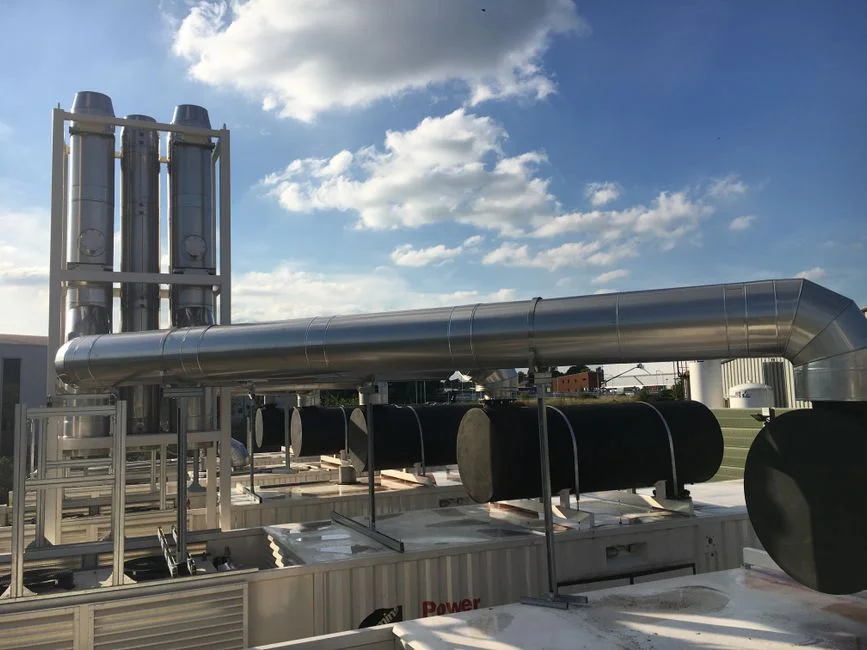
MBR removes the secondary clarifier entirely and replaces it with submerged membranes at 0.1–0.4 µm pore size, which roughly halves the biological-tank footprint versus a conventional activated-sludge plant of the same capacity (per S1: "MBR systems typically require less space than conventional treatment processes because they eliminate the need for a separate clarifier"). On a constrained central-Rome site — a basement plant under a 19th-century palazzo, a courtyard retrofit, or a below-grade plant below the hotel's service yard — that 40–60% footprint reduction is the difference between a viable and a refused permit.
Effluent quality is the second reason. MBR delivers 90–95% removal of organics and suspended solids, which produces near-reuse water without a separate tertiary stage (per S1). For a Rome hotel that wants to reuse water for toilet flushing or irrigation to offset summer water tariffs, that built-in polish is a capital-cost win. Compare that to SBR, MBBR or conventional ASP: each of those can be packaged, but all three produce an effluent that typically needs a sand-filter or disc-filter polish before it qualifies for reuse.
For a luxury hotel, guest perception matters as much as permit compliance. A packaged, buried or containerised MBR with fine screening, enclosed blowers and a sealed membrane tank is acoustically and olfactorily quieter than an open aeration basin. Vendors such as the packaged systems in this category — the HydropureWater packaged MBR system for example — are delivered as a factory-built skid that the Comune can inspect once rather than chasing an open civil-works site for months.
Flat-Sheet vs Hollow-Fiber MBR: A Hotel-Buyer Decision Matrix
The single most expensive long-term decision in a packaged MBR is the membrane geometry, because it sets the cleaning interval, the fouling risk and the 8–12-year replacement cost. Flat-sheet (flat-plate) PVDF modules operate at a 0.1 µm nominal pore, are scoured by integrated coarse-bubble aeration directly beneath the panel, and are cleaned in place roughly every six months without taking the train offline (per S2: "membranes are efficiently cleaned in place, on average once every six months without system interruption"). Hollow-fibre bundles offer higher packing density and lower capex, but they are vulnerable to hair and lint fouling from laundry, fibre breakage from pump transients, and typically need chemically enhanced backwashes on a weekly to monthly cadence.
Energy is comparable for submerged designs in both geometries. Submerged flat-sheet MBRs run at roughly 0.3–0.6 kWh per m³ of permeate for hotel duty — about 10–20× lower than external cross-flow systems, which is why no serious hotel tender still specifies cross-flow. The capex saving of hollow-fibre is real (often 15–25% lower membrane cost), but it tends to be eaten by more frequent CIP chemicals, higher blower runtime for backwash, and the operational risk of a fibre-bundle failure during a peak August night.
The hotel-specific call: choose flat-sheet PVDF for a 4- or 5-star Rome hotel with on-site laundry, large kitchens and FOG exposure; reserve hollow-fibre for low-load B&Bs and small residenze where the influent is closer to domestic and capex dominates. The S2 vendor position is that "flat-plate membranes do not bundle or break, unlike hollow fiber types" and require no pressurised permeate pump skids — that is consistent with what the engineering literature reports. The decision matrix:
| Criterion | Flat-sheet PVDF (e.g. DF, TITAN QUBE) | Hollow-fibre (e.g. Mitsubishi, Toray HF) |
|---|---|---|
| Nominal pore size | 0.1 µm | 0.1–0.4 µm |
| Cleaning interval | ~6 months in-place CIP | Weekly–monthly CEB |
| Fibre-breakage risk | None (rigid panel) | Present (hair, lint, pump surge) |
| Specific energy | 0.3–0.6 kWh/m³ permeate | 0.3–0.6 kWh/m³ permeate (submerged) |
| Membrane replacement | 8–12 years, per panel | 5–10 years, per bundle |
| Best fit for Rome hotel | 4–5 star, laundry, FOG exposure | Small B&B, low-FOG, capex-driven |
A spec-ready component to anchor the membrane choice is the DF series flat-sheet MBR module.
Package Configuration: What to Insist on in the Tender
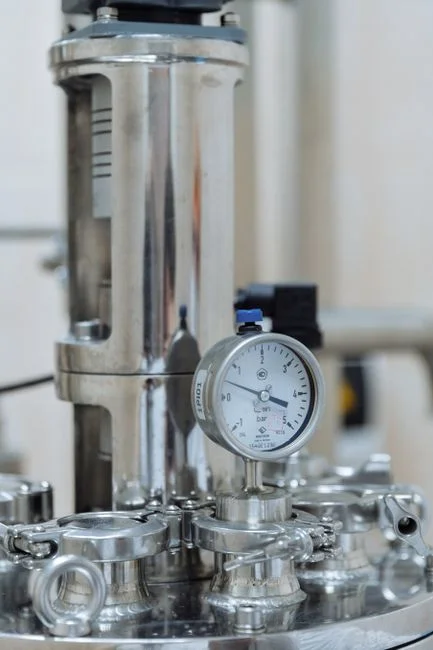
Five items should appear as non-negotiable in the technical specification. First, pre-treatment: an automatic 3 mm fine screen plus grit removal and a dedicated FOG separator ahead of the bioreactor. Hotel sewage is full of hair, lint, coffee grounds and food solids that will pin a membrane flat within weeks if not screened out — and a GX-type automatic 3 mm fine screen is the standard that survives ARPA inspection.
Second, the bioreactor itself: anoxic plus aerobic zones with PLC-controlled dissolved oxygen (typically 1.5–2.5 mg/L in the aerobic zone) and MLSS held at 8,000–12,000 mg/L, with an optional sludge storage zone for the ~20% annual wastage. Third, the membrane zone: submerged flat-sheet modules sized for the 1.6× peak flow, with redundant modules so the plant can keep running at ~80% capacity when one train is in CIP — important when the Comune will not accept a discharge permit with a single membrane train and no redundancy.
Fourth, controls: a PLC with HMI, remote monitoring, and at least 12 months of data logging for ARPA sampling. The package must be pre-plumbed, pre-wired and factory-acceptance-tested before shipping (per S2: "complete system is pre-plumbed and pre-wired prior to shipment"). Fifth, disinfection: UV as primary, sized to EN 12255-12, with a UV disinfection skid sized for the peak flow plus a chlorine dioxide backup if the reuse duty under DM 185/2003 demands a residual.
2026 Cost Envelope and Vendor Verification
For a packaged 100–250 m³/d hotel MBR, factory-built and containerised, the 2026 European market sits at roughly €60,000–€120,000 CAPEX depending on membrane supplier, level of automation and reuse scope. OPEX lands at about €0.25–€0.45 per m³ treated, dominated by energy and membrane replacement amortised over an 8–12 year membrane life (HydropureWater field data, 2026). Add an EU service contract and quarterly ARPA reporting and a 200-bed Rome hotel should budget a realistic €0.35–€0.50 per m³ all-in.
Before shortlisting, the vendor verification table below should be cleared line by line:
| Check | Why it matters for a Rome hotel |
|---|---|
| CE marking + EN 12255-1 conformity | Mandatory for Comune sign-off |
| ISO 9001 fabrication | Quality system audit |
| Factory Acceptance Test (FAT) witnessed | Avoids site surprises; pre-shipment proof |
| Membrane supplier (HydropureWater DF, Toray, Mitsubishi, Suez, DuPont) | Avoids "house-brand" membrane with no spares |
| EU spare-parts stocking | Prevents 8-week shipping holds on a failed train |
| Rome / Lazio service partner | 24-h response on ARPA sampling failures |
| Remote monitoring (SCADA / 4G) | 6-monthly CIP scheduling and audit trail |
| EU reference list (hotels) | Proof of duty cycle, not just municipal |
For the tendering workflow, the O&M contract structure used in our performance-based O&M contracts guide is a useful template, and a parallel benchmark for non-European sizing is the Mumbai hotel MBR buyer's guide and the Kaohsiung hotel wastewater guide.
Frequently Asked Questions
What is the typical per-bed design flow and peak factor for a Rome hotel MBR?
Use 220–250 L per occupied bed per day as the average dry-weather flow, add 25–40 L per F&B cover for kitchens, and apply a 1.4–1.6× peak factor for the May–October tourist season. A 200-bed 4- or 5-star property therefore averages ~250 m³/d and should be hydraulically rated to ~350 m³/d.
Which EU and Italian effluent limits must the MBR meet on the ARPA sample?
Per D.Lgs. 152/2006, Part III, Sezione II (transposing EU UWWTD 91/271/EEC), the binding numbers are BOD ≤25 mg/L, COD ≤125 mg/L, TSS ≤35 mg/L, and total phosphorus ≤2 mg/L in the Tiber sensitive-area designation. E. coli and oils/grease are sampled per ARPA Lazio protocol.
Should I choose flat-sheet or hollow-fibre membranes for a hotel with high laundry and FOG?
Specify flat-sheet PVDF for a 4- or 5-star Rome hotel with on-site laundry and large kitchens. The 0.1 µm rigid panel geometry tolerates FOG and surfactant spikes, cleans in place about every six months, and eliminates the fibre-breakage failure mode that hollow-fibre bundles suffer in hotel duty.
Can the treated water be reused for toilet flushing and irrigation under Italian rules?
Yes, but DM 185/2003 applies on top of D.Lgs. 152/2006 and adds about 40 monitoring parameters including Legionella, salinity and heavy metals. The reuse design must include a UV or chlorination barrier and a dual-sample PLC log for ARPA reporting.
How often do the membranes need cleaning and replacement, and what does it cost?
For flat-sheet PVDF in hotel duty, expect an in-place CIP roughly every six months and membrane replacement every 8–12 years. OPEX for chemicals, energy and amortised membrane replacement typically lands at €0.25–€0.45 per m³ treated in the 2026 European market.