What Dairy Wastewater Sludge Actually Is in 2026
Dairy processing sludge (DPS) is the separated solids stream produced when milk, cheese, whey, yogurt, or butter effluent passes through the wastewater treatment train. In practice, engineers deal with four sub-types: primary sludge from settling ahead of biological treatment, DAF-floated sludge skimmed after dissolved air flotation, waste activated sludge (WAS, sometimes called DPS-A) from the aeration basin, and anaerobically digested sludge (DPS-AD) leaving the digester. The 2017 Teagasc survey across nine Irish dairy plants recorded 126,718 wet tonnes of DPS, a 39% increase over 2012 (Teagasc, 2017), and the trend has continued into 2026 as milk throughput and processing intensity climb.
Heavy-metal concentrations in DPS stay well inside EU Sewage Sludge Directive 86/278 ceilings. Frontiers' 2021 systematic review reports DPS-AD at 217 mg/kg DM Zn, 38.2 mg/kg DM Cu, 13.4 mg/kg DM Ni, 9.3 mg/kg DM Cr, and 6.3 mg/kg DM Pb — comfortably below the SSD upper limits of 4,000 / 1,750 / 400 / 1,000 / 1,200 mg/kg DM respectively (Frontiers, 2021). Median N:P:K values from the Irish survey sit at roughly 33:7:1 g/kg dry weight, with a C:N near 6, meaning about 50% of total nitrogen is plant-available. In the US, the same sludge streams fall under 40 CFR Part 405, the EPA Dairy Products Processing Effluent Guidelines, which cover both direct and indirect discharges under NAICS 3115 (US EPA, 40 CFR Part 405).
Emerging contaminants — antibiotics, hormones, microplastics, and pesticide residues from CIP cleaning — are the reason researchers are now investigating low-temperature pyrolysis (250–350 °C) to convert DPS into biochar, with reported compositions of 40.067% C, 5.354% H, and 2.743% N (Emerald, 2025). That pathway remains experimental in 2026, not a default disposal route.
The 2026 Dairy Sludge Treatment Train, Step by Step
A standard 2026 sludge train for a mid-to-large dairy plant runs: pre-thickening → biological stabilization → optional sludge minimization → mechanical dewatering → cake handling. The exact order rarely changes; the equipment selection at each step is where the engineering decision lives.
Pre-thickening targets 3–6% dry solids (DS) to cut digester volume and dewatering load. Dissolved air flotation systems are the workhorse for floated FOG-rich streams, with typical operating ranges of 4–300 m³/h per unit. Gravity thickeners handle primary sludge at 25–35 kg/m²·d solids loading and deliver 2–4% underflow solids, but they are not suited to WAS without polymer pre-conditioning. Biological stabilization is normally either mesophilic anaerobic digestion (AD) at 35–37 °C with 20–30 day HRT, reaching 30–60% VS destruction and 0.25–0.45 m³ biogas per kg VS added, or aerobic activated sludge with a sludge yield under 0.05 kg DM per kg COD removed (Frontiers, 2021). Where footprint or yield is the constraint, an MBR membrane bioreactor running 8,000–12,000 mg/L MLSS on 0.1 µm PVDF membranes can cut WAS production at the source. Dewatering in 2026 still defaults to a plate-and-frame filter press for cake dryness above 22% DS, with belt presses and decanter centrifuges as the two main alternatives. Final endpoints are land application under EU SSD 86/278 with class-A pathogen criteria, incineration, or — in pilot projects — pyrolysis to biochar.
| Step | Unit operation | Typical performance | 2026 design range |
|---|---|---|---|
| Pre-thickening | DAF | 3–5% DS capture | 4–300 m³/h per unit |
| Pre-thickening | Gravity thickener | 2–4% underflow DS | 25–35 kg/m²·d loading |
| Biological stabilization | Mesophilic AD | 30–60% VS destruction | 35–37 °C, 20–30 d HRT |
| Biological stabilization | Aerobic activated sludge | <0.05 kg DM/kg COD removed | C:N ~6 |
| Sludge minimization | Submerged MBR | 8,000–12,000 mg/L MLSS | 0.1 µm PVDF |
| Dewatering | Plate-and-frame press | 22–28% DS cake | 1–500 m² filter area |
| Dewatering | Belt press | 18–22% DS cake | 1–3 m belt width |
| Dewatering | Decanter centrifuge | 20–25% DS cake | 3,000–4,000 G |
Thickening and Pre-Treatment: Getting the Solids Concentration Right
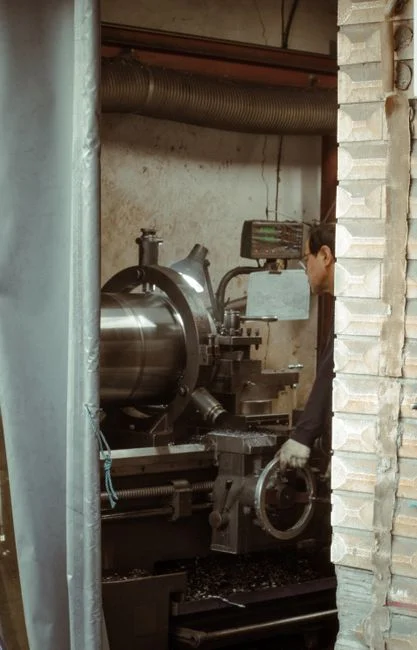
Thickener choice follows the sludge type. DAF thickening is the right call for floated, FOG-rich streams and for combined physico-chemical sludges, where micro-bubble attachment lifts solids at 3–5% capture per pass. Polymer conditioning with cationic polyacrylamide at 2–10 g/kg DS is typical, and dosing accuracy matters more than dosing rate — a HydropureWater DAF unit (13 standard models, 4–300 m³/h) pairs with an automatic chemical dosing system for flocculant preparation to keep that variance tight.
Gravity thickeners remain a low-cost, low-tech option for primary sludge at 25–35 kg/m²·d and 2–4% underflow, but they underperform on WAS because the floc is too light to settle without polymer aid. Rotary drum thickeners target 5–8% DS for WAS at 4–8 g/kg DS polymer demand — cheaper than DAF per cubic metre, but the polymer line item per tonne DS is higher, and the drum cannot handle high-FOG feeds without fouling.
For plants that switch between DAF-skimmed and primary streams, dual-train thickening with a shared polymer skid is the most common 2026 layout, because it lets operations route sludge to the right thickener by type without re-plumbing the dosing cabinet.
Anaerobic Digestion vs Aerobic Stabilization: When to Use Which
The biological-stage decision in 2026 is driven by three numbers: dry-solids throughput, energy price, and disposal route. Mesophilic AD at 35–37 °C, 20–30 day HRT, delivers 30–60% VS destruction and a usable biogas stream of 0.25–0.45 m³/kg VS added. Where the plant has a CHP unit, boiler, or upgrading skid, AD is the obvious choice once feed exceeds roughly 20 tonnes DS/day. Below that threshold, the capex rarely pays back before the 10-year asset life, and aerobic stabilization or MBR-side reduction is the cheaper path. Aerobic systems produce more sludge — the Frontiers review still puts the conventional activated-sludge yield under 0.05 kg DM per kg COD removed (Frontiers, 2021) — but they avoid digester capex, struvite management, and gas-safety obligations. Where struvite scaling is a recurring digester problem, see the engineering guide on struvite scaling prevention in digesters.
An emerging valorization route for AD reject or waste activated sludge is lipid extraction for biodiesel. The Egyptian Journal of Petroleum pilot recovered 18.81 wt% crude lipid from milk-plant activated sludge at 0.8 wt% catalyst, 55 °C, 6:1 MeOH:oil molar ratio, 40 min (Egyptian J. Petroleum, 2018). This is still a niche route, but it changes the economics of AD when the digester supernatant carries recoverable oil. Sites staying on the aerobic side of the trade-off can pair a lamella clarifier with an MBR membrane bioreactor for high-MLSS operation and lower net sludge yield.
| Criterion | Mesophilic AD | Aerobic / MBR |
|---|---|---|
| Operating temperature | 35–37 °C | Ambient (10–30 °C) |
| HRT / SRT | 20–30 d HRT | 15–30 d SRT (CAS), 30–60 d (MBR) |
| VS destruction | 30–60% | 30–50% (aerobic) |
| Sludge yield | 0.10–0.20 kg DM/kg COD removed | <0.05 kg DM/kg COD removed (CAS) |
| Energy recovery | 0.25–0.45 m³ biogas/kg VS added | None (net power consumer) |
| Payback threshold | >20 t DS/day influent | Any scale |
Dewatering Equipment Face-Off: Plate Press, Belt Press, Centrifuge
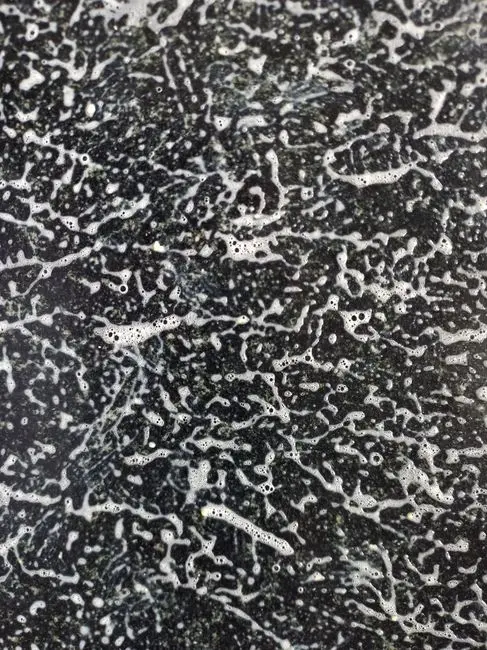
Procurement teams in 2026 are usually choosing between three machines. The plate-and-frame filter press delivers the driest cake at 22–28% DS, with filtration areas from 1 m² for a small cheese plant to 500 m² for a multi-line liquid-milk processor. Capex is the highest of the three options, footprint is the largest, and cycle time is batch — but transport cost per tonne DS is the lowest because there is less water to haul. Conditioning is typically an automatic chemical dosing system feeding 4–8 g/kg DS cationic polyacrylamide.
Belt presses are cheaper to buy, run continuously, and fit plants with limited floor space. They deliver 18–22% DS, but polymer demand rises to 8–15 g/kg DS, and the machine is sensitive to feed solids consistency — a 1% swing in feed DS can drop cake dryness by 2–3 percentage points. Decanter centrifuges sit between the two: 20–25% DS, fully enclosed (low odour — relevant in indoor dairy plants near production), 3,000–4,000 G, and 15–35 kW power draw per m³/h of feed. Centrifuge opex is dominated by power and polymer, not maintenance hours.
The disposal route usually decides the winner. Landfill levy in 2026 sits in the $40–$110/tonne wet range in most EU and US jurisdictions, which swings the math toward the driest cake — the plate press. Land application tolerates a belt-press cake at 18–22% DS without agronomic penalty, so smaller plants often stay on belts. Indoor or urban sites with strict odour or aerosol rules tend to buy centrifuges for the enclosed operation.
| Parameter | Plate-and-frame press | Belt press | Decanter centrifuge |
|---|---|---|---|
| Cake dryness | 22–28% DS | 18–22% DS | 20–25% DS |
| Capex band (2026) | $45,000–$400,000+ | $25,000–$90,000 | $80,000–$350,000 |
| Polymer demand | 4–8 g/kg DS | 8–15 g/kg DS | 5–10 g/kg DS |
| Power draw | Low (hydraulic) | Low–medium | 15–35 kW per m³/h feed |
| Footprint | Largest | Smallest | Medium |
| Best fit | Landfill, high-tonnage | Land application, low tonnage | Indoor, odour-sensitive |
Reuse and Disposal: Class-A Biosolids, Land Application, and Biochar in 2026
For European dairy plants, the binding endpoint is EU Sewage Sludge Directive 86/278 plus the class-A pathogen criteria the Frontiers review consolidates: E. coli below 1×10³ CFU/g wet weight, Salmonella spp. absent in 50 g wet samples, Ascaris ova absent, and Clostridium perfringens under 3×10³ spores/g DM (Frontiers, 2021). The Irish DPS sampling showed median metal concentrations well under those SSD ceilings, so land application remains the standard disposal path. DPS C:N of about 6, with around 50% of nitrogen easily available, gives genuine fertilizer replacement value — but phosphorus build-up and Cu/Zn loading must be tracked across multiple application seasons.
In the US, dairy sludge applied to land is regulated under EPA Part 503 biosolids rules cross-referenced through 40 CFR Part 405, which governs dairy product processing discharges under NAICS 3115. Land application of DPS follows the same Part 503 framework as municipal biosolids, with site-specific loading rates for pollutants and pathogens (US EPA, 40 CFR Part 405). Pyrolysis at 250–350 °C to produce biochar — reported at 40.067% C, 5.354% H, 2.743% N (Emerald, 2025) — is being researched as a way to lock in microcontaminants and recover a soil amendment, but it remains an experimental valorization route in 2026, not a default disposal option.
2026 Cost and ROI Snapshot for a Dairy Sludge Retrofit
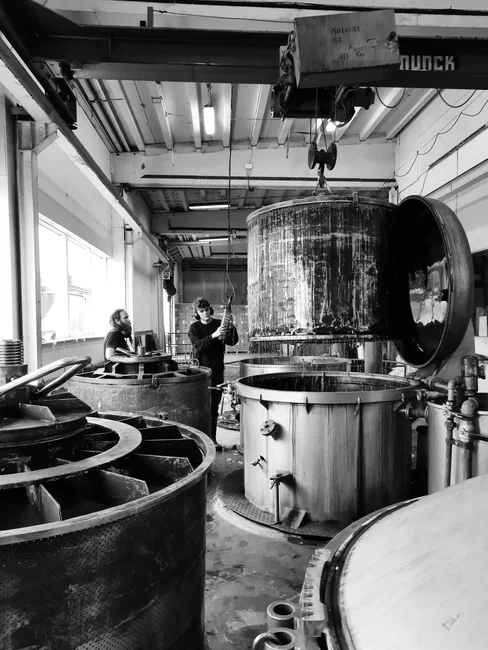
Capex bands in 2026 vary widely by spec. A 5–30 m² plate-and-frame press lists around $45,000–$180,000; a 100 m² fully automatic skid with cloth-washing and plate-shifting pushes past $400,000 (directional figures). Belt presses at 1–3 m belt width run $25,000–$90,000, with opex dominated by polymer at 8–15 g/kg DS. Decanter centrifuges at 5–40 m³/h cost $80,000–$350,000, and 15–35 kW power draw per m³/h of feed must be priced into opex from day one — not added later as a surprise. For more on pricing logic, see the 2026 sludge press cost and ROI guide.
The rule of thumb that holds across both EU and US projects: every 1 percentage point improvement in cake dryness cuts transport mass by roughly 5%, and at 2026 landfill/levy rates of $40–$110 per wet tonne, a press upgrade from a 20% DS belt to a 25% DS plate press typically pays back in 18–36 months. Procurement teams that wrap the upgrade in a performance-based wastewater O&M contract tend to capture that payback faster because the contract ties polymer dose, cake dryness, and uptime to a single SLA.
Frequently Asked Questions
What is the typical sludge yield for a dairy activated-sludge system in 2026?
The Frontiers systematic review puts conventional activated-sludge yield below 0.05 kg dry matter per kg of COD removed for dairy processing effluent, with C:N near 6 (Frontiers, 2021). Engineers should treat 0.04–0.05 kg DM/kg COD as the design range, and switch to an MBR if they need to push lower.
What cake dryness can a plate-and-frame filter press realistically hit on dairy sludge?
Plate-and-frame presses on dairy sludge reach 22–28% DS with 4–8 g/kg DS cationic polyacrylamide, versus 18–22% DS on a belt press and 20–25% DS on a decanter centrifuge. If the disposal route is landfill or long-haul land application, the press is the only option that consistently clears 25% DS.
When does anaerobic digestion make sense for a dairy plant?
Mesophilic AD at 35–37 °C with 20–30 day HRT pays back when influent exceeds roughly 20 tonnes DS/day and the site has a use for the biogas (CHP, boiler, or upgrading). Below that throughput, aerobic stabilization or MBR-side sludge reduction is usually cheaper over the asset life.
What are the EU class-A pathogen limits for land-applying dairy sludge in 2026?
Under the EU Sewage Sludge Directive 86/278 class-A criteria, treated sludge must show E. coli below 1×10³ CFU/g wet, no Salmonella in 50 g, no Ascaris ova, and C. perfringens under 3×10³ spores/g DM (Frontiers, 2021). Meeting these limits typically requires AD plus thermal drying or advanced pasteurization, not dewatering alone.