The 2026 Compliance Picture for a Chicago-Area Fabricated Metals Plant
Fabricated metals plants near Chicago meet 2026 sewer pretreatment limits by routing wastewater through a six-stage train — equalization, pH/chemistry trim, oil and TSS removal, hydroxide precipitation of dissolved metals, dissolved air flotation or lamella clarification, and sludge dewatering — designed to the 40 CFR Part 413 Metal Finishing daily-maximum values (Cd 0.11, total Cr 2.77, Cu 3.38, Ni 3.98, Zn 2.61 mg/L) and the stricter local limits set by the receiving POTW control authority. The federal floor under any of those local rules is 40 CFR Part 413, which covers forming, finishing, forging, foundry, metal spraying, and machining wash operations co-located with plating or anodizing; a dry stamping shop that ships parts out and never runs a wet process is generally outside the category, but the moment a facility owns a zinc, nickel, or chromic acid tank, the categorical numbers apply (per EPA 40 CFR Part 413).
A Chicago-area discharger interacts with four named control authorities in 2026: the Metropolitan Water Reclamation District of Greater Chicago (MWRDGC) for most of Cook County, the North Shore Water Reclamation District (NSWRD) for the northern suburbs, the DuPage County Department of Environmental Concerns for the western suburbs, and the Illinois EPA Bureau of Water for Permit to Install (PTI) review. Where this article quotes a specific local limit, it uses the 40 CFR Part 413 numbers plus the Section 926.04 national categorical framework as the representative reference, because local ordinances are stricter than the categorical floor but vary by control authority. Engineers should pull their actual receiving POTW's sewer-use ordinance before final design.
Two anti-circumvention rules bind across every Chicago-area control authority in 2026. First, no user shall increase the use of process water or otherwise attempt to dilute a discharge as a partial or complete substitute for adequate treatment; the Superintendent may impose Equivalent Mass and Concentration Limits on any user found to be diluting (per the Section 926.04 framework, 2025-08). Second, pH excursions outside the local limit — typically 5.0–10.0 — are permitted only as unintentional and temporary incidents; routine excursions are violations. A Categorical Industrial User (CIU) is a discharger subject to a categorical pretreatment standard, while a Significant Non-Compliance (SNC) user is one that has violated monthly-average limits, daily-maximum limits, or compliance schedule milestones in the prior 12 months — that classification drives inspection frequency, public notice, and whether the control authority can revoke the permit.
What Comes Out of a Fabricated Metals Floor in 2026
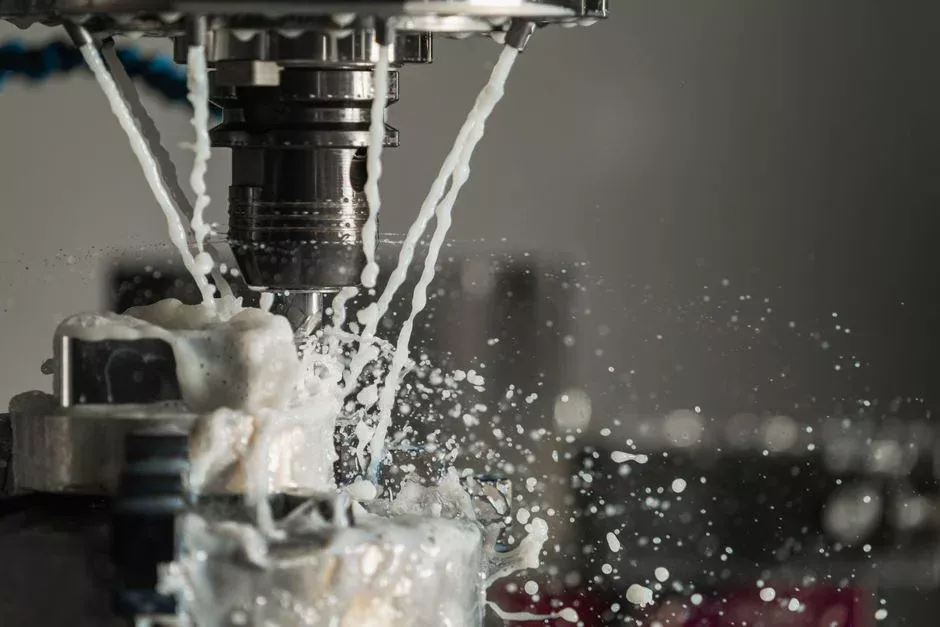
A fabricated metals floor generates four contaminant families regardless of the specific process mix: free and emulsified oils from stamping lubricants, machining coolants, and drawing compounds; dissolved heavy metals — Zn, Ni, Cu, Cr, Pb, Cd — from plating rinsewater and acid pickling; hexavalent chromium from chromic acid anodizing, hard chrome plating, and conversion coating; and total suspended solids from grinding swarf, casting sand, and hydroxide floc carryover (HydropureWater field data, 2026). Cyanide shows up wherever alkaline cyanide plating of Zn, Cu, Cd, or Ag is still in use and must be oxidized before metals precipitation, because cyanide resolubilizes metal hydroxides downstream and silently pushes the discharger out of compliance on the metals the operator thought were already precipitated.
Typical operating ranges for a mixed floor drain entering pretreatment are oils at 50–500 mg/L, total dissolved metals at 5–200 mg/L, TSS at 100–1,000 mg/L, and pH swinging between 2 and 12 across batch dumps. A hard chrome line spikes Cr(VI) to 50+ mg/L and drops pH below 2 on a rinse dump; a stamping cell with no plating holds pH near 7 with low metals but carries steady emulsified-oil loading. Because plating shops run batch dumps rather than steady flow, equalization is not optional — it is the unit operation that lets the chemistry downstream operate at all.
Two design consequences follow. First, the engineer must collect a full week of composite flow before specifying equipment, because a 4-hour composite that misses the Friday afternoon spent-coolant dump will undersize the equalization basin by 50% or more. Second, the four contaminant families do not all respond to the same chemistry: oils need physical separation or chemical break, hex chrome needs reduction at low pH, cyanide needs alkaline oxidation, and dissolved metals need pH-driven precipitation. Trying to drop them all into one reactor produces an effluent that fails on at least one parameter and usually on three.
The Six-Stage Pretreatment Train and Why the Order Matters
A defensible 2026 pretreatment train runs in six steps, and the sequence is the same one a control authority reviewer expects to see on the P&ID:
- Equalization. Flatten shock loads to a pH band of 6–9 with flow CV held below 0.5. Skipping this stage is the most common reason a downstream dissolved air flotation (DAF) skid gets overwhelmed during a spent-coolant dump.
- pH and chemistry trim. A PLC-controlled chemical dosing skid with flow-paced coagulant and polymer feed plus pH trim. Batch swings of 2 pH units are routine during coolant changeouts; only closed-loop control holds the 6.5–8.5 operating band reliably.
- Hex chrome reduction (where chromic acid processes are present). Sodium metabisulfite or ferrous sulfate at pH 2.0–2.5 with ORP controlled near 250–300 mV converts Cr(VI) to Cr(III) so the metals stage can precipitate it as Cr(OH)₃.
- Primary oil and TSS removal. DAF first for emulsified-oil streams, lamella clarifier for swarf-heavy rinses. DAF sizing is governed by surface loading 4–20 m/h, air-to-solids ratio (A/S) 0.005–0.060 with 0.02 typical, and recycle rate 10–30% of forward flow; in metalworking duty DAF routinely hits 90–95% FOG removal.
- Metals precipitation and polishing. Raise pH to 8.5–9.5 to drop Cr(OH)₃, Cu(OH)₂, Ni(OH)₂, and Zn(OH)₂; a polishing DAF or lamella stage then takes TSS to <100 mg/L and FOG to <50 mg/L.
- Sludge dewatering. A plate-and-frame filter press takes floated metal-hydroxide sludge from 2–5% dry solids out of the DAF up to 25–35% cake, which is the dry solids band that cuts hauling cost per wet ton. A rotary mechanical bar screen ahead of the equalization basin is the single most common fix for premature press-cloth failure, because it strips rags, wipes, and tramp metal before they reach the sludge train.
Reorder any of these stages and the train breaks: a metals precipitation stage ahead of chrome reduction leaves Cr(VI) soluble at high pH, and a DAF ahead of equalization gets overloaded on the first batch dump. Alarm and shutdown interlocks on pH excursion, ORP out of range, and high TSS should automatically divert flow back to the equalization basin header so a chemistry upset does not become a discharge violation.
2026 Parameter Table: What the Effluent Has to Hit
The table below is what an engineer can hand to a vendor or a jar-testing lab without further translation. Influent ranges are typical metalworking values; DAF/clarifier effluent targets are the design envelope; 40 CFR Part 413 daily-max and monthly-avg values are the categorical floor that no local ordinance can soften. The local control authority may set more stringent limits where the receiving plant's hydraulic or treatment capacity warrants it, so the design envelope should be built from the stricter of the two.
| Pollutant | Typical influent (metalworking) | DAF/clarifier effluent target | 40 CFR Part 413 daily max | 40 CFR Part 413 monthly avg | Basis |
|---|---|---|---|---|---|
| TSS | 100–1,000 mg/L | <100 mg/L | — | — | Conventional pollutant per local POTW |
| Oil & Grease (FOG) | 50–500 mg/L | <50 mg/L | 117 mg/L | 52 mg/L | 40 CFR Part 413 Table 1 |
| Cadmium (Cd) | 0.1–5 mg/L | <0.07 mg/L | 0.11 mg/L | 0.07 mg/L | 40 CFR Part 413 Table 1 |
| Total Chromium (Cr) | 1–100 mg/L | <1.71 mg/L | 2.77 mg/L | 1.71 mg/L | 40 CFR Part 413 Table 1 |
| Hexavalent Chromium (Cr(VI)) | 0.5–50+ mg/L | <0.22 mg/L | 0.32 mg/L | 0.22 mg/L | 40 CFR Part 413 Table 1 |
| Copper (Cu) | 1–50 mg/L | <2.07 mg/L | 3.38 mg/L | 2.07 mg/L | 40 CFR Part 413 Table 1 |
| Lead (Pb) | 0.5–20 mg/L | <0.43 mg/L | 0.69 mg/L | 0.43 mg/L | 40 CFR Part 413 Table 1 |
| Nickel (Ni) | 1–50 mg/L | <2.38 mg/L | 3.98 mg/L | 2.38 mg/L | 40 CFR Part 413 Table 1 |
| Zinc (Zn) | 1–100 mg/L | <1.48 mg/L | 2.61 mg/L | 1.48 mg/L | 40 CFR Part 413 Table 1 |
| pH | 2–12 (batch dumps) | Steady 6.5–8.5 | 5.0–10.0 (excursions unintentional and temporary only) | Local POTW ordinance | |
DAF vs Lamella: Which Stage Goes First in a Chicago-Area Shop
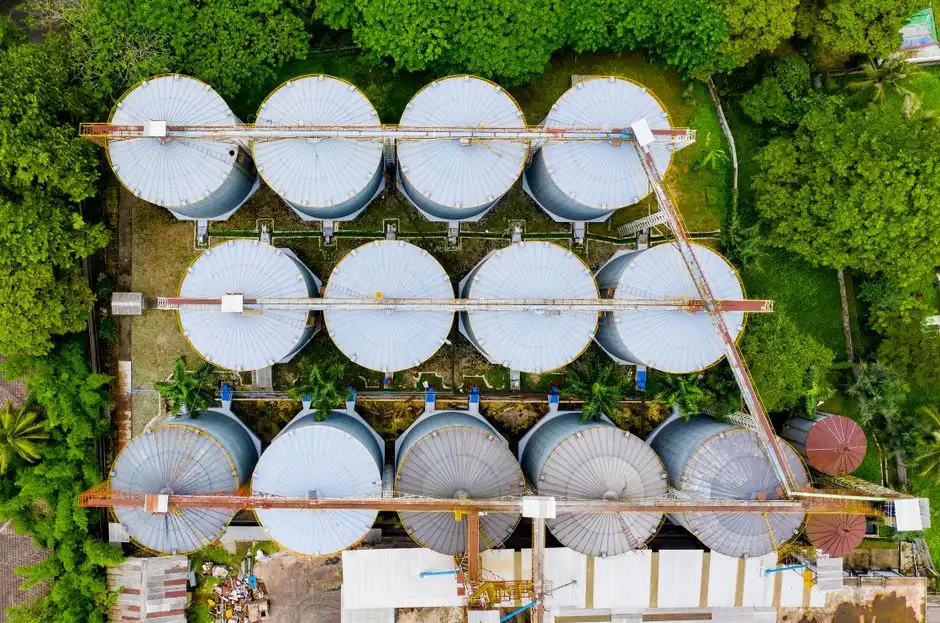
The choice between DAF and lamella is driven by the dominant contaminant in the equalized wastewater, not by a vendor preference. Emulsified oils → DAF. Inorganic TSS with little oil → lamella. DAF air-scours emulsified oil droplets to the surface for skimming and routinely hits 90–95% FOG removal in metalworking duty; a lamella clarifier cannot break a stable emulsion on its own and would need an upstream emulsion-breaking chemistry stage to do the same job (HydropureWater field data, 2026).
| Selection criterion | DAF first | Lamella first |
|---|---|---|
| Dominant contaminant | Free and emulsified oil from stamping lubricants, machining coolants, drawing compounds | Inorganic TSS — grinding swarf, mill scale, heat-treat scale |
| FOG removal | 90–95% without emulsion-breaking chemistry | 30–60% without emulsion-breaking chemistry |
| TSS removal | 60–85% as a side benefit | 70–90% with coagulant only for colloidal metals |
| Footprint | Compact skid, typically 4–6 m² per unit | Smaller per m² of footprint, taller profile |
| Sludge output | Floated skimmings, 3–8% dry solids → filter press | Settled underflow, 1–3% dry solids → needs thickening |
| Best fit | Cutting fluids, stamping lubricants, or any emulsion present | Parts washing rinses with grinding swarf and low oil |
Many Chicago-area plants run a two-stage scheme: DAF first to strip the bulk of the emulsified oil, then a lamella clarifier for TSS polishing. The DAF float goes to the plate-and-frame press, and the clarifier underflow either joins the same press or is thickened separately. One pitfall to flag: a cutting-fluid stream with a stable emulsion will pass straight through either device without emulsion-breaking chemistry first. A jar test with a cationic or amphoteric demulsifier at 50–200 mg/L confirms break in 5–10 minutes, and the same chemistry carries through to the DAF. Skipping this step is the most common reason new skids underperform on the first round of sampling — the deeper logic is in the DAF vs clarifier buyer's guide for fabricated metals.
Chicago-Area Permit Deliverables and 2026 Timeline
The deliverables the local control authority and Illinois EPA expect for a fabricated-metals permit application in 2026 are not optional. The Section 926.04 framework explicitly requires users to provide necessary pretreatment to comply with applicable discharge limitations, and a Permit to Install (PTI) is required for any new facility construction, with detailed plans, specifications, and operating procedures submitted to the Illinois EPA Bureau of Water and a copy to the City or control authority. The package consists of:
- Process description (unit operations, batch vs continuous, operating hours)
- Influent characterization with a minimum one week of 24-hour composite sampling
- P&ID and process flow diagram with control points marked
- Control narrative covering alarms, interlocks, and diversion logic
- Sampling plan (locations, frequencies, methods, chain of custody)
- Slug control plan identifying the worst-case batch dump and the containment response
- Operations and maintenance plan with spare parts and calibration intervals
- PTI application for new construction, or NPDES IU permit modification for existing facilities discharging > 25,000 gpd
Engineers who show up with a one-line process description get a rejection letter; engineers who submit the full list typically get approved on the first or second review. A typical 2026 timeline runs 4–6 months from kickoff to commissioning: 4–8 weeks for sampling and jar testing, 6–10 weeks for engineering and PTI submittal to Illinois EPA, 4–8 weeks for state and POTW review and approval, and 8–12 weeks for fabrication, delivery, and on-site installation. Shops that already have equalization and a basic oil/water separator can compress the front end by 4–6 weeks because the baseline monitoring data already exists. One forward-looking risk: EPA's PFAS and Existing Substances of Concern rulemaking could reach metal-finishing wastewaters in future NPDES cycles, so design the precipitation and sludge stages with reserve capacity (additional reactor volume, redundant polymer feed) to add a polishing step later without re-piping the skid.
CAPEX and OPEX Bands by Flow Range
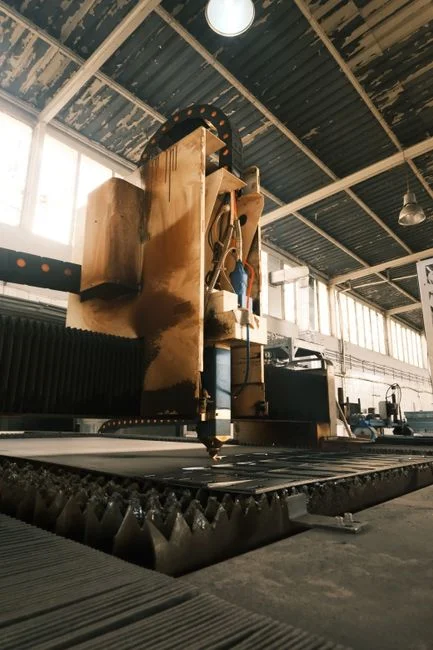
CapEx for a packaged pretreatment skid scales with flow, and the wide bands reflect vendor selection, tank material (carbon steel vs 304L/316L stainless vs FRP), and the degree of building fit-out. A defensible budget requires a process flow diagram and influent characterization before a vendor will commit to firm numbers.
| Flow band | Typical shop profile | CapEx band (packaged skid, 2026) | OpEx band (steady-state) |
|---|---|---|---|
| 5–10 m³/h | Mostly stamping and light CNC; no plating | Lower packaged-skid tier — equalization basin, pH dosing, compact DAF, sludge holding | $0.50–$1.50 per m³ |
| 10–20 m³/h | Mixed floor drain; light plating or anodizing | Mid-tier — adds metals precipitation reactor and sludge handling | $1.00–$2.00 per m³ |
| 20–50 m³/h | Plating or anodizing lines; significant metals loading | Upper tier — larger precipitation chemistry, redundant polymer feed, larger filter press | $1.50–$3.00 per m³ |
OpEx is dominated by three line items: chemical dosing (coagulant, polymer, and pH adjusters), sludge hauling (driven by cake volume), and electricity for mixers, pumps, and the DAF recycle compressor (HydropureWater field data, 2026). Avoided POTW surcharges for high-strength discharges typically pay back pretreatment CapEx in 2–4 years for shops discharging more than 20 m³/day, which is the crossover point where dedicated on-site treatment beats continued surcharges plus risk.
Frequently Asked Questions
Which control authority regulates a fabricated metals plant in the Chicago Metro?
A fabricated metals plant in the Chicago Metro is regulated by a layered structure: 40 CFR Part 413 (Metal Finishing) sets the federal categorical floor, the Illinois EPA Bureau of Water reviews the PTI and NPDES IU permit, and the local control authority — typically MWRDGC for most of Cook County, NSWRD for the northern suburbs, or DuPage County for the western suburbs — enforces the sewer-use ordinance and conducts sampling. The plant must meet the strictest limit on each parameter across all three tiers.
How does a Chicago-area plant size a DAF for cutting-fluid wastewater?
DAF for cutting-fluid wastewater is sized by surface loading rate (4–20 m/h, with 10–15 m/h typical for metalworking), air-to-solids ratio (0.005–0.060, with 0.02 as a design point), and recycle rate (10–30% of forward flow). The detailed worked example for a similar fabricated-metals stream is in the DAF vs clarifier buyer's guide for fabricated metals.
What is the 40 CFR Part 413 daily-maximum value for nickel and zinc?
Under 40 CFR Part 413 Table 1 (Metal Finishing), the daily-maximum value for nickel is 3.98 mg/L with a 2.38 mg/L monthly average, and for zinc the daily-maximum is 2.61 mg/L with a 1.48 mg/L monthly average. The local control authority may set stricter limits where the receiving plant's hydraulic or treatment capacity warrants it.
How long does a 2026 PTI submittal take from kickoff to commissioning in Illinois?
A typical 2026 timeline runs 4–6 months from kickoff to commissioning: 4–8 weeks for sampling and jar testing, 6–10 weeks for engineering and PTI submittal, 4–8 weeks for Illinois EPA and POTW review, and 8–12 weeks for fabrication and installation. Cross-references for nearby plants and the national framework are in the Sycamore-area fabricated metals pretreatment guide and the national US fabricated metals pretreatment guide.