Why Hong Kong Hotels Need Packaged MBR Sewage Treatment
To choose a packaged MBR wastewater treatment system for a Hong Kong hotel in 2026, size the plant at 0.7–1.0 m³ per guest-night (or roughly 1.2 m³ per five-star room), select a submerged PVDF membrane system with a 0.1 µm pore size in either hollow-fiber or flat-sheet geometry, and design for effluent BOD ≤20 mg/L and SS ≤30 mg/L to satisfy the Hong Kong Water Pollution Control Ordinance and enable toilet-flushing or irrigation reuse.
Hong Kong enforces the Water Pollution Control Ordinance (Cap. 358) and the Technical Memorandum on Effluent Standards. Direct discharge to a non-government drain or watercourse requires a licence, with compliance demonstrated against SS, BOD, COD, NH₃-N, and E. coli limits. There is no "automatic" discharge pathway for a hotel — either the developer connects to a DSD sewer under a trade-effluent consent, discharges under licence to a watercourse, or reuses the treated water on site. The third option is increasingly common because Hong Kong's water tariff (around HK$4–12/m³ tiered) and salt-water flushing mandate create a measurable payback for any reuse scheme that offsets 30% or more of municipal demand.
Site constraints are the second forcing function. A 200-key hotel in Tsim Sha Tsui, Wan Chai, or Causeway Bay typically has no surface area available for an open activated-sludge or SBR plant; the STP must sit below a car park, service yard, or podium garden. Buried or containerized packaged MBR units (FRP or SS304 tank, 12 m × 2.5 m × 3 m envelope) drop into a standard basement excavation and produce no visible infrastructure above grade.
Hotel wastewater is also unusually variable — laundry surges at midday, banquet nights double F&B flow for 4–6 hours, and weekend occupancy swings 80–95%. A submerged MBR operates comfortably at MLSS 8,000–12,000 mg/L (per HECS, 2026) and absorbs these shock loads far better than SBR or MBBR, which lose settleability or carrier surface area under the same spikes. The result is a smaller tankage volume, a tighter footprint, and a more stable permeate — three things a Hong Kong developer can defend to a planning reviewer.
How to Size a Packaged MBR STP for a Hong Kong Hotel
Sizing a packaged MBR for a hotel is a five-step calculation. Walk through it once and the spec you send to suppliers will already be 80% complete.
Step 1 — Establish the guest equivalent. A guest-night generates roughly 0.20 m³/d of base flow, plus 0.05 m³/d for kitchen waste and 0.10 m³/d for laundry. A practical design envelope is 0.8–1.2 m³ per occupied room per day. Cross-check this against Imemflo's published 200-bed, 5-star reference plant at 250 m³/d, which works out to 1.25 m³/bed — within the same envelope. A 300-key business hotel in Kowloon therefore sits in the 240–360 m³/d range before peaking.
Step 2 — Apply a peaking factor. Hong Kong hotels run 80–95% average occupancy with banquet spikes that can double the instantaneous flow. Apply a peaking factor of 1.5–2.0× to the average daily flow, and size the equalization tank for at least 8 hours of average flow so the membrane tank sees a steady hydraulic load.
Step 3 — Define the organic load. Design for 40–60 g BOD/person/d and 10–15 g NH₃-N/person/d, consistent with Hong Kong's mixed-domestic strength. For a 200-room hotel at 1.0 m³/room and 60 g BOD/m³, the reactor must handle about 12 kg BOD/d — easily within a 20–30 m³ aerobic chamber at MLSS 10,000 mg/L and F/M 0.10–0.15 kg BOD/kg MLSS·d.
Step 4 — Calculate membrane area. At a sustainable flux of 15–20 L/m²·h, a 200 m³/d plant needs 400–550 m² of installed membrane area. That works out to 4–5 DF-series flat-sheet modules (each 80–225 m²) or the equivalent hollow-fiber cassette count. Hold flux below 20 L/m²·h to keep trans-membrane pressure stable and cleaning intervals predictable; pushing past 25 L/m²·h is where fouling accelerates and the hotel sees TMP alarms.
Step 5 — Confirm footprint. A packaged 200 m³/d MBR typically occupies 25–40 m² of plan area, or 1–2 buried tanks of ~12 m × 2.5 m × 3 m deep — feasible below most Hong Kong basements provided a 3-tonne crane access and a 1.2 m headroom clearance are available for cassette withdrawal.
| Parameter | Design Value | Source / Basis |
|---|---|---|
| Hydraulic loading | 0.8–1.2 m³/room·d | Imemflo 200-bed/250 m³/d case (250 m³ ÷ 200 rooms = 1.25) |
| Peaking factor | 1.5–2.0× ADWF | Hong Kong hotel occupancy profile (80–95%) |
| Equalization | ≥8 h at ADWF | Membrane flux stability |
| BOD load | 40–60 g/person·d | Mixed-domestic strength (HECS, 2026) |
| NH₃-N load | 10–15 g/person·d | Mixed-domestic strength (HECS, 2026) |
| MLSS in reactor | 8,000–12,000 mg/L | HECS submerged MBR design range |
| Sustainable flux | 15–20 L/m²·h | PVDF hollow-fiber and flat-sheet operating envelope |
| Membrane pore size | 0.1 µm (UF) | PVDF submerged modules |
| Footprint (200 m³/d) | 25–40 m² plan area | Packaged buried-tank arrangement |
Hollow-Fiber vs Flat-Sheet MBR Membranes: Which Suits a Hotel?
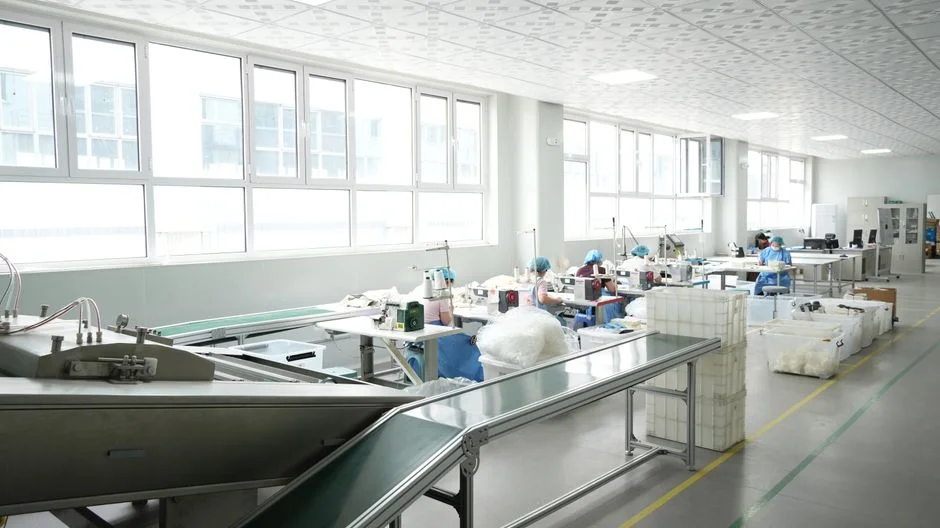
The membrane-geometry decision is the one most packaged MBR suppliers leave to the buyer. Both work in a hotel; the trade-offs are real and they affect downtime risk for the next ten years.
Hollow-fiber (HF) MBR, supplied by the major hollow-fiber membrane manufacturers, delivers the highest packing density — up to 30% more membrane area per cubic metre of tank. Flux is typically rated 15–25 L/m²·h. The downside is sensitivity to hair, lint, and grease: a single laundry surge that bypasses pre-screening can wrap fibers, raise TMP, and force an unscheduled clean-in-place. In a hotel, laundry lint is not a theoretical risk — it is a daily occurrence. HF is the right call when footprint is the binding constraint and the laundry stream is segregated to a dedicated grey-water plant.
Flat-sheet (FS) MBR, in the form of DF series flat-sheet MBR modules (0.1 µm PVDF), tolerates coarser pre-screening (2 mm versus 1 mm for HF), is easier to clean in place, and uses 10–20× less energy than external cross-flow designs because aeration scour doubles as mixing. Operating flux is typically 12–20 L/m²·h — slightly lower than HF, but the trade is reliability. For a hotel that cannot afford an unscheduled shutdown, FS is the safer default.
Module replacement is the second decision driver. DF-series flat-sheet cassettes allow individual sheet replacement, so a single damaged sheet does not require a full cassette swap. HF cassettes, by contrast, are typically replaced as a complete unit. For a hotel that must stay open during maintenance, that difference shows up in both spare-parts inventory cost and the duration of any service visit.
| Criterion | Hollow-Fiber (HF) | Flat-Sheet (FS, DF series) |
|---|---|---|
| Packing density | Up to 30% higher than FS | Lower; more tank volume per m² |
| Operating flux | 15–25 L/m²·h | 12–20 L/m²·h |
| Laundry-lint tolerance | Lower; needs fine screening | Higher; tolerates 2 mm pre-screen |
| Air-scour energy | Moderate | Lower (10–20× less than cross-flow) |
| Module replacement | Full cassette swap | Individual sheet replacement |
| Best fit for hotel | Footprint-critical, segregated laundry | Reliability-critical, mixed laundry |
Hong Kong Discharge Limits and the Reuse Opportunity
Direct discharge to inland or coastal waters under WPCO typically requires SS ≤30 mg/L, BOD₅ ≤20 mg/L, NH₃-N ≤5 mg/L, and E. coli ≤200 cfu/100 mL — values that a well-operated MBR permeate meets routinely, not as a stretch target. For sewer discharge to DSD, limits are less stringent, but a trade-effluent consent still applies, with associated consent fees and ongoing sampling. Many Hong Kong hotel operators find that the math favours on-site reuse instead: avoiding the consent fee, eliminating the discharge tariff, and turning a compliance cost into a water-cost saving.
MBR permeate is already <1 µm and low in suspended solids, but it is not potable. For reuse as toilet flushing, cooling-tower make-up, or landscape irrigation, two finishing steps are standard: disinfection (chlorine at 1–2 mg/L residual, or UV at 30–40 mJ/cm²) for E. coli control, and — for cooling-tower make-up — RO polishing. The MBR + RO combination achieves >95% TDS removal (per HECS, 2026) and brings the water inside the conductivity range that Hong Kong's cooling-tower OEMs specify for cycle-of-concentration operation. A 200-key hotel reusing 30–50% of its treated effluent can offset 30–50% of municipal water demand, which at current tariffs is a six-figure annual saving in HKD.
One clarification for the spec: pairing the MBR with a UF pre-filter is not required — the membrane itself is already an ultrafilter. A polishing activated-carbon filter is recommended for odour and colour control in reused water, but it is a polishing step, not a pre-treatment requirement. For projects that need a buried tank package to sit below the car park, a buried packaged STP in the WSZ configuration is the usual envelope.
Specifying a Packaged MBR: Procurement Checklist for 2026
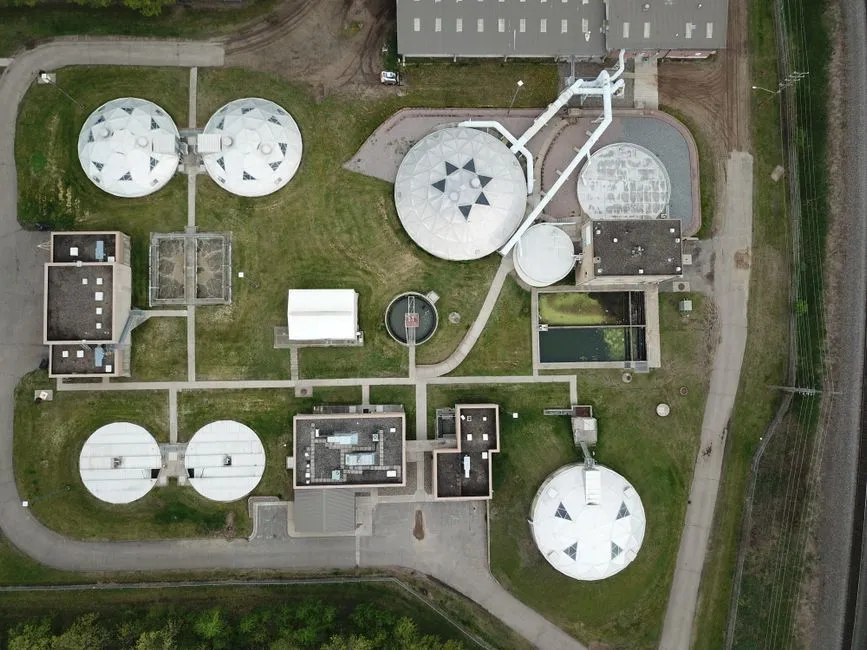
The RFQ you send to suppliers in 2026 should lock down the following items. Anything a supplier pushes back on without a written technical reason is a signal to look elsewhere.
Required process specs. PVDF membrane, 0.1 µm pore size, integrated aeration scour, automated backwash, and PLC control with remote telemetry (4G or fibre) so the hotel engineering team can see TMP, MLSS, and DO trends from a phone. Unattended basement operation is not optional in Hong Kong — the plant must alarm out, not require a roving watchman.
Materials and structural. SS304 tank or FRP with concrete surround. Confirm seismic design to the Hong Kong Code of Practice for Structural Uses of Steel and Concrete, since most plants sit below occupied buildings. Ask for the as-built drawing stamped by a Hong Kong-recognised engineer (RSE or equivalent) as a contractual deliverable.
Spare parts and service. 1 year of membrane cleaning chemicals (typically NaOCl and citric acid), a set of replacement air-diffuser discs, and at least one scheduled service visit included in the supply price. Suppliers that omit this in 2026 are signalling they do not support the Hong Kong market; spares shipped from Shenzhen or Shanghai on a 10-day lead time are not acceptable for a hotel with 90% occupancy.
Commissioning and compliance. Insist on influent/effluent lab analysis for BOD, COD, SS, NH₃-N, and E. coli over a 7-day trial period. Do not release final payment until the parameters are achieved against the WPCO licence or the reuse specification. The signed process performance report and the WPCO discharge licence reference (if applicable) belong in the handover dossier alongside as-built drawings.
Chemical dosing. For nutrient removal or pH control, specify an automatic chemical dosing system sized to the design load, with bundled reagent for the first 90 days of operation.
| Checklist Item | Acceptance Criterion |
|---|---|
| Membrane material & pore size | PVDF, 0.1 µm UF |
| Control & telemetry | PLC + remote 4G/fibre telemetry |
| Tank material | SS304 or FRP + concrete surround |
| Seismic design | Hong Kong CoP for Steel/Concrete |
| Spares bundle | 12-month CIP chemicals + diffuser discs + 1 service visit |
| Commissioning trial | 7-day lab analysis (BOD, COD, SS, NH₃-N, E. coli) |
| Final payment trigger | Parameters met against WPCO or reuse spec |
| Compliance docs | Process performance report, WPCO licence ref, as-built drawings |
Frequently Asked Questions
What size packaged MBR STP is needed for a 200-room Hong Kong hotel?
A 200-room Hong Kong hotel typically needs a 150–250 m³/d packaged MBR, depending on F&B kitchen flow, laundry volume, and whether the laundry is on the same stream. At 1.0–1.25 m³/room·d (the Imemflo 200-bed/250 m³/d benchmark) the design sits in the middle of that range.
MBR vs SBR for a hotel — which is better?
MBR wins on footprint (typically 60–70% smaller than SBR for the same load), reuse quality (permeate is already <1 NTU and suitable for RO feed), and shock-load tolerance (MLSS 8,000–12,000 mg/L). SBR wins on CAPEX if the site has no reuse requirement and adequate surface area for the batch tanks. For most Hong Kong hotel sites, the land and reuse economics tip the decision toward MBR.
What is the Hong Kong discharge BOD limit for a hotel STP?
For direct discharge under the Water Pollution Control Ordinance, the typical licence limit is BOD₅ ≤20 mg/L (with SS ≤30 mg/L, NH₃-N ≤5 mg/L, and E. coli ≤200 cfu/100 mL). For sewer discharge to DSD, limits are set by the trade-effluent consent and are less stringent, but the consent itself is a recurring compliance obligation.
Can MBR effluent be reused for hotel toilet flushing?
Yes. MBR permeate disinfected with chlorine (1–2 mg/L residual) or UV (30–40 mJ/cm²) consistently meets the E. coli and turbidity requirements for toilet-flushing reuse. For cooling-tower make-up, add RO polishing to bring TDS within the cooling-tower OEM's specification. Avoid potable reuse — that requires a separate, higher-grade treatment train and is rarely cost-effective at hotel scale. For an external benchmark on ammonia removal performance, see the ammonia removal performance of MBR reference design, and for global BOD/COD numbers, the global BOD/COD discharge limit guide. For a parallel hotel case in a different regulatory environment, the Frankfurt hotel MBR guide covers the EU framing.