
Why Jerusalem Effluent Treatment Needs a Different Design in 2026
An effluent treatment plant in Jerusalem in 2026 typically combines screening, DAF or primary clarification, biological treatment (MBR or SBR+clarifier), and tertiary UF/nanofiltration polishing to meet Israel Ministry of Environmental Protection discharge limits and Water Authority reuse criteria. Process selection is driven by influent variability from tourism-driven municipal loads and Mediterranean summer temperatures above 30°C, which depress biological kinetics and force diffused-aeration tank sizing upward by 15–25%.
Three structural drivers separate a Jerusalem ETP from a generic industrial plant. First, tourism-driven peak-to-average hydraulic ratios of 1.6–2.2x hit Old City hotels, pilgrim hostels, and adjacent laundry/catering facilities during Easter, Sukkot and summer high season, and equalization basins must be sized for that surge, not for the average daily flow printed on the utility bill. Second, basin mixed-liquor temperatures routinely exceed 30°C from June through September, which depresses nitrification rates by roughly 20–30% relative to the standard 20°C reference and forces the aeration tank upward in volume. Third, a single permit file usually crosses three reviewers: the MoEP discharge permit, the Jerusalem Municipality sewer-connection consent, and the Israel Nature and Parks Authority when the outfall or irrigation reuse zone touches a declared nature reserve.
For context, the Dubai solar CPV/T + SBR + RO + MED system documented for a 360 m³/day dairy plant is conceptually transferable, but Jerusalem's solar yield sits at about 5.5–6.0 kWh/m²/day versus Dubai's 6.3 (per the 2025 ASME paper on solar-powered distillation in dairy effluent treatment), so payback stretches by 2–3 years. The four influent profiles you will encounter in Jerusalem industrial parks are: dairy/food (BOD 1,500–4,000 mg/L + FOG), metalworking (oil + heavy metals), pharmaceutical/cosmetics (COD + solvent traces), and tourism-laundry/textile (TSS 400–1,200 mg/L + surfactants). The food processing wastewater technical guide covers the FOG and high-BOD pretreatment sequence in detail.
Process Trains Compared: MBR, SBR+Clarifier, DAF+UF, and Constructed Wetland Polish
Four realistic trains cover most Jerusalem industrial cases: (1) screening + DAF + MBR + UF for tight-footprint inner-city sites; (2) screening + equalization + SBR + clarifier + UF for steady-flow factories above 500 m³/day with available land; (3) screening + DAF + activated sludge + lamella clarifier + RO for plants targeting indirect potable reuse; and (4) screening + DAF + biological + constructed-wetland polish for agro-industrial and rural Jerusalem corridor sites where land is cheap and OPEX dominates the lifecycle cost. Wageningen University research (2024) confirms constructed wetlands as a viable WWTP polishing step for micropollutant removal, and they are particularly attractive where the receiving soil is sandy and the KKL-JNF drip-irrigation standard applies.
MBR is the default for sites under 500 m³/day with constrained footprints because it combines secondary clarification and membrane separation in a single tank, delivering BOD 90–99%, COD 85–97%, TSS 92–99% at 0.4–0.8 kWh/m³. SBR+clarifier is the workhorse above 500 m³/day where land is available and a 30–45% lower membrane-replacement cost outweighs the larger aeration footprint. DAF+UF is the right call for dairy, cosmetic, and laundry effluent where FOG or surfactant loading would foul an MBR membrane bank in weeks. The HydropureWater MBR membrane bioreactor product page quotes a 10–2,000 m³/day range with sub-1 µm filtration, which is a useful sizing reference rather than a hard quote. For a direct head-to-head of the four trains against Jerusalem's variables, the table below is the working tool.
| Parameter | MBR + UF | SBR + Clarifier + UF | DAF + Activated Sludge + Lamella + RO | DAF + Biological + Constructed Wetland |
|---|---|---|---|---|
| BOD removal | 95–99% | 90–96% | 95–99% | 85–95% |
| COD removal | 90–97% | 85–93% | 92–97% | 80–90% |
| TSS removal | 98–99% | 92–97% | 95–99% | 90–96% |
| Footprint (m² per m³/day) | 0.15–0.30 | 0.40–0.70 | 0.35–0.55 | 1.20–2.50 |
| Energy (kWh/m³) | 0.4–0.8 | 0.3–0.6 | 0.6–1.1 | 0.2–0.4 |
| Reuse potential | Unrestricted irrigation, cooling | Restricted irrigation, toilet flush | Indirect potable via aquifer recharge | Restricted irrigation, landscape |
| Best Jerusalem fit | Inner-city, FOG <150 mg/L | Steady industrial flow, land available | Pharma, indirect potable reuse | Agro-industrial, rural corridor |
The HydropureWater DAF system handles FOG and TSS cuts ahead of any of these biological stages, and the HydropureWater UF system at 0.03 µm closes the train for reuse-grade water. REKPRO's published ETP taxonomy (chemical, biological, physical, membrane, hybrid, sludge) is a useful starting vocabulary, but the Jerusalem-specific selection rule is: match the train to the hydraulic peak, not to the catalogue.
Israel 2026 Compliance Map: MoEP, Water Authority and Stream-Discharge Limits
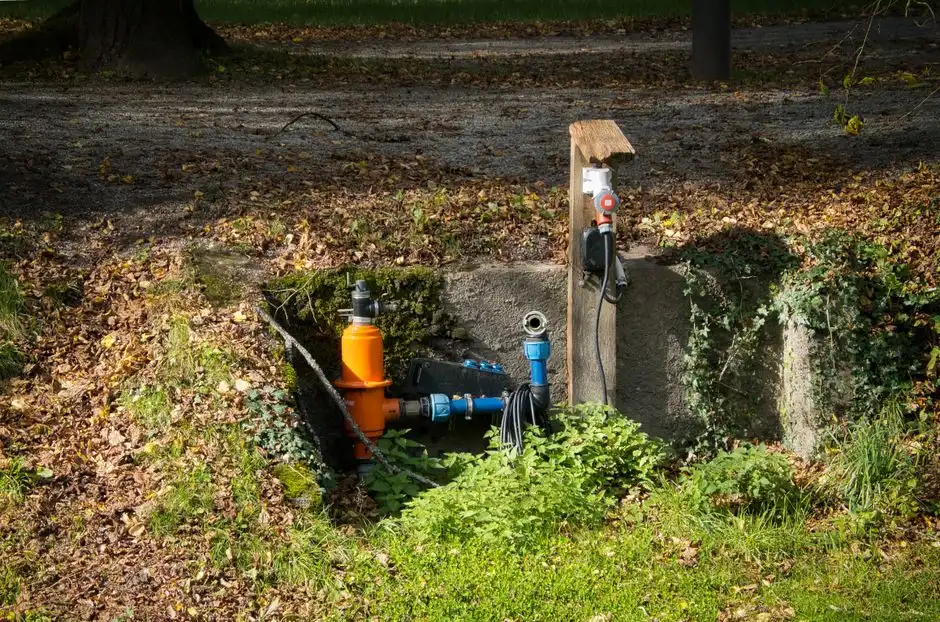
Three regulators govern an industrial ETP in Jerusalem, and confusing their roles is the most common reason a permit file stalls. The Israel Ministry of Environmental Protection issues the discharge permit and enforces environmental compliance; the Israel Water Authority sets the non-potable and potable reuse criteria referenced inside that permit; and the Standards Institution of Israel irrigation reuse guideline is what most MoEP permits cite line-by-line for unrestricted-irrigation reuse. EU WFD reuse benchmarks (per the University of Twente direct-nanofiltration thesis, 2024) are the alignment target the Israel reuse guideline tracks for indirect potable and unrestricted agricultural reuse.
Two compliance traps specific to Jerusalem are worth flagging before vendor selection. First, discharge to the Jerusalem sewage corridor — the main interceptor running toward the Sorek and the West Bank treatment plants — often triggers 10–20% tighter limits than the national MoEP defaults, because the receiving watershed is already loaded. Second, any new plant in the historic basin or within the buffer of a declared nature reserve triggers an environmental impact review that adds 6–12 months to the permit timeline and can require tertiary nutrient polishing that a plain MBR would not need.
| Parameter | MoEP surface-water discharge (typical) | MoEP sewer discharge (typical) | Unrestricted irrigation reuse (Water Authority / SII) |
|---|---|---|---|
| BOD₅ | ≤20 mg/L | ≤250 mg/L | ≤10 mg/L |
| COD | ≤120 mg/L | ≤500 mg/L | ≤60 mg/L |
| TSS | ≤30 mg/L | ≤350 mg/L | ≤10 mg/L |
| Total nitrogen | ≤15 mg/L | ≤40 mg/L | ≤10 mg/L |
| Total phosphorus | ≤2 mg/L | — | ≤1 mg/L |
| Turbidity | — | — | ≤5 NTU |
| Fecal coliforms | — | — | ≤10 CFU/100 mL (unrestricted) |
These limits are typical for a 2026 permit cycle; the actual numbers in your permit text always win, and the 6–12 month Jerusalem permit window starts the day you submit a complete file, not the day you appoint a vendor.
2026 CAPEX and OPEX Bands for a Jerusalem ETP
CAPEX scales nonlinearly with capacity because civil works and PLC/SCADA fixed costs dominate the small end and membrane area drives the large end. A packaged unit below 50 m³/day is the cheapest way to clear the MoEP sewer-discharge column; a containerized MBR between 50 and 250 m³/day is the sweet spot for most Jerusalem SMEs; civil-built MBR or SBR between 250 and 1,000 m³/day is where a proper building permit and on-site assembly are unavoidable; and above 1,000 m³/day the plant is effectively a custom build. The bands below are 2026 vendor-quote medians in USD per m³/day, not turnkey lump sums.
| Capacity tier | Typical train | CAPEX band (USD per m³/day) | Dominant cost driver |
|---|---|---|---|
| <50 m³/day | Packaged MBR or SBR | 1,800–3,200 | PLC, tank, pump skid |
| 50–250 m³/day | Containerized MBR + UF | 1,200–2,000 | Membrane modules, container integration |
| 250–1,000 m³/day | Civil-built MBR or SBR + UF | 900–1,500 | Civil works, aeration blowers |
| >1,000 m³/day | Custom MBR/SBR + UF/RO | 700–1,200 | Membrane area, electrical infrastructure |
OPEX breaks into five cost lines whose share is fairly stable across all four trains: aeration energy 45–60%, chemical dosing 10–20%, membrane replacement 5–10% (MBR only), sludge hauling 15–25%, and labour plus monitoring 5–10%. Biogas recovery is rarely economic below 1,000 m³/day for Jerusalem's industrial mix — the wastewater is too dilute and the FOG fraction too variable — so for most readers the resource-recovery line is OPEX-only and best treated as a future option. Solar augmentation is technically transferable from the Dubai CPV/T + SBR + RO model, but Jerusalem's 5.5–6.0 kWh/m²/day yield pushes ROI beyond 8 years without an Israel Electricity Authority subsidy, so describe the option but do not over-promise. The Hurghada industrial wastewater 2026 cost and compliance guide offers a comparable MENA cost model that transfers to Jerusalem with a 5–10% upward adjustment for inland logistics.
Sizing, Pre-Treatment and Sludge Path for a Jerusalem Plant
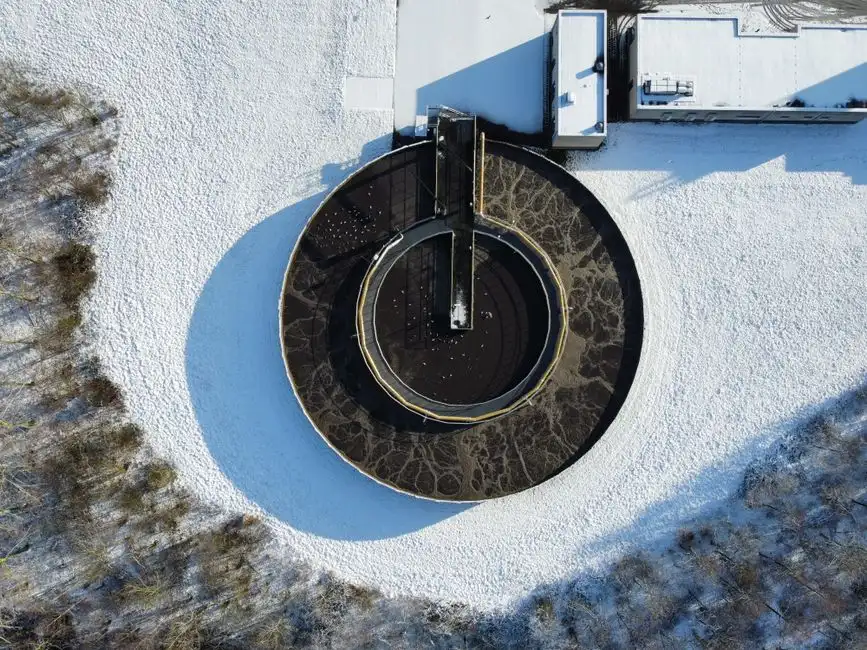
Four engineering decisions determine whether a selected train actually works on a Jerusalem site. The pretreatment sequence should be: rotary bar screen at 3–6 mm aperture, grit chamber, flow equalization sized for 1.6–2.2x peak-to-average, then DAF or primary clarifier depending on FOG load. A rotary bar screen and DAF as off-the-shelf choices is the standard configuration, and pairing them with an automatic chemical dosing system keeps pH and coagulant consumption stable through the tourism surges.
The biological-stage sizing rule of thumb for Jerusalem: when summer mixed-liquor exceeds 30°C, increase aeration tank volume by 15–25% to hold the same F/M ratio and nitrification efficiency, because the standard-rate constant k at 20°C is roughly 1.6–2.0x higher than at 30°C for the same autotrophic population. Tertiary polishing is UF at 0.03 µm for reuse-grade water, and nanofiltration if the project is targeting indirect potable reuse (per the University of Twente direct-nanofiltration thesis, 2024). Sludge handling for plants under 500 m³/day is a HydropureWater plate and frame filter press producing 22–28% dry solids cake, which cuts hauling volume by roughly 80% versus liquid sludge and is what most Jerusalem municipalities will accept at the receiving wastewater treatment plant.
Vendor Selection and RFQ Checklist for 2026
A vendor must demonstrate at least one Israeli or MENA-region reference plant within the last 36 months and supply a process performance guarantee tied to MoEP limits, not generic catalogue numbers. Required documentation in the RFQ response should include a PLC control architecture drawing (SCADA-ready with Modbus TCP or OPC-UA), a membrane replacement schedule with hourly unit cost, an OPEX model with explicit energy and chemical assumptions, and a 24-month spare-parts commitment for Jerusalem — relevant because Ashdod and Haifa port logistics add 2–4 weeks to any non-stocked part. HydropureWater is one manufacturer that ships containerized MBRs and full process trains against this checklist, but the same scoring sheet applies to any vendor on your shortlist.
The 7-step RFQ timeline mapped against the 6–12 month Jerusalem permit window: (1) site survey and influent characterization, weeks 1–3; (2) pilot or bench-scale treatability if the influent is non-standard, weeks 3–8; (3) MoEP pre-application meeting, week 6; (4) vendor shortlist and RFQ issuance, week 8; (5) bid evaluation and factory acceptance test plan, weeks 10–14; (6) permit submission and procurement, weeks 14–28; (7) installation, commissioning, and performance test, months 8–12. Sequencing the permit in parallel with procurement — not after it — is the single biggest schedule risk you can remove.
Frequently Asked Questions
What is the typical CAPEX for a 200 m³/day effluent treatment plant in Jerusalem in 2026?
A containerized MBR + UF in the 50–250 m³/day tier runs USD 1,200–2,000 per m³/day in 2026, so a 200 m³/day plant sits at roughly USD 240,000–400,000 before civil works and MoEP permit fees. Site-specific costs vary with influent FOG and the tertiary reuse target.
Which process train meets Israel MoEP unrestricted irrigation reuse in 2026?
MBR + UF paired with UV or chlorination is the most common configuration clearing BOD₅ ≤10 mg/L and turbidity ≤5 NTU, with constructed-wetland polish a viable low-OPEX add-on for agro-industrial sites. Pharma plants targeting indirect potable reuse should plan on UF + RO and a longer permit window.
How much does summer heat affect biological stage sizing in Jerusalem?
When mixed-liquor exceeds 30°C from June through September, increase aeration tank volume by 15–25% to hold the same F/M ratio and nitrification efficiency. This is the single most common reason biological stages under-perform their nameplate BOD removal in Jerusalem summers.
Do I need a separate Water Authority approval for reuse?
Yes. The MoEP discharge permit and the Water Authority reuse criteria are separate reviews, even when the MoEP permit text cites the SII irrigation standard inline. Submit both files in parallel to avoid adding 3–6 months to the schedule.