What changes on signing day when Novartis takes over an Indian plant
An Indian factory's Consent to Operate (CTO) under the Water (Prevention and Control of Pollution) Act, 1974 is granted to a named "occupier" — the legal entity running the plant — and a change in that entity on signing day voids the existing CTO for all practical purposes. The new owner must file a fresh CTO application with the State Pollution Control Board (SPCB) of the state where the plant sits, and the SPCB has no obligation to backdate consent to cover the closing date; standard processing runs 60–120 days for a clean file (SPCB procedural practice, 2024–2025). Four Indian statutes activate simultaneously: the Water Act 1974, the Air (Prevention and Control of Pollution) Act 1981, the Environment (Protection) Act 1986, and the Public Liability Insurance Act 1991, which together cover effluent, stack emissions, hazardous-waste handling, and third-party damage liability. Where the acquisition changes product mix or capacity, the EIA Notification 2006 (as amended in 2020 and updated by MoEFCC Office Memoranda) can re-open Category A or B screening, and a fresh Consent to Establish (CTE) is required before any civil work begins. Groundwater abstraction above 100 m³/day also requires a Central Ground Water Authority (CGWA) NoC transfer. Internally, every effluent KPI flows up to Novartis Group EHS through the Report on Nonfinancial Matters cycle (2024 release covering 2023 data), so a non-compliant Indian site shows up at group level from day 1 — not as a footnote but as a 2030 target miss on the "no water quality impacts" line. The deal team should plan for an "application for transfer pending" letter from the SPCB, interim operating risk of 90–180 days, and a baseline water audit that the new entity can defend at the next group reporting window.
The Indian wastewater rule stack every acquirer has to learn
The Indian effluent rule stack reads top-down as: Constitution (Article 48A, 51A(g)) → Environment (Protection) Act 1986 → Water Act 1974 and Air Act 1981 → CPCB directions and SOPs under EPA Section 5 → SPCB consent conditions → industry-specific General Statutory Rules (GSRs). For a pharma plant, the controlling instrument below the Acts is GSR 1062(E), which sets the pharmaceutical-sector effluent standards and is enforced through the consent letter. The Water Act defines the two key instruments an acquirer handles: Consent to Establish (CTE), required before construction or capacity expansion, and Consent to Operate (CTO), required to run the plant. A change in occupier, product mix beyond declared capacity, or addition of new API lines triggers a fresh CTE; routine ownership transfer with no process change typically triggers CTO re-issue plus amendment. GSR 1062(E) recognises three discharge modes — into a municipal sewer (typically to a CETP), into a surface water body, and onto land for irrigation — and assigns tighter ceilings to the latter two. Hazardous waste generated alongside wastewater — spent solvents, off-spec APIs, sludge from biological treatment — is governed by the Hazardous and Other Wastes (Management and Transboundary Movement) Rules 2016, which require a separate authorisation in the new occupier's name. CPCB has, since 2023, pushed Online Continuous Effluent Monitoring Systems (OCEMS) on red-category industries including pharma, and most SPCBs now ask for quarterly self-monitoring reports covering COD, BOD, TSS, pH, conductivity, flow, and residual chlorine uploaded to the SPCB portal. An acquirer that misses the OCEMS re-registration window (typically 30 days from change of occupier) inherits non-compliance from day 1, regardless of the CTO status.
Effluent parameter limits an Indian pharma site must hit
GSR 1062(E) sets the statutory ceiling for pharma discharge, but the controlling numbers in practice are the SPCB consent schedule, which is site-specific and often tighter. The table below shows indicative GSR 1062(E) ceilings for inland surface-water discharge (the most common mode for a standalone API plant) and the internal KPIs that a Novartis-acquired site is typically held to.
| Parameter | Unit | GSR 1062(E) indicative limit (inland surface water) | Typical Novartis internal KPI |
|---|---|---|---|
| pH | — | 6.5–8.5 | 6.5–8.0 |
| COD | mg/L | ≤ 250 | ≤ 150 |
| BOD (3-day, 27 °C) | mg/L | ≤ 30 | ≤ 15 |
| TSS | mg/L | ≤ 100 | ≤ 30 |
| Oil & grease | mg/L | ≤ 10 | ≤ 5 |
| Total residual chlorine | mg/L | ≤ 1 | ≤ 0.5 |
| Total chromium | mg/L | ≤ 2 | ≤ 0.5 |
| Hexavalent chromium (Cr⁶⁺) | mg/L | ≤ 0.1 | < detection |
| Ammoniacal nitrogen (as N) | mg/L | ≤ 50 | ≤ 20 |
| Total nitrogen | mg/L | SPCB-specific, often ≤ 100 | ≤ 45 |
| Total phosphorus | mg/L | SPCB-specific, often ≤ 5 | ≤ 2 |
Beyond the standard envelope, API plants that produce beta-lactams, macrolides, or fluoroquinolones face a second layer: antibiotic residue and antibiotic-resistance gene (ARG) indicators. CPCB advisories since 2023 and SPCB practice in Telangana, Karnataka, and Maharashtra now expect advanced treatment — ozone, UV, Fenton or photo-Fenton — to push residual antibiotic activity below effect thresholds. For a worked example of how a Fenton stage is sized against API mother-liquor, the Fenton oxidation system for pharmaceutical wastewater engineering guide is a useful reference. Inlet segregation matters: API mother-liquor, cleaning rinses, and cooling-tower blowdown are not co-treated at the front of the train — high-strength mother-liquor goes to equalisation and biological oxidation, while cooling-tower blowdown can be partially recycled through the RO. Where the plant discharges to a municipal CETP, parameter ceilings are usually negotiated with the CETP operator and can be looser on BOD but tighter on heavy metals and antibiotics. Where discharge is directly to a river or to land, every line item tightens and a ZLD conversation usually starts.
How to overlay Novartis's 2030 water targets on a new Indian site
Novartis's public 2030 nature commitments include two specific water lines: "No water quality impacts from manufacturing effluents by 2030 from own manufacturing sites, labs and all active pharmaceutical ingredient (API) suppliers," and "Implement water use reduction for own and supplier sites based in water-stressed basins by 2030" (Novartis, Nature — Water, accessed 2026-01). "No impact" in the Novartis formulation means no toxicity, no adsorbable organic halogens (AOX), and no antibiotic activity above background in the receiving water body — the bar is set at receiving-water quality, not at plant outlet. The second target is the one that drives Indian acquisitions: most of India's API manufacturing sits in high or extremely high water-stress basins per WRI Aqueduct 2023 and the India National Mission on Interlinking of Rivers mapping, including Telangana, Tamil Nadu, Gujarat, and parts of Karnataka. The Novartis India watershed programme near Hyderabad — 50,000 m³ of storage capacity created and 60,000 m³ of rainwater conserved in 2022, with a 30–40% increase in water availability in target villages (Novartis India, "The road to water neutrality," 2023) — is a benchmark the group already publishes, and an acquired Indian site will be measured against it. The practical translation into a design brief: tertiary treatment to reuse quality (MBR + RO) with RO permeate reused for cooling-tower make-up, gardening, and toilet flushing, plus rainwater harvesting sized to the site's roof and paved area. Zero-liquid-discharge (RO + brine concentrator + MEE/crystalliser) is reserved for sites discharging to land, for plants near nature-sensitive areas, and for red-category industrial estates in Gujarat and Rajasthan where SPCB notifications have required it. An acquirer should not pitch ZLD as a default — capital and operating cost step up sharply — but should be ready to defend why the chosen site does not need it.
Choosing the right treatment train for an acquired Indian API site
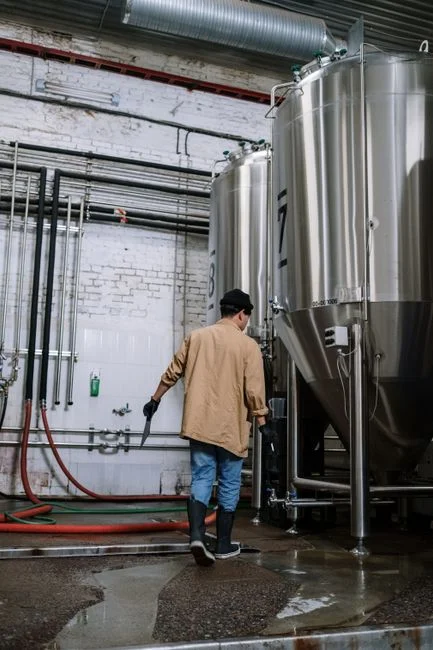
Treatment-train selection is driven by three questions: what is the discharge mode (sewer, surface water, land), what is the influent profile (mother-liquor present or not), and what is the reuse target. The table below maps the typical trains used for Indian API plants to the operating envelope each one handles.
| Discharge / reuse target | Typical influent | Recommended train | Indicative capital footprint | When to choose |
|---|---|---|---|---|
| Municipal CETP, no reuse | Low-strength, no mother-liquor | Equalisation → DAF / lamella → activated sludge → clarifier → chlorination | Low | SPCB allows CETP discharge; no API mother-liquor |
| Surface water, partial reuse | Medium-strength, mother-liquor present | Equalisation → dissolved air flotation (DAF) unit → MBBR → MBR membrane bioreactor system → industrial RO system → UV steriliser | Medium | Novartis internal KPIs; sites in water-stressed basins |
| Surface water, no reuse | Medium-strength, mother-liquor present | Equalisation → DAF → activated sludge / MBBR → MBR → ozone or UV | Medium | SPCB requires low TSS / low BOD but reuse is not economic |
| ZLD (land or near nature-sensitive areas) | High-strength, mother-liquor and rinse waters | Equalisation → DAF / lamella clarifier → MBR → RO → brine concentrator → MEE / crystalliser | High | Discharge to land, Gujarat / Rajasthan red-category estates, SPCB ZLD notification |
MBR becomes the right call when the SPCB consent schedule demands low TSS and low BOD simultaneously, when the site sits in a water-stressed basin, or when the design brief is to reuse RO permeate in the plant. A conventional activated-sludge train is defensible only when effluent is low-strength, no API mother-liquor is co-treated, and the receiving body is a municipal CETP. ZLD is the only option when the discharge mode is land, when the plant is near a protected area, or when an SPCB has issued a ZLD notification — and an EPC should be told up front that ZLD adds roughly 2–3× the operating cost of an MBR + partial-reuse train for the same throughput. Chemical conditioning upstream of DAF or MBR is best handled with an automatic chemical dosing system sized to the influent variability, not a single-shot polymer make-down. The earlier Novartis Texas plant acquisition compliance guide walks the equivalent US (TCEQ) train; the Indian envelope differs mainly in the absence of EPA categorical standards and the stronger role of SPCB discretion.
Acquisition-day checklist for the EHS and M&A teams
- Pull the existing CTO and CTE letters, the last 12 months of SPCB inspection notes, the self-monitoring reports, and OCEMS data (the data room should have all four).
- Pull the hazardous-waste authorisation under HW Rules 2016, the BMWM returns, and the manifest register for the previous year.
- File the change-of-occupier application to the SPCB within 30 days of closing; mark it urgent, because the 60–120 day clock starts at filing.
- File the hazardous-waste authorisation transfer in parallel — same SPCB, separate application, similar timeline.
- Re-register OCEMS in the new entity's name with both CPCB and the SPCB; the OCEMS IP and SIM need to be re-issued to the new occupier.
- If groundwater abstraction exceeds 100 m³/day, file the CGWA NoC transfer; expect 90–180 days.
- Confirm rainwater-harvesting compliance against the state-specific building rules and the consent conditions — most consent letters require an annual audit.
- Run a baseline water audit (mass balance across inlet, reuse, outlet) within 60 days; this is the reference point for the 5-year Novartis 2030 reduction trajectory.
- Notify Novartis Group EHS so the site enters the 2030 water-target reporting from the first full quarter under new ownership.
- Brief the plant EHS manager on the gap between SPCB consent limits and Novartis internal KPIs — typically 20–40% tighter — and on the 90–180 day interim operating risk while CTO transfer is pending.
Frequently Asked Questions
Does an Indian plant's CTO transfer automatically when Novartis buys the company?
No. Under the Water Act 1974, the CTO is issued to a named occupier and a change in occupier voids it for practical purposes. The buyer must file a fresh CTO application with the SPCB, and processing typically takes 60–120 days; the deal team should plan for interim operating risk during that window.
What effluent parameters does GSR 1062(E) set for a pharma plant in India?
GSR 1062(E) sets indicative ceilings including pH 6.5–8.5, COD ≤ 250 mg/L, BOD ≤ 30 mg/L, TSS ≤ 100 mg/L, oil and grease ≤ 10 mg/L, total residual chlorine ≤ 1 mg/L, total chromium ≤ 2 mg/L, and hexavalent chromium ≤ 0.1 mg/L for inland surface-water discharge; the controlling numbers are usually the SPCB consent schedule, which is site-specific and often tighter.
Is zero-liquid-discharge mandatory for an Indian API plant acquired by Novartis?
Not by default. ZLD is required where the SPCB has notified zero liquid discharge (certain Gujarat and Rajasthan red-category industrial estates), where the plant discharges to land, or where the site is near a nature-sensitive area covered by Novartis's biodiversity language. Elsewhere, an MBR plus RO train with partial reuse typically meets both the consent schedule and the 2030 internal KPIs.
How does Novartis's 2030 'no water quality impact' target affect the ETP design for an Indian plant?
The target sets the bar at receiving-water quality — no toxicity, no AOX, no antibiotic activity above background — rather than at plant outlet. The design translation is tertiary treatment to reuse quality via an MBR membrane bioreactor system and an industrial RO system, with RO permeate reused for cooling-tower make-up and toilet flushing, plus rainwater harvesting sized to the site's roof and paved area.