What Novartis Actually Announced in Denton, and Why It Matters for Wastewater
On 25 February 2026, Novartis committed to building a 46,000-square-foot radioligand therapy (RLT) manufacturing site in Denton, Texas, with construction scheduled to begin in 2026 and full operations targeted for 2028 (Novartis press release, 2026-02-25). The Denton facility will be the company's first Texas manufacturing site and its fifth US RLT plant, joining existing sites in New Jersey, Indiana, and California, and a recently announced Florida build-out. The investment sits inside a previously disclosed $23 billion US investment program (Novartis, 2026-02-25).
RLT is structurally different from small-molecule or biologics pharma in three ways that change the wastewater workstream. First, each dose is custom-made and time-sensitive — the network is engineered to deliver more than 99% of doses on the planned administration day (Novartis, 2026-02-25). Second, proximity to patients is the design driver, so utilities including the ETP and the radioactive-materials-licensed side streams must run with pharma-grade uptime, not commodity uptime. Third, the feedstocks and effluent carry radiological content that a greenfield site has to license from day one rather than inherit. A greenfield inside a $23 billion multi-year commitment is a permanent, not pilot, asset; the ETP and decay-storage envelope must be sized for 20+ year duty on a plot that is, today, raw Texas ground.
The TCEQ Compliance Stack: Four Instruments That Move with the Site
A greenfield RLT plant in Texas triggers four TCEQ-administered (or TCEQ-adjacent) instruments before it can lawfully discharge anything, and the order of filing is not the order of construction. The TCEQ Water Quality Division is the issuer for the wastewater and stormwater instruments, with applications submitted through the agency's wastewater permitting portal (TCEQ, 2026).
- TPDES Industrial Wastewater Permit. Coverage is either an individual TPDES permit or the TPDES Multi-Sector General Permit (MSGP), selected by SIC code and discharge type. A pharmaceutical manufacturing campus of the type Novartis described will most likely fall under SIC 2834 (pharmaceutical preparations); final selection depends on whether any process stream is routed to a receiving water body or all flow is sent to a POTW. The application is filed through TCEQ's wastewater permitting portal (TCEQ, 2026).
- Industrial Stormwater Notice of Intent (MSGP for stormwater). This is a separate filing from the wastewater permit. A greenfield on raw ground is a higher-risk stormwater file than a paved retrofit because sediment and total suspended solids loads are higher during construction and early operations. Site-specific BMPs, including sediment basins and stabilized construction entrances, are part of the NOI.
- Pretreatment / POTW Wastewater Discharge Authorization. If any process stream is routed to the City of Denton or a neighboring POTW, a separate pretreatment limits package and Wastewater Discharge Permit are required from the local authority. This is a parallel workstream to the TPDES individual permit, not a substitute: local limits can be stricter than the federal minimums and the local authority has its own approval clock.
- TCEQ Radioactive Materials License (RML). Texas is an NRC Agreement State and regulates radioactive material under 25 TAC §289. The RML is a state-issued license, not an NRC license; it covers possession, use, and decay-storage of the radiopharmaceutical feedstocks (Lu-177, I-131) and any Tc-99m decay-storage wastewater. A Radiation Safety Officer (RSO) must be named on the application, and the license class is set by the isotope mix and the activity envelope at the site boundary.
Product regulation sits on a separate axis. FDA/CDRH scope governs the GMP envelope of the RLT product itself (Laser Institute of America, DOI 10.2351/1.5056885), and that GMP envelope is what sets the cleanroom condensate envelope downstream. A reader evaluating a comparable brownfield case in Texas can compare the compliance stacking against the parallel Ford Texas plant wastewater compliance guide for automotive framing of TPDES sequencing.
| Instrument | Issuer | Trigger | Typical review window |
|---|---|---|---|
| TPDES Industrial Wastewater Permit (individual or MSGP) | TCEQ Water Quality Division | Any industrial discharge to surface water in Texas | 6–12 months from application completeness |
| TPDES Multi-Sector General Permit — Stormwater | TCEQ | Industrial activity on a site >1 acre | NOI acknowledged; coverage on filing |
| Pretreatment / POTW Wastewater Discharge Permit | City of Denton or local POTW authority | Any industrial discharge to municipal sewer | 3–6 months; local clock varies |
| TCEQ Radioactive Materials License (25 TAC §289) | TCEQ Radiation Program | Possession/use of Lu-177, I-131, Tc-99m above exemption thresholds | 6–12 months; RSO nomination required |
The RLT Wastewater Envelope: What Comes Out of the Plant
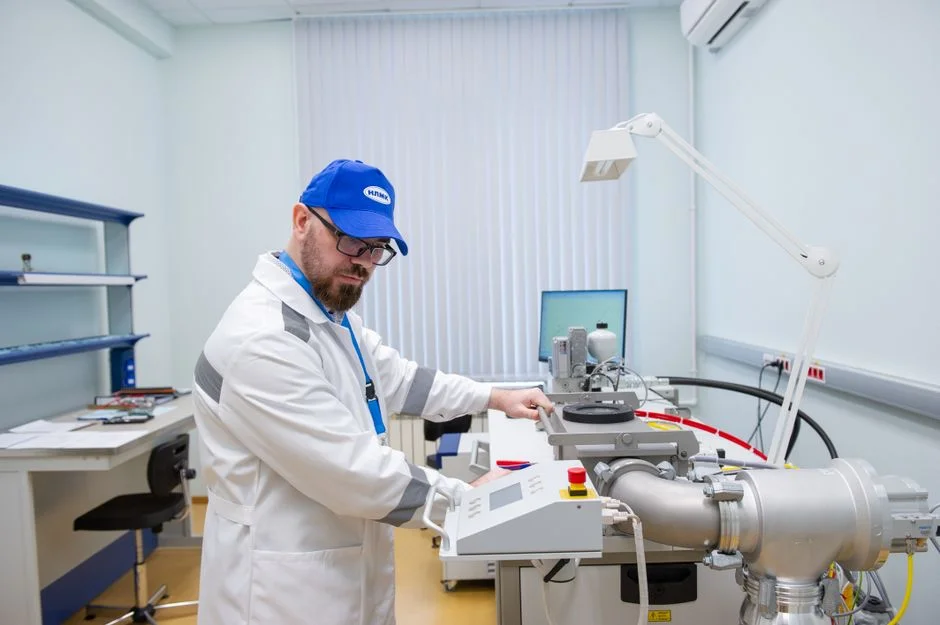
An RLT plant produces a stream list that does not look like a generic pharma envelope because of the radiological axis and the radiosynthesis solvent carryover. Four stream families dominate the design basis.
- Cleanroom and gowning room condensate. Low-flow, intermittent, with periodic hot spikes from cycle rinses. Typical BOD is below 50 mg/L but TDS is elevated by buffer salts and target-molecule carryover.
- Glassware and equipment wash. BOD 200–800 mg/L, COD 400–1,500 mg/L, surfactant-bearing, with occasional organic solvent traces (ethanol, acetone) from radiosynthesis cleanup. This is the stream that drives biological-stage sizing.
- Decay-storage tank decant. The radiological stream. Held for 7–10 half-lives of the dominant isotope — Lu-177 at 6.7 days or I-131 at 8 days — and then discharged under the RML. Activity at the point of discharge must be below license-issued limits, not just below TPDES numeric effluent limits, and gross alpha/beta monitoring is required.
- Cooling-tower and boiler blowdown. Cycles-of-concentration driven, governed by the TPDES volume cap. On a Texas site, this is the dominant variable in the water-use envelope: TCEQ administers water-use permitting rather than a CONAGUA-style Título, but the operational logic of bounding total daily flow is the same. The parallel logic for a high-volume campus in a different state is set out in the Hyundai Arizona plant wastewater requirements guide.
- Sanitary sewage. Peaking factor 1.5–2.0× at shift change; co-mingled with the process train in most pharma designs, segregated in others for operational flexibility.
| Stream | Key parameters | Typical range | Design driver |
|---|---|---|---|
| Cleanroom / gowning condensate | BOD, TDS, TOC | BOD < 50 mg/L; TDS elevated by buffer carryover | Intermittent spikes from cycle rinses |
| Glassware / equipment wash | BOD, COD, surfactant, solvent trace | BOD 200–800 mg/L; COD 400–1,500 mg/L | Biological-stage sizing |
| Decay-storage decant | Gross alpha/beta, Lu-177/I-131/Tc-99m activity | Below RML-issued limit at point of discharge | Hold-up volume from isotope half-life |
| Cooling-tower / boiler blowdown | TDS, cycles of concentration | 3–6 cycles typical | TPDES volume cap |
| Sanitary sewage | BOD, TSS, NH₃-N | Peaking factor 1.5–2.0× at shift change | Hydraulic balancing |
Default ETP Train for an RLT Plant: DAF, MBR, RO, and the Decay Loop
The defensible default train for a greenfield RLT plant in Texas is DAF → MBR → RO, with the decay-storage loop as a parallel, separately licensed side stream rather than a stage inside the ETP. The unit-operation logic carries over from comparable pharma ETP work; for a biologics parallel see the Roche biologics plant ETP guide.
Headworks. A rotary mechanical bar screen protects downstream pumps and the MBR from rag and plastic carryover, sized for the peak instantaneous flow from glassware wash plus the sanitary peaking factor (1.5–2.0×). The GX-series rotary mechanical bar screen is the conventional selection for this duty.
DAF as the suspended-solids and oil/grease step. Micro-bubble flotation ahead of the biological stage handles pH-conditioned 7–8 effluent, surfactant peaks from glassware wash, and any cleaning-agent carryover. A dissolved air flotation system in the 4–300 m³/h range covers the design envelope for a 46,000 sq ft RLT site.
MBR as the biological workhorse. A 0.1 µm PVDF submerged flat-sheet membrane with MLSS 8,000–12,000 mg/L and an integrated denitrification/nitrification split hits the total-nitrogen envelope and delivers the low-turbidity, low-SSD effluent downstream reuse needs. The footprint is roughly 60% smaller than conventional activated sludge, which is the right answer on a constrained Texas plot. Selection is between a module-level retrofit (the DF-series PVDF flat-sheet MBR module) and a packaged integrated MBR wastewater treatment system; for a greenfield at this scale the integrated system is the lower-risk path.
RO polish for reuse-quality effluent. An industrial RO polish at recovery rates up to 95% closes the loop for cooling-tower make-up, with cycles-of-concentration managed by routing RO reject back to the DAF inlet. This is the reuse stream that a comparable Mexican site would register with CONAGUA under the 2024–2025 Ley de Aguas Nacionales reform; in Texas the equivalent discipline is the TPDES volume cap and the local POTW's industrial-user tariff.
Decay-storage loop. This is parallel to, not inside, the ETP. It is sized for 7–10 half-lives of the dominant isotope, with the decant arm re-entering the main ETP only after the activity check clears the RML-issued limit. Treat it as a radioactive-materials-licensed side loop with its own monitoring, its own RSO oversight, and its own hazardous-area classification — not as a standard ETP unit operation.
From Press Release to 2028 Go-Live: A 24-Month Compliance Gantt
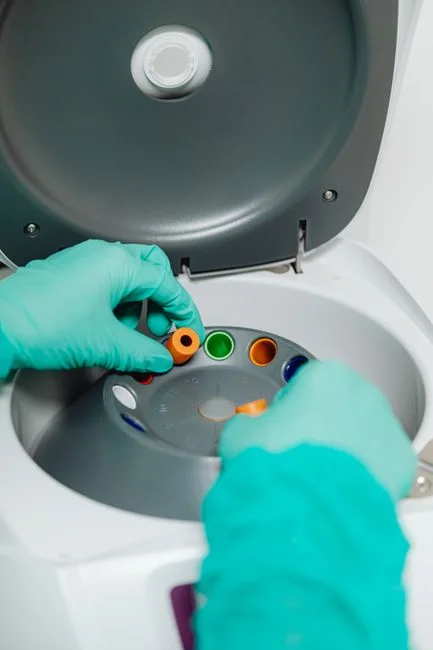
The compliance stack and the ETP train compress into a 24-month schedule if the 2026 groundbreaking is treated as month 0 and the 2028 operational target is treated as month 24. The structure mirrors the day-0-to-day-365 brownfield Gantt used in the TI–Mexico work (HydropureWater, 2026), but runs at roughly 2× the calendar time because there is no inherited permit to ride on.
- Months 0–6 (2026). TPDES pre-application meeting with TCEQ, MSGP NOI scoping, 25 TAC §289 radioactive-materials license pre-application with RSO nomination, topographical and geotechnical surveys for the 46,000 sq ft site, and influent wastewater characterization. The wastewater characterization has to be modeled for the radiological streams as well as the conventional BOD/COD/TDS envelope, because the RML application needs an activity forecast.
- Months 6–14 (2026–2027). TPDES individual-permit application or MSGP NOI submission, radioactive-materials license application with full isotope and activity schedule, ETP P&ID development, and hazardous-area classification for any in-line monitoring in the decay loop. The pretreatment limits package goes to the City of Denton in parallel.
- Months 14–20 (2027). TCEQ permit issuance, RML issuance, ETP procurement and factory acceptance testing, and civil work for the headworks and decay-storage tanks. Long-lead membrane and RO skid deliveries fall in this window.
- Months 20–24 (early 2028). Installation, commissioning, 90-day performance trial against TPDES and RML limits, operator training, and handoff to operations — the operational milestone Novartis set in the 25 February 2026 release.
Frequently Asked Questions
Does a greenfield pharma plant in Texas need a TPDES permit?
Yes. Any industrial discharge to surface water in Texas requires a TPDES individual permit or coverage under the TPDES Multi-Sector General Permit, with the application filed through the TCEQ Water Quality Division (TCEQ, 2026). A pharmaceutical manufacturing campus of the type Novartis announced will most likely fall under SIC 2834.
What TCEQ license covers radioligand therapy wastewater?
The TCEQ Radioactive Materials License under 25 TAC §289 covers possession, use, and decay-storage of Lu-177, I-131, and any Tc-99m-bearing wastewater. Texas is an NRC Agreement State, so the license is state-issued and an RSO must be named on the application. Activity at the point of discharge from the decay-storage loop must be below the license-issued limit, not just below TPDES numeric effluent limits.
How long does a TCEQ Radioactive Materials License take to issue?
A typical review window is 6–12 months from a complete application, running in parallel with the TPDES individual permit review. The RML clock and the TPDES clock are independent, so a greenfield RLT plant should file both as early as month 6 to protect the 2028 operational target.
What is the default ETP for an RLT plant?
The defensible default is DAF → MBR → RO, with a parallel decay-storage loop for the radiological streams. A 0.1 µm PVDF submerged flat-sheet MBR at MLSS 8,000–12,000 mg/L with denitrification/nitrification hits the total-nitrogen envelope at roughly 60% smaller footprint than conventional activated sludge; an industrial RO polish at recovery rates up to 95% closes the loop for cooling-tower make-up.
How does the Denton schedule tie to the 2028 operational target?
Novartis committed to construction in 2026 and full operations in 2028 (Novartis, 2026-02-25). The 24-month compliance Gantt treats the groundbreaking as month 0, files the TPDES and RML applications in months 6–14, and runs installation, commissioning, and the 90-day performance trial in months 20–24 so the site clears the 2028 operational milestone without holding the ETP or the radioactive-materials license as the critical path.