What a Biologics Plant Expansion Actually Changes for the ETP
After a biologics capacity expansion of 30-60%, the ETP scope shifts from a flow problem to a load-profile problem. Fermentation broth carryover, residual antibiotics, and CIP caustic/acid surges do not scale linearly with KLD; they scale with bioreactor harvest frequency, which jumps as the fermenter train expands. A 30-60% capacity lift at a Roche-equivalent biologics site typically forces a 1.5-2x increase in design flow, not the 1.3-1.6x a generic capacity multiplier would predict, because CIP frequency, autoclave condensate, and buffer-prep washwater all rise with batch count rather than tank volume. For context, an integrated textile ETP handling 500-600 KLD at effluent temperatures up to 50°C (source: TeamOne Biotech case study) represents the kind of high-KLD, thermally loaded industrial ETP envelope that biologics sites enter post-expansion — biologics influent routinely lands in the 30-45°C band from fermenter vent condensates and hot CIP return.
Three biologics-specific stress streams must be designed for, each with a different removal mechanism. First, fermentation broth carryover — residual sugars, amino acids, and recombinant proteins elevate COD without proportional BOD (BOD/COD ratio often 0.3-0.5 vs the 0.5-0.7 typical of municipal wastewater). Second, CIP caustic (NaOH 1-3%) and acid (HNO₃/H₃PO₄ 0.5-1.5%) surges drive pH swings of 3-11 across a 12-24 hour equalization window. Third, cleaning-agent detergents (surfactants, chelants like EDTA) push COD without adding biodegradable carbon, which confuses BOD-based control loops. On top of these, residual antibiotics from the production train — typically 0.1-10 mg/L of penicillins, cephalosporins, tetracyclines, or macrolides in the raw wastewater — are now a hard regulatory driver: WHO and EMA watch-list targets of 0.1-1 µg/L for individual antibiotics in receiving water effectively mandate tertiary polishing on any 2026 biologics ETP spec. The bottom line: a biologics expansion is a process-train redesign, not a tank resize.
Influent Characteristics the ETP Must Be Designed Around
Engineers sizing a biologics ETP need a defensible influent envelope before reactor volumes can be set. The 2026 envelope for a Roche-equivalent biologics site post-expansion lands in these bands:
| Parameter | Typical Range (mg/L unless noted) | Design Driver |
|---|---|---|
| COD | 5,000 – 12,000 | Sizes anaerobic + aerobic stages |
| BOD₅ | 2,000 – 6,000 | Aeration demand; biological stage sizing |
| TSS | 500 – 2,500 | Clarifier/lamella overflow rate |
| Total Nitrogen (TN) | 100 – 500 | Nitrification/denitrification SRT |
| Total Phosphorus (TP) | 20 – 80 | Biological P removal or chemical precipitation |
| Antibiotic residue (total) | 0.1 – 10 | Drives RO/advanced oxidation spec |
| pH | 3 – 11 (post-CIP peaks) | Equalization HRT must dampen shock |
| Temperature | 30 – 45 °C | Supports mesophilic anaerobic; thermophilic tolerated to ~50 °C (per TeamOne Biotech textile ETP precedent) |
| Oil & grease | 50 – 300 | Pre-anoxic DAF or skimming |
Antibiotic residue is the parameter that most differentiates biologics from generic pharma wastewater. Conventional activated sludge achieves only 60-80% antibiotic removal (industry benchmark, 2025), which is why the 2026 design envelope must budget for either advanced oxidation (O₃/H₂O₂, UV/H₂O₂) or RO polishing — both of which can push individual antibiotic species below the 0.1 µg/L watch-list threshold. pH swings from CIP campaigns are the second design driver: equalization tanks should hold 12-24 hours HRT to flatten the 3-11 peaks into a feed that the biological stages can absorb without nitrification collapse. Temperature in the 30-45°C band is a bonus for anaerobic biology — it sits inside the mesophilic optimum (35-40°C) for UASB and IC reactors, and thermophilic operation up to 50°C has been demonstrated at industrial scale (per the 50°C textile ETP precedent cited above).
Process Train Options: MBR, Anaerobic+MBR, and SBR Compared
Three process trains realistically cover a 2026 biologics ETP upgrade. Each has defensible trade-offs on removal efficiency, footprint, energy, and reuse-readiness, and the choice hinges on whether the priority is discharge compliance only, or discharge plus water reuse.
| Criterion | A: ASP + MBR | B: UASB/IC + MBR + RO (default 2026) | C: SBR + UF + RO |
|---|---|---|---|
| COD removal | 85 – 95% | 95 – 99% | 90 – 96% |
| Antibiotic removal (overall) | 60 – 80% | 90 – 99% (with RO) | 85 – 95% (with UF, lower for low-MW APIs) |
| Sludge yield vs aerobic-only | Baseline (1.0x) | 0.20 – 0.30x (70-80% lower) | 0.85 – 1.0x |
| Energy (kWh/m³ treated) | 1.2 – 2.0 | 0.6 – 1.0 (biogas offsets 20-30% of aeration) | 1.0 – 1.6 |
| Footprint (m² per 100 m³/d) | 25 – 35 | 12 – 18 | 30 – 45 (batch buffers) |
| Reuse-readiness (boiler/process water) | Marginal | High — RO permeate <50 µS/cm | Moderate — UF alone insufficient for high-purity reuse |
| Best fit for biologics | Discharge-only, small sites | Reuse-driven 500-1,000 m³/d expansions | Variable batch schedules, smaller reuse demand |
Option A — conventional activated sludge with an integrated MBR membrane bioreactor system — is the simplest retrofit. MBR effluent typically lands below 1 NTU turbidity, which protects downstream RO if it is added later, but the train does little for antibiotic removal on its own and produces the highest sludge yield of the three options.
Option B — high-rate anaerobic (UASB or IC) followed by MBR and an industrial RO polishing skid — is the 2026 default for biologics sites targeting reuse. The anaerobic front-end cuts COD by 70-85% with biogas recovery that offsets 20-30% of aeration energy, the MBR produces RO-quality feed water at <1 NTU, and the RO block pushes individual antibiotics below 0.1 µg/L while delivering permeate suitable for boiler feed or process reuse. Sludge yield is 70-80% lower than aerobic-only designs, which materially cuts hauling cost for biologics waste.
Option C — sequencing batch reactor (SBR) with UF and RO — is the right answer for biologics CDMOs running highly variable batch fermentation schedules. The fill/decant cycle absorbs load swings naturally, but footprint runs 2-3x larger than Option B and the UF block alone will not reject low-MW antibiotics, so a polishing stage is still required for full compliance.
Discharge and Reuse Limits the ETP Must Hit in 2026
Designing to the right 2026 ceiling is what separates a defensible spec from one a regulator can reject. Three compliance frameworks matter for a Roche-equivalent biologics site.
Under EPA 40 CFR 439 (Pharmaceutical Manufacturing), the daily maximum limits are COD 220 mg/L, TSS 60 mg/L, BOD 150 mg/L, and total residual chlorine 0.4 mg/L (per EPA 40 CFR 439, current as of 2026). The EU BAT-AEL for pharma wastewater — the 2024/2025 update that carries into 2026 — tightens these to COD <150 mg/L, TOC <30 mg/L, and total nitrogen <15 mg/L for direct discharge to receiving water. WHO and EMA antibiotic watch-list targets push individual antibiotics of high environmental concern below 0.1 µg/L in effluent, which is the driver that puts RO on the spec. The reuse envelope for boiler feed or process water is its own set of numbers: RO permeate conductivity <50 µS/cm, TOC <0.5 mg/L, and individual antibiotic species below detection — these are the values that justify the RO capex on reuse economics alone, separate from any discharge-compliance argument. For sites operating under both frameworks, the EU numbers effectively govern because they are the tighter ceiling.
Capex, Opex, and Reuse ROI for a 500-1,000 m³/d Biologics ETP
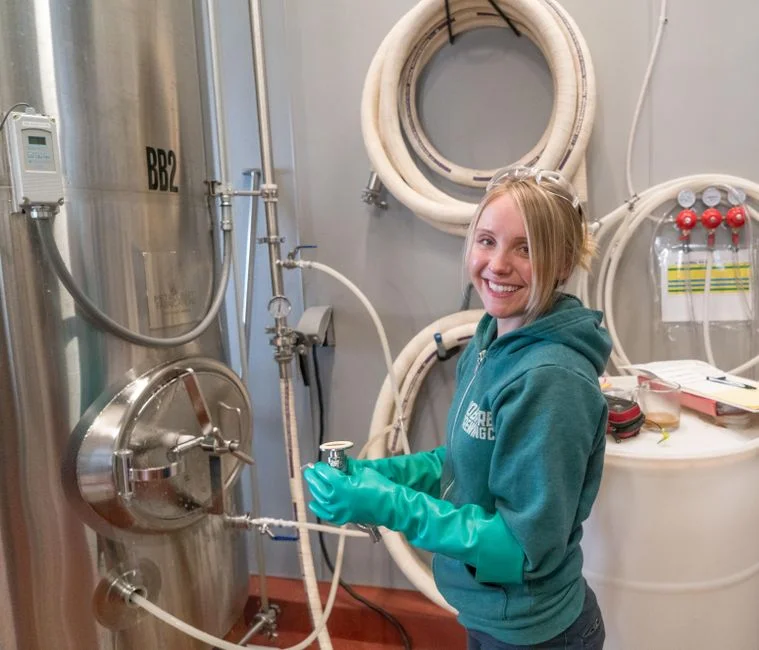
The 2026 installed-capex band for a 500-1,000 m³/d anaerobic + MBR + RO train lands at USD 3-7M, with a 25-40% premium for full ZLD polish (evaporator/crystallizer block). Operating cost is dominated by three line items: aeration energy at 0.4-0.8 kWh/m³, RO energy at 0.6-1.2 kWh/m³, and sludge hauling at USD 80-150 per ton dry solids. Biogas recovery from the UASB/IC front-end offsets 20-30% of aeration energy, which is a material number at 800 m³/d throughput.
| Cost / Benefit Line | 2026 Value | Notes |
|---|---|---|
| Installed capex (anaerobic+MBR+RO) | USD 3 – 7M | 500-1,000 m³/d scope |
| ZLD premium | +25 – 40% | Evaporator + crystallizer |
| Aeration energy | 0.4 – 0.8 kWh/m³ | MBR stage |
| RO energy | 0.6 – 1.2 kWh/m³ | Polishing + reuse |
| Sludge hauling | USD 80 – 150 / ton DS | Biologics sludge often classed as hazardous |
| Reuse value (70% reuse @ 800 m³/d) | USD 0.3 – 0.6M / year | 560 m³/d freshwater offset at USD 1.5-3.0/m³ |
| RO polishing-block payback | 3 – 5 years | At current industrial water tariffs |
The reuse economics are the line that wins finance sign-off. At 70% reuse on an 800 m³/d stream, the site offsets roughly 560 m³/d of freshwater purchase at industrial rates typically running USD 1.5-3.0/m³, which lands in the USD 0.3-0.6M/year savings band. Against an RO polishing-block capex of USD 1.0-2.0M, payback typically runs 3-5 years, and the rest of the train is justified on compliance rather than reuse alone.
Five-Step Decision Checklist Before Procuring the Upgrade
This is the framework a process engineer can hand to procurement and EHS without rework.
- Lock the design flow at 1.5-2x current average. Confirm the peak diurnal factor (typically 1.3-1.5x the average). Biologics expansions almost always outrun a straight KLD multiplier because CIP and autoclave condensate scale with batch count, not tank volume.
- Characterize the new biologics streams across at least two production campaigns. Sample fermentation, CIP, and autoclave condensate separately for COD, BOD, TN, TP, and individual antibiotics. A pilot that runs on one campaign of wastewater is not a pilot; the second campaign catches the antibiotic species the first one missed.
- Pick the process train against the discharge vs reuse target. Anaerobic + MBR + RO is the right answer for any site with a reuse mandate above 50%. MBR-only is acceptable for discharge-only sites under 300 m³/d where reuse is not on the roadmap.
- Pilot the MBR and RO skids for 60-90 days on real wastewater. Confirm sustainable flux (typically 15-25 LMH for MBR, 18-25 LMH for RO on pharma feed), antibiotic rejection, and CIP recovery before signing capex. For background on what flux and TMP behavior to expect during the pilot, the UF membrane troubleshooting guide walks through the failure modes that drive an MBR or RO skid off-spec.
- Map redundancy into the spec. Biologics cannot shut down ETP — a single RO train failure stops production. Specify 1+1 RO trains and dual MBR cassettes. Include a high-rate lamella clarifier upstream of the MBR for TSS cut, and a PLC-controlled chemical dosing system for CIP neutralization and antiscalant injection on the RO block.
Frequently Asked Questions
What ETP does Roche need after expanding its biologics plant?
A biologics ETP upgrade post-expansion should be rated for 1.5-2x pre-expansion design flow with an anaerobic (UASB/IC) + MBR + RO train. This combination delivers 95-99% COD removal, hits EPA 40 CFR 439 limits, and supports 70% water reuse — the 2026 default for biologics CDMOs targeting both compliance and reuse.
What influent COD and antibiotic load does a biologics ETP need to handle?
Design for COD of 5,000-12,000 mg/L, BOD of 2,000-6,000 mg/L, and total antibiotic residue of 0.1-10 mg/L. Conventional biological treatment removes only 60-80% of antibiotics, which is why RO polishing is required to meet the WHO/EMA watch-list target of 0.1 µg/L for individual antibiotics in effluent.
What is the 2026 capex for a 500-1,000 m³/d biologics ETP?
Installed capex for a 500-1,000 m³/d anaerobic + MBR + RO train runs USD 3-7M in 2026, with a 25-40% premium for full ZLD polish. The RO polishing block alone typically pays back in 3-5 years through freshwater offset at 70% reuse.
Does the ETP need RO polishing if the site only discharges to sewer?
If discharge-only with no reuse and no antibiotics on the WHO/EMA watch list in the waste stream, MBR alone can meet EPA 40 CFR 439 daily-max limits (COD 220 mg/L, TSS 60 mg/L, BOD 150 mg/L). The moment reuse above 50% is on the table, or antibiotics of environmental concern are present, RO moves from optional to required.
How long should the equalization tank HRT be for biologics wastewater?
Equalization tanks should hold 12-24 hours HRT to dampen CIP-driven pH swings of 3-11 into a feed the biological stages can absorb. Shorter HRTs risk nitrification collapse during CIP campaigns, particularly on the acid-side peaks from HNO₃/H₃PO₄ rinse cycles.