
Why Pharmaceutical Exhaust Cannot Be Treated Like a Standard Industrial Vent
A combined reactor-vent, fluid-bed-dryer-exhaust, and coating-pan duct on a multi-product batch plant will deliver solvent vapor, HCl, and combustible lactose dust to a single fan suction simultaneously — a condition that defeats any single-device scrubber sized for one pollutant class. The packed bed that strips acetone from a reactor vent will not stop HCl released during a downstream hydrochloride salt formation step, and a dry baghouse that handles tablet-press lactose will be destroyed if solvent-laden coating-pan air is drawn across the same filter media (per pharmaceutical exhaust treatment field data, 2026). The wet scrubber system for pharmaceutical service must therefore be specified as a treatment train, not a single vessel.
Three pollutant classes coexist in pharma process vents and demand different capture mechanisms:
- Solvent VOCs — acetone, methanol, ethanol, IPA, THF, dichloromethane, ethyl acetate — typically 100–5,000 ppm at the reactor and 100–1,000 ppm residual solvent off the fluid bed dryer (FBD).
- Acid gases — HCl from chloride salt formation, acetic acid from buffer adjustments, trace H₂SO₄ — typically 50–500 ppm.
- Combustible organic dust — lactose, starch, and entrained API at 5–50 mg/m³ off the FBD, particle size 0.5–20 µm, with a 60 g/m³ lower-explosive threshold as the design safety ceiling.
Because entrained API can deposit on any wetted internal surface, the scrubber is classified as a GMP utility system. Its design, materials of construction, and cleaning protocols must be documented and validated alongside the reactor and dryer. The remainder of this article follows four engineering steps in order: build a pollutant map by operation, select the equipment train, fix the material and GMP documentation package, then close the loop on the scrubber blowdown wastewater stream so the air problem is not converted into a water problem.
Pollutant Map: Concentrations by Pharmaceutical Process Operation
The starting basis for any scrubber sizing is a per-operation pollutant map — concentrations, particle size, humidity, and the water-solubility flag that determines whether packed-bed absorption or downstream carbon adsorption is required. The table below summarizes the typical envelope a 2026 audit-ready design will be built around; site-specific data should always supersede these ranges.
| Process operation | Pollutant profile | Typical concentration | Humidity / dust | Indicative treatment |
|---|---|---|---|---|
| Reactor charging & distillation | Acetone, methanol, DCM, THF, EtOAc + HCl, acetic acid | 100–5,000 ppm VOC; 50–500 ppm acid gas | Low dust; moderate humidity | Packed bed scrubber (NaOH + water) |
| Fluid bed dryer (FBD) | API, lactose, starch dust + residual solvent | 5–50 mg/m³ dust (0.5–20 µm); 100–1,000 ppm VOC | High humidity; combustible dust < 60 g/m³ LEL | Wet scrubber with pre-dust knockout |
| Tablet coating pan | IPA, ethanol vapors + plasticizer mist | 200–2,000 ppm VOC; low acid gas | Low dust; entrained droplet mist | Packed bed or downstream carbon |
| Laboratory / pilot vents | Mixed acid gases + solvent vapors | Variable, typically < 1,000 ppm total VOC | Low dust; intermittent flow | Dedicated packed bed, segregated from production |
| Granulation / milling | Excipient dust (lactose, starch, MCC) | 10–100 mg/m³ dust; negligible VOC | Low humidity; combustible | Wet dust collector or dedicated baghouse (non-solvent) |
The solvent inventory splits into two design-driving groups. Water-soluble solvents — acetone, methanol, ethanol, IPA, THF, ethyl acetate — are captured by physical absorption in the packed bed at 80–95% removal for acetone and similar hydrophilic solvents (per pharmaceutical exhaust treatment field data, 2026). Water-insoluble solvents — dichloromethane, toluene, hexane, xylene — pass through the packed bed at only 20–40% removal and must be captured downstream on activated carbon or in a front-end carbon adsorption stage. For FBD exhaust the 60 g/m³ combustible-dust ceiling is the binding safety constraint; the pre-dust knockout must hold inlet dust well below that number even at upset drying conditions.
Wet Scrubber Equipment Train for Pharmaceutical Exhaust
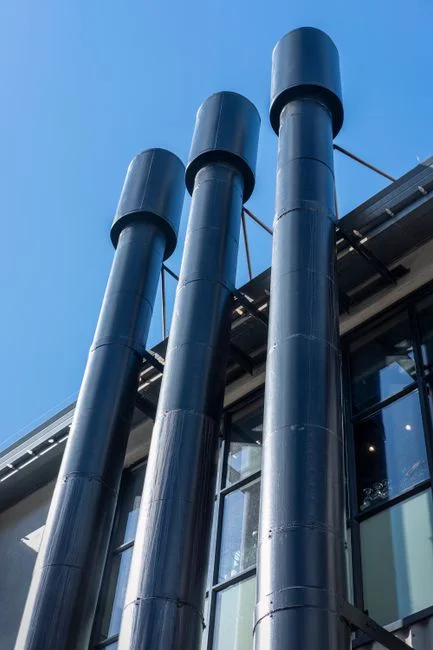
The recommended configuration for a multi-product API or solid-dose plant in 2026 is a four-stage train: pre-dust knockout, packed bed, demister, and activated carbon polish, with an induced-draft fan and stack on the discharge. The same train handles the solvent + acid gas + dust combination that no single device can resolve.
Stage 1 — Pre-dust knockout. A water-wash chamber or wet cyclone ahead of the packed bed captures the 5–50 mg/m³ FBD dust before it reaches the packing. This stage is non-negotiable when the FBD shares a header with the reactor vent: dust loading above the explosive threshold will foul the packing in hours and create a downstream fire risk on the carbon bed. In multi-product plants running campaigns with and without FBD operation, segregate the FBD vent to its own dedicated wet scrubber — this is the configuration that simplifies validation, since the FBD scrubber can be cleaned and CIP'd between products without touching the reactor-vent train (per pharmaceutical exhaust treatment field data, 2026).
Stage 2 — Packed bed scrubber. A PP shell with 2–3 m of PP pall ring packing, operated at an L/G ratio of 2–5 L/m³, captures the water-soluble VOCs by physical absorption and the acid gases by chemical reaction with NaOH at pH 7–9. Hold pH above 8 when acetic acid is present — it is a weak acid and slips below pH 8 (per pharmaceutical exhaust treatment field data, 2026). Typical design pressure drop is 1.5–2.5 mbar per meter of packing; gas velocities of 1.0–1.5 m/s through the tower cross-section keep the packing fluidized correctly without flooding.
Stage 3 — Mist eliminator. A two-stage chevron or knittedmesh demister on top of the packed bed drops entrainment to below 50 mg/m³ of liquor carryover. Carryover is the failure mode that wets the downstream carbon bed, destroys its capacity, and can route scrubbing liquor into the induced-draft fan.
Stage 4 — Activated carbon adsorption. Sized to handle the 20–40% dichloromethane slip and any non-polar solvent breakthrough from the scrubber, the carbon bed is the safety net that lets the packed bed operate at higher L/G and lower pressure drop than it otherwise could. A 50–100 mm bed depth at 0.2–0.4 m/s superficial velocity is a typical 2026 starting basis for VOC finishing.
Process flow: contaminated air → pre-dust knockout → packed bed (NaOH + water) → demister → activated carbon → induced-draft fan → stack. For the FGD wet scrubber platform that handles the high-temperature acid gas service on a co-located boiler, see the FGD wet scrubber platform reference design.
Material Selection and GMP Documentation Requirements
Material selection is driven by the worst-case combination of acid gas, solvent, and temperature that the wetted surface will see during a campaign — not by the average stream composition. The 2026 audit-ready matrix below covers the four metals and polymers a pharmaceutical scrubber is normally bid against.
| Material | Acid gas resistance | Solvent resistance (typical pharma envelope < 5,000 ppm, < 60 °C) | GMP compatibility | Relative CAPEX |
|---|---|---|---|---|
| Polypropylene (PP) | Excellent for HCl, acetic acid, H₂SO₄ | Inert to acetone, methanol, IPA, THF, EtOAc; swells in toluene/xylene/hexane above 10,000 ppm | Non-porous, low surface energy releases residue during CIP; widely used | Lowest |
| PVDF | Excellent | Resistant to chlorinated and non-polar solvents up to higher temperatures | Good CIP release; preferred where PP swells | ~2.5× PP |
| 316L stainless | Marginal in combined acid service (pitting, SCC) | Adequate for organic-only streams; fails quickly with HCl + chloride solvent | Standard pharma finish; rougher CIP release than PP | ~2× PP |
| Hastelloy C-276 | Excellent in all acid + chloride combinations | Resistant across full solvent envelope | Best-in-class; specified only when chemistry forces it | ~6–8× PP |
PP is the default 2026 choice for acid + water-soluble-solvent service and is documented as inert to HCl, acetic acid, acetone, methanol, IPA, THF, and ethyl acetate below 5,000 ppm and 60 °C (per pharmaceutical exhaust treatment field data, 2026). Specify PVDF or Hastelloy for streams dominated by toluene, xylene, or hexane above 10,000 ppm; for those services it is often cheaper to add a front-end carbon adsorption stage that drops the solvent loading before it reaches the PP shell. 316L stainless is acceptable only on non-corrosive organic-only streams where chloride-induced stress-corrosion cracking is not a risk.
GMP documentation package — every wetted surface that can entrain API residue into the next batch is a product-contact surface and must be supported by:
- IQ (Installation Qualification) confirming the scrubber is built and installed per the approved design specification, including material certificates for PP sheet, welding rod, gaskets, and elastomers.
- OQ (Operational Qualification) confirming design removal efficiency, pressure drop, and liquid flow rate at commissioning, with the test runs cross-referenced to the pollutant map in Section 2.
- CIP validation using spray balls or rotating jet cleaners in the shell, packed bed, and mist eliminator housing, circulating 1–2% NaOH or a validated detergent, with swab testing of representative internal surfaces to demonstrate residue removal (per pharmaceutical exhaust treatment field data, 2026).
- Multi-product cleaning verification between campaigns, referenced in the site validation master plan.
PP cleans more completely than 316L because its non-porous, low-surface-energy finish releases residues more readily — a documented CIP advantage when a single scrubber is shared across an API product portfolio.
Scrubber Blowdown Wastewater: Treating It as a Pharmaceutical Process Stream
Scrubber blowdown is the wastewater generated when contaminated droplets are captured in the scrubbing liquor. It carries dissolved solvents, entrained API, and neutralized salts (NaCl, Na₂SO₄, sodium acetate), and it is generated continuously for as long as the scrubber is in operation. In a GMP facility this stream cannot be discharged to the general plant drain without documented treatment or verification that API concentration is below environmental release limits (per pharmaceutical exhaust treatment field data, 2026) — it is treated as a process wastewater, not a utility drain.
The 2026 treatment train for a typical API-plant blowdown is:
- Equalization in a dedicated blowdown tank to smooth pH, flow, and concentration swings between batches.
- pH correction (if needed) to bring the stream into the operating window of the downstream biology or membrane step.
- Biological treatment for the dissolved solvent load, or physical/chemical separation (DAF, ultrafiltration) if the API is the binding contaminant.
- Polishing by reverse osmosis or activated carbon to meet the reuse or discharge spec.
- Zero liquid discharge (ZLD) polishing for plants with no surface-water discharge option: an atmospheric or heated evaporator concentrates the blowdown, a filter press for ZLD blowdown dewatering captures the solids, and the condensate is returned to the scrubber as make-up water (per Met-Chem ZLD system design, 2025).
For plants that prefer biological or membrane polishing over evaporation, the MBR downstream of scrubber blowdown equalization handles the dissolved COD and BOD load generated by solvent-bearing scrubber liquor and produces a clarified permeate suitable for RO polishing or direct reuse. The 2026 trend is to move away from end-of-pipe blowdown treatment toward scrubber-water minimization — operating at the higher end of the L/G range, recycling clarified blowdown back to the scrubber sump, and using closed-loop scrubbing to cut both water consumption and ZLD energy cost. A related reference for plant-level water strategy is the pharmaceutical water treatment guide; for vendor selection in regulated jurisdictions, see the industrial wastewater treatment supplier selection guide.
2026 Compliance and Cost Framework for Pharmaceutical Scrubber Procurement
The compliance anchor and the cost drivers below are what an engineer walks into a vendor meeting with. Both are non-negotiable for a defensible 2026 shortlist.
US compliance: EPA NSPS Subpart NNN (SOCMI process vents) and Subpart NNNN (air oxidation processes) govern VOC emissions from pharmaceutical reactor and oxidation vents under 40 CFR Part 60; 40 CFR Part 60 Subpart VV equipment-leak rules apply to the upstream piping; state-level air permits (e.g. Title V in NJ, NY, TX) layer on top with their own testing and monitoring schedules. EU compliance: Industrial Emissions Directive 2010/75/EU Chapter IV (VOC Solvents Directive) and the BAT conclusions for Common Waste Gas Treatment in the Chemical Sector set emission limit values and monitoring requirements; national transpositions vary and must be checked against the operator's permit. GMP linkage: the scrubber design basis is signed by both EHS and QA and referenced in the facility validation file.
| Service envelope (2026) | Recommended material | Equipment train | Indicative CAPEX (USD, skid + IQ/OQ) | Primary OPEX drivers |
|---|---|---|---|---|
| Acid gas + water-soluble VOC, < 5,000 ppm, no combustible dust | PP shell, PP pall ring packing | Packed bed + demister + carbon polish | $180,000–$320,000 (5,000–15,000 m³/h) | NaOH consumption, carbon replacement, blower power |
| FBD exhaust: dust + VOC + acid gas, multi-product | PP shell, PP pall ring, 316L fan | Pre-dust knockout + packed bed + demister + carbon | $260,000–$450,000 (3,000–10,000 m³/h) | Water make-up, CIP chemicals, blowdown disposal, NaOH |
| Non-polar solvent (DCM, toluene) > 10,000 ppm | PVDF internals or front-end carbon | Carbon adsorption first stage + PP packed bed polish | $350,000–$600,000 (5,000–12,000 m³/h) | Carbon replacement frequency (largest line), steam regen energy |
| Combined acid + chloride + non-polar solvent, high temperature | Hastelloy internals, PP shell | Carbon + packed bed + demister, two-stage NaOH dosing | $700,000+ (engineered per case) | Hastelloy fabrication premium, ZLD blowdown energy |
Decision shortcut for 2026 procurement: for acid gas plus water-soluble VOC service below 5,000 ppm with no FBD on the same header, a PP packed bed with downstream carbon delivers 90%+ compliance at the lowest CAPEX band. For FBD exhaust in a multi-product plant, add the pre-dust knockout and budget for the CIP skid. For non-polar solvent streams above 10,000 ppm, move to PVDF internals or front-end carbon rather than escalating to Hastelloy — the carbon stage cuts both the solvent loading on the scrubber and the long-term OPEX, which is where the real money is in pharmaceutical scrubber operation.
Frequently Asked Questions
When should I use a packed-bed scrubber versus a venturi scrubber for pharmaceutical exhaust?
Use a packed-bed scrubber at L/G 2–5 L/m³ for the combined acid gas and water-soluble VOC service that dominates pharmaceutical vents (100–5,000 ppm). Use a venturi scrubber only for high-dust FBD exhaust above 50 mg/m³ where the pressure drop (50–250 mbar) is acceptable and the gas stream is too dust-loaded for packing.
What removal efficiency can a packed-bed scrubber achieve on dichloromethane?
A PP packed bed scrubber removes 20–40% of dichloromethane on a single pass because DCM is poorly water-soluble. For a 2026 design, route the DCM slip to a downstream activated carbon bed sized at 0.2–0.4 m/s superficial velocity, and confirm removal by FID at the stack (per pharmaceutical exhaust treatment field data, 2026).
Can scrubber blowdown be discharged to the general plant drain?
No. Blowdown containing entrained API must be captured in a dedicated waste tank and either treated to below environmental release limits or routed to a ZLD system with an evaporator and filter press for solids dewatering; condensate is returned to the scrubber as make-up water.
When do I need Hastelloy instead of PP for a pharmaceutical scrubber?
Specify Hastelloy C-276 internals when the service combines chloride-bearing acid gas, non-polar solvent above 10,000 ppm, and temperatures above 60 °C. For services dominated by HCl, acetic acid, and the common pharmaceutical solvents below 5,000 ppm and 60 °C, PP is inert and delivers equivalent chemistry at roughly one-sixth the fabrication cost.
Which 2026 regulations govern pharmaceutical process vent scrubbers in the US and EU?
US: EPA NSPS Subpart NNN (SOCMI process vents) and Subpart NNNN (air oxidation processes) under 40 CFR Part 60, plus state-level Title V permits. EU: Industrial Emissions Directive 2010/75/EU Chapter IV (VOC Solvents) and the BAT conclusions for Common Waste Gas Treatment in the Chemical Sector; national transpositions vary.