Why Boise Food and Beverage Plants Are Under Tightening Pretreatment Scrutiny
The City of Boise has run an EPA-approved Pretreatment Program since 1985 to protect the Boise River from industrial and commercial discharges to its water renewal system, and every significant food and beverage (F&B) producer in the metro falls inside that scope (source: City of Boise Public Works, 2026). At the federal level, 40 CFR Part 403 sets the General Pretreatment Regulations, while 40 CFR Parts 405–409 layer categorical standards on top for specific F&B subcategories — dairy, grain mills, canned fruit and vegetables, beverages, and brewing (source: eCFR Title 40, 2026). State oversight sits with the Idaho Department of Environmental Quality (IDEQ) for surface-water quality, with the City of Boise Pretreatment Program enforcing the discharge-side sewer-use limits. F&B streams are uniquely hard to treat because pH can swing from 3 to 11, BOD and COD routinely land in the thousands of mg/L, fats, oils, and grease (FOG) load heavily, and seasonal production drives hydraulic surges — exactly the conditions where conventional primary treatment breaks down (per Integrated Water Services, 2024). Rules vary significantly between jurisdictions, which is why a plant near Boise cannot copy a national playbook and expect to pass inspection.
For a peer plant on the Oregon coast, the same problem is solved differently — see how how food and beverage plants near Tillamook meet 2026 pretreatment limits works under Oregon DEQ oversight. Boise's river-drainage geography and EPA-approved program make the local rule stack tighter than most peer cities.
The Boise Pretreatment Stack: City Ordinance, 40 CFR 403, and Categorical Standards
40 CFR Part 403 establishes the umbrella framework: general prohibitions against pass-through, interference, and slug discharges, plus local limits derived from the POTW's NPDES permit (source: 40 CFR Part 403, 2026). The City of Boise Sewer Use Ordinance is the first binding layer — the program instructs every industrial or commercial discharger to contact the program before discharging so the city can determine whether a permit is required and which local limits apply (source: City of Boise Pretreatment Program, 2026). Categorical standards under 40 CFR Part 405 (dairy), 406 (grain mills), 407 (canned and preserved fruits and vegetables), 408 (beverages and bottling), and 409 (sugar processing and breweries under fermentation) sit on top, with subcategory-specific numeric effluent limits that apply regardless of what the local ordinance alone would require. Where categorical limits exist they take precedence; local limits fill the gaps. A brewery in Boise must meet 40 CFR Part 409 Subpart J discharge limits for BOD, TSS, and pH before the city limits even enter the discussion (per 40 CFR Part 409, 2026). Categorical facilities must also file baseline monitoring reports and periodic self-monitoring reports under 40 CFR 403.12 — the reporting burden is part of the deal, not optional paperwork.
| Layer | Authority | What it controls | Source |
|---|---|---|---|
| 1 — Local ordinance | City of Boise Sewer Use Ordinance | Permit requirement, local numeric limits, FOG program | City of Boise, 2026 |
| 2 — General pretreatment | 40 CFR Part 403 | Pass-through, interference, slug control, BMPs, self-monitoring | eCFR, 2026 |
| 3 — Categorical standards | 40 CFR Parts 405–409 | Subcategory-specific numeric effluent limits for dairy, grain, canned foods, beverages, brewing | eCFR, 2026 |
Mining and metals plants face a parallel rule stack under 40 CFR Part 437 — see mining and metals plants near Beaver County meeting 40 CFR Part 437 for a comparable compliance structure.
What Food and Beverage Wastewater Actually Contains
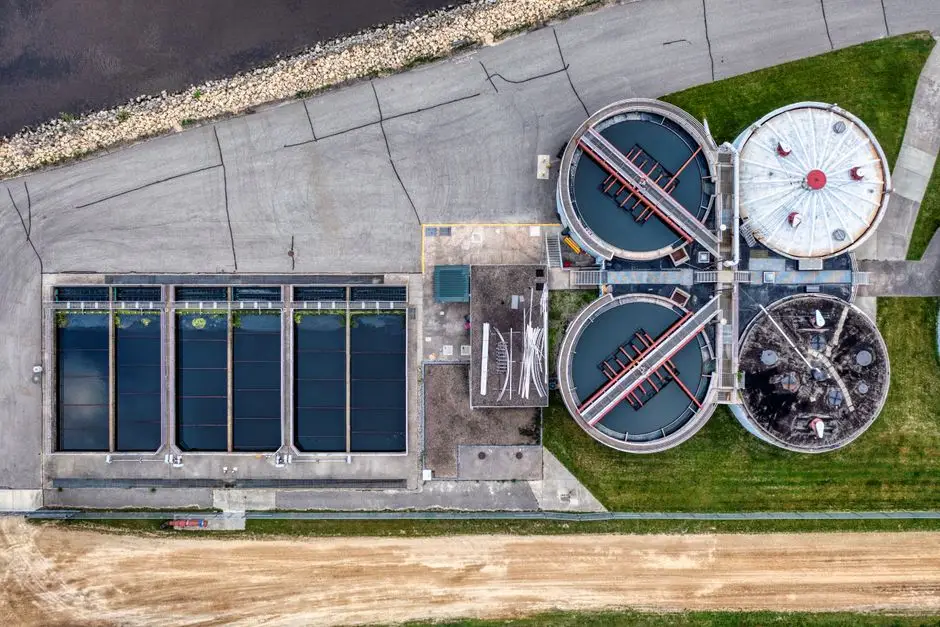
Typical F&B wastewater runs pH 3–11, BOD 500–5,000 mg/L, COD 1,000–10,000 mg/L, TSS 200–3,000 mg/L, FOG 100–2,000 mg/L, and TKN 20–200 mg/L depending on the subcategory and the day's product mix (per Integrated Water Services, 2024). Seven recurring pain points show up across the industry: H2S odor, high BOD/COD, pH and alkalinity instability, DAF optimization, anaerobic digester H2S, disinfection performance, and nutrient discharge (per USP Technologies, 2024). Hydrogen sulfide is the dominant odor complaint in dairies, breweries, and protein processors where sulfur-bearing compounds and warm side streams drive anaerobic activity in collection systems — the same chemistry that creates headaches in headworks. The City of Boise runs a residential Fats, Oils, and Grease program for restaurants, and the same pollutant is what industrial F&B plants must control to sewer under the sewer-use ordinance (source: City of Boise, 2026). For sizing purposes, the published ranges above are the engineering envelope; the binding local numbers must come from the Boise Pretreatment Program directly, since the city sets site-specific limits on top of the categorical floor.
| Parameter | Typical F&B range | Why it matters for sizing |
|---|---|---|
| pH | 3–11 | Drives equalization volume and chemical dosing capacity |
| BOD | 500–5,000 mg/L | Sets aeration basin volume and MBR sizing |
| COD | 1,000–10,000 mg/L | Confirms biodegradability and FOG fraction |
| TSS | 200–3,000 mg/L | Drives DAF sizing and sludge handling |
| FOG | 100–2,000 mg/L | Dictates DAF air-to-solids ratio and polymer dose |
| TKN | 20–200 mg/L | Sets nitrification/denitrification volume |
Landfill leachate and high-strength food waste streams face the same high-BOD/FOG reality and often share unit operations with F&B plants — see the 2026 landfill leachate and sludge treatment process guide for parallel pollutant profiles.
The 2026 Process Train That Gets You to Compliance
Step one is a GX series rotary mechanical bar screen at the headworks — F&B plants carry rags, bottle caps, fruit skins, and fibrous debris that wreck pumps and plug membrane modules downstream. Step two is flow and load equalization, sized to dampen pH, BOD, and hydraulic surges so the downstream biology stays in its operating envelope across CIP, seasonal changeovers, and tank cleans (per Integrated Water Services, 2024). Step three is a dissolved air flotation system as the standard first separation step for FOG and suspended solids in food processing, with 13 standard models covering 4–300 m³/h (HydropureWater DAF product data, 2026). Step four is biological treatment — an integrated MBR membrane bioreactor system combining activated sludge with submerged PVDF membranes at sub-micron pore size to deliver near-reuse effluent in roughly 60% of the footprint of a conventional activated-sludge plus clarifier train (HydropureWater MBR product data, 2026). MBRs are increasingly the 2026 default for F&B because tightening categorical limits leave little margin for clarifier upset. Step five is nutrient polishing — chemical precipitation for phosphorus and nitrification/denitrification for nitrogen — since nutrient rules are tightening across US jurisdictions (per USP Technologies, 2024). Step six is disinfection with either a UV sterilizer for water treatment for chemical-free inactivation of Cryptosporidium and other chlorine-tolerant organisms, or a chlorine dioxide generator when a residual is required in the receiving line. Step seven is sludge handling with a plate and frame filter press to manage biosolids generated across the train. A UF polishing step at 0.03 µm is a defensible final barrier if the plant wants margin against future local tightening (HydropureWater UF product data, 2026).
Choosing the Right Boise-Ready Equipment: DAF, MBR, or Both?
If the plant is small (under 50 m³/day) and the binding limit is essentially TSS and FOG, DAF alone plus discharge to the City of Boise POTW will typically satisfy the permit because the POTW is the primary control point (source: City of Boise, 2026). If the categorical standard imposes tight BOD or COD limits — 40 CFR Part 409 for brewing or 40 CFR Part 405 for dairy — an MBR is almost always required because MBRs deliver higher and more stable removal than conventional biology with a clarifier (per Integrated Water Services, 2024). For plants pursuing water reuse in addition to compliance, an MBR followed by UF and RO is the standard 2026 train, and reuse is the trajectory most US F&B plants are following (HydropureWater UF and RO product data, 2026). MBR flat-sheet modules in the DF series at 0.1 µm and 80–225 m² configurations offer individually replaceable elements and roughly 10–20× lower energy than external cross-flow designs (HydropureWater MBR module data, 2026).
| Flow range (m³/day) | Primary biology | DAF placement | Polishing |
|---|---|---|---|
| < 50 | None or packaged activated sludge | Pre-DAF only | UV or ClO₂ |
| 50–250 | MBR or MBBR | Pre-DAF (FOG removal) | UV, optional UF |
| 250–1,000 | MBR | Pre-DAF + post-DAF on waste-activated sludge | UF, optional RO for reuse |
| > 1,000 | MBR with nutrient removal | Pre-DAF, often two-stage | UF + RO for water reuse |
For module selection, the DF series MBR module, the UF water treatment system, and the chlorine dioxide generator cover the typical polishing train. For the membrane selection logic behind module choice, see the best MBR membrane module for industrial use in 2026 engineering guide.
Permit, Monitoring, and Reporting Obligations Near Boise
Step one is contacting the City of Boise Pretreatment Program to determine whether a permit is required and which local limits apply; the program explicitly instructs every industrial or commercial discharger to make that contact before sending anything to the water renewal system (source: City of Boise, 2026). Categorical facilities must also file the baseline monitoring reports and 90-day compliance reports required under 40 CFR 403.12, followed by periodic self-monitoring reports on the schedule the program sets (per 40 CFR Part 403, 2026). FOG management is a hot-button local issue: the City's residential FOG program pairs with industrial FOG limits in the sewer-use ordinance, so a brewery or dairy with marginal FOG removal will hear about it. Slug control plans and best management practices are typically required for F&B plants because of batch discharges from cleaning, CIP, and seasonal production runs, and an automatic chemical dosing system is the practical way to keep pH and nutrient precipitation on setpoint through those surges. Numeric City of Boise discharge limits are not published in the materials available for this article; request the current limits directly from the Boise Pretreatment Program and confirm with IDEQ on the surface-water side.
What This Typically Costs: CAPEX and OPEX Bands for 2026
A packaged DAF skid in the 4–300 m³/h range scales orders of magnitude with capacity, but a 50 m³/day F&B plant should expect DAF CAPEX in the low-to-mid six figures USD before installation and civil work (HydropureWater DAF product data, 2026). Packaged MBR systems from 10–2,000 m³/day scale similarly: small packaged units under 100 m³/day typically land in the mid six figures, while full-scale plants above 500 m³/day move into the seven figures (HydropureWater MBR product data, 2026). OPEX is dominated by membrane replacement (typically every 5–8 years for PVDF MBR modules), chemical dosing for pH and nutrient control, sludge hauling, and energy for aeration and permeate pumps — as a planning anchor, OPEX for an MBR with chemical polish generally runs 8–15% of CAPEX per year, with energy at about half of that and the rest split between chemicals, hauling, and membrane amortization. For a parallel cost framing in a different mid-sized US plant context, the Birmingham 2026 effluent treatment plant buyer's engineering guide walks through comparable CAPEX/OPEX bands. Sludge dewatering at the back end is typically handled with a plate and frame filter press sized to the dry-solids capture target. Final pricing always depends on influent characterization, target effluent, local construction costs, and discharge limits — these bands are for budget framing, not vendor quotes.
Frequently Asked Questions
What is 40 CFR Part 403 and why does it matter for a Boise F&B plant?
40 CFR Part 403 is the EPA's General Pretreatment Regulations, the umbrella rule that every industrial discharger to a POTW must follow. It sets the general prohibitions against pass-through and interference, requires slug control plans and BMPs, and authorizes the local POTW — in this case the City of Boise — to set site-specific numeric limits derived from its own NPDES permit (per 40 CFR Part 403, 2026). It is the floor under the categorical standards in 40 CFR Parts 405–409.
How do breweries and dairies near Boise meet categorical effluent limits?
Breweries must meet 40 CFR Part 409 Subpart J limits for BOD, TSS, and pH; dairies must meet the 40 CFR Part 405 subcategory limit that matches their product (fluid milk, cheese whey, evaporated milk, etc.). The practical 2026 process train is screening, equalization, DAF for FOG, an MBR for BOD/COD/solids, and UV or chlorine dioxide disinfection before discharge to the City of Boise water renewal system (HydropureWater product data, 2026).
What is the City of Boise's FOG program and does it apply to industrial F&B?
The City of Boise runs a residential Fats, Oils, and Grease program aimed at restaurants, but the same FOG pollutant is what industrial F&B plants must control under the sewer-use ordinance. DAF is the standard primary separation step for industrial FOG, and chemical dosing or MBR polishing provides the residual margin (source: City of Boise, 2026).
How do plants near Boise control H2S in collection systems and headworks?
H2S control for F&B plants near Boise typically combines DAF for FOG reduction, supplemental aeration or chemical oxidation in the equalization basin, and slug-load management to keep the collection system aerobic. The City of Boise's pretreatment and IDEQ's surface-water programs both push plants toward controls that limit sulfide generation at the source (per USP Technologies, 2024).
Where do I start the permit process for a new F&B discharge near Boise?
Contact the City of Boise Pretreatment Program first — the program's published guidance instructs every industrial or commercial discharger to make that contact before sending anything to the water renewal system so the program can determine whether a permit is required and which local limits apply (source: City of Boise, 2026). Confirm any surface-water or reuse constraints with IDEQ before equipment selection is locked in.