Why Leather Wastewater Needs Fenton Oxidation
Tannery combined effluent typically carries 3,000–8,000 mg/L COD, 20,000–40,000 mg/L TDS from pickling NaCl, 50–200 mg/L sulfide, and 5–50 mg/L residual chrome — a matrix that stops conventional activated sludge in its tracks. Uygur & Kargi (2004) and the Sekaran group (Environ Chem Lett 9:499–504, 2011) both show sharp BOD-removal collapse above 1% salinity because halophilic shock disrupts floc formation and causes bulking, while sulfide strips dissolved oxygen and chrome inhibits nitrifiers. Fenton's hydroxyl radical (·OH, E° = 2.80 V vs NHE) attacks these streams non-selectively, recovering biodegradability so a downstream MBBR or MBR can finish the job. The Sekaran 2011 optimum is the benchmark any 2026 plant design must clear or beat: 69% COD, 74% BOD, 61% TOC, and 80% dissolved-protein removal from a salt-laden raw tannery feed — without which the downstream biological stage will not stay alive long enough to discharge inside the consent.
Fenton Chemistry and Optimum Operating Window
The Fenton chain is the Haber–Weiss cycle: Fe²⁺ + H₂O₂ → Fe³⁺ + ·OH + OH⁻ (k ≈ 63–76 L·mol⁻¹·s⁻¹), followed by Fe³⁺ + H₂O₂ → Fe²⁺ + ·OOH + H⁺, regenerating the catalyst. The reaction window is narrow. Below pH 2.5, ·OH is scavenged by H⁺ back to H₂O₂; above pH 4.0, Fe(OH)₃ precipitates and the catalyst is lost. For salt-laden leather streams the published optimum (Sekaran 2011) is pH 3.0–3.5, 7.5 mmol/L H₂O₂ (≈ 255 mg/L as 100%), 0.3 mmol/L FeSO₄·7H₂O (≈ 84 mg/L), and 10 g/L mesoporous activated carbon (MAC 800) as catalyst support. Reactor temperature is held at 25–40 °C — above 50 °C, H₂O₂ decomposes non-productively to O₂ and water. One routinely missed detail in tannery plant work: residual H₂O₂ interferes with the closed-reflux COD test (Talini & Anderson 1992, Water Res 26:107–110), biasing the reading 50–100 mg/L COD high and causing operators to over-dose downstream coagulant. Quench by raising sample pH to 10 for 10 minutes, by adding Na₂SO₃, or by adding catalase at ~10 U/mL before analysis.
| Parameter | Optimum (Sekaran 2011) | 2026 plant operating range | Failure mode if missed |
|---|---|---|---|
| pH | 3.5 | 3.0–3.5 | < 2.5 ·OH scavenged; > 4.0 Fe(OH)₃ precipitate |
| H₂O₂ (100%) | 7.5 mmol/L (255 mg/L) | 200–500 mg/L | Low dose = poor COD; excess = scavenging + COD bias |
| FeSO₄·7H₂O | 0.3 mmol/L (84 mg/L) | 60–120 mg/L | Low Fe²⁺ = slow ·OH; high Fe³⁺ = coloured effluent + sludge |
| Catalyst (heterogeneous) | MAC 800, 10 g/L | 5–15 g/L | None = falls back to CHP; aged = drop in COD removal |
| Temperature | 30 °C | 25–40 °C | > 50 °C H₂O₂ wastes to O₂ + H₂O |
| HRT | 45 min | 30–60 min | < 20 min incomplete ·OH utilisation |
Classical vs Heterogeneous vs Electro-Fenton for Tanneries
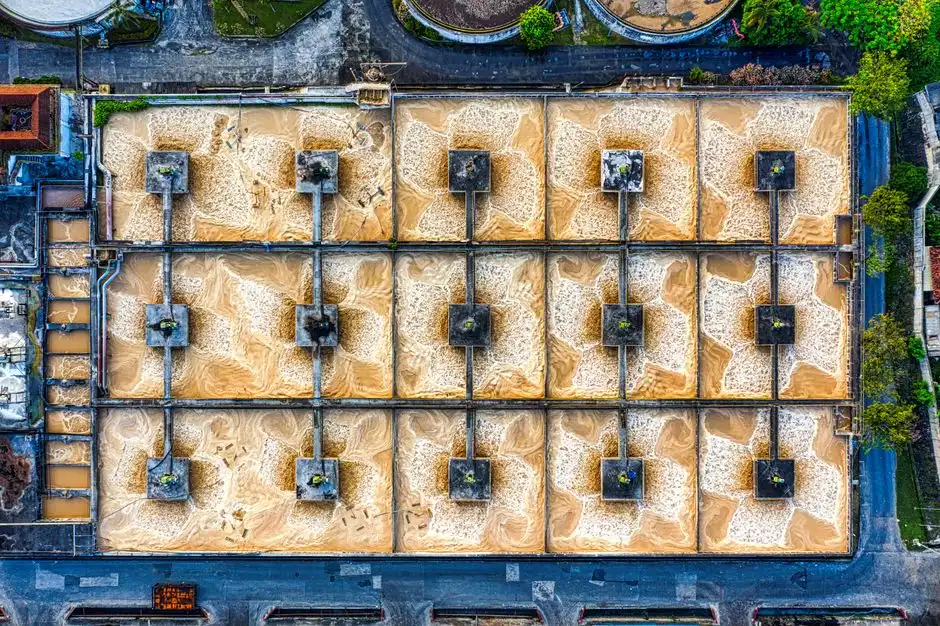
Three Fenton variants are credible on tannery duty in 2026; the choice turns on flow rate, sludge-disposal cost, and grid power, not on COD removal percentage alone. Classical homogeneous Fenton (CHP) is the cheapest CAPEX, fully mature, and references well in municipal tenders — but it produces 0.4–0.8 kg dry iron sludge per kg COD removed, on a site already burdened with chrome-bearing sludge. Heterogeneous Fenton (HET) on mesoporous activated carbon, Fe-ZSM-5, or Fe₂O₃/carbon composite (Dantas 2006, Chem Eng J 118:77–82; Ramirez 2007, Appl Catal B 75:312–323) matches CHP at 61–80% COD removal with near-zero sludge output, at 1.5–2× CAPEX and 6–18 month catalyst life on leather streams. Electro-Fenton (EF) generates H₂O₂ in-situ at a graphite-felt or gas-diffusion cathode and regenerates Fe²⁺ at the anode; Kurt et al. (J Hazard Mater 2007) reported 60–75% COD reduction on organized tannery-region wastewater, with very low sludge but 1.5–3 kWh/m³ power draw. Photo-Fenton (UV/H₂O₂/Fe²⁺) is best kept for polishing duty. The decision rule of thumb for 2026: CHP for ≤ 200 m³/d where on-site sludge landfill is available, HET for 200–2,000 m³/d where tipping fees bite, and EF only where grid power is cheap (< $0.07/kWh) and a chrome-recovery line is already installed. Dosing accuracy across all three variants is non-negotiable — a PLC-controlled H₂SO₄, FeSO₄ and H₂O₂ dosing skid holds pH inside the 0.3-unit band that decides whether the reactor is producing ·OH or wasting reagent.
| Variant | COD removal (tannery) | Iron sludge | CAPEX vs CHP | OPEX driver | Best fit (2026) |
|---|---|---|---|---|---|
| CHP (classical) | 60–75% | 0.4–0.8 kg / kg COD | 1.0× | H₂O₂ + sludge haulage | ≤ 200 m³/d, on-site landfill |
| HET (heterogeneous) | 61–80% | < 0.05 kg / kg COD | 1.5–2.0× | Catalyst replacement 6–18 mo | 200–2,000 m³/d, high tipping fees |
| EF (electro-Fenton) | 60–75% | < 0.05 kg / kg COD | 2.0–2.5× | Power 1.5–3 kWh/m³ | Power < $0.07/kWh, chrome line present |
| Photo-Fenton | 70–85% | 0.3–0.6 kg / kg COD | 2.5–3.5× | Lamp/UV replacement | Polishing only, not full flow |
Typical 2026 Process Flow for a Tannery Fenton Skid
On a real 2026 tannery ETP, Fenton sits between physical-chemical pre-treatment and biological polishing, not at the head of the plant. The sequence is: rotary bar screen (typically a rotary mechanical bar screen at 5 mm aperture) → 24-hour equalisation basin to flatten drum-dyeing peaks → pH adjustment to 3.0–3.5 with H₂SO₄ → FeSO₄ dosing → H₂O₂ dosing into a plug-flow reactor at 30–60 min HRT → neutralisation to pH 7 with NaOH or lime → coagulation/flocculation → lamella clarifier or DAF (a dissolved-air flotation unit handles tannery loads with high solids better than a settling tank) → biological polishing on an MBR polishing stage downstream of Fenton → UV or ClO₂ disinfection before discharge. Two interstage constraints decide whether the Fenton skid works: (1) Fenton effluent must drop below 5 mg/L residual H₂O₂ before the MBR, or the membranes foul and the biomass is oxidatively stressed; (2) equalisation must hold pH 3.5 steady across a 3–5× demand swing, otherwise ·OH yield collapses mid-batch. Material of construction for the Fenton reactor and dosing lines is FRP or rubber-lined carbon steel at pH 2.5–4 in the presence of chloride — 316L stainless is acceptable only on the neutralised side of the train.
Dosing, Sizing and 2026 Cost Benchmarks
Stoichiometric H₂O₂ demand for tannery COD removal sits at roughly 2.125 mg H₂O₂ per mg COD oxidised; on a Sekaran-class 1,000 mg/L COD drop, that is about 2.1 kg H₂O₂ (as 100%) per m³, supplied in practice as 50% reagent grade for skid economics. Reactor sizing at 45 min HRT and a 1,000 mg/L COD load gives approximately 0.03 m³ reactor per m³/h of design flow — a 500 m³/d plant needs a 12 m³ FRP Fenton tank, a 3 m³ neutralisation tank, and a 1.5× clarifier. OPEX in 2026 industrial APAC pricing: 50% H₂O₂ at $0.45–$0.70 per kg delivered, FeSO₄·7H₂O at $0.25–$0.40 per kg. A 500 m³/d tannery removing 1,500 mg/L COD spends $90,000–$140,000 per year on Fenton reagents alone (HydropureWater 2026 bid data). Iron sludge from CHP at the same duty runs 600–800 kg dry cake per day, dewatered on a plate-and-frame filter press for Fenton iron cake to below 60% moisture for landfill. Heterogeneous Fenton cuts reagent OPEX 30–50% because the iron catalyst is regenerated, but CAPEX runs 40–80% higher; the payback window drops inside 3 years once landfill tipping fees exceed $80/t. Solids separation after the Fenton stage is best handled by a lamella clarifier for iron-sludge separation after Fenton, which keeps the sludge blanket in a small footprint.
| Cost line (2026, APAC) | Unit | CHP | HET | EF |
|---|---|---|---|---|
| H₂O₂ (50%) | $ / kg | 0.45–0.70 | 0.45–0.70 | — (generated) |
| FeSO₄·7H₂O | $ / kg | 0.25–0.40 | 0.05–0.10 (catalyst replacement) | 0.10 (anode loss) |
| Reagent OPEX @ 1,500 mg/L COD removed | $ / m³ | 0.55–0.85 | 0.30–0.55 | 0.25 (power) – 0.50 |
| Iron sludge, dry | kg / m³ | 0.6–1.2 | < 0.06 | < 0.05 |
| Sludge disposal @ $80/t | $ / m³ | 0.05–0.10 | 0.005 | 0.004 |
| CAPEX (500 m³/d plant) | $ million | 0.35–0.55 | 0.55–0.90 | 0.80–1.20 |
Sludge, Safety and Discharge Compliance
Iron Fenton sludge is generated separately from chrome-bearing beamhouse sludge, and the two streams must never be co-mixed — chromium(III) re-oxidises to Cr(VI) under the alkaline conditions that stabilise ferric hydroxide cake. A plate-and-frame filter press for Fenton iron cake drives moisture below 60% and produces a stackable cake for Class-B landfill. H₂O₂ storage follows standard 35–50% HDPE tank practice with vacuum venting, segregation from organics, and 110% spill containment sized to the largest vessel (per OSHA 29 CFR 1910.106 and EPA SPCC 40 CFR 112). Disinfection downstream of the MBR is best handled by a chlorine dioxide generator rather than Cl₂, because ClO₂ does not form trihalomethanes with the residual protein fragments typical of tannery effluent. Combined Fenton + MBR effluent for tannery streams typically lands at COD ≤ 150 mg/L, BOD ≤ 30 mg/L, TSS ≤ 30 mg/L, meeting Indian CPCB inland discharge norms and EU 91/271/EEC thresholds for tannery-cluster discharges. Daily operator KPIs: influent pH after dosing, ORP in the 350–450 mV range during reaction, residual H₂O₂ at the clarifier outlet (target < 5 mg/L), and mixed-liquor TSS in the downstream MBR (target 8,000–12,000 mg/L).
Frequently Asked Questions
What is the optimum Fenton dose for tannery wastewater in 2026?
The Sekaran 2011 optimum remains the design benchmark for salt-laden tannery streams: pH 3.5, 7.5 mmol/L H₂O₂ (≈ 255 mg/L as 100%), 0.3 mmol/L FeSO₄·7H₂O (≈ 84 mg/L), and 10 g/L mesoporous activated carbon catalyst, delivering 69% COD, 74% BOD, 61% TOC, and 80% protein removal. Modern 2026 plants run within ±20% of these numbers and dose via a PLC-controlled H₂SO₄, FeSO₄ and H₂O₂ dosing skid to hold the 0.3-unit pH band.
How much iron sludge does a 500 m³/d tannery Fenton system produce?
A 500 m³/d plant removing 1,500 mg/L COD on classical homogeneous Fenton produces 600–800 kg of dry iron cake per day, equivalent to 0.6–1.2 kg dry sludge per m³ of treated effluent. Switching to heterogeneous Fenton cuts that to below 60 kg/day, which is why the variant pays back inside 3 years at landfill tipping fees above $80/t.
Does Fenton fit ahead of an MBR, and what interstage controls are needed?
Fenton sits upstream of the MBR as a pre-treatment to recover biodegradability — the MBR cannot function on raw salt-laden tannery feed. The critical interstage is residual H₂O₂: the Fenton effluent must drop below 5 mg/L before the membranes, otherwise oxidative stress kills the biomass and the membranes foul. Quench with a 10-minute pH-10 hold or Na₂SO₃ dosing before the MBR polishing stage downstream of Fenton.
How does the H₂O₂ residual distort the standard COD test, and how is it corrected?
Residual H₂O₂ reacts with the dichromate reagent in the closed-reflux COD method (Talini & Anderson 1992, Water Res 26:107–110), biasing the result 50–100 mg/L COD high and pushing operators to over-dose downstream coagulant. Correct by raising sample pH to 10 for 10 minutes, by adding Na₂SO₃ in stoichiometric excess, or by adding catalase at ~10 U/mL before titration.
What material of construction is correct for the Fenton reactor on tannery duty?
At pH 2.5–4 in the presence of 20,000–40,000 mg/L chloride, the Fenton reactor and dosing lines must be FRP or rubber-lined carbon steel — 316L stainless is acceptable only on the neutralised side of the train, where pH is back at 7. More detail on the upstream–downstream train is in the Fenton for pharmaceutical wastewater guide and the iron-sludge dewatering and disposal guide.