Why Foundries Need Ion Exchange After Precipitation
Foundry effluent routinely breaches 40 CFR 433 multi-sector metals limits and EU IED BAT-AEL thresholds because hydroxide precipitation at pH 8.5–9.5 leaves residual Zn at 1–5 mg/L and Ni at 0.5–3 mg/L even when dosing is optimized (per EPA 40 CFR 433). Zn redissolves above pH 10 from amphoteric Zn(OH)₄²⁻ formation, and Ni(OH)₂ precipitation kinetics stall below 25 °C — two chemistry reasons the bulk step cannot finish the job on its own.
The influent envelope for a ~200 t/day iron foundry is unusually wide (HydropureWater field data, 2026): Cr 5–500, Ni 10–300, Zn 20–800, Cu 5–200, TSS 200–3,000, and oil/grease 50–500 mg/L. After lime or NaOH dosing, the column sees single-digit mg/L metal residuals, the exact window where ion exchange becomes economic — pushing effluent from 1–5 mg/L to <0.1 mg/L at OPEX of $0.35–$0.85/m³.
That <1 mg/L residual is not a polishing nicety; it is the regulatory ceiling. Foundries discharging to a POTW bound by 40 CFR 433 (Zn 1.48 mg/L, Ni 0.69 mg/L monthly average) and foundries under EU IED BAT-AEL for non-ferrous installations need a finishing step that does not depend on dosing accuracy. Ion exchange system for foundry wastewater design in 2026 starts from that premise.
Why Ion Exchange Cannot Be the First Step in a Foundry
Resin beds cannot tolerate the suspended solids and emulsified oils in raw casting wastewater. The 2011 wastewater-system reference is explicit that "resins can be very sensitive to fouling caused by presence of organic matter" and that upstream removal of TSS and soluble organics is mandatory. That pretreatment requirement is why ion exchange is always specified as the third or fourth unit operation, never the first.
The financial consequence is direct. Resin life in casting service collapses from 5–7 years to 18–24 months when upstream TSS exceeds 10 mg/L or oil exceeds 5 mg/L — a 60–70% reduction in service life that no OPEX model can absorb. Macroporous SAC has 2–3× better organic-fouling resistance than gel-type because the larger pore channels (typically 50–100 nm vs. <5 nm) admit high-molecular-weight cutting-fluid surfactants and let them backwash out; the gel matrix traps them irreversibly. Macroporous is the foundry default for that reason, not because it loads more metal.
Resin Selection by Target Metal in Casting Wastewater
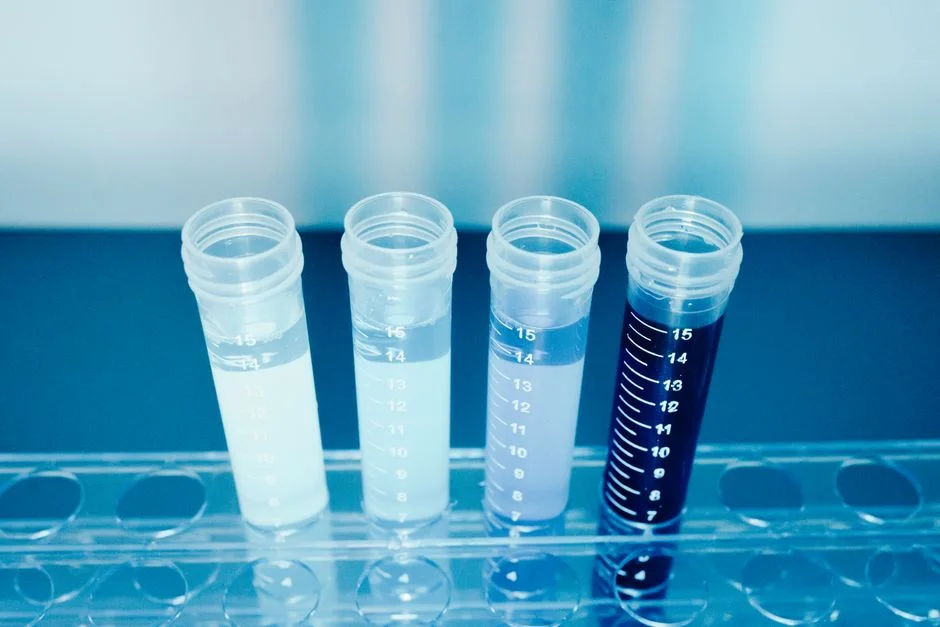
Resin selection in a foundry is driven by three questions: which metal is the regulatory priority, what is the competing-ion background (Ca²⁺, Na⁺, SO₄²⁻), and is metal recovery for resale a project requirement. The table below maps a specific stream profile to a named resin, the pH window, and the regeneration recipe that hits <0.1 mg/L effluent (HydropureWater field data, 2026).
| Target metal | Resin (example) | Functional group | Capacity (eq/L) | Service pH | Regenerant | Selectivity note |
|---|---|---|---|---|---|---|
| Cr(III), bulk cation | Strong-acid cation (SAC) | Sulfonic | 1.8–2.2 | 6.5–8.5 | 5–10% HCl at 80–120 g/L | Workhorse; minimal Ca²⁺ discrimination |
| Hardness + metals, alkalinity >150 mg/L as CaCO₃ | Weak-acid cation (WAC) | Carboxylic | 3.0–4.0 | 6.5–7.5 | 1.5–2× stoichiometric H₂SO₄ | ~40% less acid than SAC on high-hardness streams |
| Ni²⁺, Cu²⁺ selective | Iminodiacetate (Lewatit TP207, Amberlite IRC748, Purolite S930) | Chelating | 1.2–1.8 | 2–4 | 10–15% H₂SO₄ | ~10× higher Cu²⁺ selectivity over Ca²⁺ |
| Zn²⁺, Cd²⁺ | Aminomethylphosphonic acid (Lewatit TP260) | Chelating | 1.0–1.6 | 1–2 | 10–15% H₂SO₄ | Stable at lower pH than iminodiacetate |
The pH sensitivity trap is severe. Drop from pH 7 to pH 3 on an iminodiacetate column and Cu uptake falls from 1.6 to 0.4 eq/L — a 75% capacity loss driven by protonation of the amine nitrogen. Specify automatic chemical dosing for pH adjustment and regeneration with redundant pumps and a two-stage PID loop; manual HCl trim will run a foundry column hot or cold within hours.
Cr(VI) Treatment: Reduction Before the Cation Column
Foundries running pickling baths or chrome rinsewater carry Cr(VI), and the standard cation train fails if the reduction step is skipped. The Cr(VI)→Cr(III) reduction uses FeSO₄·7H₂O at 2.8–3.0× stoichiometric weight ratio (roughly 16–20 mg FeSO₄ per mg Cr(VI)) or Na₂S₂O₅ at 2.5× stoichiometric, at pH 2–3 with 15–20 minutes residence time in a dedicated reduction tank with mechanical mixing.
Quantify the failure mode if reduction is skipped. Chelating resins bind Cr(III) irreversibly and foul within 20–40 cycles, dropping operating capacity by 30–50% and shortening resin life below 3 years. The reduction step is the only way to keep the chelating columns serviceable in mixed streams. After reduction, raise pH to 6.5–7.5 before the SAC column so Cr(OH)₃ does not precipitate on the resin and physically blind it; Cr(VI) also destroys the resin's selective binding sites for Ni and Cu by oxidative attack, so reduction is upstream of the SAC lead and the chelating lag, never in-line. For a deeper view of the upstream train, the passivation chrome rinse Cr(VI) reduction process train walks through the same chemistry for a MBBR-polishing sequence.
Pretreatment Train: DAF, Multimedia Filter, Carbon Polisher
The pretreatment sequence is non-negotiable. Specify each step against a measured inlet/outlet target so resin life is protected by instrumentation, not by hope.
- DAF first — strip emulsified oil and floatable solids, 80–95% oil removal, TSS drops from 200–3,000 to 30–80 mg/L. The DAF system for oil and TSS removal as the first unit protects every downstream vessel from organic loading.
- pH adjust to 6.5–7.5 with H₂SO₄ or NaOH to fix metal speciation for both SAC and chelating resin service.
- Multimedia filter (sand + anthracite + garnet) drives TSS to <5 mg/L and SDI <6 — the resin-protection threshold. The multi-media filter for resin protection ahead of the cation vessel sets that backwash sizing.
- Activated carbon or organoclay polisher when cutting fluid or coolant residues survive the DAF and would otherwise load the resin with organics that half operating capacity within 10 cycles.
Backwash sizing for a 10 m³/h column train: 40–60 m³/h backwash flow per m² of bed area, 8–12% bed expansion, 15–20 minute backwash every 24–72 hours. Air-scour at 60 m³/h per m² for 3–5 minutes before the water backwash prevents mudball formation on multimedia filters.
Column Design, Regeneration, and Breakthrough Control
Hydraulic loading runs 15–25 BV/h (bed volumes per hour); service cycle lands at 8–24 hours between regenerations, set by the breakthrough of the first metal of concern rather than a clock. Bed depth typically 1.0–1.5 m in foundry service, freeboard 50–75% to allow for backwash expansion after an organic upset.
Specify counter-current regeneration (upflow acid through a packed bed against downflow service) on any new 2026 build unless influent TDS exceeds 3,000 mg/L. Counter-current saves 30–50% on regeneration chemical and delivers 15–25% higher operating capacity than co-current because the bottom of the bed — the section doing the last polishing — stays fully regenerated at the end of every cycle. Above 3,000 mg/L TDS, the viscosity penalty offsets the chemical savings.
The breakthrough trigger is critical: regenerate when effluent metal reaches 10–20% of feed concentration, not at theoretical exhaustion. Running to exhaustion permanently fouls chelating resin with trace Cr(III) and shortens resin life from 5–7 years to under 3 years. Two-bed configuration (SAC lead + chelating lag) is the 2026 default for mixed-metal foundry streams; mixed-bed polishing is reserved only for the final rinse stage when the reuse spec is <0.05 mg/L total metals before a downstream RO. For a side-by-side of competing unit operations, the electroplating wastewater CAPEX/OPEX benchmark provides a related higher-TDS reference.
CAPEX, OPEX, and Nickel Recovery Payback
A 10 m³/h foundry ion exchange skid (two cation vessels, regeneration system, PLC controls, acid dosing skid, neutralization tank) lands at $180,000–$320,000 CAPEX in 2026; cost scales with flow at a 0.85–0.90 exponent due to vessel pricing tiering (HydropureWater field data, 2026). The table below breaks down OPEX and payback for a 5 m³/h foundry treating 80,000 m³/year.
| Line item | Quantity | Unit cost | Annual ($/yr at 80,000 m³) |
|---|---|---|---|
| CAPEX (5 m³/h skid, scaled from 10 m³/h base) | 1 skid | $95,000–$170,000 | Capitalized |
| HCl / H₂SO₄ regeneration chemical | 0.12–0.28 L/m³ treated | $1.00/L equiv. | 9,600–22,400 |
| NaOH neutralization | 0.05–0.10 L/m³ treated | $0.80/L | 3,200–6,400 |
| Resin replacement (amortized) | 0.08–0.18 $/m³ | — | 6,400–14,400 |
| Pump power | 0.05–0.10 $/m³ | — | 4,000–8,000 |
| Total OPEX | — | — | 28,000–68,000 |
| Avoided Ni/Zn hydroxide sludge disposal | ~200 t/yr at 60% moisture | $200–$450/ton hazardous | 40,000–90,000 (savings) |
| Ni resale (iminodiacetate eluate) | 5–15 g/L × ~4,000 m³/yr eluate | LME Ni $16,000–$19,000/ton (Q1 2026) | 45,000–80,000 |
| Net annual benefit | — | — | 57,000–102,000 |
| Payback (CAPEX / net benefit) | — | — | 12–30 months |
When LME Ni pricing exceeds $17,000/ton, the resin-based recovery economics dominate the decision against sulfide precipitation, which produces a $300–$600/ton hazardous sulfide sludge with no resale offset.
When to Pick IX, RO, Sulfide Precipitation, or Hybrid
The decision rule is sharper than most procurement frameworks make it. Pick ion exchange when the discharge limit is <1 mg/L for multiple metals simultaneously, when Ni or Cu has resale value >$15/kg, or when downstream RO requires <0.5 mg/L total metals in feed. The RO system for foundry water reuse covers the polishing half of the hybrid train.
Pick enhanced precipitation with NaSH or Na₂S when only Cr and Pb are regulated and the discharge ceiling is 1–2 mg/L — sulfide chemistry drives Cr to <0.05 mg/L but produces a hazardous sulfide sludge that runs $300–$600/ton to dispose. Pick RO as the final barrier when the reuse spec is TDS <50 mg/L, not for selective metal removal — RO concentrate is 10–20% of feed and cannot economically concentrate Ni to a saleable 50 g/L eluate the way chelating resin can. Hybrid (precipitation + IX + RO) is the 2026 default for foundries in water-stressed jurisdictions targeting >85% reuse and EU IED BAT-AEL compliance; IX wins on concentrate volume, RO wins on absolute purity. For a contrasting physical-chemistry option, the electrocoagulation system for metal finishing wastewater addresses a similar stream profile through a different mechanism.
Frequently Asked Questions
Which ion exchange resin is best for nickel recovery from casting wastewater?
Iminodiacetate chelating resin (Lewatit TP207, Purolite S930) selectively captures Ni²⁺ at pH 2–4 with 1.2–1.8 eq/L capacity and roughly 10× higher affinity for Ni²⁺ over Ca²⁺; regenerate with 10–15% H₂SO₄ to produce a 5–15 g/L Ni eluate suitable for crystallization or electrolytic recovery.
How often does foundry ion exchange resin need regeneration?
Every 8–24 hours depending on influent metal concentration and hydraulic loading (15–25 BV/h); trigger regeneration when effluent metal reaches 10–20% of feed, not at theoretical exhaustion, to prevent irreversible Cr(III) fouling and protect the 5–7 year resin life.
Can ion exchange treat hexavalent chromium in foundry wastewater?
Yes, but only after reduction — reduce Cr(VI) to Cr(III) with FeSO₄ at 16–20 mg/mg Cr(VI) or Na₂S₂O₅ at 2.5× stoichiometric, at pH 2–3 with 15–20 minute residence time, raise pH to 6.5–7.5, then capture Cr(III) on SAC resin; the chelating resins bind Cr(III) irreversibly and foul within 20–40 cycles if reduction is skipped.
What is the resin life in casting wastewater service?
5–7 years with proper DAF and multimedia filtration upstream (TSS <5 mg/L, oil <2 mg/L); drops to 2–3 years with any oil breakthrough or sustained operation above pH 9 on chelating columns, which protonates the binding sites and halves operating capacity within 10 cycles.
Does ion exchange recover nickel for resale at current LME prices?
Yes — regenerate the iminodiacetate column with 10–15% H₂SO₄ to produce a 5–15 g/L Ni sulfate eluate; crystallize as NiSO₄·6H₂O or feed an electrolytic cell for LME-grade Ni cathode. At LME Q1 2026 Ni pricing of $16,000–$19,000/ton, payback is 12–30 months for a 5 m³/h foundry.