Why electronics assembly wastewater needs ion exchange in 2026
An ion exchange system for electronics assembly wastewater is typically deployed as the polishing step after chemical precipitation and MBR, where cation and anion resin beds strip residual Cu and Ni to below 0.05 mg/L to satisfy GB 39731-2020 self-monitoring limits, and the rinse water is then sent to a 75–95% recovery RO unit for DI reuse. The one stream where ion exchange is unavoidable in 2026 is the EDTA-laden electroless Ni/Au/Ag rinse, which carries Ni²⁺ at 20–200 mg/L with EDTA at 50–500 mg/L and collapses MBR biomass above 50 mg/L EDTA (HydropureWater field data, 2026).
Four segregated streams define every 2026 electronics plant design. (1) SMT stencil wash at COD 2,000–15,000 mg/L and TSS 200–1,500 mg/L. (2) Wave-solder and reflow scrubber water with Sn 5–50 mg/L at pH 3–5. (3) Electroless Ni/Au/Ag rinse with Ni²⁺ 20–200 mg/L, total P 10–80 mg/L, EDTA 50–500 mg/L, and trace free CN⁻. (4) CMP and edge-bevel rinse with 0.5–5 wt% SiO₂ or Al₂O₃ slurry plus Cu 5–50 mg/L. Standard MBR biomass at MLSS 8,000–12,000 mg/L cannot tolerate EDTA above 50 mg/L, so the electroless line is either AOP-pretreated or routed to a dedicated ion-exchange train — the canonical 2026 design dilemma (per the full 2026 electronics assembly wastewater treatment train).
Three regulatory regimes govern the discharge design. China GB 39731-2020 sets total Cu ≤1.0, total Ni ≤1.0, total Ag ≤0.5 mg/L, F⁻ ≤10 mg/L, TN ≤40 mg/L, TP ≤2.0 mg/L. The EU translates RoHS 2 and RoHS 3 (Directive 2011/65/EU) into effluent permits of Pb <0.5, Cd <0.1, Cr⁶⁺ <0.1, Hg <0.05 mg/L. The US 40 CFR 433 daily-maximum caps lead at 0.69, copper at 3.38, and nickel at 3.98 mg/L. The 2026 TSCA PFAS reporting rule separately flags fluorinated flux residues as reportable above 100 kg/year, and single-use PFAS-selective resin is one route to compliance.
How ion exchange works on electronics wastewater
Ion exchange is an equilibrium process, not a filter. A crosslinked polymer matrix carries fixed charged functional groups, each balanced by a mobile counterion; as feed water passes through the bed, ions in solution compete with the counterions for the fixed sites, and the resin's affinity order determines which species wins. Exchange is stoichiometric and reversible — flooding the bed with a high concentration of the original counterion drives the equilibrium backward and strips the accumulated contaminant off, which is exactly how regeneration works (per waterandwastewater.com, 2026).
Cation resins split into two functional families. Strong acid cation resins carry sulfonic acid groups, operate across the full pH range, and in the H-form strip Cu²⁺, Ni²⁺, Sn²⁺, and Pb²⁺ down to the sub-0.05 mg/L residuals GB 39731-2020 self-monitoring demands. Weak acid cation resins carry carboxylic acid groups, exchange only against alkalinity, and are cheaper to regenerate but cannot handle the acidic plating-rinse matrix that dominates electronics wastewater at pH 3–9.
Anion resins follow the same strong/weak split. Strong base anion resins with quaternary ammonium functional groups remove all anions including weakly ionized silica and CO₂, which matters when F⁻ from fluoride flux must be polished to ≤10 mg/L. Weak base anion resins handle only strong-acid anions (Cl⁻, SO₄²⁻) and regenerate far more efficiently but cannot touch silica or carbonate. Crosslink density is the hidden parameter: higher crosslink resists oxidant attack (free Cl₂ from NaOCl CIP routinely degrades cation resin) but slows kinetics; for the post-MBR polish with low inlet TDS, lower crosslink is acceptable and faster.
The failure mode specific to electronics is chromatographic displacement. As a cation bed exhausts, a previously captured Cu²⁺ can be displaced by a more preferred ion such as Ca²⁺ or Na⁺ and elute at higher than influent concentration. This is the reason nitrate, PFAS, and EDTA-loaded systems use lead-lag vessels and continuous online Cu/Ni monitoring with automatic lockout, and why an automatic chemical dosing skid for regenerant preparation is paired with every serious installation.
Which resin family targets which electronics contaminant
Resin selection maps directly to the target ion. Strong acid cation in the H-form handles Cu²⁺, Ni²⁺, Sn²⁺, and Pb²⁺ in the polish train and regenerates with 5–10% HCl or H₂SO₄. Strong base anion in the OH-form handles F⁻, sulfate, phosphate, and trace CN⁻ oxidation products, regenerating with 4–8% NaOH. The two resins run in series, cation first to convert dissolved solids to their acid form, then anion to strip the freed anions.
For chelated metals, only a dedicated chelating resin breaks the metal-EDTA bond at the design pH window of 6–9. Iminodiacetic acid (IDA) functional groups bind Cu²⁺, Ni²⁺, and other transition metals even when EDTA is present above 50 mg/L; aminomethylphosphonic acid (AMP) functional groups are the variant chosen when hardness ions compete strongly. A standard strong acid cation resin cannot remove chelated Ni, and this single fact forces the chelating-resin decision at every 2026 electroless Ni/Au/Ag line.
Selective resins address the long tail. Nitrate-selective strong base anion with bulky functional groups reverses the normal affinity order so the resin prefers NO₃⁻ over SO₄²⁻, preventing the sulfate-driven nitrate displacement that defeats ordinary strong base anion on ENIG post-dip neutralization effluent. PFAS-selective resin is built for a different economics entirely: it is operated single-use rather than regenerated, because regenerating it would simply create a liquid concentrate with no disposal route. Spent PFAS resin is handled as solid waste, and disposal cost dominates the lifecycle.
| Resin family | Functional group / form | Target contaminant | Regenerant | 2026 use case |
|---|---|---|---|---|
| Strong acid cation (SAC) | Sulfonic acid, H-form | Cu²⁺, Ni²⁺, Sn²⁺, Pb²⁺ | 5–10% HCl or H₂SO₄ | Post-MBR polish, main train |
| Weak acid cation (WAC) | Carboxylic, H-form | Hardness tied to alkalinity | 0.5–1% H₂SO₄ | Not suited to acidic plating rinses |
| Strong base anion (SBA) | Quaternary ammonium, OH-form | F⁻, SO₄²⁻, PO₄³⁻ | 4–8% NaOH | Post-cation polish, flux F⁻ control |
| Chelating (IDA / AMP) | Iminodiacetic acid / aminomethylphosphonic | Ni²⁺, Cu²⁺ as EDTA complexes | 5–10% HCl or H₂SO₄ | Electroless Ni/Au/Ag rinse, dedicated train |
| Nitrate-selective SBA | Bulky quaternary, modified | NO₃⁻ over SO₄²⁻ | 4–8% NaCl | ENIG post-dip neutralization |
| PFAS-selective | Proprietary fluorophilic | PFAS, fluorinated flux residues | None (single-use) | 2026 TSCA PFAS rule, >100 kg/yr |
The chelating resin is the one most engineers under-spec. If the design carries Ni²⁺ 20–200 mg/L with EDTA 50–500 mg/L and relies on a standard SAC bed, the unit will run to breakthrough on chelated Ni and the downstream RO will foul within weeks. Pairing a multi-media filter ahead of the ion-exchange vessels to drop SDI below 5 protects the chelating resin from particulate fouling and extends service life.
Where ion exchange sits in the 2026 electronics train
The 2026 standard train for electronics assembly wastewater runs equalization → pH adjustment → chemical precipitation → DAF → multi-media filter → MBR → ion exchange polish → RO, with plate-and-frame sludge dewatering on the back end. Unit operations are sequenced in the order a real plant walks them, and the ion-exchange skid is positioned after MBR specifically to polish the Cu/Ni residual that precipitation leaves behind (HydropureWater standard train, 2026).
For the segregated EDTA-laden electroless stream, the placement decision is different. That stream is routed around the main MBR and into a dedicated cation + chelating resin train, then recombined with the main flow only after the EDTA-metal bond is broken. Sending EDTA-laden water to biology collapses MLSS above 50 mg/L EDTA; sending it to a standard SAC bed releases chelated Ni to breakthrough; only a chelating resin train, optionally with Fenton or H₂O₂/UV AOP upstream, reliably clears this stream.
Inside the polish skid, cation and anion vessels run in series, then a mixed-bed polisher if the rinse-water spec is below 1 μS/cm. Mixed beds give effectively infinite exchange stages because the two resins are intimately mixed, but regeneration requires hydraulic separation by backwash exploiting density differences — many plants send exhausted mixed-bed resin offsite rather than handle it in-house. A lead-lag arrangement on the cation bed prevents chromatographic-displacement Cu breakthrough into the anion stage and protects the downstream RO from metal fouling. A typical skid uses an MBR membrane bioreactor upstream of the ion-exchange polish to drive COD below 80 mg/L and turbidity below 1 NTU before the resin sees the water, paired with a dissolved air flotation unit upstream of the multimedia filter to lift 80–95% of TSS and colloidal metals in a single pass.
Ion exchange versus double-pass RO as the polish step
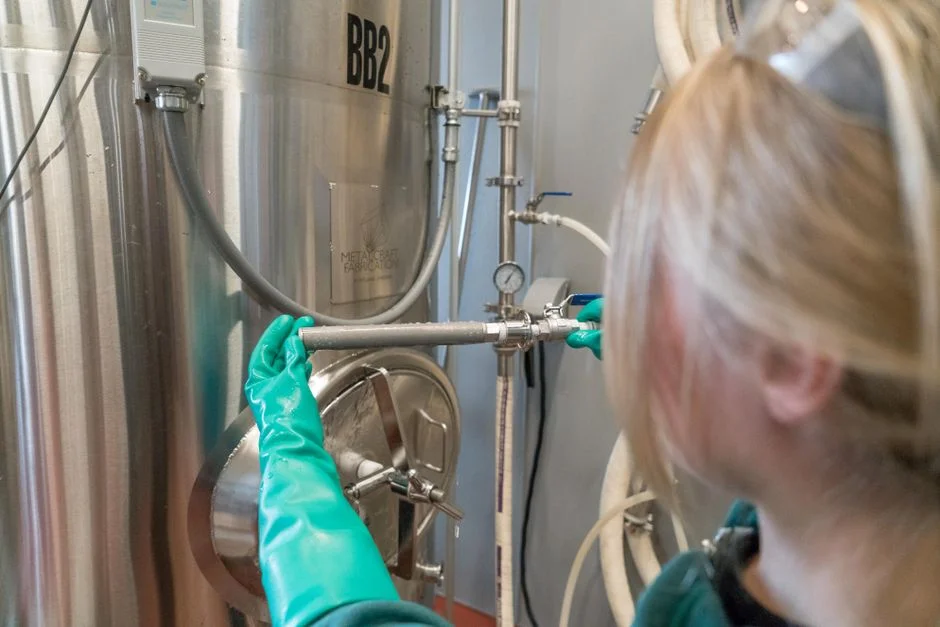
Procurement teams face a real choice in 2026: ion exchange polish, double-pass RO polish, or both in series. The decision is driven by residual metal target, brine management, and the rinse-water reuse specification.
On residual metal performance, ion exchange polish hits Cu/Ni below 0.05 mg/L consistently and is the standard answer for GB 39731-2020 self-monitoring. Double-pass RO at 75–95% recovery hits below 0.01 mg/L on the permeate, but the concentrate stream still contains the rejected metals at 5–25% of feed volume and must be handled — typically routed back to equalization or to a small brine evaporator. For the strictest discharge targets, ion exchange ahead of RO protects the RO from metal fouling and extends membrane life from the typical 3–5 years to 5–7 years.
Operating cost splits along the same line. Ion exchange OPEX is regenerant chemicals (NaOH 4–8%, HCl or H₂SO₄ 5–10%) plus resin replacement at 5-year amortized life, running $0.05–$0.18/m³ on the IX skid alone. RO OPEX is power at $0.04–$0.12/m³ plus membrane replacement at $0.02–$0.05/m³, with the second pass roughly doubling both numbers (HydropureWater field data, 2026).
The waste-stream comparison is the deciding factor for many sites. Ion exchange regenerant is a high-salinity brine at 2–5× influent TDS, 5–15% of treated flow, and sewer salinity limits often govern viability. RO concentrate is a 5–25% side stream that can usually be blended back to the equalization basin for another pass through chemistry, which is materially easier to manage.
| Parameter | Ion exchange polish | Double-pass RO polish |
|---|---|---|
| Residual Cu/Ni on treated water | <0.05 mg/L | <0.01 mg/L (permeate) |
| Permeate conductivity | 1–10 μS/cm (mixed bed) | <1 μS/cm (DI-grade) |
| Concentrate / brine volume | 5–15% of flow, 2–5× TDS | 5–25% of flow, RO concentrate |
| Brine disposal route | Sewer (salinity-limited), evaporation, crystallization | Blend to equalization, evaporator |
| OPEX ($/m³) | $0.05–$0.18 (regenerant + resin) | $0.04–$0.12 power + $0.02–$0.05 membranes (single pass) |
| Resin / membrane life | 5 years amortized | 3–5 years single pass, 5–7 with IX upstream |
| Best fit | Low residual metal, brine manageable | Ultra-pure DI rinse <1 μS/cm required |
The decision rule: use ion exchange when low residual metal is the binding constraint and brine can be sewered, evaporated, or blended; use RO when the DI rinse loop demands <1 μS/cm reuse water; use both in series when the site needs both low residual metal and DI-grade reuse water. For a coastal SEZ site, the combined IX + RO arrangement is the standard 2026 answer, anchored by an industrial RO system for the DI rinse polish.
2026 cost of an ion-exchange skid on an electronics plant
The ion-exchange skid typically runs 8–15% of the total plant CAPEX envelope — small enough to fit inside a buyer's contingency, large enough to deserve a line item in the RFQ. The numbers below are scoped to the IX skid itself, not the full plant, and are anchored to 2026 industry norms (HydropureWater field data, 2026).
For a small contract manufacturer at 5–30 m³/day, full plant CAPEX lands at $80K–$280K and the IX skid is $8K–$30K, typically a single SAC + SBA pair in 200–400 mm diameter vessels with timed regeneration. For a mid-tier OEM at 30–150 m³/day, full plant CAPEX runs $300K–$1.2M and the IX skid is $25K–$120K with mixed-bed polish and lead-lag vessels on the cation side. For a large fab above 200 m³/day, full plant CAPEX is $1.5M–$4.5M and the IX skid runs $150K–$500K including a dedicated chelating-resin train for the segregated electroless stream plus automated online Cu/Ni analyzers on the effluent.
OPEX on the IX skid alone runs $0.05–$0.18/m³ for regenerant chemicals plus amortized resin replacement, on top of the $0.25–$0.85/m³ plant-wide chemical and sludge cost. Payback is driven by water reuse: a 70–90% RO recovery loop on the DI rinse lines cuts municipal water purchase by 50–70%, and in coastal Chinese and Vietnamese SEZs where water exceeds $0.80/m³, combined IX + RO payback lands at 18–36 months. Metal-rich cake at 8–15% metal content sold to recyclers at $200–$1,200/tonne offsets 10–30% of OPEX. Sludge dewatering on an automatic plate-and-frame filter press to 25–35% dry solids is what makes the recycler-offtake route workable.
| Plant tier | Flow (m³/day) | Full plant CAPEX | IX skid CAPEX | IX skid OPEX ($/m³) | Notes |
|---|---|---|---|---|---|
| Small CM | 5–30 | $80K–$280K | $8K–$30K | $0.05–$0.10 | Single SAC + SBA, timed regeneration |
| Mid-tier OEM | 30–150 | $300K–$1.2M | $25K–$120K | $0.08–$0.15 | Lead-lag cation, mixed-bed polish |
| Large fab | >200 | $1.5M–$4.5M | $150K–$500K | $0.10–$0.18 | Chelating train + online Cu/Ni analyzers |
The decision tree for placing ion exchange in the train: (1) If influent EDTA exceeds 50 mg/L, segregate the stream to a chelating-resin train before biology. (2) If discharge limit is GB 39731-2020 Cu/Ni ≤1.0 mg/L with self-monitoring, run SAC + SBA polish after MBR and before RO. (3) If DI rinse reuse demands <1 μS/cm, add mixed-bed polish or a second RO pass. (4) If PFAS flux residues exceed 100 kg/year, add a single-use PFAS-selective resin stage upstream of the IX skid and treat spent resin as solid waste.
Frequently Asked Questions
How do I prevent Cu or Ni breakthrough from the cation bed into the RO?
Operate lead-lag cation vessels with continuous online Cu/Ni analyzers and automatic lockout at breakthrough. The standard safeguard is to swap the lead vessel at 60–80% of theoretical capacity, never run to exhaustion. Chromatographic displacement can release previously captured Cu²⁺ at higher than influent concentration when the bed is allowed to exhaust, and the only defense is conservative run-length control plus real-time monitoring. Lead-lag means the lag vessel polishes whatever the lead vessel leaks, so the RO never sees a metal spike.
Can a standard strong acid cation resin remove Ni-EDTA from the electroless rinse?
No. Standard SAC resin cannot break the metal-EDTA bond at the design pH window of 6–9. Use a chelating resin with iminodiacetic acid (IDA) functional groups operated at pH 4–5, or install an upstream AOP (Fenton, H₂O₂/UV, or ozone) to break the bond before the SAC bed. For more on nickel-specific removal methods for the electroless plating line and the related lead-specific removal methods for wave-solder and legacy lines, see the dedicated 2026 guides.
What resin replacement rate should I budget for a 30 m³/day plant?
1–3% resin loss per cycle is the industry benchmark, made up of bead attrition, foulant accumulation, and irreversible oxidant damage. A well-run 30 m³/day plant replaces roughly 15–25% of cation resin per year and 10–20% of anion resin, with the chelating resin on a 2–3 year swap when EDTA loading is heavy. Resin life is dominated by free chlorine breakthrough from NaOCl CIP upstream and by iron fouling when precipitation is poorly controlled.
What does the regenerant waste stream look like and how is it disposed?
High-strength brine at 2–5× influent TDS, 5–15% of treated flow, with pH 1–2 on acid regenerant and pH 12–13 on caustic regenerant. Sewer salinity limits often govern viability — many municipal treatment plants cap chloride at 250–500 mg/L in received wastewater. Where sewer is unavailable, the routes are evaporation ponds (site-specific, climate-limited), brine crystallization (capex-heavy at this scale), or transport to a licensed industrial waste facility. The waste stream, not the treatment itself, is usually what determines whether ion exchange is viable at a given site.
Does ion exchange polish meet 2026 regulatory limits across all three regimes?
Yes. GB 39731-2020 (Cu ≤1.0, Ni ≤1.0, Ag ≤0.5 mg/L), EU RoHS-derived effluent permits (Pb <0.5, Cd <0.1, Cr⁶⁺ <0.1, Hg <0.05 mg/L), and US 40 CFR 433 daily-max (Pb 0.69, Cu 3.38, Ni 3.98 mg/L) all accept ion-exchange polish residuals when the skid is properly sized and operated. The 2026 TSCA PFAS reporting rule for fluorinated flux residues above 100 kg/year is addressed separately by a single-use PFAS-selective resin deployed upstream of the IX skid, with spent resin handled as solid waste.