Why F&B process wastewater is a hard reuse feed for cooling blowdown
A Midwestern chicken processing plant generates roughly 2.0 million gallons per day of high-BOD, oil-and-grease, and ammonia process wastewater (per Aries Chem's food and beverage case data); dairies, breweries, and snack-fry operations sit in the same band of 0.5-3.0 MGD with comparable pollutant loads. After the conventional biological step (typically activated sludge or MBR) and an industrial DAF for FOG and suspended solids removal, the polishing feed still carries residual COD (often 60-200 mg/L), sub-100 mg/L FOG micro-emulsions, 200-600 mg/L hardness as CaCO3, 50-300 mg/L sulfate, and 5-30 mg/L phosphate — the exact ion set that the 2026 Zou et al. study identifies as the dominant RO scale-formers above 90% recovery.
Cooling-tower blowdown reuse targets are unforgiving: makeup water typically needs <50 mg/L hardness, <20 mg/L silica, TDS controlled to 4-6 cycles of concentration, and TOC <10 mg/L to prevent tower fouling, biological growth, and scale on fill. The Applied Water Science 2022 review of industrial effluent trains reports that dairy physicochemical trains reach 98% removal efficiency and membrane filtration removes >90% of target ions, which means the polishing step — not the bulk biological step — is where OPEX is won or lost for reuse applications. Two polishing technologies dominate the conversation: reverse osmosis and ion exchange, and the table below frames what each one can and cannot do on this feed.
| Feed parameter (post-DAF / biological) | Typical F&B range | RO impact | Ion exchange impact |
|---|---|---|---|
| Residual COD / TOC | 60-200 mg/L COD; 10-40 mg/L TOC | Organic fouling; raises CIP frequency | Resin fouling; capacity loss; IX does not polish TOC |
| FOG micro-emulsions | 20-100 mg/L | Flux decline; hydrophobic fouling | Coats resin beads; shortens run length |
| Hardness (Ca, Mg as CaCO3) | 200-600 mg/L | CaSO4 / CaCO3 scale above ~80% recovery | Primary IX target — design capacity g/L resin |
| Sulfate (SO4 2-) | 50-300 mg/L | CaSO4 scaling is the binding limit | Anion resin target; brine disposal cost |
| Phosphate (PO4 3-) | 5-30 mg/L | Ca3(PO4)2 scale at high pH / recovery | Selective anion exchange (HAIX-NanoFe class) |
| TDS | 800-1500 mg/L | Osmotic pressure sets energy cost | Low direct impact; IX is non-pressurized |
Standalone reverse osmosis on F&B secondary effluent
Standalone RO on F&B secondary effluent is technically possible but OPEX-painful: even on low-TDS feed (~1000 mg/L), the Orange County Water District holds its reclamation RO under 80% recovery specifically to avoid calcium, sulfate, and phosphate scaling (per Hutchinson et al., 2022, as cited in the 2026 Zou et al. study). That 80% ceiling is not a soft target — pushing past it on F&B feed typically means CaSO4 and Ca3(PO4)2 supersaturation on the tail elements, which collapses flux and forces a clean-in-place every 2-4 weeks instead of every 8-12.
The fouling stack on F&B RO is two-layered. Residual FOG micro-emulsions (often 20-100 mg/L even after DAF) cause hydrophobic organic fouling on polyamide membranes, while Ca, SO4, and PO4 cause inorganic scaling once recovery crosses the solubility limit. The combined effect cascades through every OPEX line: CIP chemical consumption (alkaline + acid + surfactant cleaners) rises 2-3x, antiscalant dose increases to defend the saturation index, specific energy climbs from 0.6-0.8 kWh/m3 at 75% recovery to 1.0-1.4 kWh/m3 at 85% recovery, and membrane life shortens from the typical 5-7 years to 3-5 years. For an industrial RO system with up to 95% recovery to hit that upper number, the feed has to be pretreated more aggressively than standalone RO can manage alone.
The 2006 Japan Association of Ion Exchange field study on iron-rich well water makes the logic transfer explicit: when ion exchange replaced a conventional oxidation + sand + activated-carbon pretreatment train upstream of RO, OPEX fell 35% and CAPEX fell 40% because pretreatment quality is what controls RO's chemical and energy demand. The same principle applies on F&B feed — what comes before RO is the OPEX lever, not the RO skid itself. A multi-media filter for RO pretreatment handles TSS but does nothing for the dissolved scale-formers that set the recovery ceiling.
Standalone ion exchange for hardness and dissolved-ion polishing
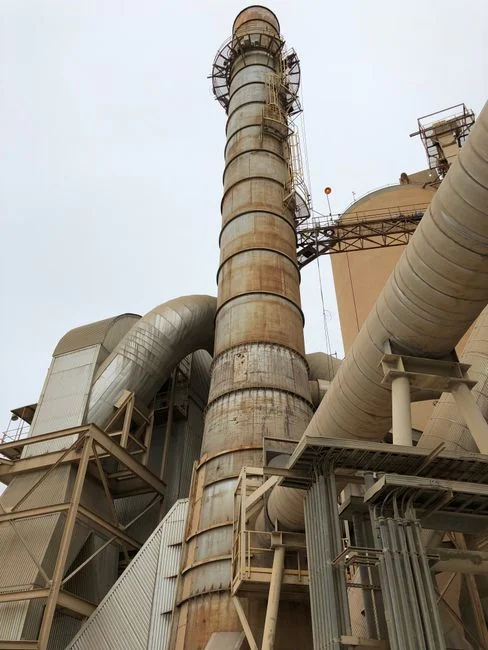
Standalone ion exchange is selective and energy-efficient at stripping the exact ions that scale RO — calcium, magnesium, sulfate, phosphate — using a weak-acid cation (WAC) plus strong-acid cation (SAC) plus anion exchange train. It runs at ambient pressure, has no high-pressure pump, and on a feed with 200-600 mg/L hardness, a properly sized twin-tank industrial water softener for hardness polishing can drop hardness to <5 mg/L with no chemical energy input beyond the regenerant itself.
The OPEX penalty shows up on the regenerant line. Per the 2026 Zou et al. study, traditional IX regeneration consumes 5-10% NaCl and produces a salty spent regenerant that becomes a brine-disposal OPEX line — salt purchase, neutralization, and either sewer discharge (often volume-capped at inland sites) or hauler-off to evaporation ponds. For an inland F&B plant with no outfall, that brine line alone is 15-30% of annual IX OPEX, and it is recurring every regeneration cycle. Resin capacity is finite — strong-acid cation resin typically delivers 1.5-2.0 eq/L on a high-hardness F&B feed — so regeneration frequency is set by influent hardness, and co-current vs counter-current regeneration changes salt efficiency by roughly 30-50% (the directional rule, not a fabricated exact number).
Two structural limits of standalone IX for cooling-blowdown reuse: first, IX does not remove residual organics or FOG micro-emulsions, so the resin must sit after DAF and biological polishing, and any residual TOC carries through to the tower, where it feeds biofilm and biocide demand; second, IX alone does not polish TOC, so if the cooling-tower reuse spec includes a TOC ceiling — most do, to keep cycles of concentration in the 4-6 range without biocide runaway — a downstream RO or AOP step is still required. The result is that standalone IX is rarely the final answer for cooling-blowdown reuse; it is almost always either a stand-in for RO (with a TOC penalty) or a precursor to RO (where the real OPEX win lives).
Head-to-head parameter comparison: RO vs ion exchange vs hybrid HIX-RO
The table below puts the three configurations on the same cooling-blowdown reuse spec so the reader can drop in their own feed numbers and operating costs. The standalone RO and standalone IX columns reflect the 2026 Zou et al. framing on recovery ceilings and the 5-10% NaCl regenerant OPEX; the hybrid HIX-RO column is anchored to the 52-cycle, ~600 mg/L TDS validation in that same study, which demonstrated 3-4x Ca and SO4 surge tolerance with stable ~90% RO recovery.
| Parameter | Standalone RO | Standalone ion exchange | Hybrid HIX-RO |
|---|---|---|---|
| Typical recovery | <80% (per OCWD operating data) | ~95-98% (no membrane); defined by regeneration cycle | ~90% RO recovery (Zou et al., 2026) |
| Energy (kWh/m3 permeate) | 0.6-1.4 (scales with recovery and feed TDS) | 0.05-0.15 (regenerant pumping only) | 0.5-0.9 (RO runs at lower feed TDS after HIX) |
| Chemical intensity | Antiscalant; alkaline + acid CIP every 2-12 weeks | 5-10% NaCl regenerant; occasional acid CIP | HIX regenerant (NaCl or CO2) + low-dose antiscalant; CIP frequency cut 2-3x |
| Brine / spent-regenerant | RO concentrate 20-30% of feed; managed by ZLD or outfall | Spent NaCl brine every cycle; disposal is a binding OPEX line at inland sites | RO concentrate only; HIX brine eliminated under CO2-driven regeneration |
| Sensitivity to FOG / organics | High — flux decline, CIP frequency | Moderate — resin fouling, capacity loss | Low — upstream DAF + bio protect HIX; HIX protects RO |
| Sensitivity to Ca / SO4 / PO4 | High — sets the recovery ceiling | Low — these are the design target | Low — HIX strips them before RO; 3-4x surge tolerance validated |
| CAPEX intensity (relative) | High (high-pressure pumps, vessels, membranes) | Low-moderate (resin vessels, brine tank) | Highest upfront; partially offset by 40% CAPEX reduction vs conventional pretreatment (S1 logic) |
| Primary OPEX drivers | Energy, membrane replacement (3-5 yr), CIP chemicals, antiscalant | NaCl, brine disposal, neutralization, resin replacement (5-10 yr) | RO energy at lower feed TDS; HIX regenerant; RO membrane replacement |
| Maturity (2026) | Mature, fully commercial | Mature, fully commercial | CO2-driven HIX is pilot-to-early-commercial; salt-regen HIX-RO is fully commercial |
The IX-as-RO-pretreatment result from the 2006 Japan Association of Ion Exchange study is the single most transferable data point: when IX replaced a conventional pretreatment train upstream of RO on iron-rich well water, OPEX dropped 35% and CAPEX dropped 40% — and the mechanism (pretreatment quality controls RO OPEX) is identical on F&B feed. Operational risk tells the same story: standalone RO is vulnerable to FOG upsets from upstream DAF breakthrough, standalone IX is vulnerable to organic fouling of the resin, and hybrid HIX-RO is the most resilient architecture because each stage protects the next.
Why the 2026 answer for cooling blowdown reuse is hybrid HIX-RO
Cooling-tower blowdown reuse asks for low hardness, low silica, controlled TDS, and low TOC — and a hybrid HIX-RO train produces exactly that water quality because HIX strips the scale-formers (Ca, SO4, PO4, alkalinity) and RO strips the rest (TDS, silica, residual TOC). Per the 2026 Zou et al. study, the HIX-RO architecture was validated over 52 consecutive cycles on real secondary effluent at ~600 mg/L TDS, with 3-4x Ca and SO4 surge tolerance and stable RO operation at ~90% recovery — a recovery that standalone RO cannot hit on this feed without aggressive antiscalant and frequent CIP.
The 2026 frontier is CO2-driven HIX, which uses a weak-acid cation exchanger (WAC) plus a phosphate-selective hybrid anion exchanger (HAIX-NanoFe) regenerated with dissolved CO2 instead of 5-10% NaCl. The result: simultaneous Ca, SO4, alkalinity, and PO4 removal with no spent brine, no salt purchase, and no neutralization step. Removing the NaCl regenerant line eliminates what is typically 15-30% of a standalone IX plant's annual OPEX — a directional band, not a fabricated exact figure — and it removes the brine-disposal liability that makes inland IX sites hard to permit. Automatic chemical dosing for the regenerant stream becomes a CO2 mass-flow controller rather than a salt saturator, and the UF stage upstream of the HIX-RO train protects both stages from particulates and colloidal carryover.
Practical caveat for 2026: CO2-driven HIX is still pilot-to-early-commercial, so for most plants specifying equipment today, the immediate answer is still salt-regenerated HIX feeding RO — same architecture, same ~90% recovery advantage, and most of the OPEX win. The CO2-driven variant is the answer to specify on a 2-3 year roadmap if the site has a sustainability mandate or a brine-disposal constraint that blocks the salt-regenerated version. A 2026 TCO breakdown for a wastewater plant with this configuration would put RO energy and membrane replacement as the dominant recurring lines, with HIX regenerant (NaCl or CO2) as a controllable secondary line — a fundamentally different OPEX shape than either standalone alternative.
Decision framework: which train to specify in 2026
A three-step selection rule lets the engineer apply the analysis above to their own plant without re-running the bench tests.
- Define the cooling-tower reuse spec. Target cycles of concentration (typically 4-6 for inland F&B), hardness ceiling (usually <50 mg/L as CaCO3), silica ceiling (often <20 mg/L to avoid tower silica scale), TOC ceiling (typically <10 mg/L to control biocide demand), and the discharge constraint on the blowdown purge (sea outfall, sewer with volume cap, ZLD, or evaporation pond). The discharge constraint alone often decides between standalone RO and hybrid HIX-RO.
- Characterize the polishing feed after DAF and biological. Measure BOD, COD, FOG, hardness, alkalinity, SO4, PO4, and TDS — and run a scaling-index calculation (Langelier Saturation Index for CaCO3, gypsum saturation for CaSO4) at the target RO recovery. If projected RO recovery is <80% on this feed, standalone RO will not hit the net water yield; if IX brine disposal is the binding discharge constraint, standalone IX will not pass permitting.
- Pick the train. If RO recovery is <80% or IX brine disposal is the binding permit constraint, specify hybrid HIX-RO. If the site has a sea outfall or a ZLD destination for the RO concentrate, standalone RO may still be the lowest CAPEX route. If the cooling-tower spec does not constrain TOC, standalone IX with a polishing polish on the blowdown can be the lowest OPEX, but that combination is rare in practice.
One-line rule: For inland F&B sites targeting cooling-tower blowdown reuse in 2026, the lowest 5-year OPEX is a DAF + biological + HIX + RO train. Sites with a sea outfall or ZLD for the concentrate can revisit standalone RO, but the HIX-RO architecture is the safer default for the typical inland food and beverage facility.
Frequently Asked Questions
What comes before RO when polishing F&B process wastewater for cooling-tower reuse?
An industrial DAF for FOG and suspended solids removal followed by biological treatment (activated sludge or MBR) is the standard upstream train, and a RO system then handles the dissolved load. The hybrid HIX-RO architecture inserts a weak-acid cation plus anion exchange stage between the biological step and RO to strip Ca, SO4, and PO4 before they reach the membrane.
Why is standalone ion exchange not the lowest OPEX for cooling-tower reuse from F&B wastewater?
Because IX does not remove residual organics or TOC, and traditional regeneration uses 5-10% NaCl with a recurring spent-brine disposal cost that typically accounts for 15-30% of the plant's annual OPEX at inland sites. The 2026 Zou et al. study validates that a hybrid HIX-RO train hits ~90% RO recovery and 3-4x Ca/SO4 surge tolerance without the brine penalty.
How much does using ion exchange as RO pretreatment actually save on OPEX?
The 2006 Japan Association of Ion Exchange field study on iron-rich well water measured a 35% OPEX reduction and 40% CAPEX reduction when IX replaced a conventional oxidation + sand + activated-carbon pretreatment train upstream of RO, because pretreatment quality is what controls RO's chemical and energy demand. The same mechanism applies to F&B feed, where IX strips the scale-formers that otherwise cap RO recovery below 80%.
What is CO2-driven HIX and is it commercial in 2026?
CO2-driven HIX uses a WAC plus HAIX-NanoFe train regenerated with dissolved CO2 instead of NaCl, eliminating the 5-10% salt regenerant and the spent-brine waste line. The 2026 Zou et al. study (ScienceDirect S004313542600014X) validated 52 cycles of stable operation on ~600 mg/L TDS feed with 3-4x Ca and SO4 surge tolerance, but the technology is still pilot-to-early-commercial; most plants specifying in 2026 will use salt-regenerated HIX feeding RO as the deployable version.