Why Ion Exchange Matters in a 2026 PCB Wastewater Train
Chemical precipitation drives dissolved metals down to roughly 5 mg/L in a typical PCB plating wastewater train, but that residual is two to three orders of magnitude too high for closed-loop rinse reuse, and it is tightening against stricter 2026 sewer and ZLD limits in many jurisdictions. Ion exchange bridges that gap, swapping a hydrogen or sodium counter-ion on a synthetic resin bead for the dissolved heavy metal in the rinse stream. In a 2026 PCB plant, an ion exchange system for circuit board wastewater typically sits between the precipitation clarifier and either the discharge point or a downstream RO/evaporator pair that closes the loop (Quick-PCBA, 2024; Aries case study, 2024).
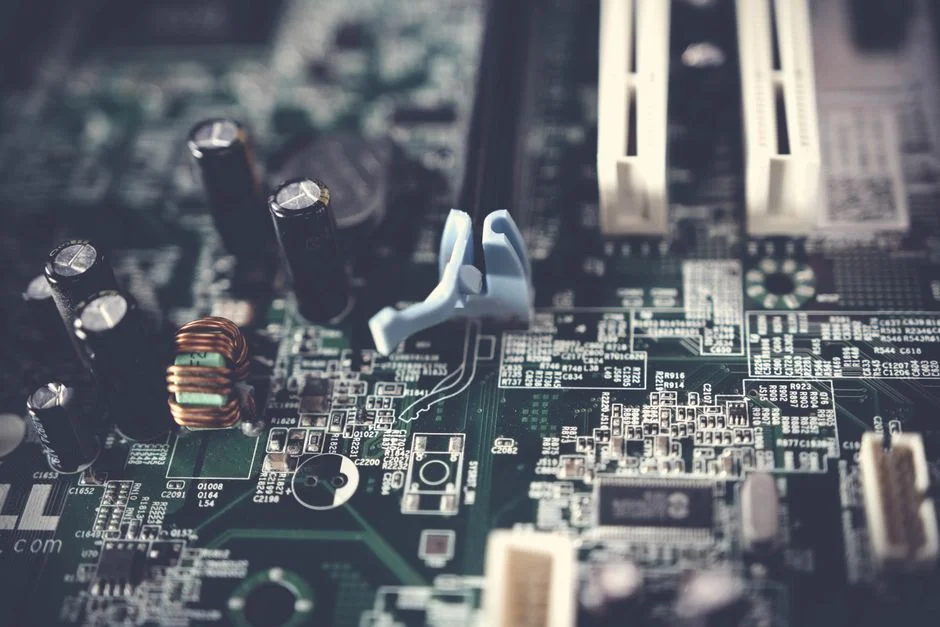
The target species are dense. PCB fabrication produces rinse water loaded with Cu²⁺, Ni²⁺, Ag⁺, Au⁺, Sn²⁺/Sn⁴⁺, and Pb²⁺, plus secondary inorganics (ammonia, cyanide, fluoride, phosphorus) and an organic fraction: surfactants, inks, dry-film resists, organic dispersants, brighteners, and degreasers (per Quick-PCBA). The organic load is what forces pretreatment decisions upstream of the ion exchange vessel, because resists and brighteners foul cation resin within a service cycle if they reach the bed unprotected. The scale is large enough to matter at the policy level: China's PCB fabrication output value exceeded 25% of the global total in recent reporting, making the wastewater question a high-volume, high-stakes engineering problem in 2026 (Quick-PCBA).
That volume is also why rinse water closed loop is no longer a sustainability talking point — it is a cost line. A 45 gpm plating rinse stream recirculated to the rinse tanks at sub-ppm metal saves both sewer surcharges and the operating cost of fresh deionized make-up water, and it gives the engineer a controllable influent that can be optimized for resin life rather than treated as a disposal problem.
How Ion Exchange Resin Removes Metals from Plating Rinse Water
At the bead level, a strong-acid cation (SAC) resin carries fixed sulfonate groups with mobile H⁺ or Na⁺ counter-ions. When a divalent metal like Cu²⁺ passes through the bed, the bead releases its counter-ion and binds the metal, holding it until a stronger regenerant displaces it back into a concentrated eluent. That one reaction underwrites both polishing and resource recovery (Bolto & Pawlowski, 1985).
Resin families differ by functional group and selectivity. Strong-acid cation resin (sulfonated styrene-DVB) handles bulk divalent hardness and most heavy metals across a wide pH window. Weak-acid cation resin (carboxylic) works at higher pH and is more selective for divalents over sodium, which is useful when the rinse water is high in TDS but the target metal is a divalent. Chelating resins — iminodiacetic acid (IDA) and aminomethylphosphonic acid (AMP) — form coordinate bonds with transition metals, which makes them selective enough to take a rinse stream from low ppm down to sub-ppm and to release a single high-value metal (Cu or Ni) into a clean regenerant for recovery. Strong-base anion (SBA) resin is the workhorse for anionic complexes — cyanide, tin-fluorides, gold-cyanide — where the metal travels as a negatively charged complex. This is a separate question from the cation polishing train and is covered in detail in the ion exchange system for fluoride wastewater engineering guide.
The selectivity story gets more interesting when complexing agents are present. EDTA, ammonia, and citrate ride out of the plating bath on the rinse water and bind Cu²⁺, Ni²⁺, and other metals into anionic or neutral complexes that pass straight through a cation bed unreacted. Chelating resins with IDA functionality partially overcome this by binding the metal even through weak complexation, but the engineer still has to design for the complexing-agent loading when sizing a column. The reference case that anchors this engineering discussion is a Northeastern U.S. PCB plant where a 45 gpm plating rinse water is treated by an ion-exchange-based system, then reused directly to replenish rinse tanks inside a zero-discharge closed loop (Aries case study, 2024).
Choosing the Right Resin for Cu, Ni, Pb, and Tin Removal
Resin selection is metal-by-metal, not a single spec line. The table below maps the four dominant divalent species in PCB plating rinse water to a starting resin family and the operating window that drives long service life.
| Target metal | Dominant species in rinse water | Primary resin family | Typical pH window | Key fouling / lifetime risk |
|---|---|---|---|---|
| Copper (Cu) | Cu²⁺, Cu(NH₃)₄²⁺ | Chelating (IDA) for selective recovery; SAC for bulk | 2–9 (IDA), 0–14 (SAC) | Ammonia complexing, organic fouling from brighteners |
| Nickel (Ni) | Ni²⁺, Ni-citrate, Ni-EDTA | Chelating (IDA) for sub-ppm polish; WAC for high-TDS feed | 2–9 (IDA), 4–14 (WAC) | EDTA masking; nickel-selective chelation is the workaround |
| Lead (Pb) | Pb²⁺, Pb-fluoride complexes | SAC for bulk; chelating for selective polish to sub-ppm | 2–9 (IDA), 0–14 (SAC) | Fluoride complexes can mask; treat F first if loading is high |
| Tin (Sn) | Sn²⁺, Sn⁴⁺, SnF₆²⁻ (fluoborate / fluorosilicate baths) | SAC for cations; SBA for anionic tin-fluorides | 0–14 (SAC), 0–12 (SBA type I) | Oxidation of Sn²⁺ to Sn⁴⁺ on the bed; fluoride complexing |
Operating windows deserve as much attention as the resin letter code. SAC resin is forgiving on pH but limited to about 120–140 °C in service and intolerant of free chlorine above 1 mg/L — a typical fab chlorinated rinse feed will oxidize the resin matrix over hundreds of cycles. Chelating IDA resin operates in a narrower 2–9 pH window but gives the operator something a generic cation bed cannot: a single-metal regenerant stream from which Cu or Ni can be electrowon back into the plating bath. That is the resource-recovery argument Bolto & Pawlowski make for metal-finishing wastewater — the metal is worth more in concentrated form than the cost of the regenerant (1985).
Service-life drivers, in order of how often they cut resin life short in real fabs, are organic fouling from resists and brighteners, oxidant attack from residual chlorine or hypochlorite carried in on poorly segregated rinses, and mechanical attrition from backwash. Designing the bed around these three failure modes — carbon or multimedia filtration upstream, dechlorination where municipal water enters, controlled backwash expansion — is what separates a resin skid that runs for years from one that needs replacement in twelve months. Specific service life depends on feed water quality and operating discipline; treat any quoted year count as site-specific rather than universal.
Engineering Parameters for a PCB Ion Exchange Skid
Field reference numbers from a documented zero-discharge PCB installation: 45 gpm design flow on the plating rinse ion exchange unit, and 12 gpm on the pre-treated chemical etching stream that continues to RO (Aries case study, 2024). Those are useful order-of-magnitude anchors, not universal specs — every skid has to be sized to its own feed analysis.
Beyond flow rate, the design parameters an engineer actually sets on a data sheet are linear flow rate (typically 8–12 gpm/ft² for polishing service on SAC and 5–8 gpm/ft² for chelating resin), bed depth (commonly 3–6 ft to give sufficient mass transfer zone), freeboard (50–75% expansion allowance for backwash), and service flow rate expressed in bed volumes per hour. The service flow rate and the bed depth together control contact time, which is the lever that determines whether breakthrough happens at the design run length or three cycles early. Backwash expansion at 50–80% is the design criterion for resin cleaning, not an exact number to copy across vessels.
| Parameter | Reference value (Aries PCB case, 2024) | Design range / criterion | Why it matters |
|---|---|---|---|
| Plating rinse design flow | 45 gpm | Set by rinse-tank overflow and drag-out | Defines vessel cross-section |
| Etching wastewater flow to RO | 12 gpm | Set by etch machine carry-out | Sets downstream RO size |
| Linear flow rate (service) | — | 8–12 gpm/ft² (SAC), 5–8 gpm/ft² (chelating) | Controls mass transfer and pressure drop |
| Bed depth | — | 3–6 ft | Determines mass transfer zone and run length |
| Regenerant (SAC divalent metals) | — | 4–10% HCl or 5–10% H₂SO₄ | Sulfuric acid risks CaSO₄ scaling if hardness is high |
| Regenerant (anion / SBA) | — | 4–8% NaOH | Drives off anionic complexes; rinse water reuse for dilution |
| Regenerant volume | — | 3–8 bed volumes per regeneration | Lower for counter-current, higher for co-current |
Breakthrough behavior is the concept that ties the parameter set to operations. As a bed loads with metal, the outlet concentration holds at a low baseline, then begins to rise in an S-shaped breakthrough curve as the mass transfer zone migrates down the vessel. The run ends when the target metal hits its discharge or rinse-reuse limit at the outlet — for Cu polishing to a 0.1 ppm rinse-reuse target, that is the trigger to take the skid off-line and regenerate. Treating breakthrough as a curve rather than a hard endpoint lets the engineer schedule regeneration on conductivity or on online metal analyzers instead of on a fixed timer.
Spent regenerant is the other design decision. It is typically routed to the evaporator or back to a precipitation step for metal recovery, and the rinse water used during the regeneration step itself can be reused for the next regeneration dilution. That closed-loop design is what turns a regenerant stream from a waste into a feedstock.
Integrating Ion Exchange with RO, Evaporation, and Zero Liquid Discharge
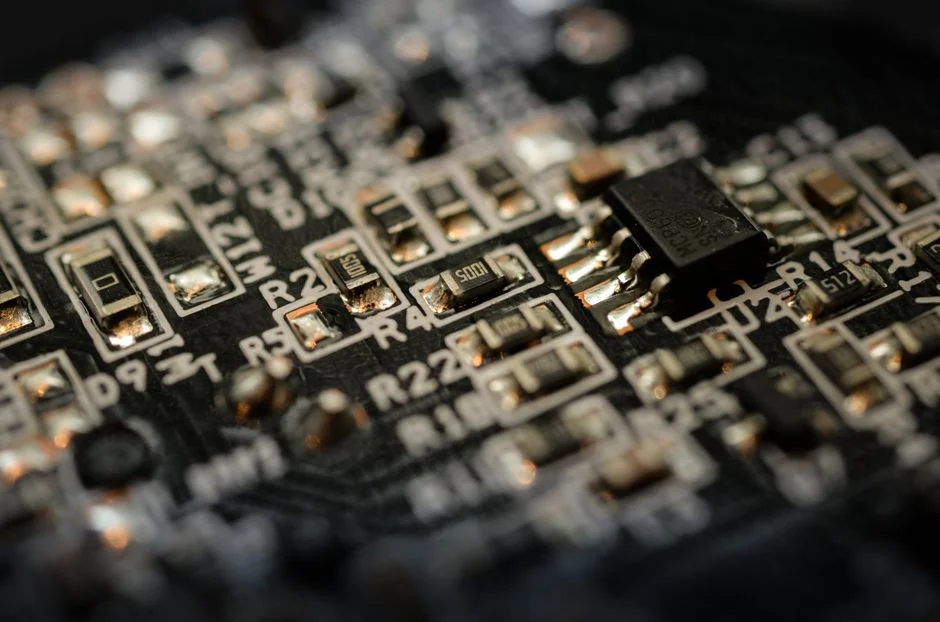
The full train in the reference zero-discharge PCB plant runs as a coordinated system. Chemical pretreatment and microfiltration handle the etching wastewater; RO removes the bulk of the salts; a recovery RO concentrates the salts further and returns most of the permeate to the primary RO feed; and a natural-gas-fired high-efficiency evaporator paired with a filter press solidifies the dissolved solids from the ion exchange and RO concentrates (Aries case study, 2024). The ion exchange unit is the polishing step on the plating rinse line and the protector of the RO membrane surface.
That protective role is underappreciated. Divalent heavy metals foul and scale RO membranes disproportionately to their concentration, and they contribute to the silt density index (SDI) loading that limits RO recovery. A properly engineered ion exchange polish drops divalents to sub-ppm, which both extends RO membrane life and lets the system push recovery higher without scale control chemistry. The plating rinse goes back to the rinse tanks; the etching rinse goes forward to the RO pair. Two streams, two destinations, one resin skid upstream as the gatekeeper.
| Treatment stage | Function | Stream handled | Output destination |
|---|---|---|---|
| Chemical precipitation + clarification | Bulk metal removal | Combined plating + etching wastewater | Sludge to filter press; clarifier overflow forward |
| Ion exchange (chelating / SAC) | Polish divalent metals to sub-ppm; protect RO | Plating rinse water (~45 gpm) | Back to rinse tanks; spent regenerant to evaporator |
| Microfiltration + RO | Salt reduction; water reuse | Pre-treated etching stream (~12 gpm) | RO permeate to process; concentrate to recovery RO |
| Recovery RO | Further concentrate salts; recycle permeate | Primary RO concentrate | Permeate back to primary RO feed; concentrate to evaporator |
| Natural-gas evaporator + filter press | Solidify dissolved solids; eliminate liquid discharge | Ion exchange + RO concentrate | Distillate back to process; filter cake to off-site recovery |
Fabs without a ZLD target run a simpler architecture: ion exchange polishes to discharge limits, and the spent regenerant is precipitated and dewatered. The 2026 driver pushing more plants toward the full ZLD train is a combination of tightening pretreatment limits, sewer-surcharge economics, and the resource-recovery argument that Bolto & Pawlowski framed decades ago and that now reads as standard operating procedure — heavy-metal losses in metal finishing are economically significant, and ion exchange captures them in a concentrated form suitable for recycling (1985). For sites handling HF-bearing etchants, the PCB HF wastewater treatment guide covers the fluoride-specific stage that has to be designed in parallel.
Operating Cost, Resin Lifetime, and 2026 ROI Considerations
The operating-cost line items on a PCB ion exchange skid break into four buckets: regenerant chemicals (HCl, H₂SO₄, or NaOH depending on resin family), rinse water consumption during the regeneration step, resin replacement amortized over expected service life, and energy for backwash pumps and blowers. The largest of these in most fabs is regenerant, which is why chelating-resin copper recovery with an electrowinning cell downstream is often the highest-leverage cost decision on the skid — the value of recovered Cu offsets a meaningful fraction of the acid bill.
The evaporator and filter press in a ZLD train convert the spent regenerant into a filter cake, eliminating liquid discharge and reducing off-site waste hauling. The trade-off is fuel cost on the natural-gas evaporator, which in 2026 is the single largest operating line item in a closed-loop PCB wastewater plant and the reason the engineering question is not "should we ZLD" but "where in the train is ZLD the lowest-cost answer." For sites with low sewer surcharges and high gas prices, ion exchange polish to discharge plus precipitation and dewatering of the regenerant remains the lower-TCO architecture.
Frame the ROI around three numbers the procurement reviewer will sign off on: avoided sewer surcharges at the site's 2026 discharge tariff, recovered metal value (Cu and Ni at 2026 LME pricing when chelating recovery is in scope), and avoided cost of fresh deionized rinse make-up water. A 2026 sensitivity worth flagging is that tightening pretreatment limits in many jurisdictions are pushing more fabs toward ion-exchange polish as a permit-condition requirement, not a discretionary upgrade — which raises the value of a properly engineered skid relative to a 2024 baseline. For copper-specific polish design, the product reference for an industrial RO system for PCB rinse polishing shows the downstream polishing stage that pairs with an ion exchange skid; for the sludge side, a filter press for spent ion exchange regenerant solids closes the solids loop. Regenerant and pH control sit on an automatic chemical dosing for regenerant and pH control skid to keep breakthrough and rinse quality on spec without operator babysitting.
Frequently Asked Questions
Why is ion exchange chosen over additional precipitation for PCB wastewater?
Selective resin beds drop divalent metals to sub-ppm, two to three orders of magnitude below what hydroxide or sulfide precipitation can reach at reasonable cost. The regenerant is also reusable as a concentrated metal eluent for resource recovery, which is a second economic argument precipitation cannot make (Quick-PCBA, 2024).
Can ion exchange alone achieve zero liquid discharge?
No. Ion exchange produces a concentrated spent regenerant that still has to be either precipitated and dewatered or routed to an evaporator and filter press. In a ZLD train, ion exchange is the polishing step that protects the RO and closes the rinse loop, not the liquid-elimination step on its own (Aries case study, 2024).
What flow rates are typical for a plating rinse ion exchange unit?
A documented 2024 reference is 45 gpm on the plating rinse ion exchange system at a zero-discharge PCB facility, with 12 gpm continuing to RO from the pre-treated etching stream (Aries case study, 2024). Use these as an order-of-magnitude anchor only; actual sizing depends on rinse-tank overflow, drag-out, and target recovery.
How long does PCB-grade ion exchange resin last in service?
Service life is driven by feed water quality and operating discipline. The dominant failure modes are organic fouling from resists and brighteners, oxidant attack from residual chlorine or hypochlorite, and mechanical attrition from backwash. With proper pretreatment, multi-year service life is typical; treat any specific year count as site-specific rather than universal.
Which resin family is best for copper recovery from a plating rinse?
Chelating resin in the iminodiacetic acid (IDA) form. It binds Cu²⁺ selectively at low ppm and releases it into a clean acid regenerant from which copper can be electrowon back into the plating bath. The economics improve further when the same skid is sized for Ni recovery in parallel (Bolto & Pawlowski, 1985).
Can ion exchange remove fluoride and cyanide from PCB wastewater?
Strong-base anion resin handles anionic complexes including cyanide and tin-fluorides. Fluoride-specific design at the higher loadings seen in PCB HF etchant streams is a separate sizing question, covered in the linked ion exchange system for fluoride wastewater engineering guide; lead and nickel removals are detailed in the lead removal engineering guide and the nickel removal engineering guide.